The official data lists 52 versions of the Ford Bronco (1984 - 2026), in the European Union, the United States, and Canada. Each market publishes its own figures, measured on its own test procedure.
At a glance
Years in the data
1984 - 2026
Markets
European Union, United States, Canada
Engines
2.0 L to 5.8 L
Power
186 kW (253 PS) to 246 kW (334 PS)
Fuels
Petrol, Diesel
Lowest consumption (United States)
11.2 L/100 km (EPA)
Lowest consumption (Canada)
11.2 L/100 km (5-cycle)
Lowest consumption (European Union)
12.6 L/100 km (WLTP)
New registrations in the EU
1,222
What is the Ford Bronco?
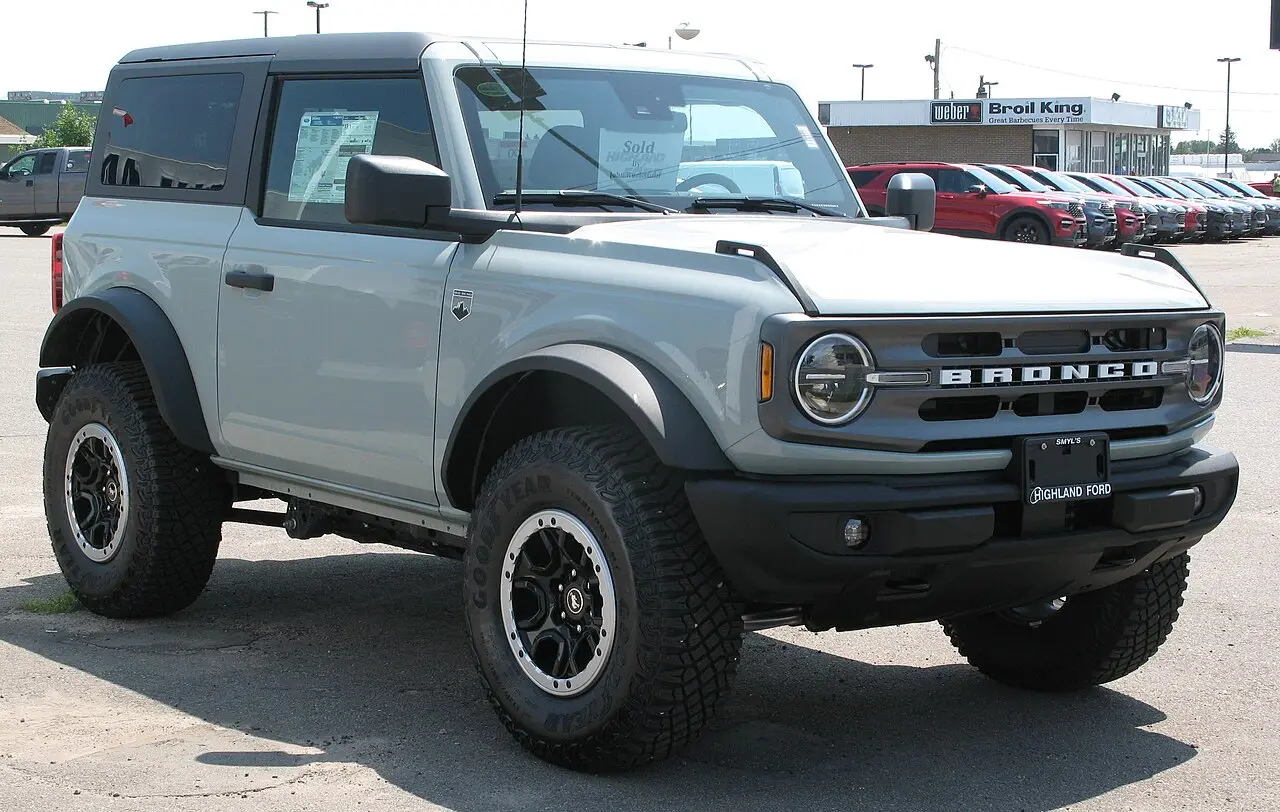
The Bronco is Ford’s off-road-focused SUV, with a history rooted in utility and trail driving. Ford introduced the original in 1966 in three body styles: an open Roadster, a pickup-like Sports Utility and a two-door Wagon. The modern Bronco carries on that outdoors-oriented character.
Ford Bronco generations
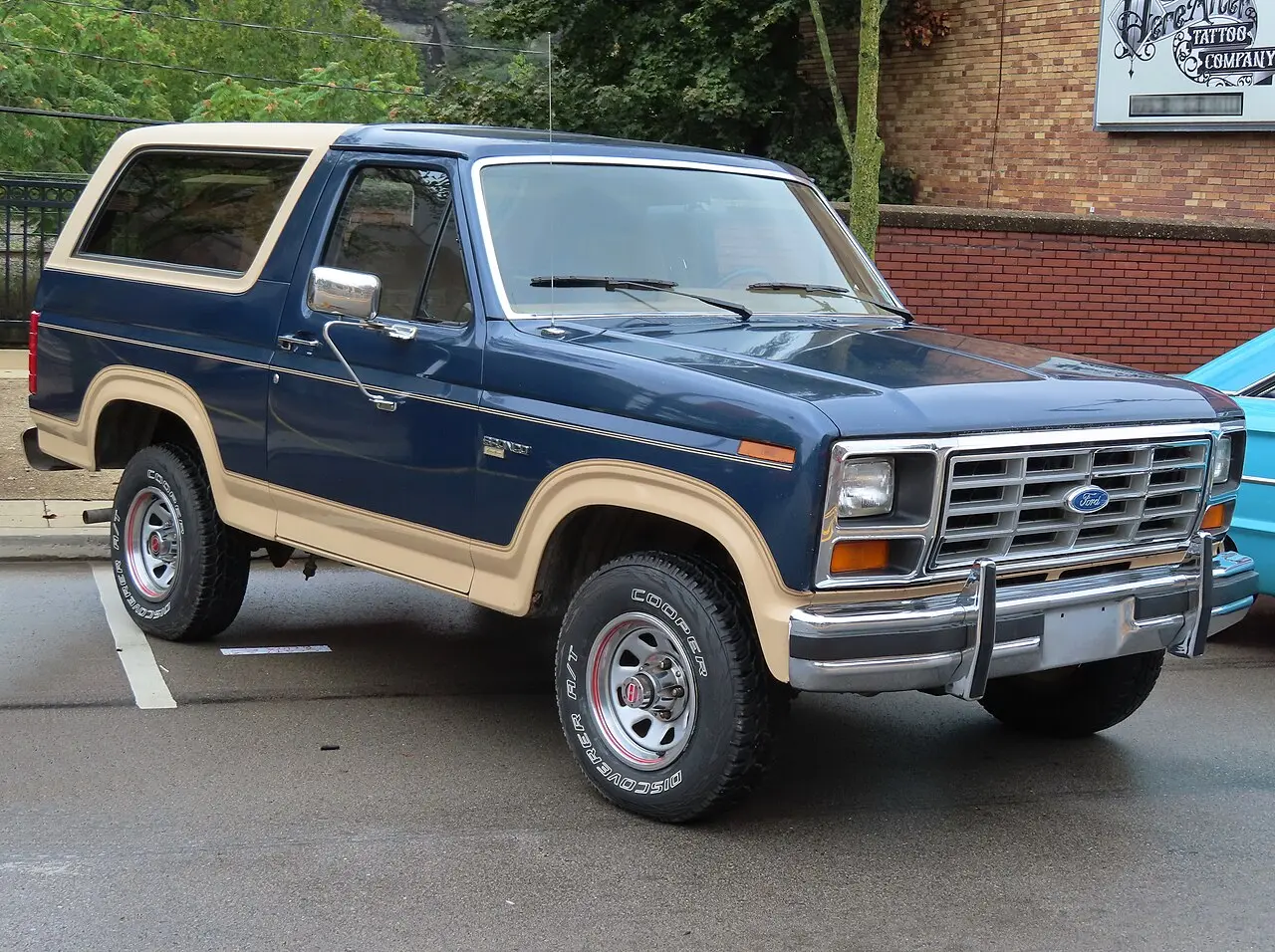
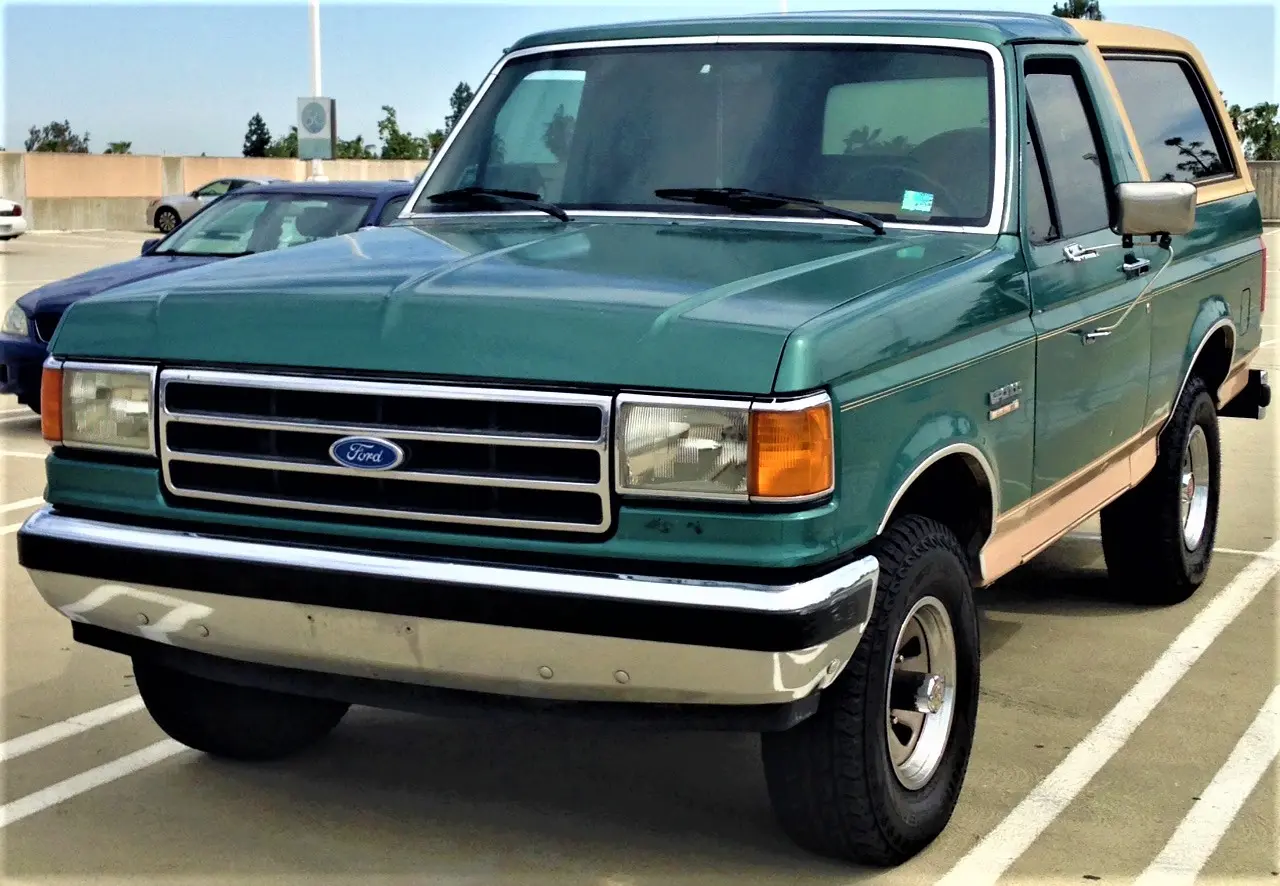
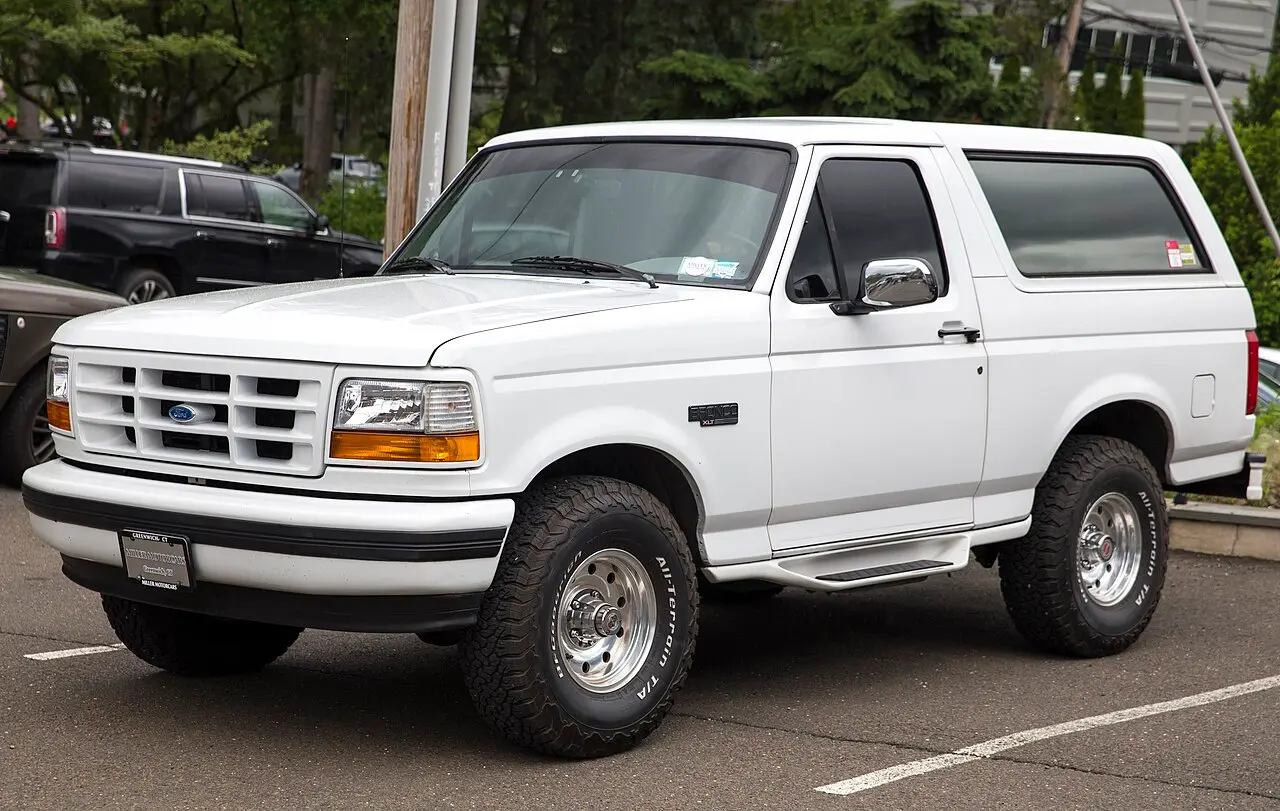
The generations represented here include the third, from 1980 to 1986; the fourth, from 1987 to 1991; and the fifth, from 1992 to 1996. The sixth generation began in 2021, bringing the Bronco name back after a long break.
Engines and fuel economy
The United States range spans 2.3 L to 5.8 L petrol engines, while Canada’s listed range covers the same engine-size endpoints and petrol fuel. In Europe, the listed Bronco versions use 2.0 L to 2.7 L engines, with stated power from 186 kW (253 PS) to 246 kW (334 PS). The lowest stated consumption is 11.2 L/100 km in the United States under EPA testing and 11.2 L/100 km in Canada on NRCan’s 5-cycle test. The European figure is 12.6 L/100 km on WLTP. These procedures differ, so the figures are not direct market-to-market comparisons.
Where was the Ford Bronco sold?
The listed United States range runs from 1984 to 2026, and Canada’s from 1995 to 2026. European Union registration figures cover 2021 to 2025 and total 1,222. The 2.7 L petrol version rated at 246 kW (334 PS) led the listed configurations in each of the last three years shown.
Questions and answers
When did the modern Ford Bronco generation begin?
The sixth generation began in 2021.
What engines are listed for the Bronco in the United States?
The listed United States range uses petrol engines from 2.3 L to 5.8 L.
Why do Bronco consumption figures differ between markets?
The United States uses EPA testing, Canada uses NRCan’s 5-cycle procedure, and Europe uses WLTP. These procedures produce results that are not directly comparable.
New cars registered in the EU (plus Norway and Iceland), from the European Environment Agency. Figures on the NEDC procedure until 2020 and on WLTP from 2021; versions are grouped by engine and power, with their number of registrations.
Years and version
Engine
Power
Fuel
Consumption (combined)
CO₂
EU registrations
2023 - 2025
2.7 L
246 kW (334 PS)
Petrol
12.6 - 14.1 L/100 km WLTP
313 - 328 g/km
1,097
2025
3.0 L
-
Petrol
-
378 g/km
10
2024
2.7 L
246 kW (334 PS)
Diesel
-
274 g/km
10
2022 - 2023
2.7 L
224 kW (305 PS)
Petrol
-
261 g/km
29
2022
2.3 L
202 kW (275 PS)
Petrol
-
290 g/km
20
2021
2.0 L
186 kW (253 PS)
Petrol
-
237 g/km
56
United States 8 versions
Model years sold in the USA, from the EPA and the Department of Energy (fueleconomy.gov). MPG on the EPA test; litres per 100 km = 235.215 ÷ MPG.
Years and version
Engine
Fuel
Gearbox
Drive
Consumption (combined)
CO₂
2021 - 2026SIDI & PFI
2.3 L
Petrol
10-speed automatic
Part-time four-wheel drive
17 - 21 MPG (11.2 - 13.8 L/100 km) EPA
263 - 322 g/km
2021 - 2026SIDI & PFI
2.3 L
Petrol
7-speed manual
Part-time four-wheel drive
17 - 21 MPG (11.2 - 13.8 L/100 km) EPA
265 - 334 g/km
2021 - 2026SIDI & PFI
2.7 L
Petrol
10-speed automatic
Part-time four-wheel drive
17 - 20 MPG (11.8 - 13.8 L/100 km) EPA
281 - 330 g/km
2022 - 2026SIDI
3.0 L
Petrol
10-speed automatic
Part-time four-wheel drive
15 MPG (15.7 L/100 km) EPA
359 g/km
2022 - 2024SIDI & PFI · SIDI
2.3 L
Petrol
10-speed automatic
Part-time four-wheel drive
18 MPG (13.1 L/100 km) EPA
307 g/km
2023 - 2024SIDI & PFI · SIDI
2.3 L
Petrol
7-speed manual
Part-time four-wheel drive
17 MPG (13.8 L/100 km) EPA
325 g/km
2024SIDI
2.3 L
Petrol
7-speed manual
Part-time four-wheel drive
17 - 20 MPG (11.8 - 13.8 L/100 km) EPA
272 - 327 g/km
2024SIDI
2.3 L
Petrol
10-speed automatic
Part-time four-wheel drive
20 MPG (11.8 L/100 km) EPA
276 g/km
Canada 5 versions
Model years sold in Canada, from Natural Resources Canada fuel consumption ratings (5-cycle test).
Years and version
Engine
Fuel
Gearbox
Consumption (combined)
CO₂
2021 - 2026Sport utility vehicle: Small
2.3 L
Petrol
10-speed automatic
11.2 - 13.8 L/100 km 5-cycle
264 - 324 g/km
2021 - 2026Sport utility vehicle: Small
2.3 L
Petrol
7-speed manual
11.3 - 14.3 L/100 km 5-cycle
265 - 336 g/km
2021 - 2026Sport utility vehicle: Small
2.7 L
Petrol
10-speed automatic
11.9 - 14.1 L/100 km 5-cycle
281 - 331 g/km
2025 - 2026Sport utility vehicle: Standard
2.7 L
Petrol
10-speed automatic
12.0 - 12.2 L/100 km 5-cycle
282 - 287 g/km
2022 - 2026Sport utility vehicle: Standard
3.0 L
Petrol
10-speed automatic
15.3 L/100 km 5-cycle
358 g/km
Ford Bronco recalls
65 official safety recalls for the Ford Bronco from NHTSA (United States), DVSA (United Kingdom) and the EU Safety Gate, newest first. Recall repairs are normally free at the maker’s dealers.
Side curtain air bag may tear during deployment2026
Engine pistons may fail2026
Engine wiring harness may short circuit2021 - 2026
Fender flares may detach2022 - 2026
Engine may fail and cause loss of drive power2025 - 2026
Official figures are measured on standard test procedures and differ between markets. Your consumption depends on how, where and in what conditions you drive.