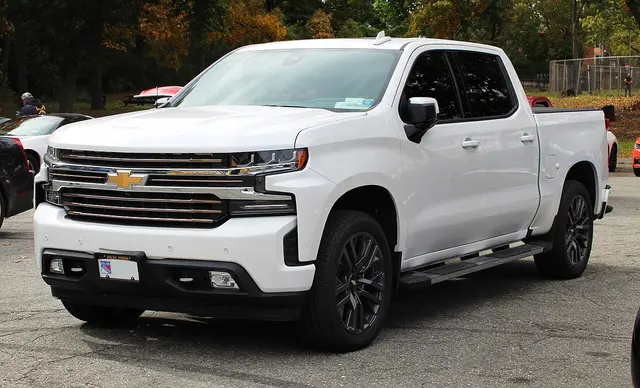
Ford F-150

Ford F-150
Photo: Gold Pony / Wikimedia Commons · CC BY 3.0

The official data lists 233 versions of the Ford F-150 (1984 - 2026), in the European Union, the United States, and Canada. Each market publishes its own figures, measured on its own test procedure.

At a glance

Years in the data
1984 - 2026
Markets
European Union, United States, Canada
Engines
2.7 L to 6.2 L
Power
318 kW (432 PS) to 420 kW (571 PS)
Fuels
Electric, Petrol, Hybrid, Flex fuel (E85), Diesel, Natural gas, LPG
Lowest consumption (Canada)
9.3 L/100 km (5-cycle)
Lowest consumption (United States)
9.4 L/100 km (EPA)
New registrations in the EU
589

What is the Ford F-150?

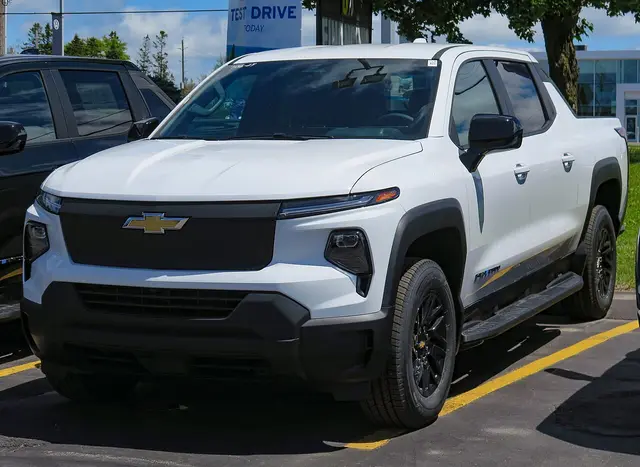
The F-150 is a full-size pickup in Ford’s F-Series. Its open load bed and passenger cabin make it suited to work, carrying cargo and everyday driving. In the United States, the F-150 appears in official EPA figures from 1984 through 2026; Canadian NRCan figures begin in 1995. In the European Union, registration figures include an electric F-150.

F-150 generations

The F-150 generations run from the seventh generation (1984-1986) through the fourteenth (2021-today). Between them came the eighth (1987-1991), ninth (1992-1996), tenth (1997-2003), eleventh (2004-2008), twelfth (2009-2014) and thirteenth (2015-2020). The thirteenth generation introduced an aluminum body, while the current generation continues with an aluminum body over a steel frame. The F-150 Lightning brought battery power to the pickup line.

Engines and power

US figures include petrol, hybrid, electric, flex-fuel E85, diesel, natural gas and LPG versions, with engines from 2.7 L to 5.8 L. Canadian figures include petrol, electric, E85, diesel and natural gas versions, also with engines from 2.7 L to 5.8 L. The electric F-150 in EU registration figures produces 337 kW (458 PS). Canadian power figures span 318 kW (432 PS) to 420 kW (571 PS).

Fuel consumption and markets

The lowest listed US consumption is 9.4 L/100 km, and the best EPA combined rating is 25 MPG. Canada’s lowest listed figure is 9.3 L/100 km on the NRCan 5-cycle test. Test procedures differ between markets: the EPA and Canadian 5-cycle tests are distinct from the WLTP and NEDC procedures used in Europe. EU registration figures cover 2024-2025, with 589 registrations in total.

Questions and answers

Is the F-150 available as an electric vehicle?

Yes. EU registration figures include an electric F-150 rated at 337 kW (458 PS), and US figures also include electric versions.

What is the F-150’s lowest listed fuel consumption?

The lowest listed US figure is 9.4 L/100 km under EPA testing; Canada’s is 9.3 L/100 km on the NRCan 5-cycle test.

Which F-150 generation is current?

The fourteenth generation began in 2021 and is listed as continuing today.
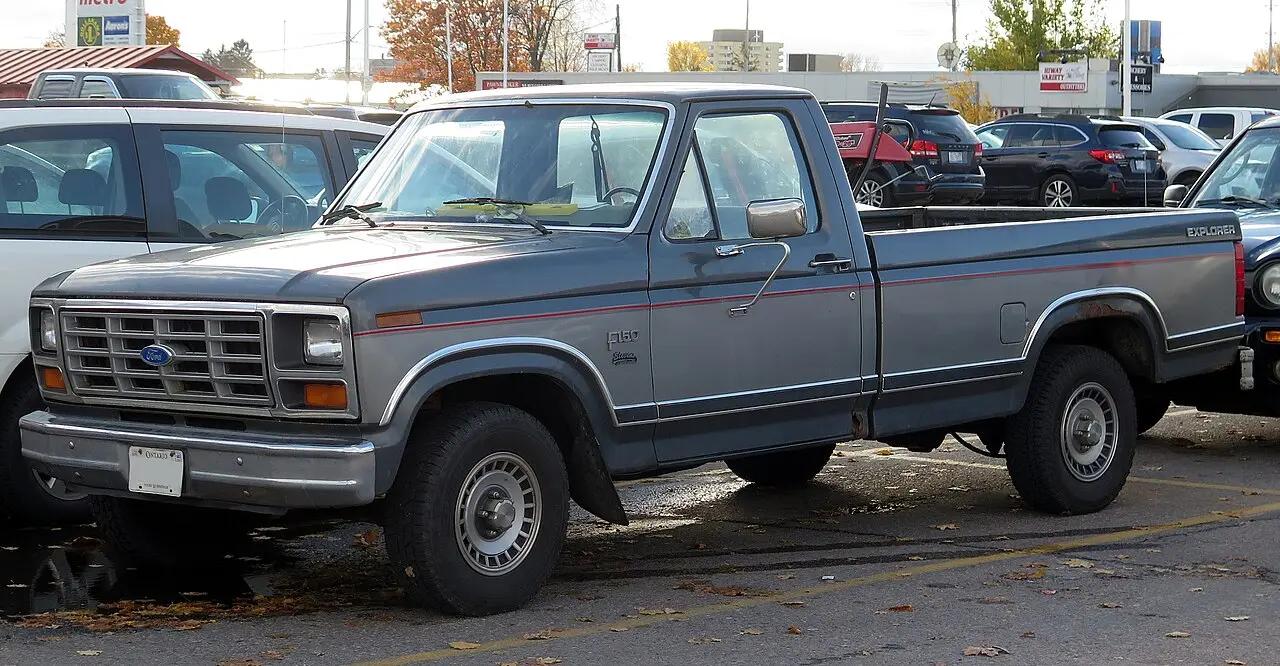
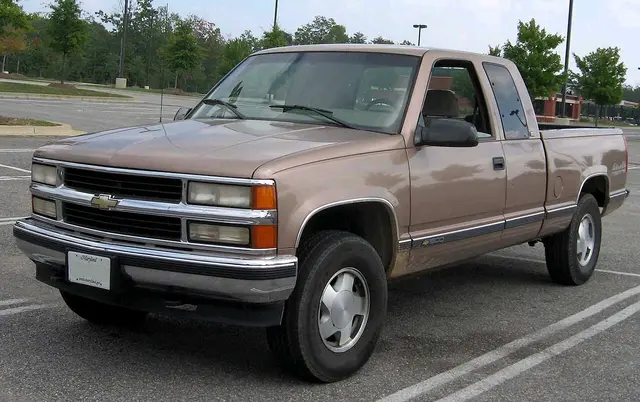
F-150 seventh generation (1984 - 1986)

Ford F-150 seventh generation
Photo: Elise240SX / Wikimedia Commons · CC BY-SA 4.0

References: supermotors.net, motortrend.com

Specifications, reliability and all versions

Show all 52 versions

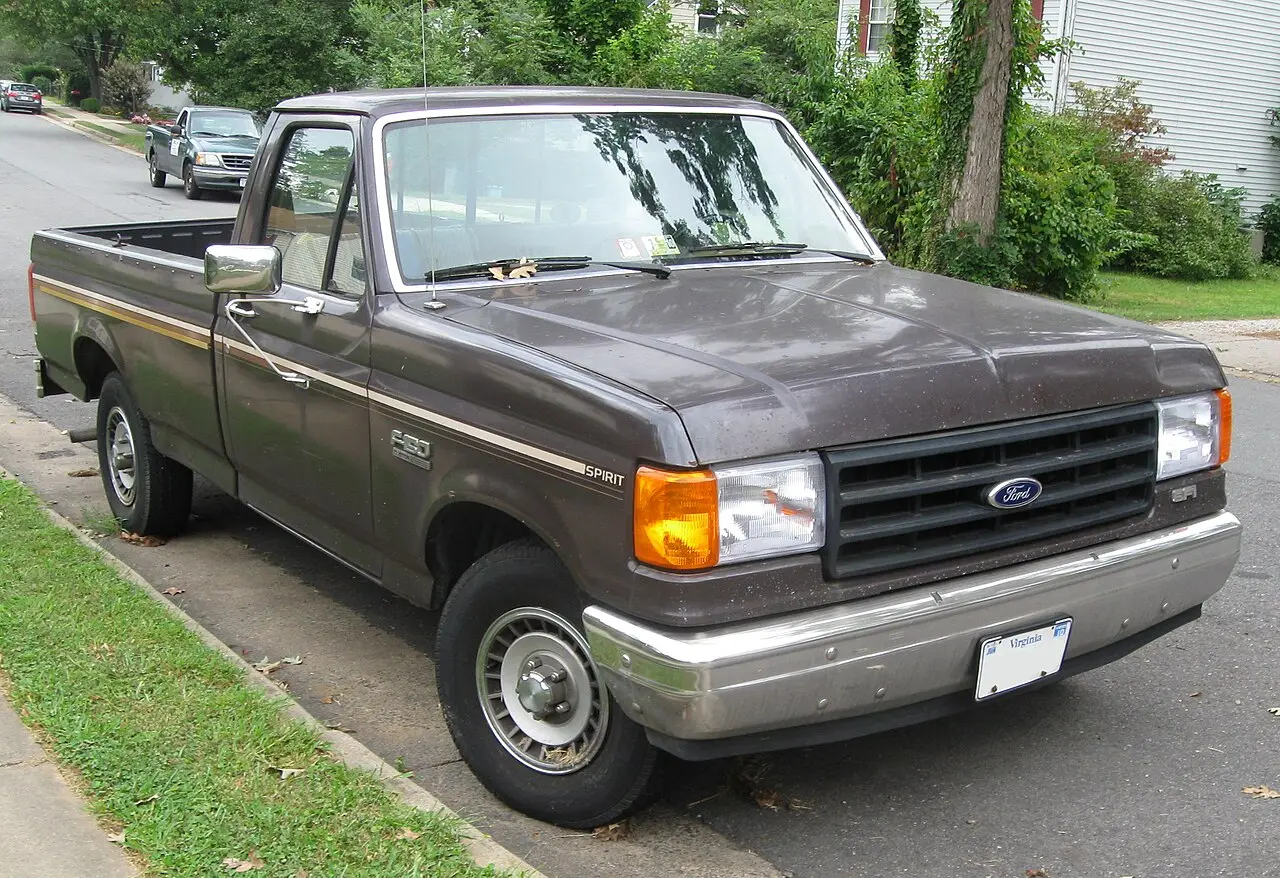
F-150 eighth generation (1987 - 1991)

Ford F-150 eighth generation
Photo: IFCAR / Wikimedia Commons · Public domain

References: carmodelhistory.com

At a glance: Length 4,860 - 6,000 mm Specifications, reliability and all versions

Show all 31 versions

F-150 ninth generation (1992 - 1996)

Ford F-150 eighth generation
No photo of this generation yet; the photo shows the eighth generation.Photo: IFCAR / Wikimedia Commons · Public domain

References: carmodelhistory.com

Specifications, reliability and all versions

Show all 27 versions

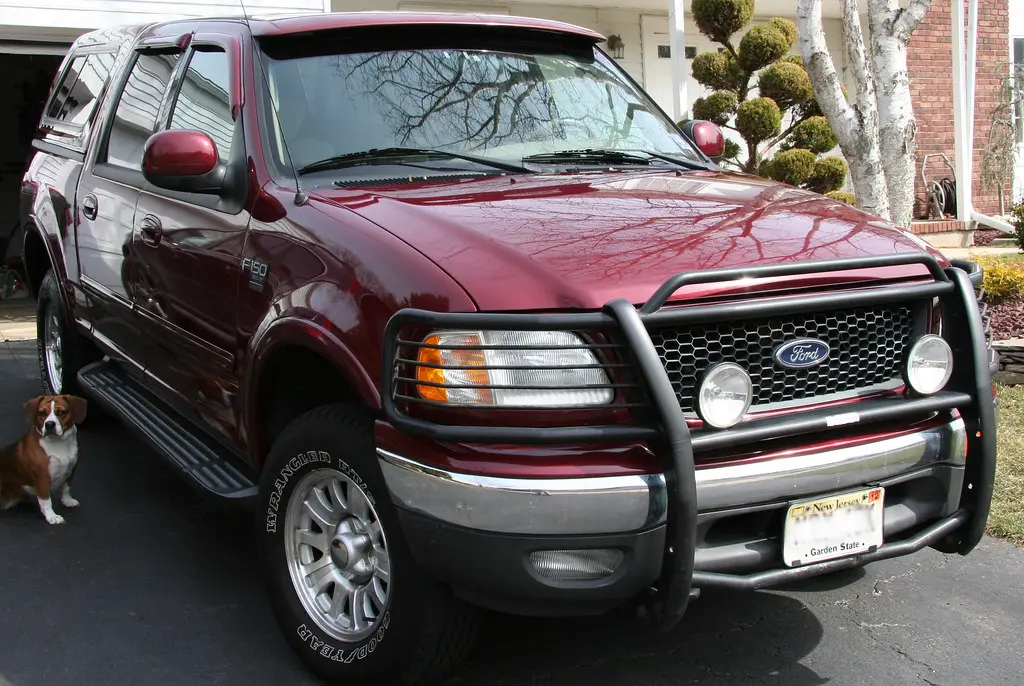
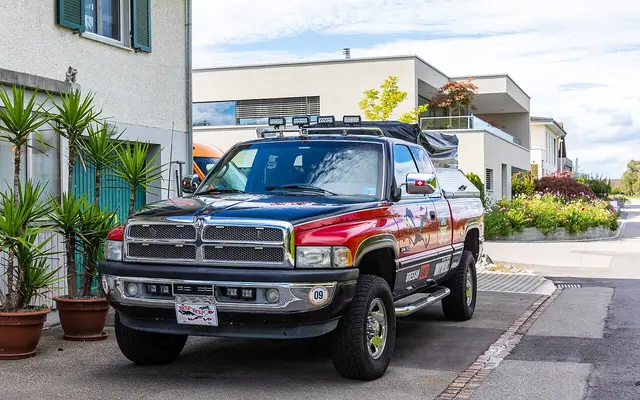
F-150 tenth generation (1997 - 2003)

Ford F-150 tenth generation
Photo: MCS@flickr / Wikimedia Commons · CC BY 2.0

References: supermotors.net

At a glance: Length 5,136 - 6,081 mm · MOT first-time pass at 13 years and older: 82.3% (UK average 69.2%) Specifications, reliability and all versions

Show all 48 versions

F-150 eleventh generation (2004 - 2008)

Ford F-150 twelfth generation
No photo of this generation yet; the photo shows the twelfth generation.Photo: Bull-Doser / Wikimedia Commons · Public domain

References: carmodelhistory.com

At a glance: Length 5,100 - 5,660 mm Specifications, reliability and all versions

Show all 20 versions

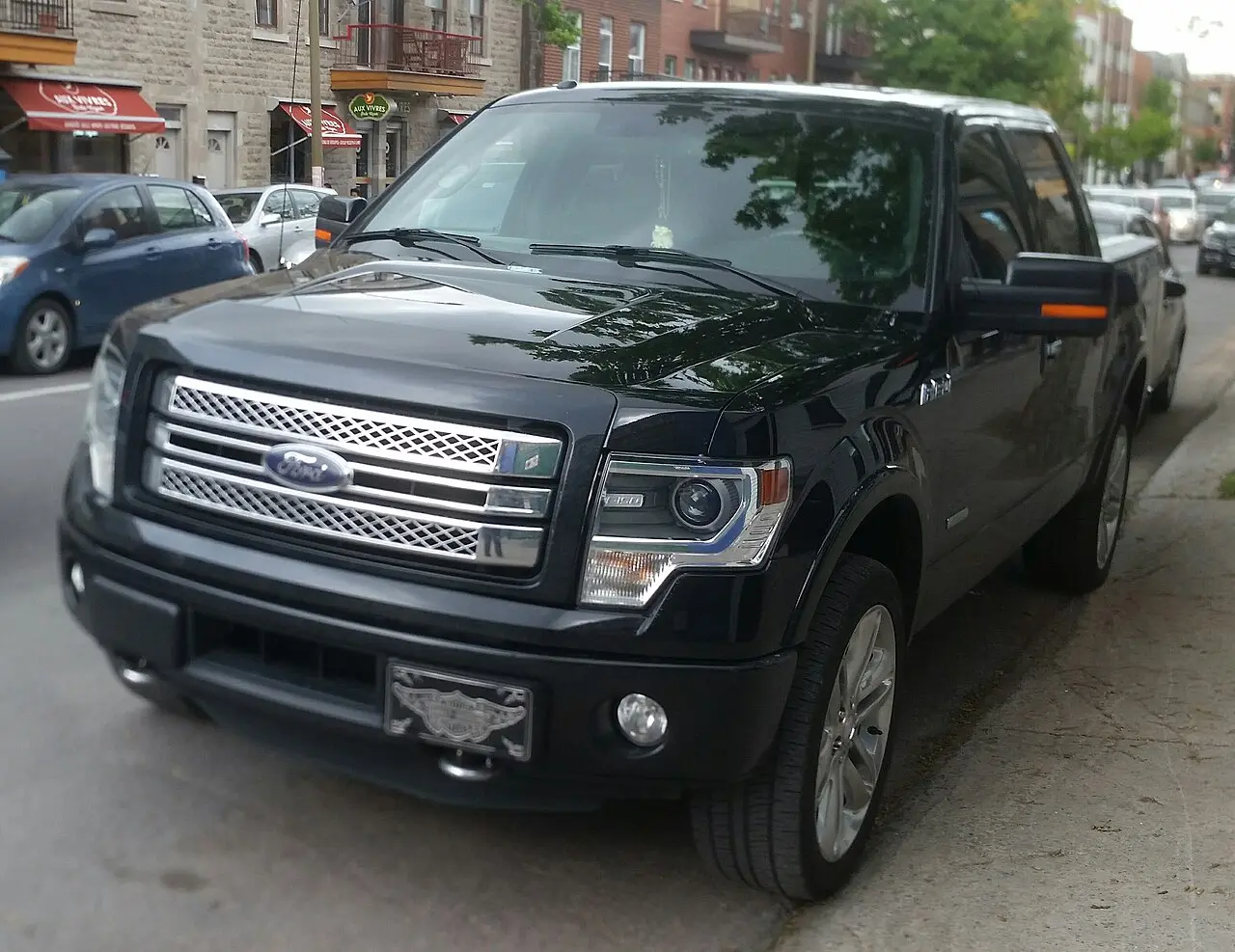
F-150 twelfth generation (2009 - 2014)

Ford F-150 twelfth generation
Photo: Bull-Doser / Wikimedia Commons · Public domain

References: carmodelhistory.com

At a glance: Length 5,330 - 6,280 mm · Kerb weight 2,159 - 2,812 kg Specifications, reliability and all versions

Show all 31 versions

F-150 thirteenth generation (2015 - 2020)

Ford F-150 thirteenth generation
Photo: Kevauto / Wikimedia Commons · CC BY-SA 4.0

References: carmodelhistory.com

At a glance: Length 5,270 - 6,320 mm · Kerb weight 1,837 - 2,506 kg Specifications, reliability and all versions

Show all 47 versions

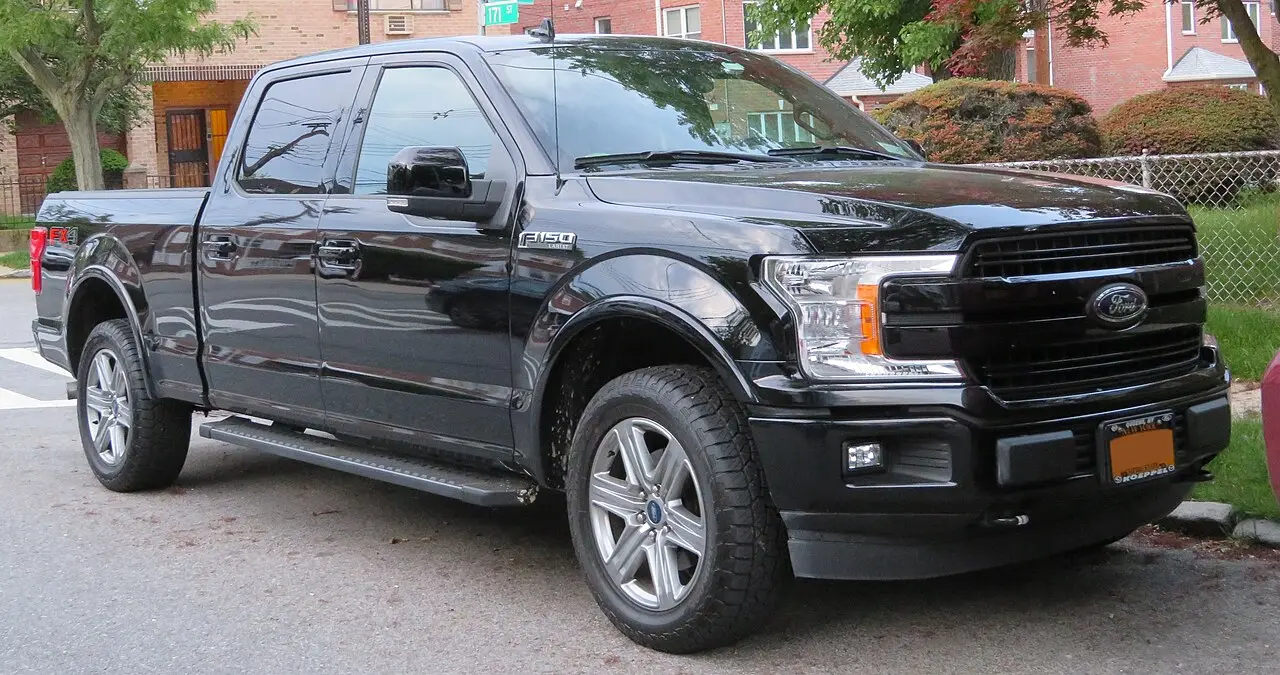
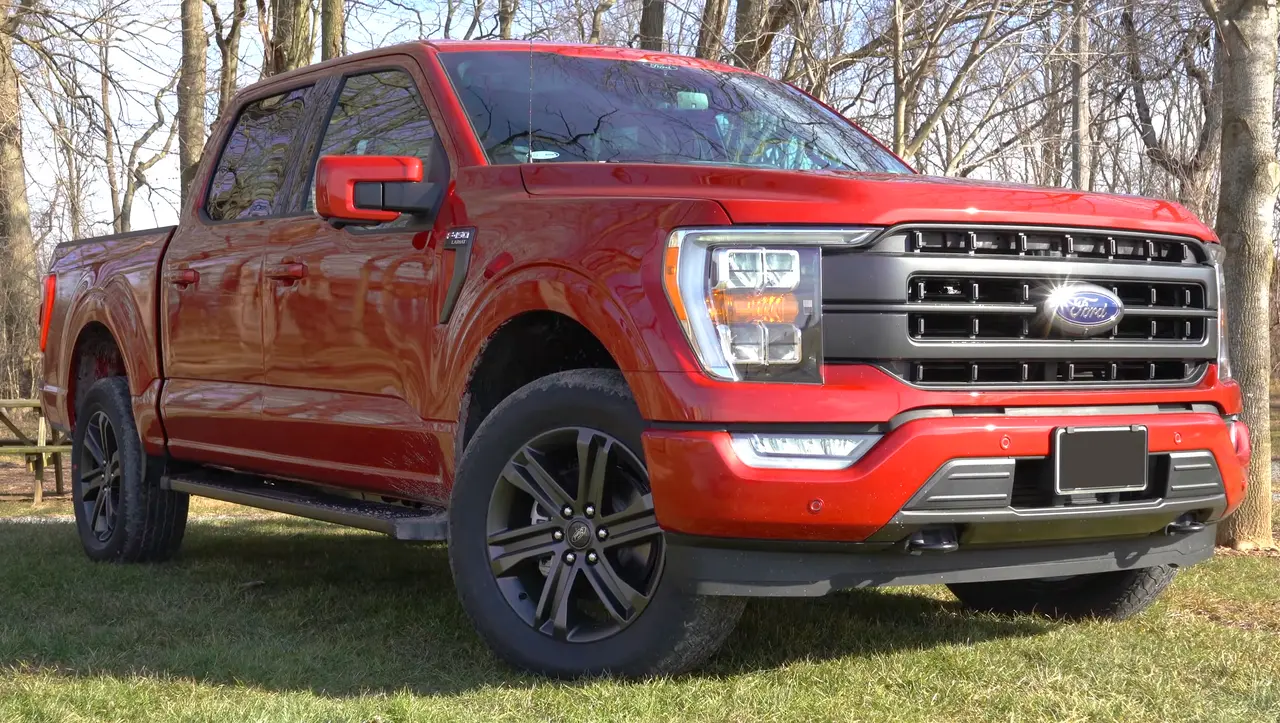
F-150 fourteenth generation (since 2021)

Ford F-150 fourteenth generation
Photo: Gold Pony / Wikimedia Commons · CC BY 3.0

Model codes: P702 · References: supermotors.net, autofiles.com

At a glance: Length 5,260 - 6,310 mm · Kerb weight 1,823 - 2,584 kg · Top speed 177 km/h Specifications, reliability and all versions

Show all 44 versions

European Union 2 versions

New cars registered in the EU (plus Norway and Iceland), from the European Environment Agency. Figures on the NEDC procedure until 2020 and on WLTP from 2021; versions are grouped by engine and power, with their number of registrations.

Years and versionEnginePowerFuelConsumption (combined)CO₂Electric rangeEU registrations
2024 - 2025Electric motor337 kW (458 PS)Electric26.6 kWh/100 km WLTP0 g/km429 km578
2024Electric motorNot listedElectric - 0 g/km - 11

United States 32 versions

Model years sold in the USA, from the EPA and the Department of Energy (fueleconomy.gov). MPG on the EPA test; litres per 100 km = 235.215 ÷ MPG.

Years and versionEngineFuelGearboxDriveConsumption (combined)CO₂Electric range
2021 - 2026SIDI & PFI2.7 LPetrol10-speed automaticPart-time four-wheel drive20 - 21 MPG (11.2 - 11.8 L/100 km) EPA268 - 281 g/km -
2021 - 2026SIDI & PFI2.7 LPetrol10-speed automaticRear-wheel drive21 - 22 MPG (10.7 - 11.2 L/100 km) EPA251 - 264 g/km -
2021 - 2026SIDI & PFI3.5 LPetrol10-speed automaticPart-time four-wheel drive15 - 20 MPG (11.8 - 15.7 L/100 km) EPA277 - 370 g/km -
2021 - 2026SIDI & PFI3.5 LPetrol10-speed automaticRear-wheel drive20 MPG (11.8 L/100 km) EPA272 - 283 g/km -
2026SIDI & PFI; Hybrid3.5 LHybrid10-speed automaticPart-time four-wheel drive23 MPG (10.2 L/100 km) EPA241 g/km -
2026SIDI & PFI; Hybrid3.5 LHybrid10-speed automaticRear-wheel drive24 MPG (9.8 L/100 km) EPA231 g/km -
2024 - 2026SIDI & PFI5.0 LPetrol10-speed automaticPart-time four-wheel drive17 - 19 MPG (12.4 - 13.8 L/100 km) EPA293 - 325 g/km -
2024 - 2026SIDI & PFI5.0 LPetrol10-speed automaticRear-wheel drive19 MPG (12.4 L/100 km) EPA291 - 294 g/km -
2023 - 20265.2 LPetrol10-speed automaticPart-time four-wheel drive12 MPG (19.6 L/100 km) EPA460 g/km -
2022 - 2025Electric motorElectricAutomaticAll-wheel drive66 - 70 MPGe EPA0 g/km370 - 515 km
2025Electric motorElectricAutomaticFour-wheel drive72 MPGe EPA0 g/km483 km
2021 - 2025SIDI; Hybrid3.5 LHybrid10-speed automaticPart-time four-wheel drive23 - 24 MPG (9.8 - 10.2 L/100 km) EPA229 - 240 g/km -
2023SIDI & PFI; with Stop-start2.7 LPetrol10-speed automaticRear-wheel drive22 MPG (10.7 L/100 km) EPA252 g/km -
2023SIDI; with Stop-Start2.7 LPetrol10-speed automaticRear-wheel drive21 MPG (11.2 L/100 km) EPA268 g/km -
2023SIDI & PFI; with Stop-start2.7 LPetrol10-speed automaticPart-time four-wheel drive20 MPG (11.8 L/100 km) EPA270 g/km -
2022 - 2023FFV · FFV; with Stop-start3.3 LFlex fuel (E85)10-speed automaticRear-wheel drive21 MPG (11.2 L/100 km) EPA263 g/km -
2022 - 2023FFV · FFV; with Stop-start3.3 LFlex fuel (E85)10-speed automaticPart-time four-wheel drive20 MPG (11.8 L/100 km) EPA276 g/km -
2023FFV3.3 LFlex fuel (E85)10-speed automaticRear-wheel drive20 MPG (11.8 L/100 km) EPA275 g/km -
2021 - 2023SIDI & PFI; Stop-Start · SIDI & PFI; with Stop-start3.5 LPetrol10-speed automaticPart-time four-wheel drive15 - 18 MPG (13.1 - 15.7 L/100 km) EPA309 - 359 g/km -
2022 - 2023SIDI; Hybrid · SIDI; Hybrid; with Stop-Start3.5 LHybrid10-speed automaticRear-wheel drive25 MPG (9.4 L/100 km) EPA219 g/km -
2023SIDI & PFI; with Stop-start3.5 LPetrol10-speed automaticRear-wheel drive21 MPG (11.2 L/100 km) EPA268 g/km -
2023SIDI & PFI; with Stop-start3.5 LPetrol10-speed automaticPart-time four-wheel drive20 MPG (11.8 L/100 km) EPA280 g/km -
2021 - 2023SIDI & PFI; FFV5.0 LFlex fuel (E85)10-speed automaticPart-time four-wheel drive17 - 19 MPG (12.4 - 13.8 L/100 km) EPA291 - 322 g/km -
2021 - 2023SIDI & PFI; FFV5.0 LFlex fuel (E85)10-speed automaticRear-wheel drive19 - 20 MPG (11.8 - 12.4 L/100 km) EPA277 - 289 g/km -
2022SIDI & PFI; Stop-Start3.5 LPetrol10-speed automaticRear-wheel drive20 MPG (11.8 L/100 km) EPA271 g/km -
2022SIDI & PFI; Stop-Start3.5 LPetrol10-speed automaticPart-time four-wheel drive20 MPG (11.8 L/100 km) EPA276 g/km -
2022SIDI & PFI; FFV; Stop-Start5.0 LFlex fuel (E85)10-speed automaticRear-wheel drive20 MPG (11.8 L/100 km) EPA276 g/km -
2022SIDI & PFI; FFV; Stop-Start5.0 LFlex fuel (E85)10-speed automaticPart-time four-wheel drive19 MPG (12.4 L/100 km) EPA291 g/km -
20213.0 LDiesel10-speed automaticPart-time four-wheel drive23 MPG (10.2 L/100 km) EPA277 g/km -
2021SIDI & PFI; FFV3.3 LFlex fuel (E85)10-speed automaticRear-wheel drive21 MPG (11.2 L/100 km) EPA263 g/km -
2021SIDI & PFI; FFV3.3 LFlex fuel (E85)10-speed automaticPart-time four-wheel drive20 MPG (11.8 L/100 km) EPA277 g/km -
2021SIDI; Hybrid3.5 LHybrid10-speed automaticRear-wheel drive25 MPG (9.4 L/100 km) EPA217 g/km -

Canada 10 versions

Model years sold in Canada, from Natural Resources Canada fuel consumption ratings (5-cycle test).

Years and versionEnginePowerFuelGearboxConsumption (combined)CO₂Electric range
2021 - 2026Pickup truck: Standard2.7 LNot listedPetrol10-speed automatic10.7 - 12.0 L/100 km 5-cycle252 - 282 g/km -
2021 - 2026Pickup truck: Standard3.5 LNot listedPetrol10-speed automatic9.3 - 15.8 L/100 km 5-cycle217 - 370 g/km -
2021 - 2026Pickup truck: Standard5.0 LNot listedPetrol10-speed automatic12.2 - 13.8 L/100 km 5-cycle287 - 322 g/km -
2023 - 2026Pickup truck: Standard5.2 LNot listedPetrol10-speed automatic19.7 L/100 km 5-cycle460 g/km -
2022 - 2025Pickup truck: StandardElectric motor318 kW (432 PS)ElectricAutomatic30.6 kWh/100 km 5-cycle0 g/km370 - 386 km
2022 - 2025Pickup truck: StandardElectric motor420 kW (571 PS)ElectricAutomatic29.2 - 31.5 kWh/100 km 5-cycle0 g/km483 - 515 km
2021 - 2023Pickup truck: Standard3.3 LNot listedPetrol10-speed automatic11.0 - 11.8 L/100 km 5-cycle259 - 277 g/km -
2021 - 2023Pickup truck: Standard3.3 LNot listedFlex fuel (E85)10-speed automatic14.8 - 15.4 L/100 km 5-cycle242 - 256 g/km -
2021 - 2023Pickup truck: Standard5.0 LNot listedFlex fuel (E85)10-speed automatic16.6 - 18.3 L/100 km 5-cycle270 - 303 g/km -
2021Pickup truck: Standard3.0 LNot listedDiesel10-speed automatic10.7 L/100 km 5-cycle287 g/km -

Ford F-150 recalls

197 official safety recalls for the Ford F-150 from NHTSA (United States), DVSA (United Kingdom) and the EU Safety Gate, newest first. Recall repairs are normally free at the maker’s dealers.

  • Fuel tank may leak or detach2023 - 2027
  • Rear stabilizer rod may shift out of position2026
  • Incorrect rear axle bearing may cause wheel lock-up2026
  • Vehicle joints may be improperly tightened2026
  • Infotainment menu may obstruct rearview camera2021 - 2023

See all 197 recalls

Official figures are measured on standard test procedures and differ between markets. Your consumption depends on how, where and in what conditions you drive.