Ford

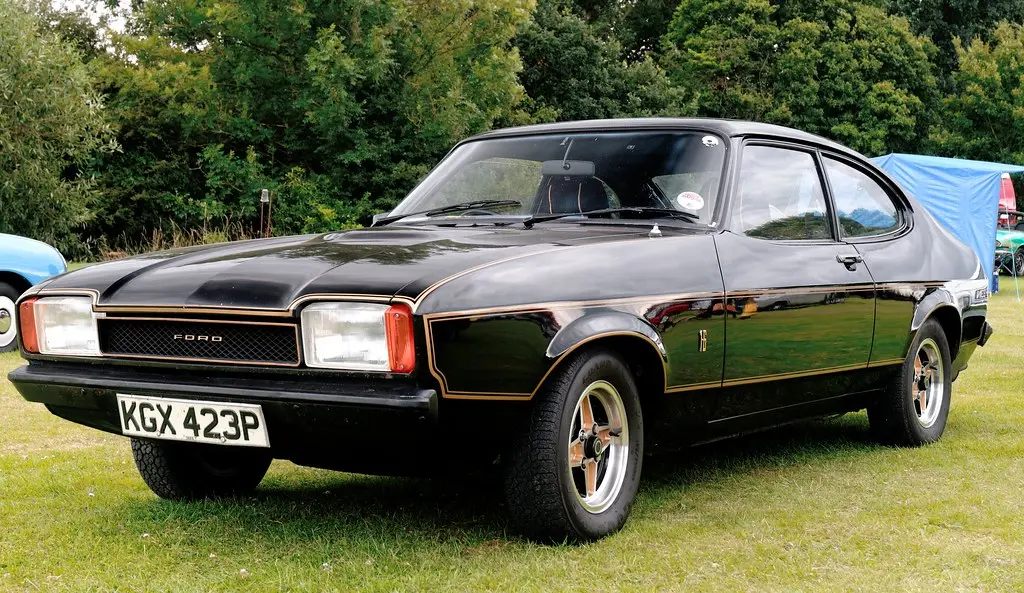
Ford Capri

Ford Capri
Photo: pyntofmyld / Wikimedia Commons · CC BY 2.0

The official data lists 11 versions of the Ford Capri (2010–2025), in the European Union. Each market publishes its own figures, measured on its own test procedure.

At a glance

Years in the data
2010–2025
Markets
European Union
Engines
1.2 L
Power
89 kW (121 PS) to 250 kW (340 PS)
Fuels
Electric, Petrol
New registrations in the EU
14,032

What is the Ford Capri?

The Capri name has returned on an electric crossover with a coupe-like roofline. The new model brings the familiar Ford name into the family car range in a different form from the classic Capri, pairing electric drive with a cabin designed for everyday use. It is part of Ford of Europe’s electric range and uses Volkswagen Group’s MEB platform.

The second-generation Capri began in 2025. The classic Capri was known as a sporty Ford; the current model takes the name in a new direction with an electric, family-focused design.

Engines and power

The current Capri is electric, with European figures spanning 89 kW (121 PS) to 250 kW (340 PS). Output varies by version. The 1.2-litre engine in the broader European figures belongs to the petrol-powered Capri listed in the registration history, not the electric generation introduced in 2025.

How economical is the Ford Capri?

European Union registration figures for the Ford Capri cover 2010–2025 and include petrol and electric versions. European tests use NEDC or WLTP, while the USA uses EPA procedures and Canada uses a 5-cycle test; results from different procedures are not directly comparable.

EU registrations across the full period total 14,032. In 2025, the most registered electric version was the 210 kW (286 PS) model, with 7,828 registrations, followed by the 250 kW (340 PS) version with 3,225.

Where was the Capri sold?

The registration market listed is the European Economic Area, with figures spanning 2010–2025. The second-generation electric Capri is identified for the EU, UK and France. The name now links Ford’s earlier petrol-powered model with its electric range.

Questions and answers

Is the current Ford Capri electric?

Yes. The second-generation Capri introduced in 2025 is electric.

How much power does the Capri have?

European versions listed range from 89 kW (121 PS) to 250 kW (340 PS).

How many EU registrations are listed?

The 2010–2025 period records 14,032 EU registrations.

Which Capri version had the most registrations in 2025?

The electric 210 kW (286 PS) version, with 7,828 registrations.

Capri second generation (since 2025)

Model codes: MEB · Sold in: European Union, United Kingdom, and France · References: fromtheroad.ford.com, techradar.com

European Union 5 versions

New cars registered in the EU (plus Norway and Iceland), from the European Environment Agency. Figures on the NEDC procedure until 2020 and on WLTP from 2021; versions are grouped by engine and power, with their number of registrations.

Years and versionEnginePowerFuelConsumption (combined)CO₂Electric rangeEU registrations
2025Electric motor210 kW (286 PS)Electric14.1 kWh/100 km WLTP0 g/km606 km7,828
2025Electric motor250 kW (340 PS)Electric16.4 kWh/100 km WLTP0 g/km552 km3,225
2025Electric motor89 kW (121 PS)Electric14.4 kWh/100 km WLTP0 g/km602 km1,192
2025Electric motor125 kW (170 PS)Electric16.1 kWh/100 km WLTP0 g/km383 km230
2025Electric motor70 kW (95 PS)Electric15.9 kWh/100 km WLTP0 g/km386 km13

Versions outside these generations

European Union 6 versions

New cars registered in the EU (plus Norway and Iceland), from the European Environment Agency. Figures on the NEDC procedure until 2020 and on WLTP from 2021; versions are grouped by engine and power, with their number of registrations.

Years and versionEnginePowerFuelConsumption (combined)CO₂Electric rangeEU registrations
2024Electric motor210 kW (286 PS)Electric13.8 kWh/100 km WLTP0 g/km606 km890
2024Electric motor250 kW (340 PS)Electric15.9 kWh/100 km WLTP0 g/km558 km360
2024Electric motor89 kW (121 PS)Electric14.2 kWh/100 km WLTP0 g/km595 km218
20111.2 L–Petrol–129 g/km–10
20101.2 L–Petrol–132 g/km–50
20101.4 L–Petrol–133 g/km–16

Official figures are measured on standard test procedures and differ between markets. Your consumption depends on how, where and in what conditions you drive.