

Lexus LS second generation
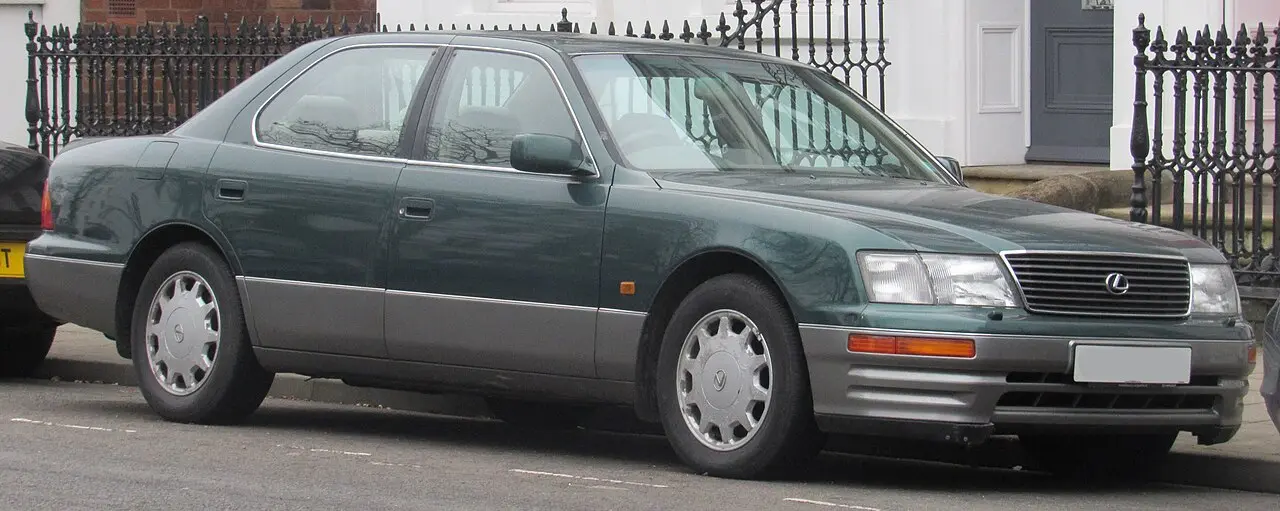
The Lexus LS second generation (1995–2000): dimensions, weights, reliability and the official figures of its 5 versions in the United States and Canada.
Model codes: XF20, UCF20
Dimensions, weights and capacity
| Specification | North America | Wikipedia |
|---|---|---|
| Dimensions | ||
| Length | – | 4,996 mm |
| Width | – | 1,829 mm |
| Height | – | 1,420–1,435 mm |
| Wheelbase | – | 2,850 mm |
| Weights and towing | ||
| Kerb weight | – | 1,659–1,764 kg |
| Seats and space | ||
| Luggage space (EPA) | 396 L EPA | – |
| Passenger space (EPA) | 2,888 L EPA | – |
Ranges cover the generation’s versions and body styles; European and North American versions can differ. Sources: Wikipedia, US EPA fuel economy data. Wikipedia figures are used under CC BY-SA 4.0.
Reliability and owner reports
Owner complaints to NHTSA (US)
10 complaints for model years 1995–2000. 2 crashes · 1 fire · 1 injury
Complaints are reported by owners and not checked by NHTSA; they are not adjusted for how many cars were sold, so popular models have more. NHTSA owner complaints
All 5 versions of the Lexus LS second generation
United States 3 versions
Model years sold in the USA, from the EPA and the Department of Energy (fueleconomy.gov). MPG on the EPA test; litres per 100 km = 235.215 ÷ MPG.
| Years and version | Engine | Fuel | Gearbox | Drive | Consumption (combined) | CO₂ |
|---|---|---|---|---|---|---|
| 1999–2000CLKUP | 4.0 L | Petrol | 5-speed automatic | Rear-wheel drive | 19 MPG (12.4 L/100 km) EPA | 291 g/km |
| 19982MODE 2LKUP | 4.0 L | Petrol | 5-speed automatic | Rear-wheel drive | 19 MPG (12.4 L/100 km) EPA | 291 g/km |
| 1995–1997(FFS), 2MODE 2LKUP | 4.0 L | Petrol | 4-speed automatic | Rear-wheel drive | 19 MPG (12.4 L/100 km) EPA | 291 g/km |
Canada 2 versions
Model years sold in Canada, from Natural Resources Canada fuel consumption ratings (5-cycle test).
| Years and version | Engine | Fuel | Gearbox | Consumption (combined) | CO₂ |
|---|---|---|---|---|---|
| 1998–2000Mid-size | 4.0 L | Petrol | 5-speed automatic | 12.4–12.7 L/100 km 5-cycle | 285–292 g/km |
| 1995–1997Mid-size | 4.0 L | Petrol | 4-speed automatic | 12.1–12.7 L/100 km 5-cycle | 278–292 g/km |
Similar models from other brands



Official figures are measured on standard test procedures and differ between markets. Your consumption depends on how, where and in what conditions you drive.