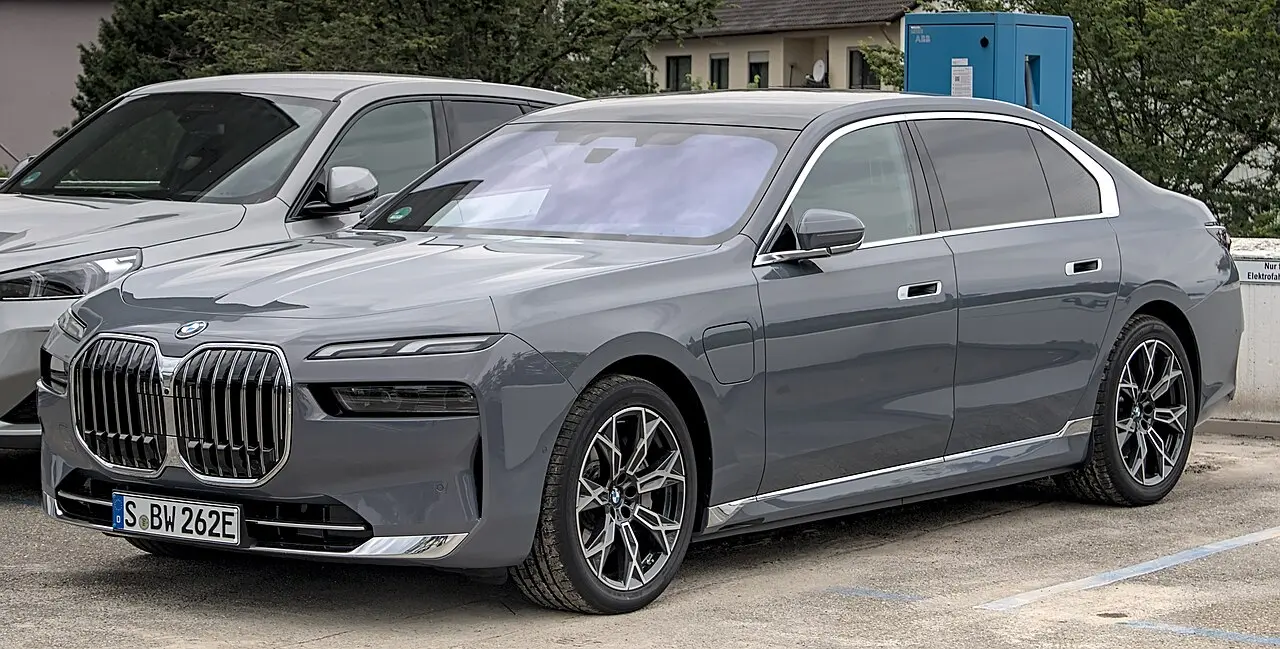
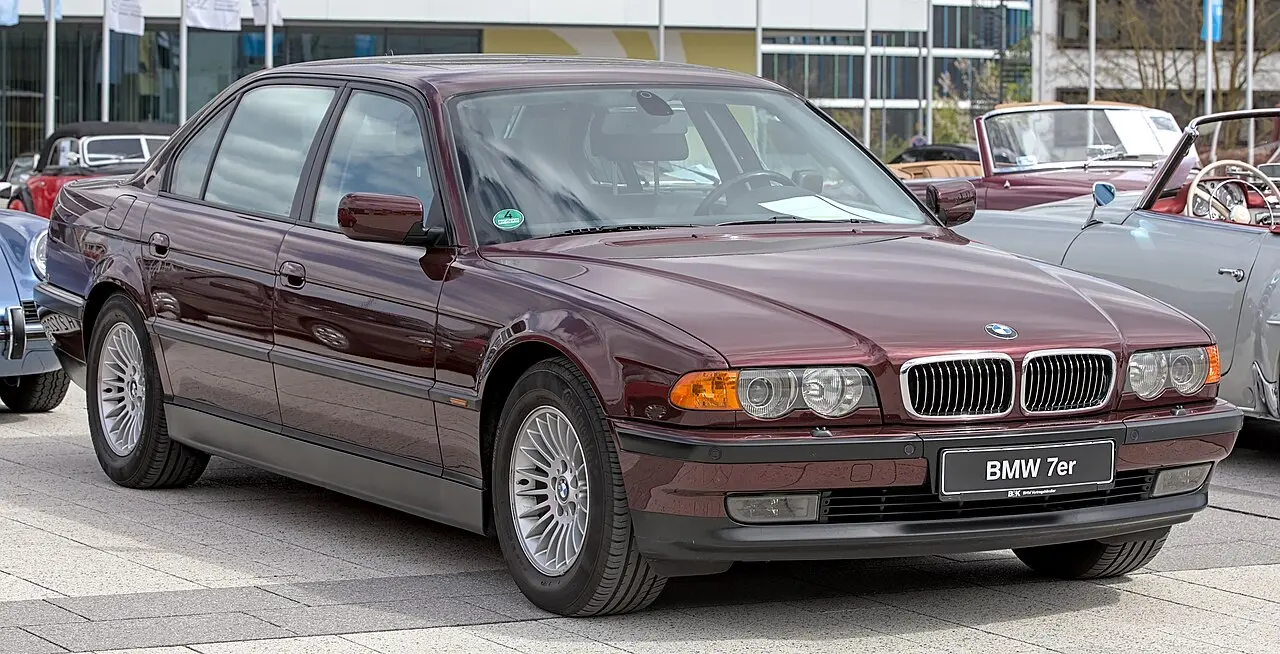
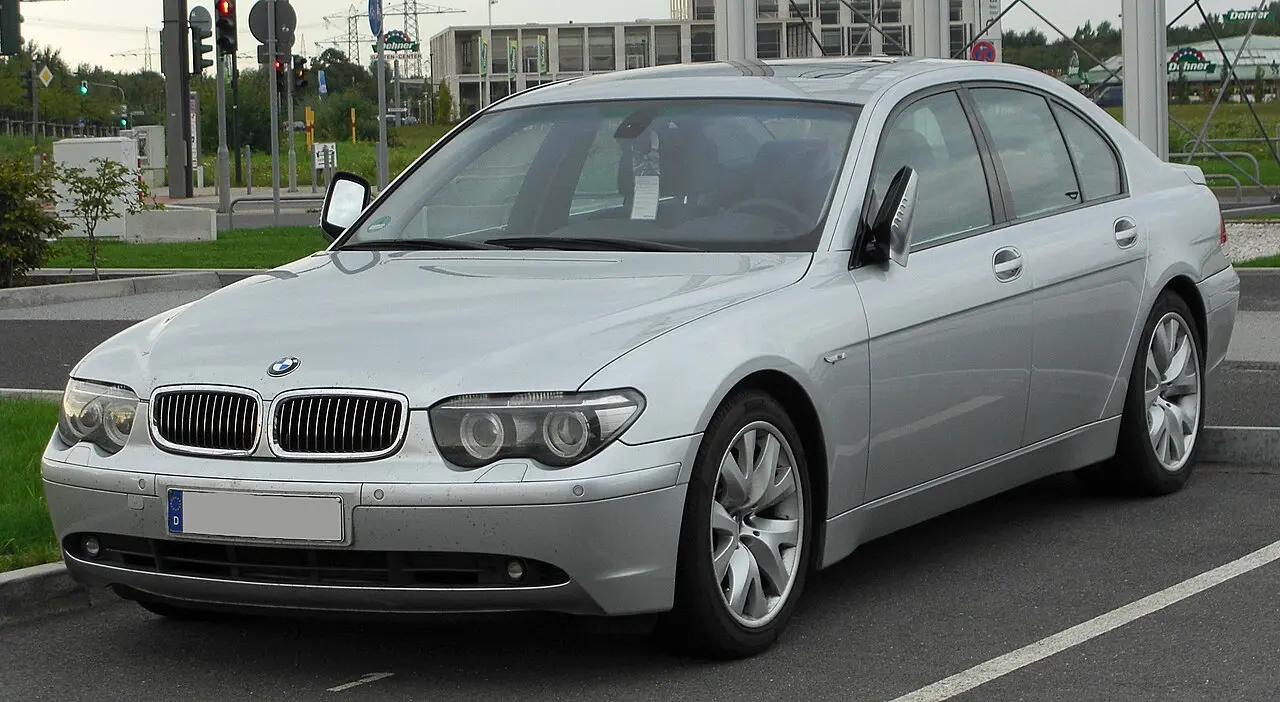
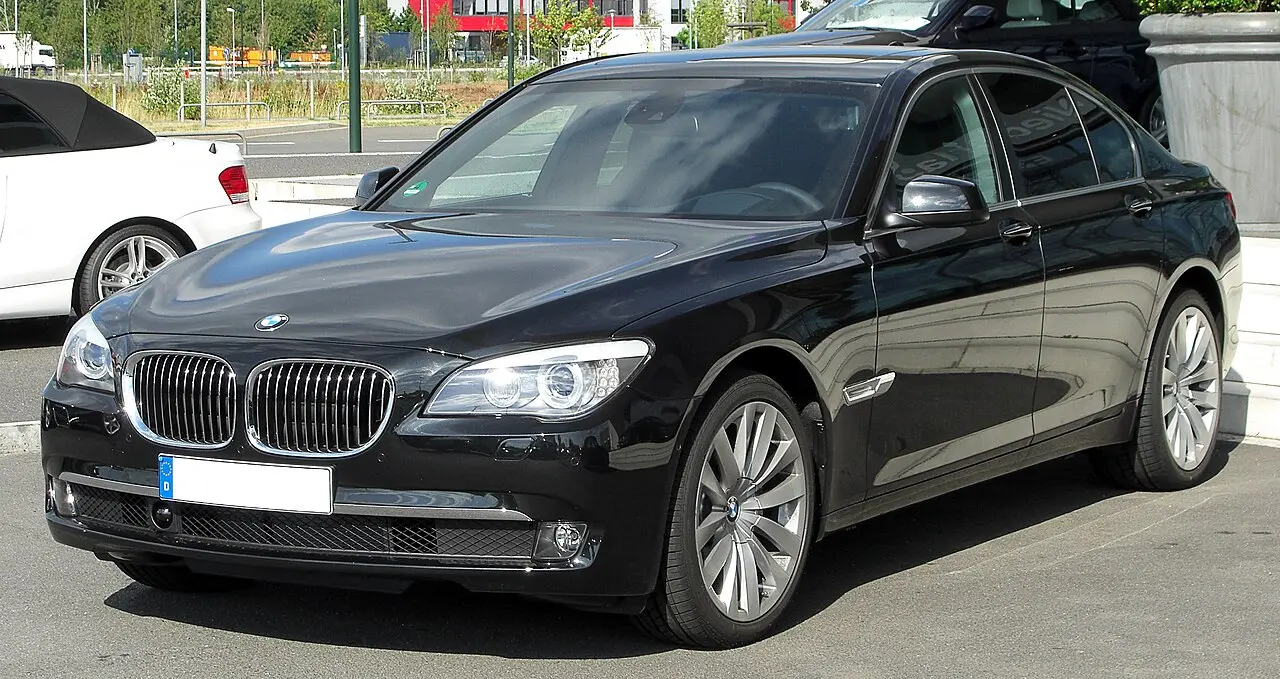
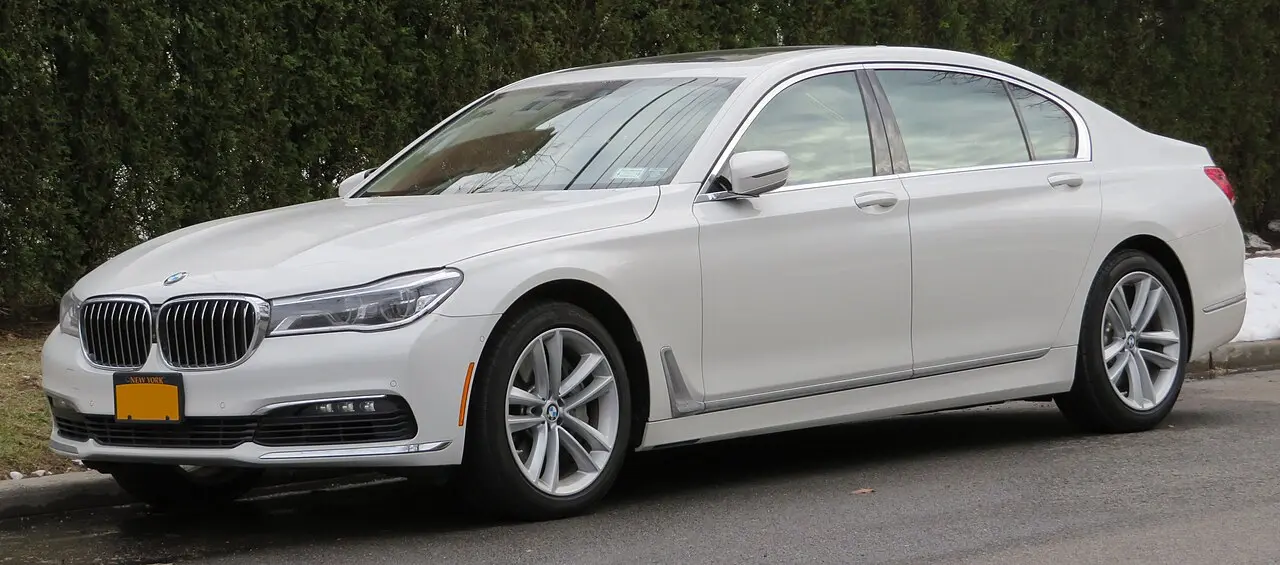
The official data lists 505 versions of the BMW 7 Series (1984–2027), in the European Union, the United Kingdom, France, the United States, and Canada. Each market publishes its own figures, measured on its own test procedure.
At a glance
Years in the data
1984–2027
Markets
European Union, United Kingdom, France, United States, Canada
Engines
2.0 L to 6.6 L
Power
155 kW (211 PS) to 441 kW (600 PS)
Fuels
Diesel, Petrol, Hybrid, Plug-in hybrid, Electric
Lowest consumption (United Kingdom)
4.6 L/100 km (NEDC)
Lowest consumption (European Union)
5.0 L/100 km (WLTP)
Lowest consumption (France)
5.6 L/100 km (NEDC)
Plug-in hybrid, weighted (European Union)
1.1 L/100 km (WLTP)
Plug-in hybrid, weighted (United Kingdom)
2.1 L/100 km (NEDC)
New registrations in the EU
196,477
What is the BMW 7 Series?
The BMW 7 Series is the brand’s flagship luxury saloon, with a spacious cabin and a focus on long-distance travel. Since its introduction in 1977, it has also served as a showcase for technology across BMW’s range.
The generations covered here are the third, E38 (1995–2001); fourth, E65/E66 (2002–2008); fifth, F01/F02 (2009–2015); sixth, G11/G12 (2016–2022); and seventh, G70 (2023–today). The current generation brought the all-electric i7 into the 7 Series family.
Engines and power
The 7 Series range has included petrol and diesel engines, hybrids, plug-in hybrids and, in the EU, electric versions. EU engine sizes span 2.0 L to 6.6 L, with power from 155 kW (211 PS) to 448 kW (609 PS). The UK listings cover engines from 2.0 L to 6.0 L.
How economical is the BMW 7 Series?
For petrol, diesel and hybrid versions, the lowest listed EU consumption is 5 L/100 km WLTP. The lowest EU plug-in hybrid figure is 1.1 L/100 km WLTP, a weighted value that assumes some driving is electric. In the UK, the lowest listed figures are 4.6 L/100 km NEDC for petrol, diesel and hybrid versions and 2.1 L/100 km NEDC for plug-in hybrids.
The lowest listed US figure is 8.4 L/100 km under EPA procedures, or 28 MPG combined; the lowest plug-in hybrid figure is 8.7 L/100 km. Canada’s lowest listed figure is 8.8 L/100 km on the NRCan 5-cycle test, including for plug-in hybrids. European WLTP and NEDC results, US EPA figures and Canadian 5-cycle results use different test procedures.
Where was the BMW 7 Series sold?
The 7 Series has been sold in Europe, the UK, France, the United States and Canada. EU registration figures cover 2010–2025 and total 196,477. The listed periods extend from 1984 in the US and 1995 in Canada; the UK period starts in 2000 and France’s in 2012.
Questions and answers
What kind of car is the BMW 7 Series?
It is BMW’s flagship luxury saloon, with a spacious cabin and a focus on comfort and technology.
Which generation is the current one?
The seventh generation, G70, is listed from 2023 to today.
Is there an electric 7 Series?
Yes. The seventh-generation family includes the all-electric i7.
What is the lowest listed EU plug-in hybrid consumption?
It is 1.1 L/100 km WLTP, a weighted figure that assumes some driving is electric.
Model codes: G70 · Sold in: United States, Canada, European Union, France, and United Kingdom · References: adac.de, en.wikipedia.org
European Union 27 versions
New cars registered in the EU (plus Norway and Iceland), from the European Environment Agency. Figures on the NEDC procedure until 2020 and on WLTP from 2021; versions are grouped by engine and power, with their number of registrations.
Years and version
Engine
Power
Fuel
Consumption (combined)
CO₂
Electric range
EU registrations
2025
3.0 L
210 kW (286 PS)
Hybrid
6.3 L/100 km WLTP
165 g/km
–
1,657
2025
3.0 L
230 kW (313 PS)
Plug-in hybrid
1.3 L/100 km WLTP23.8 kWh/100 km WLTP
30 g/km
78 km
850
2025
3.0 L
280 kW (381 PS)
Plug-in hybrid
1.4 L/100 km WLTP23.3 kWh/100 km WLTP
39 g/km
77 km
532
2025
3.0 L
210 kW (286 PS)
Diesel
–
–
–
224
2025
3.0 L
280 kW (381 PS)
Hybrid
–
185 g/km
–
146
2025
3.0 L
210 kW (286 PS)
Plug-in hybrid
6.3 L/100 km WLTP
166 g/km
–
115
2025
3.0 L
280 kW (381 PS)
Petrol
–
155 g/km
–
62
2025
3.0 L
220 kW (299 PS)
Hybrid
–
180 g/km
–
23
2024
3.0 L
210 kW (286 PS)
Hybrid
6.3 L/100 km WLTP
165 g/km
–
2,497
2024
3.0 L
280 kW (381 PS)
Plug-in hybrid
2.0 L/100 km WLTP24.0 kWh/100 km WLTP
27 g/km
76 km
998
2024
3.0 L
230 kW (313 PS)
Plug-in hybrid
1.9 L/100 km WLTP24.2 kWh/100 km WLTP
26 g/km
78 km
756
2024
3.0 L
280 kW (381 PS)
Petrol
6.5 L/100 km WLTP23.2 kWh/100 km WLTP
183 g/km
–
144
2024
3.0 L
230 kW (313 PS)
Petrol
6.5 L/100 km WLTP
177 g/km
–
29
2024
3.0 L
210 kW (286 PS)
Plug-in hybrid
7.3 L/100 km WLTP
165 g/km
–
14
2024
3.0 L
350 kW (476 PS)
Plug-in hybrid
–
–
71 km
14
2023
3.0 L
210 kW (286 PS)
Hybrid
6.3 L/100 km WLTP
162 g/km
–
2,423
2023
3.0 L
230 kW (313 PS)
Plug-in hybrid
1.1 L/100 km WLTP22.2 kWh/100 km WLTP
25 g/km
81 km
825
2023
3.0 L
280 kW (381 PS)
Plug-in hybrid
1.2 L/100 km WLTP22.5 kWh/100 km WLTP
26 g/km
78 km
723
2023
3.0 L
210 kW (286 PS)
Diesel
–
139 g/km
–
311
2023
3.0 L
280 kW (381 PS)
Hybrid
8.3 L/100 km WLTP
113 g/km
–
84
2023
3.0 L
230 kW (313 PS)
Hybrid
–
112 g/km
–
40
2023
3.0 L
210 kW (286 PS)
Plug-in hybrid
2.0 L/100 km WLTP18.6 kWh/100 km WLTP
49 g/km
50 km
33
2023
3.0 L
350 kW (476 PS)
Plug-in hybrid
–
–
75 km
23
2023
3.0 L
67 kW (91 PS)
Plug-in hybrid
–
164 g/km
–
20
2023
3.0 L
155 kW (211 PS)
Plug-in hybrid
1.1 L/100 km WLTP22.2 kWh/100 km WLTP
24 g/km
82 km
18
2023
3.0 L
250 kW (340 PS)
Hybrid
6.4 L/100 km WLTP
169 g/km
–
12
2023
4.4 L
390 kW (530 PS)
Petrol
10.7 L/100 km WLTP
244 g/km
–
12
United Kingdom 11 versions
New cars on sale in the UK, from the Vehicle Certification Agency. NEDC figures until 2018 and WLTP figures after; years are the editions a version appeared in.
2026750e xDrive M Sport (Northern Ireland version)
3.0 L
360 kW (489 PS)
Plug-in hybrid
8-speed automatic
16.9 kWh/100 km WLTP
76 g/km
79 km
2025–2026M760e xDrive
3.0 L
420 kW (571 PS)
Plug-in hybrid
8-speed automatic
23.5 kWh/100 km WLTP
–
80 km
2026M760e xDrive
3.0 L
420 kW (571 PS)
Plug-in hybrid
8-speed automatic
16.3 kWh/100 km WLTP
77 g/km
79 km
2025750e xDrive Excellence
3.0 L
360 kW (489 PS)
Plug-in hybrid
8-speed automatic
24.8 kWh/100 km WLTP
–
77 km
2025750e xDrive M Sport
3.0 L
360 kW (489 PS)
Plug-in hybrid
8-speed automatic
24.9 kWh/100 km WLTP
–
77 km
2025M760e xDrive
3.0 L
420 kW (571 PS)
Plug-in hybrid
8-speed automatic
24.4 kWh/100 km WLTP
–
77 km
United States 9 versions
Model years sold in the USA, from the EPA and the Department of Energy (fueleconomy.gov). MPG on the EPA test; litres per 100 km = 235.215 ÷ MPG.
Years and version
Engine
Fuel
Gearbox
Drive
Consumption (combined)
CO₂
2027SIDI & PFI; Mild Hybrid
3.0 L
Hybrid
8-speed automatic
Rear-wheel drive
26 MPG (9.0 L/100 km) EPA
214 g/km
2027SIDI & PFI; Mild Hybrid
3.0 L
Hybrid
8-speed automatic
All-wheel drive
26 MPG (9.0 L/100 km) EPA
214 g/km
2024–2026SIDI & PFI; Mild Hybrid
3.0 L
Hybrid
8-speed automatic
Rear-wheel drive
28 MPG (8.4 L/100 km) EPA
197 g/km
2024–2026SIDI & PFI; Mild Hybrid
3.0 L
Hybrid
8-speed automatic
All-wheel drive
27 MPG (8.7 L/100 km) EPA
203 g/km
2026SIDI; PHEV
3.0 L
Plug-in hybrid
8-speed automatic
All-wheel drive
24 MPG (9.8 L/100 km) EPA
81 g/km
2024–2026SIDI; Mild Hybrid
4.4 L
Hybrid
8-speed automatic
All-wheel drive
20 MPG (11.8 L/100 km) EPA
265 g/km
2025SIDI; PHEV
3.0 L
Plug-in hybrid
8-speed automatic
All-wheel drive
25 MPG (9.4 L/100 km) EPA
82 g/km
2023SIDI & PFI; Mild Hybrid
3.0 L
Hybrid
8-speed automatic
Rear-wheel drive
27 MPG (8.7 L/100 km) EPA
201 g/km
2023SIDI; Mild Hybrid
4.4 L
Hybrid
8-speed automatic
All-wheel drive
21 MPG (11.2 L/100 km) EPA
261 g/km
Canada 4 versions
Model years sold in Canada, from Natural Resources Canada fuel consumption ratings (5-cycle test).
Years and version
Engine
Fuel
Gearbox
Consumption (combined)
CO₂
Electric range
2026Full-size
3.0 L
Plug-in hybrid
8-speed automatic
9.7 L/100 km 5-cycle
81 g/km
56 km
2024–2026Full-size
4.4 L
Petrol
8-speed automatic
11.5 L/100 km 5-cycle
265 g/km
–
2024–2025Full-size
3.0 L
Plug-in hybrid
8-speed automatic
9.4 L/100 km 5-cycle
82 g/km
55 km
2023Full-size
4.4 L
Petrol
8-speed automatic
11.3 L/100 km 5-cycle
261 g/km
–
Versions outside these generations
United Kingdom 37 versions
New cars on sale in the UK, from the Vehicle Certification Agency. NEDC figures until 2018 and WLTP figures after; years are the editions a version appeared in.
Years and version
Engine
Fuel
Gearbox
Consumption (combined)
CO₂
2008730d Saloon - with particle filter
3.0 L
Diesel
6-speed automatic
7.9 L/100 km NEDC
210 g/km
2008730Ld Saloon - with particle filter
3.0 L
Diesel
6-speed automatic
8.0 L/100 km NEDC
212 g/km
2006–2008730i Saloon
3.0 L
Petrol
6-speed automatic
10.1 L/100 km NEDC
241 g/km
2006–2008730Li Saloon
3.0 L
Petrol
6-speed automatic
10.1 L/100 km NEDC
242 g/km
2006–2008740i Saloon
4.0 L
Petrol
6-speed automatic
11.2 L/100 km NEDC
267 g/km
2006–2008740Li Saloon
4.0 L
Petrol
6-speed automatic
11.2 L/100 km NEDC
268 g/km
2006–2008750i Saloon
4.8 L
Petrol
6-speed automatic
11.4 L/100 km NEDC
271 g/km
2006–2008750Li Saloon
4.8 L
Petrol
6-speed automatic
11.4 L/100 km NEDC
272 g/km
2007–2008760i Saloon · 760Li Saloon
6.0 L
Petrol
6-speed automatic
13.6 L/100 km NEDC
327 g/km
2006–2007730d Saloon · 730Ld Saloon · 730d Saloon - with particle filter and 1 more trim
3.0 L
Diesel
6-speed automatic
8.2 L/100 km NEDC
216 g/km
2006760i Saloon
6.0 L
Petrol
6-speed automatic
13.4 L/100 km NEDC
325 g/km
2006760Li Saloon
6.0 L
Petrol
6-speed automatic
13.6 L/100 km NEDC
330 g/km
2003–2004730i Saloon
3.0 L
Petrol
6-speed automatic
10.6 L/100 km NEDC
257 g/km
2003–2004730Li Saloon
3.0 L
Petrol
6-speed automatic
10.7 L/100 km NEDC
260 g/km
2003–2004730d Saloon
3.0 L
Diesel
6-speed automatic
8.5 L/100 km NEDC
227 g/km
2002–2004735i Saloon · 735i Saloon (up to February 2004 production)
3.6 L
Petrol
6-speed automatic
10.7 L/100 km NEDC
259 g/km
2003–2004735Li Saloon · 735Li Saloon (up to February 2004 production)
3.6 L
Petrol
6-speed automatic
10.9 L/100 km NEDC
263 g/km
2004735i Saloon (from March 2004 production)
3.6 L
Petrol
6-speed automatic
11.1 L/100 km NEDC
268 g/km
2004735Li Saloon (from March 2004 production)
3.6 L
Petrol
6-speed automatic
11.2 L/100 km NEDC
271 g/km
2002–2004745i Saloon · 745i Saloon (up to February 2004 production)
4.4 L
Petrol
6-speed automatic
10.9 L/100 km NEDC
263 g/km
2003–2004745Li Saloon · 745Li Saloon (up to February 2004 production)
4.4 L
Petrol
6-speed automatic
11.2 L/100 km NEDC
271 g/km
2004745Li Saloon (from March 2004 production)
4.4 L
Petrol
6-speed automatic
11.6 L/100 km NEDC
280 g/km
2004745i Saloon (from March 2004 production)
4.4 L
Petrol
6-speed automatic
11.4 L/100 km NEDC
276 g/km
2003–2004760i Saloon
6.0 L
Petrol
6-speed automatic
13.4 L/100 km NEDC
325 g/km
2003–2004760Li Saloon
6.0 L
Petrol
6-speed automatic
13.6 L/100 km NEDC
330 g/km
2001728i Saloon
2.8 L
Petrol
5-speed automatic
11.3 L/100 km NEDC
272 g/km
2001735i Saloon
3.5 L
Petrol
5-speed automatic
12.4 L/100 km NEDC
298 g/km
2001740i Saloon
4.4 L
Petrol
5-speed automatic
12.8 L/100 km NEDC
307 g/km
2001740iL Saloon
4.4 L
Petrol
5-speed automatic
13.1 L/100 km NEDC
314 g/km
2001750i Saloon
5.4 L
Petrol
5-speed automatic
13.9 L/100 km NEDC
333 g/km
2001750iL Saloon
5.4 L
Petrol
5-speed automatic
14.1 L/100 km NEDC
338 g/km
2000728i Saloon
2.8 L
Petrol
5-speed automatic
11.1 L/100 km NEDC
267 g/km
2000735i Saloon
3.5 L
Petrol
5-speed automatic
12.1 L/100 km NEDC
291 g/km
2000740i Saloon
4.4 L
Petrol
5-speed automatic
12.5 L/100 km NEDC
301 g/km
2000740iL Saloon
4.4 L
Petrol
5-speed automatic
12.8 L/100 km NEDC
306 g/km
2000750i Saloon
5.4 L
Petrol
5-speed automatic
13.6 L/100 km NEDC
327 g/km
2000750iL Saloon
5.4 L
Petrol
5-speed automatic
13.8 L/100 km NEDC
332 g/km
United States 20 versions
Model years sold in the USA, from the EPA and the Department of Energy (fueleconomy.gov). MPG on the EPA test; litres per 100 km = 235.215 ÷ MPG.
Official figures are measured on standard test procedures and differ between markets. Your consumption depends on how, where and in what conditions you drive.