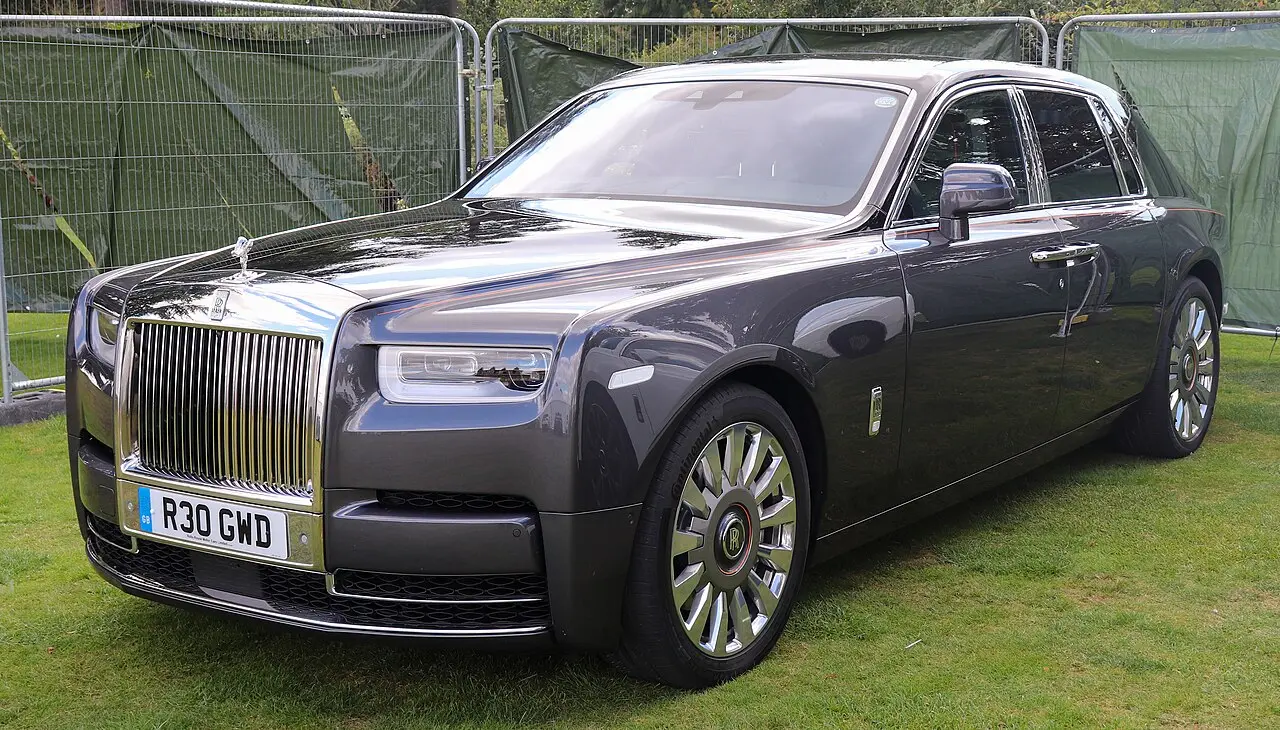
The official data lists 76 versions of the Rolls-Royce Phantom (2003–2027), in the European Union, the United Kingdom, France, the United States, and Canada. Each market publishes its own figures, measured on its own test procedure.
At a glance
Years in the data
2003–2027
Markets
European Union, United Kingdom, France, United States, Canada
Engines
6.7 L to 6.7 L
Power
338 kW (460 PS) to 571 kW (776 PS)
Fuels
Petrol
Lowest consumption (France)
14.8 L/100 km (NEDC)
Lowest consumption (United Kingdom)
14.8 L/100 km (NEDC)
Lowest consumption (Canada)
16.3 L/100 km (5-cycle)
New registrations in the EU
2,217
What is the Rolls-Royce Phantom?
The Phantom is Rolls-Royce’s flagship luxury saloon, a spacious four-door with a formal character and a cabin designed around passenger comfort. It sits at the top of the marque’s range. The generations covered here are Phantom VII and Phantom VIII.
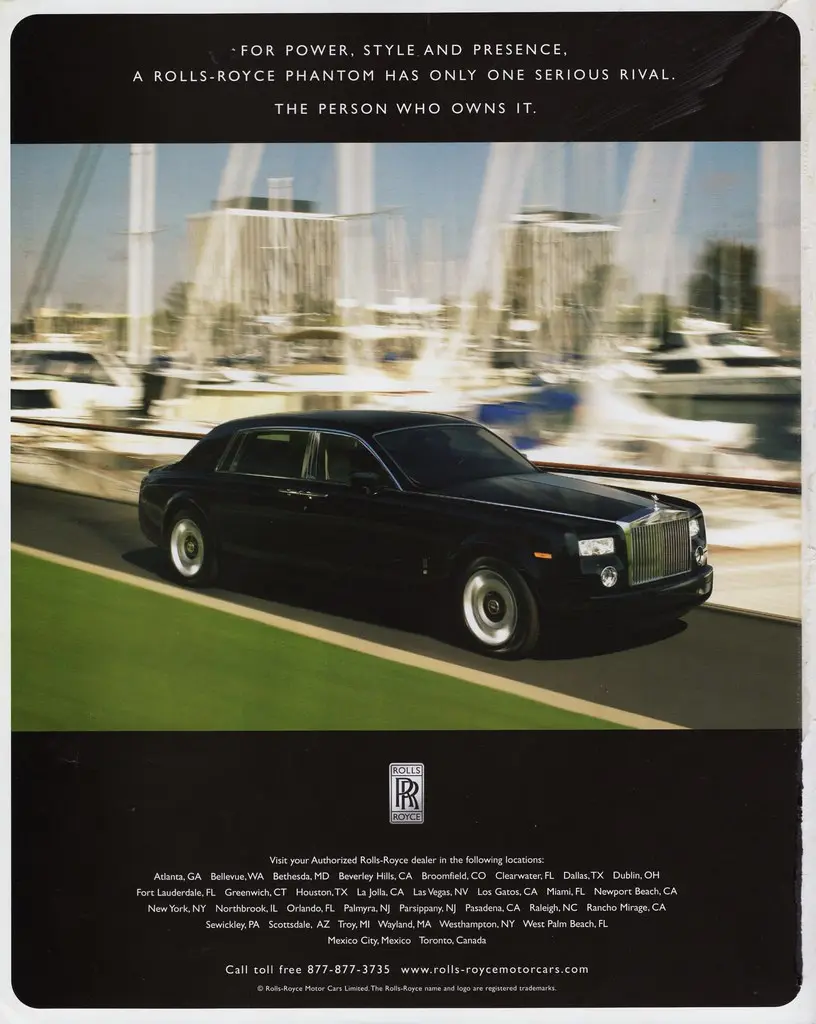
Phantom VII (RR1) ran from 2004 to 2017, establishing the modern Goodwood-era flagship. Phantom VIII (RR11) began in 2018. It introduced an all-aluminium architecture and a more contemporary design, carrying the Phantom’s established role into a new generation.
Engines and power
The listed Phantom versions use a 6.7-litre petrol engine. EU figures range from 338 kW (460 PS) to 420 kW (571 PS); French figures list 338 kW (460 PS). UK figures range from 420 kW (571 PS) to 571 kW (776 PS).
How economical is the Rolls-Royce Phantom?
The lowest listed consumption is 14.8 L/100 km in UK NEDC figures; France also lists 14.8 L/100 km under NEDC. The United States EPA figure is 16.8 L/100 km, or 14 MPG combined, and Canada’s NRCan 5-cycle figure is 16.3 L/100 km. Test procedures differ: Europe uses WLTP or NEDC, the USA uses EPA testing and Canada uses its 5-cycle procedure, so these results are not directly comparable.
Where was the Phantom sold?
Official figures cover the European Union, the United Kingdom, France, the United States and Canada. The UK series runs from 2003 to 2026; US and Canadian figures run from 2004 to 2027 and 2004 to 2026, respectively. The modern Phantom’s story is closely tied to Goodwood, where the marque’s flagship returned as a contemporary, hand-crafted saloon.
Questions and answers
What are the Phantom generations and their years?
Phantom VII (RR1) ran from 2004 to 2017. Phantom VIII (RR11) began in 2018.
What engine does the Phantom have?
The listed versions use a 6.7-litre petrol engine. EU power figures range from 338 kW (460 PS) to 420 kW (571 PS).
How much fuel does a Phantom use?
The lowest listed result is 14.8 L/100 km in UK and French NEDC figures. US EPA and Canadian 5-cycle results use different procedures.
Is the Phantom sold in North America?
Yes. Official Phantom figures are listed for both the United States and Canada.
New cars registered in the EU (plus Norway and Iceland), from the European Environment Agency. Figures on the NEDC procedure until 2020 and on WLTP from 2021; versions are grouped by engine and power, with their number of registrations.
Years and version
Engine
Power
Fuel
Consumption (combined)
CO₂
EU registrations
2025
6.7 L
420 kW (571 PS)
Petrol
15.9 L/100 km WLTP
361 g/km
18
2024
6.7 L
420 kW (571 PS)
Petrol
14.7 L/100 km WLTP
359 g/km
23
2024
6.6 L
420 kW (571 PS)
Petrol
–
–
14
2023
6.7 L
420 kW (571 PS)
Petrol
15.9 L/100 km WLTP
359 g/km
29
2023
6.6 L
420 kW (571 PS)
Petrol
–
–
10
2022
6.7 L
420 kW (571 PS)
Petrol
15.6 L/100 km WLTP
356 g/km
30
2021
6.7 L
420 kW (571 PS)
Petrol
15.5 L/100 km WLTP
353 g/km
30
2020
6.7 L
420 kW (571 PS)
Petrol
–
330 g/km
79
2019
6.7 L
420 kW (571 PS)
Petrol
–
328 g/km
180
2018
6.7 L
420 kW (571 PS)
Petrol
–
322 g/km
270
United Kingdom 10 versions
New cars on sale in the UK, from the Vehicle Certification Agency. NEDC figures until 2018 and WLTP figures after; years are the editions a version appeared in.
Years and version
Engine
Power
Fuel
Gearbox
Consumption (combined)
CO₂
2025–2026Phantom · Phantom Extended Wheelbase
6.7 L
420 kW (571 PS)
Petrol
8-speed automatic
17.8 L/100 km WLTP
365 g/km
2025–2026Phantom · Phantom Extended Wheelbase
6.7 L
420 kW (571 PS)
Petrol
8-speed automatic
18.7 L/100 km WLTP
351 g/km
2024Phantom · Phantom Extended Wheelbase
6.7 L
571 kW (776 PS)
Petrol
8-speed automatic
18.7 L/100 km WLTP
351 g/km
2024Phantom · Phantom Extended Wheelbase
6.7 L
571 kW (776 PS)
Petrol
8-speed automatic
17.8 L/100 km WLTP
365 g/km
2022–2023Phantom · Phantom Extended Wheelbase
6.7 L
420 kW (571 PS)
Petrol
8-speed automatic
15.5 L/100 km WLTP
351 g/km
2022–2023Phantom · Phantom Extended Wheelbase
6.7 L
420 kW (571 PS)
Petrol
8-speed automatic
16.2 L/100 km WLTP
365 g/km
2020–2021Phantom · Phantom Extended Wheelbase
6.7 L
420 kW (571 PS)
Petrol
8-speed automatic
15.1 L/100 km WLTP
345 g/km
2020–2021Phantom · Phantom Extended Wheelbase
6.7 L
420 kW (571 PS)
Petrol
8-speed automatic
15.9 L/100 km WLTP
362 g/km
2019Phantom · Phantom Extended Wheelbase
6.7 L
420 kW (571 PS)
Petrol
8-speed automatic
15.9 L/100 km WLTP
–
2019Phantom · Phantom Extended Wheelbase
6.7 L
420 kW (571 PS)
Petrol
8-speed automatic
15.0 L/100 km WLTP
–
United States 5 versions
Model years sold in the USA, from the EPA and the Department of Energy (fueleconomy.gov). MPG on the EPA test; litres per 100 km = 235.215 ÷ MPG.
Years and version
Engine
Fuel
Gearbox
Drive
Consumption (combined)
CO₂
2027SIDI
6.7 L
Petrol
8-speed automatic
Rear-wheel drive
13 MPG (18.1 L/100 km) EPA
408 g/km
2025–2026SIDI
6.7 L
Petrol
8-speed automatic
Rear-wheel drive
14 MPG (16.8 L/100 km) EPA
378 g/km
2023–2024SIDI
6.7 L
Petrol
8-speed automatic
Rear-wheel drive
14 MPG (16.8 L/100 km) EPA
397 g/km
2019–2022SIDI
6.7 L
Petrol
8-speed automatic
Rear-wheel drive
14 MPG (16.8 L/100 km) EPA
382 g/km
2018SIDI
6.7 L
Petrol
8-speed automatic
Rear-wheel drive
14 MPG (16.8 L/100 km) EPA
387 g/km
Canada 4 versions
Model years sold in Canada, from Natural Resources Canada fuel consumption ratings (5-cycle test).
Years and version
Engine
Fuel
Gearbox
Consumption (combined)
CO₂
2025–2026Full-size
6.7 L
Petrol
8-speed automatic
16.4 L/100 km 5-cycle
379 g/km
2023–2024Full-size
6.7 L
Petrol
8-speed automatic
17.0 L/100 km 5-cycle
397 g/km
2019–2022Full-size
6.7 L
Petrol
8-speed automatic
16.3 L/100 km 5-cycle
382 g/km
2018Full-size
6.7 L
Petrol
8-speed automatic
16.6 L/100 km 5-cycle
387 g/km
Versions outside these generations
United Kingdom 1 version
New cars on sale in the UK, from the Vehicle Certification Agency. NEDC figures until 2018 and WLTP figures after; years are the editions a version appeared in.
Years and version
Engine
Fuel
Gearbox
Consumption (combined)
CO₂
2003–2004Rolls-Royce Phantom
6.7 L
Petrol
6-speed automatic
15.9 L/100 km NEDC
385 g/km
Official figures are measured on standard test procedures and differ between markets. Your consumption depends on how, where and in what conditions you drive.