

Land Rover Range Rover V
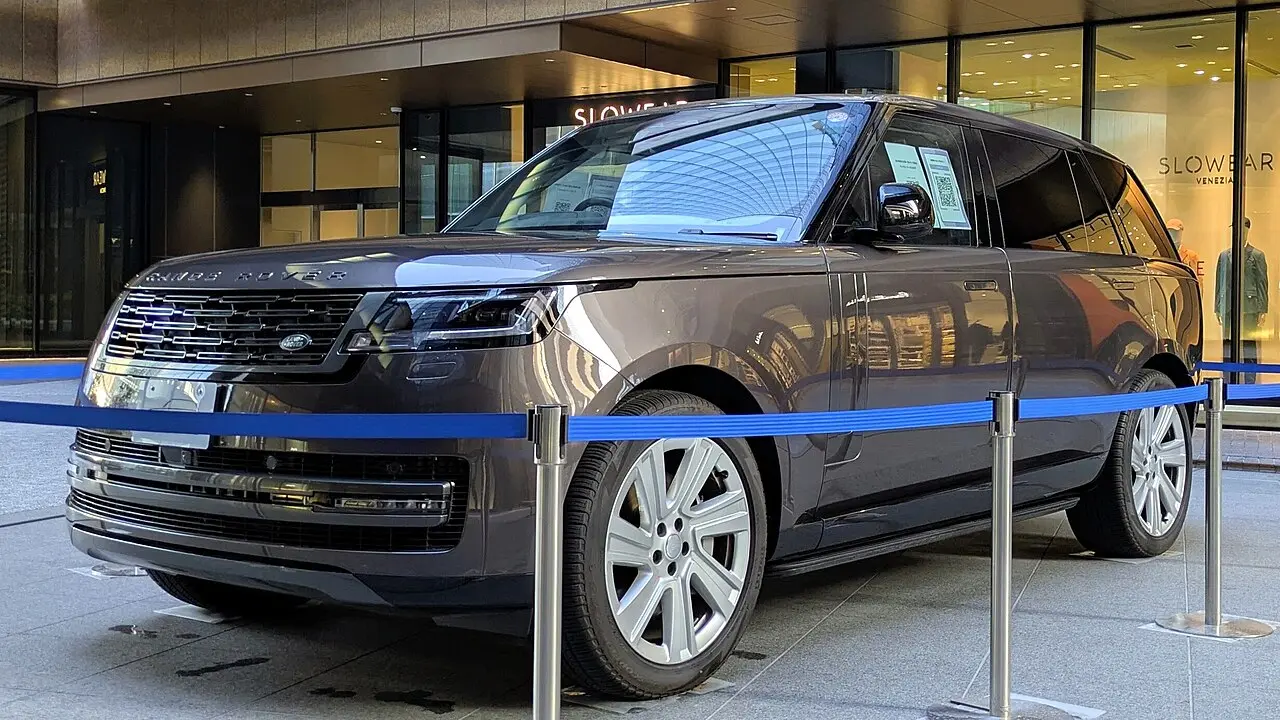
The Land Rover Range Rover V (since 2022): dimensions, weights, reliability and the official figures of its 32 versions in the European Union, the United Kingdom, the United States, and Canada.
Model codes: L460
Dimensions, weights and capacity
| Specification | Europe | North America | Wikipedia |
|---|---|---|---|
| Dimensions | |||
| Length | 5,050–5,250 mm RDW | 5,050–5,250 mm TC | 5,052–5,252 mm |
| Width | 2,000 mm RDW | 2,050–2,070 mm TC | 2,047–2,048 mm |
| Height | 1,870 mm RDW | 1,840–1,870 mm TC | 1,870 mm |
| Wheelbase | 3,000–3,200 mm RDW | 3,000–3,200 mm TC | 2,997–3,197 mm |
| Front track | 1,702 mm ASTRA | 1,690 mm TC | – |
| Rear track | 1,704 mm ASTRA | 1,680 mm TC | – |
| Weights and towing | |||
| Kerb weight | 2,485–2,710 kg RDW | 2,451–2,626 kg TC | 2,454–2,885 kg |
| Mass in running order | 2,585–2,810 kg RDW | – | – |
| Gross vehicle weight | 3,350–3,480 kg RDW | – | – |
| Towing, braked trailer | 2,500–3,500 kg RDW | – | – |
| Towing, unbraked trailer | 750 kg RDW | – | – |
| Seats and space | |||
| Seats | 5 RDW | – | – |
| Doors | 5 RDW | – | – |
| Performance | |||
| Top speed | 225–250 km/h RDW | – | 206 km/h |
| Torque | 550 Nm ASTRA | – | – |
| Electric motor power | – | 160 kW NRCan | – |
| Electric | |||
| Charging time at 240 V | – | 4.0 h EPA | – |
Tyre sizes (most common first): 275/50R21, 275/55R20, 285/45R22, 255/60R20
Ranges cover the generation’s versions and body styles; European and North American versions can differ. Sources: RDW type approvals (Netherlands), Transport Canada vehicle specifications, Wikipedia (en, fr), ASTRA type approvals (Switzerland), Natural Resources Canada, US EPA fuel economy data, Traficom type approvals (Finland). Wikipedia figures are used under CC BY-SA 4.0.
Reliability and owner reports
Owner complaints to NHTSA (US)
46 complaints for model years 2022–2025. 5 crashes · 2 fires · 16 injuries · 2 deaths
Complaints are reported by owners and not checked by NHTSA; they are not adjusted for how many cars were sold, so popular models have more. NHTSA owner complaints
All 32 versions of the Land Rover Range Rover V
Show all 32 versions
European Union 22 versions
New cars registered in the EU (plus Norway and Iceland), from the European Environment Agency. Figures on the NEDC procedure until 2020 and on WLTP from 2021; versions are grouped by engine and power, with their number of registrations.
| Years and version | Engine | Power | Fuel | Consumption (combined) | CO₂ | Electric range | EU registrations |
|---|---|---|---|---|---|---|---|
| 2022–2025 | 3.0 L | 294 kW (400 PS) | Plug-in hybrid | 0.8–2.4 L/100 km WLTP28.7–29.4 kWh/100 km WLTP | 18–25 g/km | 111–116 km | 11,676 |
| 2022–2025 | 3.0 L | 258 kW (351 PS) | Hybrid | 7.7–8.1 L/100 km WLTP | 202–211 g/km | – | 4,579 |
| 2023–2025 | 4.4 L | 390 kW (530 PS) | Hybrid | 11.7–11.8 L/100 km WLTP | 266–267 g/km | – | 1,549 |
| 2023–2025 | 4.4 L | 452 kW (615 PS) | Hybrid | 11.8 L/100 km WLTP | 267–268 g/km | – | 681 |
| 2022–2025 | 3.0 L | 183 kW (249 PS) | Hybrid | 7.5–7.9 L/100 km WLTP | 198–208 g/km | – | 937 |
| 2022–2025 | 3.0 L | 221 kW (300 PS) | Hybrid | 7.6–8.1 L/100 km WLTP | 199–214 g/km | – | 906 |
| 2022–2025 | 3.0 L | 258 kW (351 PS) | Diesel | 7.6–8.0 L/100 km WLTP | 201–215 g/km | – | 92 |
| 2025 | 3.0 L | 258 kW (351 PS) | Plug-in hybrid | 7.6 L/100 km WLTP | 201 g/km | – | 47 |
| 2022–2025 | 4.4 L | 390 kW (530 PS) | Petrol | 11.7 L/100 km WLTP | 265–266 g/km | – | 2,331 |
| 2022–2025 | 3.0 L | 294 kW (400 PS) | Hybrid | 9.7–10.3 L/100 km WLTP | 223–233 g/km | – | 524 |
| 2025 | 4.4 L | 390 kW (530 PS) | Plug-in hybrid | 11.8 L/100 km WLTP | 266 g/km | – | 16 |
| 2023 | 3.0 L | 294 kW (400 PS) | Plug-in hybrid | 0.9 L/100 km WLTP29.1 kWh/100 km WLTP | 19 g/km | 112 km | 67 |
| 2022–2023 | 2.0 L | 221 kW (300 PS) | Plug-in hybrid | 2.2–4.9 L/100 km WLTP22.4–25.7 kWh/100 km WLTP | 49–79 g/km | 42–53 km | 92 |
| 2023 | 3.0 L | 258 kW (351 PS) | Hybrid | 8.0 L/100 km WLTP | 209 g/km | – | 18 |
| 2023 | 3.0 L | 67 kW (91 PS) | Hybrid | 7.9 L/100 km WLTP | 206 g/km | – | 11 |
| 2022 | 5.0 L | 386 kW (525 PS) | Petrol | 13.7 L/100 km WLTP | 319 g/km | – | 51 |
| 2022 | 2.0 L | 184 kW (250 PS) | Petrol | 7.7 L/100 km WLTP | 224 g/km | – | 16 |
| 2022 | 3.0 L | 258 kW (351 PS) | Hybrid | – | 208 g/km | – | 15 |
| 2022 | 3.0 L | 294 kW (400 PS) | Petrol | 10.0 L/100 km WLTP | 226 g/km | – | 14 |
| 2022 | 5.0 L | 423 kW (575 PS) | Petrol | 12.7 L/100 km WLTP | 331 g/km | – | 14 |
| 2022 | 5.0 L | 415 kW (564 PS) | Petrol | 14.8 L/100 km WLTP | 335 g/km | – | 11 |
| 2022 | 2.0 L | 150 kW (204 PS) | Hybrid | 5.3 L/100 km WLTP | 178 g/km | – | 10 |
United Kingdom 2 versions
New cars on sale in the UK, from the Vehicle Certification Agency. NEDC figures until 2018 and WLTP figures after; years are the editions a version appeared in.
| Years and version | Engine | Power | Fuel | Gearbox | Consumption (combined) | CO₂ |
|---|---|---|---|---|---|---|
| 20243.0 i6 Petrol 400PS AWD Auto SWB | 3.0 L | 400 kW (544 PS) | Petrol | 8-speed automatic | 10.6–11.3 L/100 km WLTP | 240–255 g/km |
| 20243.0 i6 Petrol 400PS AWD Auto LWB | 3.0 L | 400 kW (544 PS) | Petrol | 8-speed automatic | 10.8–11.4 L/100 km WLTP | 245–258 g/km |
United States 4 versions
Model years sold in the USA, from the EPA and the Department of Energy (fueleconomy.gov). MPG on the EPA test; litres per 100 km = 235.215 ÷ MPG.
| Years and version | Engine | Fuel | Gearbox | Drive | Consumption (combined) | CO₂ |
|---|---|---|---|---|---|---|
| 2022–2027SIDI; Mild Hybrid | 3.0 L | Hybrid | 8-speed automatic | Four-wheel drive | 20–22 MPG (10.7–11.8 L/100 km) EPA | 254–277 g/km |
| 2024–2027SIDI; Mild Hybrid | 4.4 L | Hybrid | 8-speed automatic | Four-wheel drive | 18–19 MPG (12.4–13.1 L/100 km) EPA | 296–311 g/km |
| 2023–2025SIDI; PHEV | 3.0 L | Plug-in hybrid | 8-speed automatic | Four-wheel drive | 21 MPG (11.2 L/100 km) EPA | 63–66 g/km |
| 2022–2023SIDI · SIDI; SV | 4.4 L | Petrol | 8-speed automatic | Four-wheel drive | 18 MPG (13.1 L/100 km) EPA | 314–316 g/km |
Canada 4 versions
Model years sold in Canada, from Natural Resources Canada fuel consumption ratings (5-cycle test).
| Years and version | Engine | Fuel | Gearbox | Consumption (combined) | CO₂ | Electric range |
|---|---|---|---|---|---|---|
| 2022–2026Sport utility vehicle: Standard | 4.4 L | Petrol | 8-speed automatic | 12.6–13.3 L/100 km 5-cycle | 296–316 g/km | – |
| 2025Sport utility vehicle: Standard | 3.0 L | Plug-in hybrid | 8-speed automatic | 11.0 L/100 km 5-cycle | 63 g/km | 85 km |
| 2022–2025Sport utility vehicle: Standard | 3.0 L | Petrol | 8-speed automatic | 11.3–11.7 L/100 km 5-cycle | 265–276 g/km | – |
| 2022Sport utility vehicle: Standard | 5.0 L | Petrol | 8-speed automatic | 15.5 L/100 km 5-cycle | 365 g/km | – |
Similar models from other brands




Official figures are measured on standard test procedures and differ between markets. Your consumption depends on how, where and in what conditions you drive.