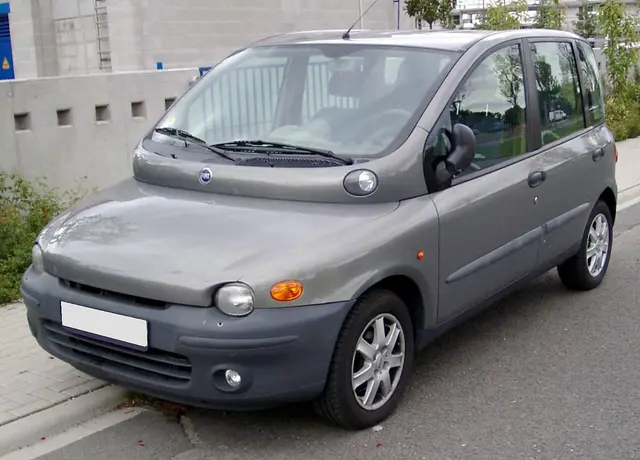
The official data lists 101 versions of the Kia Carens (2000 - 2019), in the European Union, the United Kingdom, and France. Each market publishes its own figures, measured on its own test procedure.
At a glance
Years in the data
2000 - 2019
Markets
European Union, United Kingdom, France
Engines
1.6 L to 2.0 L
Power
85 kW (116 PS) to 122 kW (166 PS)
Fuels
Diesel, Petrol, LPG
Lowest consumption (United Kingdom)
4.2 L/100 km (NEDC)
Lowest consumption (France)
4.7 L/100 km (NEDC)
New registrations in the EU
241,949
What is the Kia Carens?
The Carens is a compact MPV with a taller, more flexible cabin than a conventional hatchback. Kia presented the third-generation model as a family car with up to seven seats. It focused on carrying passengers and luggage in a compact footprint.
The Carens carried that practical role through several generations. It was sold in the UK from 2000 to 2018, while EU registrations span 2010 to 2019.
Carens generations
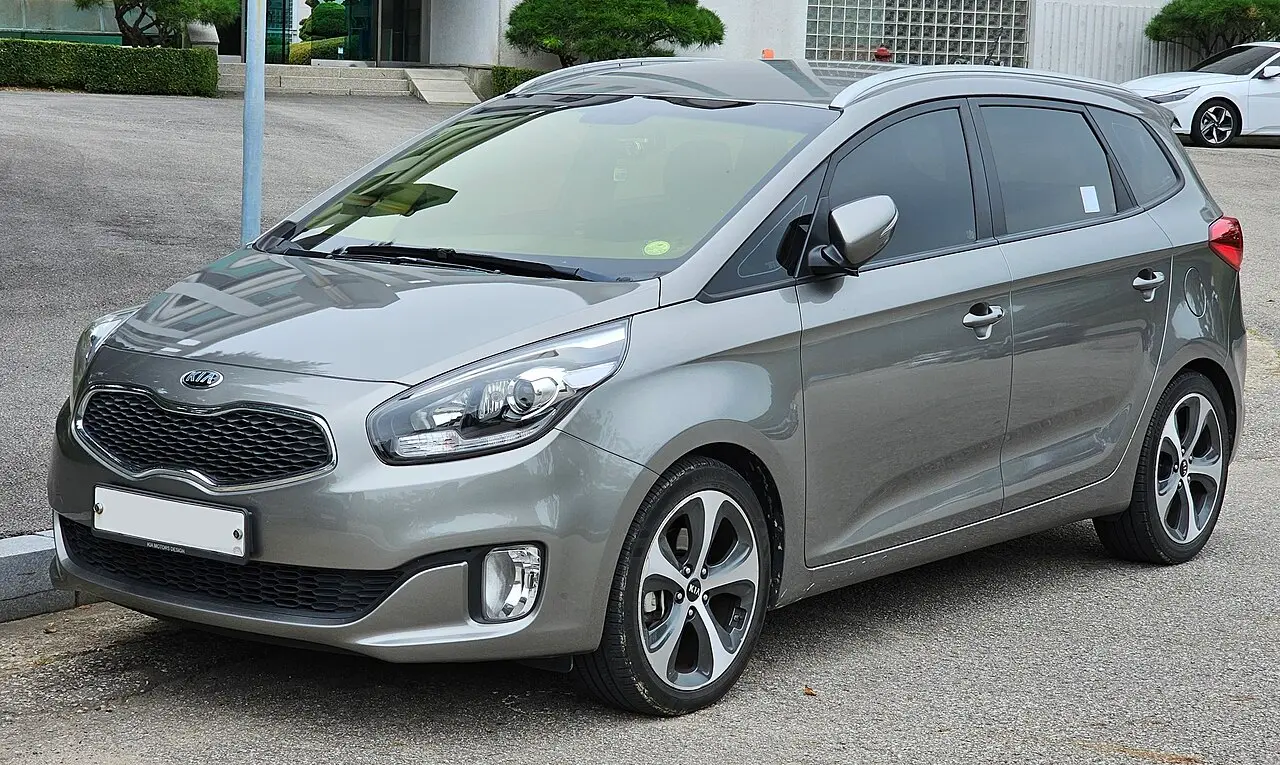
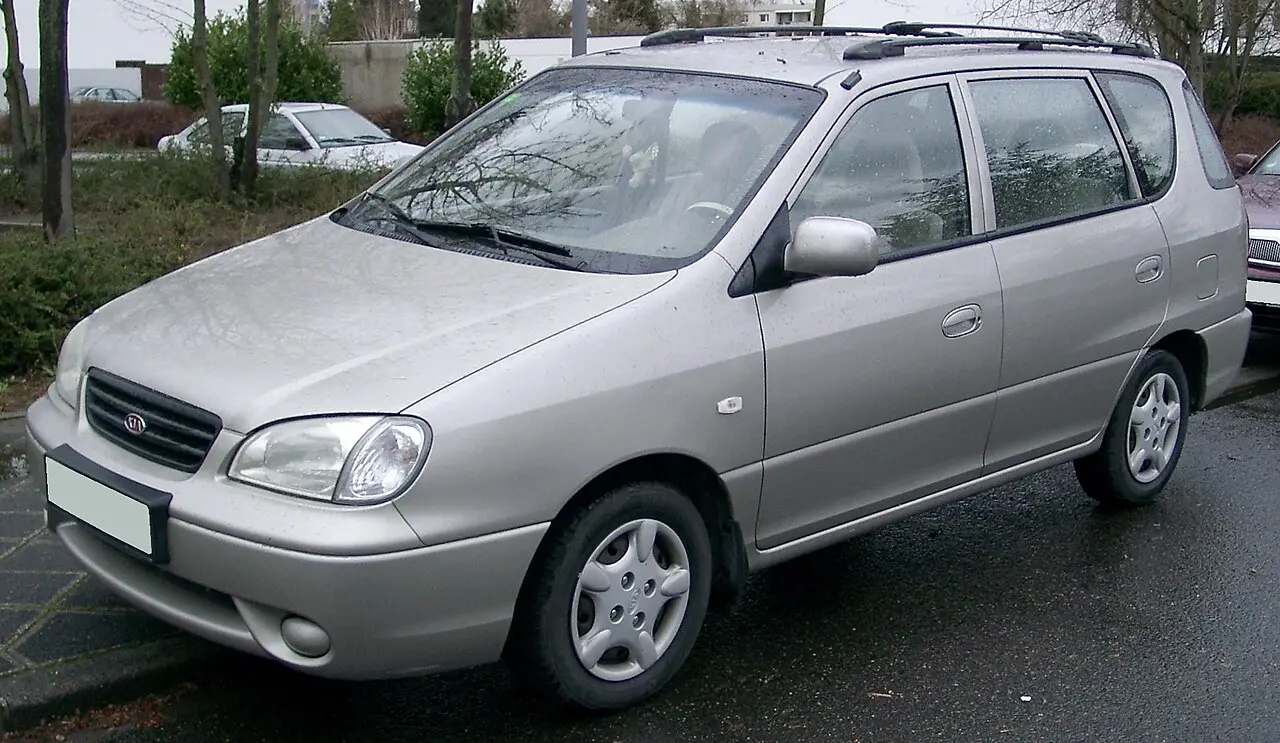
The first generation (FC) ran from 2000 to 2002, followed by the second (FJ) from 2002 to 2006. The third generation (UN) covered 2006 to 2013, and the fourth (RP) followed from 2013 to 2018 in Europe and the UK.
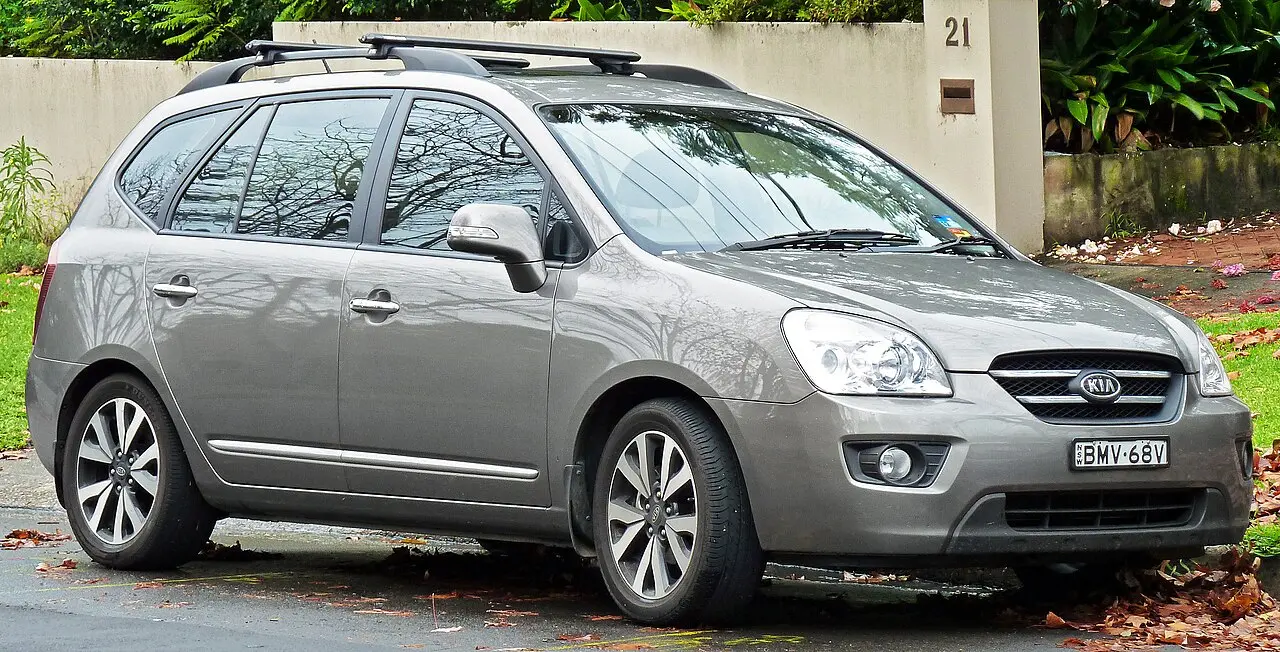
The third-generation Carens had compact MPV proportions. The fourth kept the family-car role with a more streamlined look. Across its generations, the model offered a practical cabin and, in some versions, extra seating.
Engines and power
In the EU, the Carens had engines from 1.6 L to 2.0 L, with petrol, diesel, LPG and other fuel types. Power ranged from 85 kW (116 PS) to 122 kW (166 PS). UK figures cover 1.6 L to 2.0 L petrol and diesel models, rated from 85 kW (116 PS) to 104 kW (141 PS). French figures list petrol and diesel versions from 85 kW (116 PS) to 100 kW (136 PS).
Fuel consumption and registrations
The lowest listed UK consumption is 4.2 L/100 km on the NEDC test. The French low is 4.7 L/100 km, also on NEDC. These are official test results; everyday consumption varies. EU registrations total 241,949 from 2010 to 2019. Among the leading configurations were 1.7 L diesels rated at 85 kW (116 PS) in 2015 and 104 kW (141 PS) in 2016.
The UK and French consumption figures use the NEDC procedure.
Questions and answers
Was the Kia Carens a seven-seater?
Kia described the third-generation Carens as offering up to seven seats, though seating depended on version.
What engines were available?
EU versions span 1.6 L to 2.0 L engines, with petrol, diesel, LPG and other fuel types. UK versions include petrol and diesel.
What is the lowest listed fuel consumption?
The lowest listed figure is 4.2 L/100 km for UK versions on the NEDC test.
When was the Carens sold in Europe?
EU registrations span 2010 to 2019, UK figures span 2000 to 2018, and French figures cover 2013 to 2015.
The photo shows the Kia Rondo, the same car under another name.Photo: OSX / Wikimedia Commons · Public domain
Model codes: UN · Sold in: European Union and United Kingdom · References: adac.de
At a glance: Length 4,490 - 4,550 mm · Kerb weight 1,322 - 1,447 kg · Top speed 181 - 190 km/h · MOT first-time pass at 13 years and older: 60.3% (UK average 69.2%) Specifications, reliability and all versions
Model codes: RP · Sold in: European Union, United Kingdom, and France · References: adac.de, autobild.de
At a glance: Length 4,530 mm · Kerb weight 1,383 - 1,481 kg · Top speed 185 - 193 km/h · MOT first-time pass at 6 - 8 years: 82.0% (UK average 86.4%) Specifications, reliability and all versions
Show all 55 versions
European Union 11 versions
New cars registered in the EU (plus Norway and Iceland), from the European Environment Agency. Figures on the NEDC procedure until 2020 and on WLTP from 2021; versions are grouped by engine and power, with their number of registrations.
Years and version
Engine
Power
Fuel
CO₂
EU registrations
2014 - 2019
1.7 L
85 kW (116 PS)
Diesel
120 - 129 g/km
88,770
2014 - 2019
1.6 L
99 kW (135 PS)
Petrol
147 - 157 g/km
59,286
2015 - 2019
1.7 L
104 kW (141 PS)
Diesel
122 - 129 g/km
37,168
2015 - 2019
2.0 L
121 kW (165 PS)
Petrol
173 - 182 g/km
1,454
2017
1.6 L
Not listed
Diesel
150 g/km
648
2017
1.7 L
-
Diesel
117 g/km
14
2014 - 2016
1.7 L
100 kW (136 PS)
Diesel
141 - 142 g/km
14,208
2016
1.6 L
99 kW (135 PS)
LPG
150 g/km
556
2014 - 2015
2.0 L
122 kW (166 PS)
Petrol
176 - 178 g/km
812
2015
1.6 L
99 kW (135 PS)
Diesel
143 g/km
12
2014
-
Not listed
Diesel
146 g/km
24
United Kingdom 12 versions
New cars on sale in the UK, from the Vehicle Certification Agency. NEDC figures until 2018 and WLTP figures after; years are the editions a version appeared in.
New cars registered in the EU (plus Norway and Iceland), from the European Environment Agency. Figures on the NEDC procedure until 2020 and on WLTP from 2021; versions are grouped by engine and power, with their number of registrations.
Years and version
Engine
Power
Fuel
CO₂
EU registrations
2013
1.7 L
85 kW (116 PS)
Diesel
129 g/km
11,314
2013
1.7 L
100 kW (136 PS)
Diesel
139 g/km
6,206
2013
1.6 L
99 kW (135 PS)
Petrol
158 g/km
6,020
2013
1.7 L
Not listed
Other fuel
134 g/km
3,234
2013
1.6 L
Not listed
Other fuel
158 g/km
830
2013
2.0 L
122 kW (166 PS)
Petrol
179 g/km
706
2013
-
Not listed
Petrol
169 g/km
18
2013
1.6 L
Not listed
Other fuel
149 g/km
14
2013
-
Not listed
Diesel
144 g/km
10
United Kingdom 7 versions
New cars on sale in the UK, from the Vehicle Certification Agency. NEDC figures until 2018 and WLTP figures after; years are the editions a version appeared in.
4 official safety recalls for the Kia Carens from NHTSA (United States), DVSA (United Kingdom) and the EU Safety Gate, newest first. Recall repairs are normally free at the maker’s dealers.
Brake control unit may overheat2009 - 2018
Brake light switch fault may affect brake lights2008 - 2009
Brake lights may not operate2006
ABS programming error may reduce braking force2002 - 2003
Official figures are measured on standard test procedures and differ between markets. Your consumption depends on how, where and in what conditions you drive.