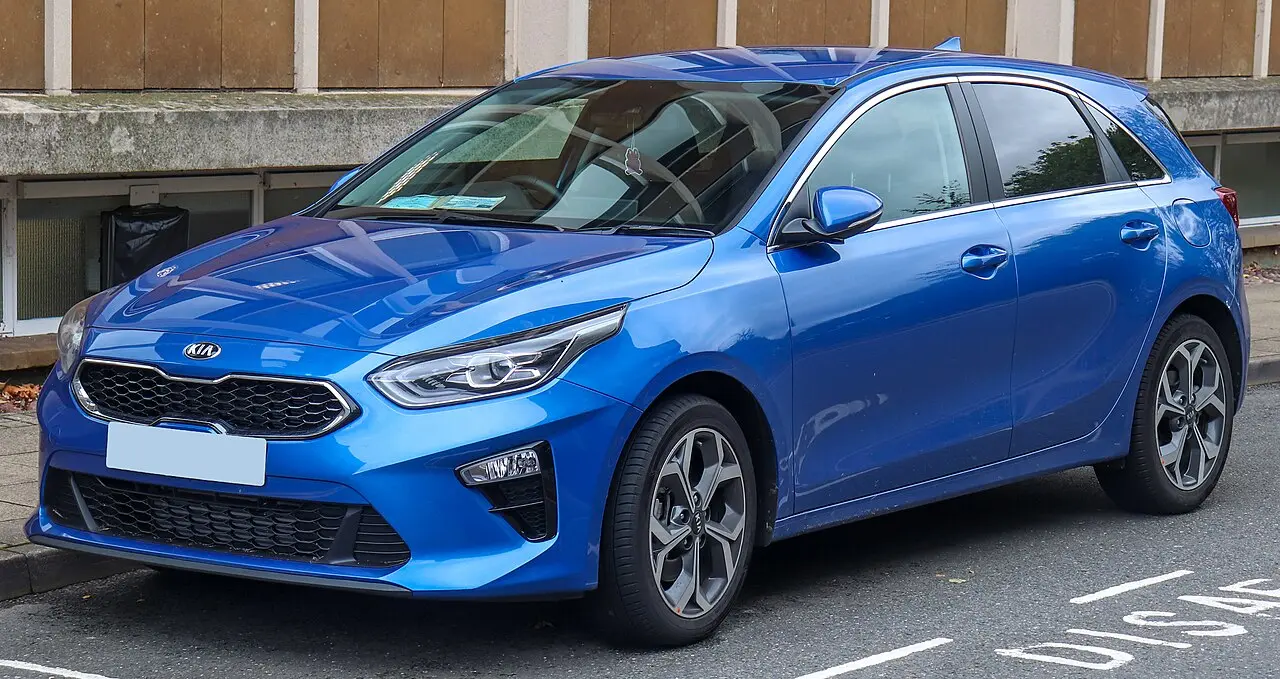
The official data lists 136 versions of the Kia XCeed (2019–2026), in the European Union, the United Kingdom, and France. Each market publishes its own figures, measured on its own test procedure.
At a glance
Years in the data
2019–2026
Markets
European Union, United Kingdom, France
Engines
1.0 L to 1.6 L
Power
74 kW (101 PS) to 160 kW (218 PS)
Fuels
Petrol, Plug-in hybrid, Hybrid, LPG, Diesel
Lowest consumption (European Union)
1.3 L/100 km (WLTP)
Lowest consumption (France)
4.9 L/100 km (WLTP)
Lowest consumption (United Kingdom)
5.1 L/100 km (WLTP)
Plug-in hybrid, weighted (United Kingdom)
1.4 L/100 km (WLTP)
Plug-in hybrid, weighted (European Union)
1.5 L/100 km (WLTP)
New registrations in the EU
315,255
What is the Kia XCeed?
The Kia XCeed is a compact crossover that combines a raised stance with hatchback-like proportions. It joined the Ceed family as a distinct body style, offering a higher driving position and practical cabin space in a compact shape.
The first generation began in 2019. Kia’s European design centre in Frankfurt developed its coupé-inspired silhouette. The range includes conventional engines and plug-in hybrid versions, depending on market.
Engines and power
In EU registration figures, the XCeed spans 1.0- to 1.6-litre engines and power from 74 kW (101 PS) to 150 kW (204 PS). The listings include petrol, hybrid, LPG, plug-in hybrid and diesel versions. The UK range covers 1.0 to 1.6 litres, with outputs from 85 kW (116 PS) to 160 kW (218 PS). Listed French versions use 1.0- to 1.6-litre engines and produce 77 kW (105 PS) to 118 kW (160 PS).
The leading EU registration specification in 2020 was a 1.4-litre petrol with 103 kW (140 PS). A 1.6-litre plug-in hybrid listed at 77 kW (105 PS) was among the leading specifications in 2021.
Fuel consumption and markets
The lowest listed non-plug-in consumption is 1.3 L/100 km in the EU on WLTP, 5.1 L/100 km in the UK on WLTP, and 4.9 L/100 km in France on WLTP. Listed plug-in hybrid weighted figures are 1.5 L/100 km in the EU and 1.4 L/100 km in the UK, also on WLTP. Those figures assume part of the driving is electric.
Official EU registration figures run from 2019 to 2025 and total 315,255 registrations. UK VCA listings cover 2019 to 2026, while the France ADEME listing covers 2026.
Questions and answers
What kind of car is the Kia XCeed?
It is a compact crossover with a raised stance and hatchback-like proportions.
When did the XCeed first appear?
Its first generation began in 2019.
What is the lowest listed XCeed consumption?
The lowest listed non-plug-in figure is 1.3 L/100 km in the EU on WLTP; the EU plug-in hybrid weighted figure is 1.5 L/100 km.
Where is the XCeed listed?
Listings cover EU registrations, UK VCA figures and France ADEME figures.
New cars registered in the EU (plus Norway and Iceland), from the European Environment Agency. Figures on the NEDC procedure until 2020 and on WLTP from 2021; versions are grouped by engine and power, with their number of registrations.
Years and version
Engine
Power
Fuel
Consumption (combined)
CO₂
Electric range
EU registrations
2025
1.5 L
103 kW (140 PS)
Petrol
6.3 L/100 km WLTP
142 g/km
–
7,321
2024–2025
1.5 L
103 kW (140 PS)
Hybrid
6.1 L/100 km WLTP
139 g/km
–
5,866
2024–2025
1.0 L
74 kW (101 PS)
Petrol
6.0 L/100 km WLTP
136 g/km
–
4,172
2025
1.0 L
73 kW (99 PS)
Petrol
6.0 L/100 km WLTP
136 g/km
–
2,269
2025
1.6 L
110 kW (150 PS)
Petrol
6.6 L/100 km WLTP
150 g/km
–
1,918
2025
1.0 L
74 kW (101 PS)
LPG
6.0 L/100 km WLTP
137 g/km
–
584
2025
1.6 L
77 kW (105 PS)
Plug-in hybrid
1.5 L/100 km WLTP12.4 kWh/100 km WLTP
33 g/km
48 km
544
2025
1.0 L
84 kW (114 PS)
Hybrid
6.0 L/100 km WLTP
136 g/km
–
533
2025
1.6 L
132 kW (179 PS)
Petrol
6.6 L/100 km WLTP
151 g/km
–
496
2025
1.0 L
84 kW (114 PS)
Petrol
6.1 L/100 km WLTP
137 g/km
–
247
2025
1.0 L
85 kW (116 PS)
Hybrid
6.1 L/100 km WLTP
138 g/km
–
245
2025
1.0 L
85 kW (116 PS)
Petrol
6.1 L/100 km WLTP
138 g/km
–
187
2025
1.6 L
100 kW (136 PS)
Hybrid
5.0 L/100 km WLTP
130 g/km
–
58
2025
1.5 L
118 kW (160 PS)
Hybrid
6.2 L/100 km WLTP
140 g/km
–
40
2025
1.5 L
103 kW (140 PS)
Plug-in hybrid
–
137 g/km
–
39
2025
1.5 L
118 kW (160 PS)
Petrol
6.2 L/100 km WLTP
141 g/km
–
28
2025
1.0 L
85 kW (116 PS)
Plug-in hybrid
–
137 g/km
–
23
2025
1.5 L
117 kW (159 PS)
Petrol
6.2 L/100 km WLTP
141 g/km
–
21
2025
1.0 L
88 kW (120 PS)
Petrol
6.0 L/100 km WLTP
135 g/km
–
17
2022–2024
1.0 L
88 kW (120 PS)
Petrol
6.0 L/100 km WLTP
136 g/km
–
18,717
2023–2024
1.6 L
77 kW (105 PS)
Plug-in hybrid
1.5 L/100 km WLTP12.7 kWh/100 km WLTP
35 g/km
45 km
7,973
2024
1.5 L
103 kW (140 PS)
Petrol
6.3 L/100 km WLTP
142 g/km
–
6,535
2024
1.5 L
118 kW (160 PS)
Petrol
6.2 L/100 km WLTP
141 g/km
–
5,379
2022–2024
1.6 L
150 kW (204 PS)
Petrol
7.1 L/100 km WLTP
161 g/km
–
3,270
2024
1.6 L
100 kW (136 PS)
Hybrid
4.9 L/100 km WLTP
129 g/km
–
1,708
2024
1.5 L
118 kW (160 PS)
Hybrid
6.1 L/100 km WLTP
138 g/km
–
1,640
2024
1.0 L
88 kW (120 PS)
LPG
8.1 L/100 km WLTP
131 g/km
–
881
2024
1.0 L
74 kW (101 PS)
LPG
6.0 L/100 km WLTP
142 g/km
–
121
2023
1.5 L
118 kW (160 PS)
Petrol
6.2 L/100 km WLTP
141 g/km
–
13,858
2023
1.5 L
118 kW (160 PS)
Hybrid
6.1 L/100 km WLTP
139 g/km
–
4,310
2023
1.6 L
100 kW (136 PS)
Hybrid
5.0 L/100 km WLTP
130 g/km
–
2,840
2022
1.6 L
77 kW (105 PS)
Plug-in hybrid
1.6 L/100 km WLTP12.8 kWh/100 km WLTP
36 g/km
44 km
12,066
2022
1.5 L
118 kW (160 PS)
Petrol
5.9 L/100 km WLTP
139 g/km
–
9,735
2022
1.5 L
117 kW (159 PS)
Hybrid
6.2 L/100 km WLTP
139 g/km
–
2,478
2022
1.5 L
117 kW (159 PS)
Petrol
6.2 L/100 km WLTP
140 g/km
–
1,930
2022
1.6 L
100 kW (136 PS)
Hybrid
5.0 L/100 km WLTP
131 g/km
–
1,610
2022
1.5 L
118 kW (160 PS)
Hybrid
6.1 L/100 km WLTP
140 g/km
–
1,338
2022
1.0 L
88 kW (120 PS)
LPG
6.0 L/100 km WLTP
128 g/km
–
1,336
2022
1.6 L
77 kW (105 PS)
Hybrid
1.3 L/100 km WLTP
114 g/km
–
616
2022
1.5 L
206 kW (280 PS)
Petrol
–
142 g/km
–
246
2022
1.6 L
100 kW (136 PS)
Diesel
5.2 L/100 km WLTP
135 g/km
–
29
2022
1.6 L
85 kW (116 PS)
Diesel
4.3 L/100 km WLTP
146 g/km
–
20
2022
1.6 L
77 kW (105 PS)
Petrol
1.3 L/100 km WLTP
114 g/km
–
14
2022
1.6 L
206 kW (280 PS)
Hybrid
–
129 g/km
–
10
2021
1.6 L
77 kW (105 PS)
Plug-in hybrid
1.5 L/100 km WLTP12.1 kWh/100 km WLTP
36 g/km
45 km
25,371
2021
1.5 L
118 kW (160 PS)
Petrol
6.2 L/100 km WLTP0.6 kWh/100 km WLTP
140 g/km
–
14,978
2021
1.0 L
88 kW (120 PS)
Petrol
6.0 L/100 km WLTP
137 g/km
–
13,935
2021
1.6 L
100 kW (136 PS)
Hybrid
5.1 L/100 km WLTP
133 g/km
–
6,668
2021
1.5 L
117 kW (159 PS)
Petrol
6.2 L/100 km WLTP
140 g/km
–
6,633
2021
1.4 L
103 kW (140 PS)
Petrol
6.4 L/100 km WLTP
151 g/km
–
4,020
2021
1.6 L
150 kW (204 PS)
Petrol
7.0 L/100 km WLTP
161 g/km
–
3,440
2021
1.5 L
117 kW (159 PS)
Hybrid
6.1 L/100 km WLTP
139 g/km
–
2,827
2021
1.6 L
100 kW (136 PS)
Diesel
5.0 L/100 km WLTP
135 g/km
–
2,440
2021
1.6 L
77 kW (105 PS)
Hybrid
1.6 L/100 km WLTP12.8 kWh/100 km WLTP
36 g/km
44 km
2,171
2021
1.5 L
118 kW (160 PS)
Hybrid
6.1 L/100 km WLTP
139 g/km
–
1,759
2021
1.0 L
88 kW (120 PS)
LPG
5.5 L/100 km WLTP
136 g/km
–
1,405
2021
1.6 L
85 kW (116 PS)
Diesel
4.5 L/100 km WLTP
145 g/km
–
1,105
2021
1.6 L
85 kW (116 PS)
Hybrid
4.5 L/100 km WLTP
133 g/km
–
227
2020
1.4 L
103 kW (140 PS)
Petrol
–
138 g/km
–
32,181
2020
1.0 L
88 kW (120 PS)
Petrol
–
128 g/km
–
19,343
2020
1.6 L
77 kW (105 PS)
Plug-in hybrid
11.0 kWh/100 km NEDC
30 g/km
47 km
12,628
2020
1.6 L
85 kW (116 PS)
Diesel
–
112 g/km
–
8,294
2020
1.6 L
100 kW (136 PS)
Diesel
–
118 g/km
–
5,848
2020
1.6 L
150 kW (204 PS)
Petrol
–
147 g/km
–
5,115
2020
1.6 L
100 kW (136 PS)
Hybrid
–
110 g/km
–
912
2020
1.6 L
77 kW (105 PS)
Petrol
–
–
–
782
2020
1.6 L
10 kW (14 PS)
Plug-in hybrid
12.7 kWh/100 km NEDC
30 g/km
50 km
430
2020
1.6 L
85 kW (116 PS)
Hybrid
–
103 g/km
–
80
2020
1.0 L
88 kW (120 PS)
LPG
–
124 g/km
–
77
2019
1.4 L
103 kW (140 PS)
Petrol
–
138 g/km
–
10,400
2019
1.0 L
88 kW (120 PS)
Petrol
–
127 g/km
–
3,550
2019
1.6 L
150 kW (204 PS)
Petrol
–
147 g/km
–
1,982
2019
1.6 L
100 kW (136 PS)
Diesel
–
119 g/km
–
1,786
2019
1.6 L
85 kW (116 PS)
Diesel
–
112 g/km
–
1,600
United Kingdom 54 versions
New cars on sale in the UK, from the Vehicle Certification Agency. NEDC figures until 2018 and WLTP figures after; years are the editions a version appeared in.
Official figures are measured on standard test procedures and differ between markets. Your consumption depends on how, where and in what conditions you drive.