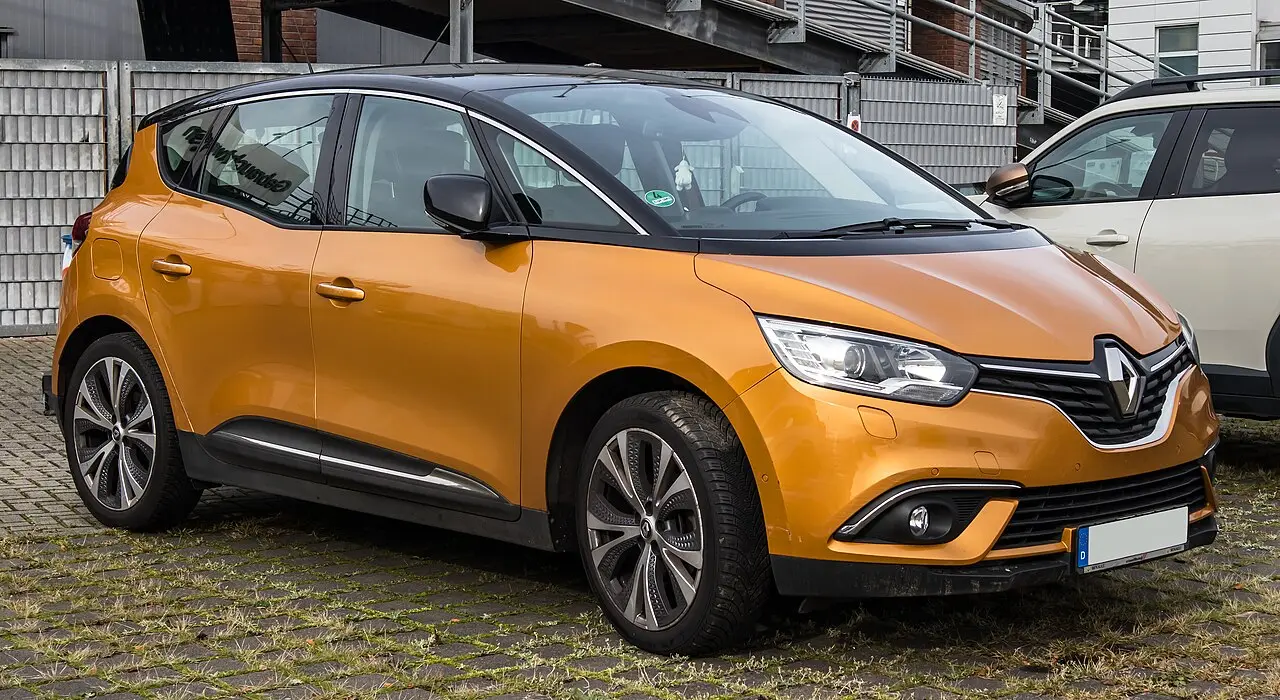
The official data lists 309 versions of the Renault Scénic (2000–2026), in the European Union, the United Kingdom, and France. Each market publishes its own figures, measured on its own test procedure.
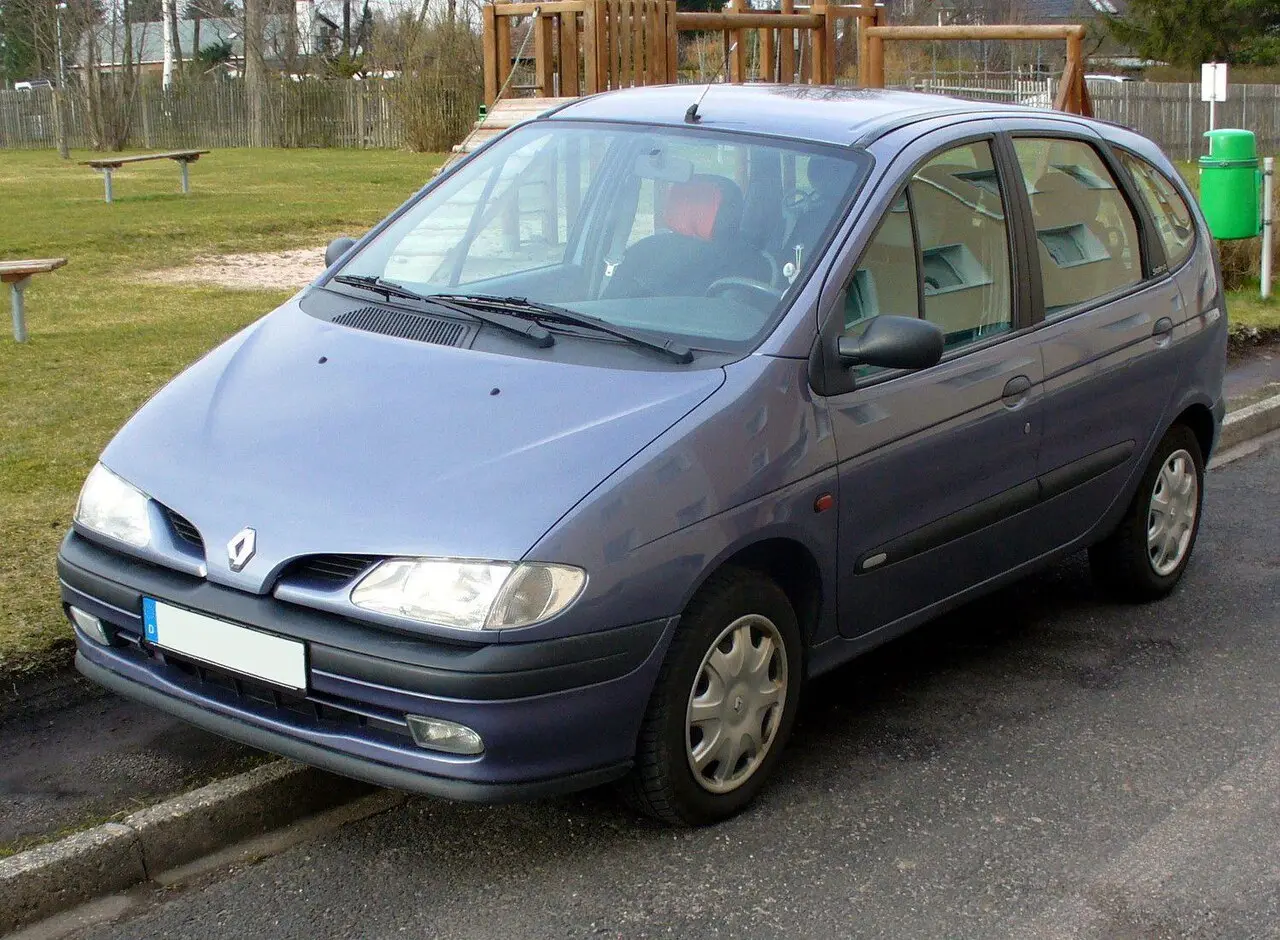
The Scénic began as a compact family MPV, designed to give passengers generous cabin space and flexible seating in a car smaller than Renault’s Espace. First sold as the Mégane Scénic, it helped establish the compact MPV as a familiar European family-car shape. Storage and adaptable seating were central to its appeal.
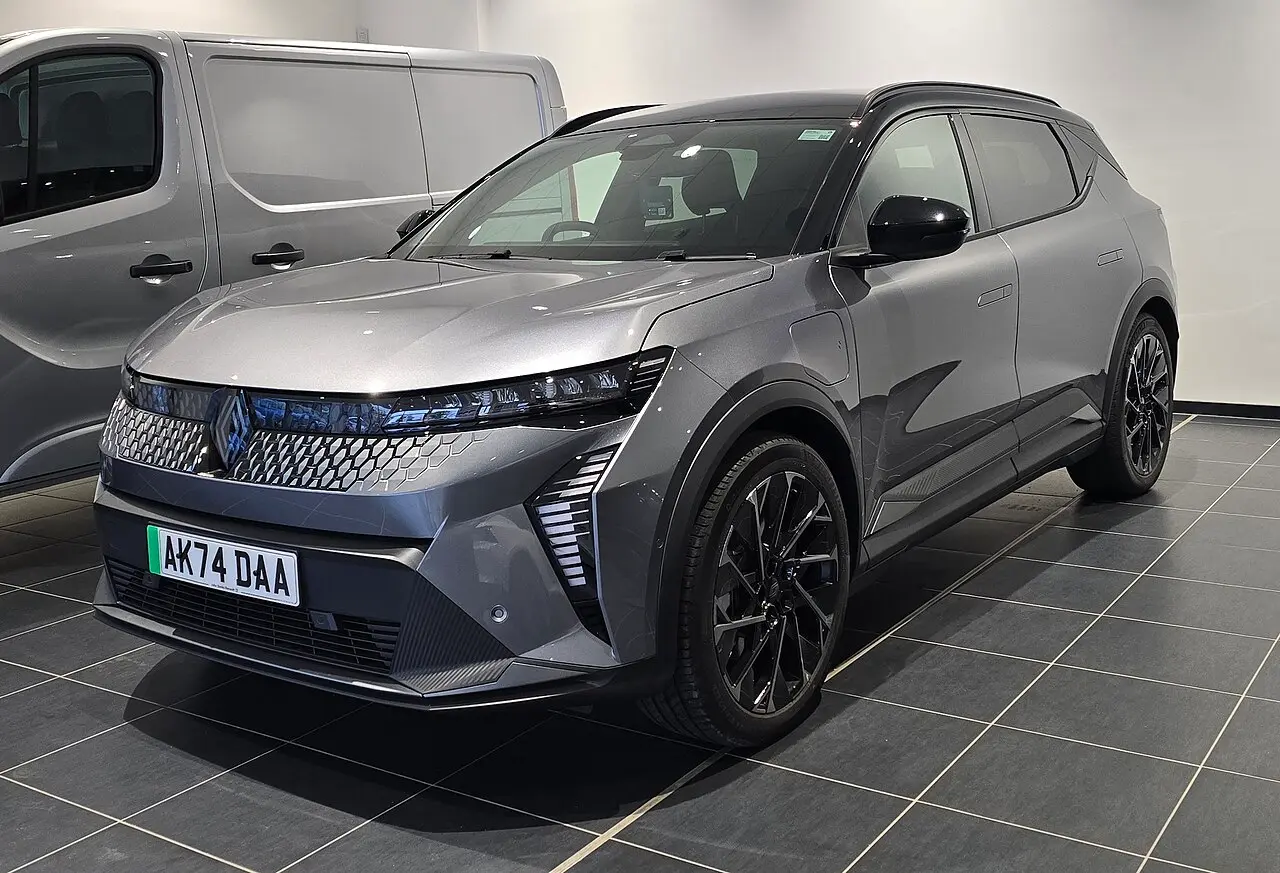
The model’s shape and purpose have changed over time. Its first four generations were family MPVs, with the fourth taking on a more crossover-like design. The fifth generation, Scénic E-Tech electric, is an all-electric family car, carrying the name into a new format.
Scénic generations
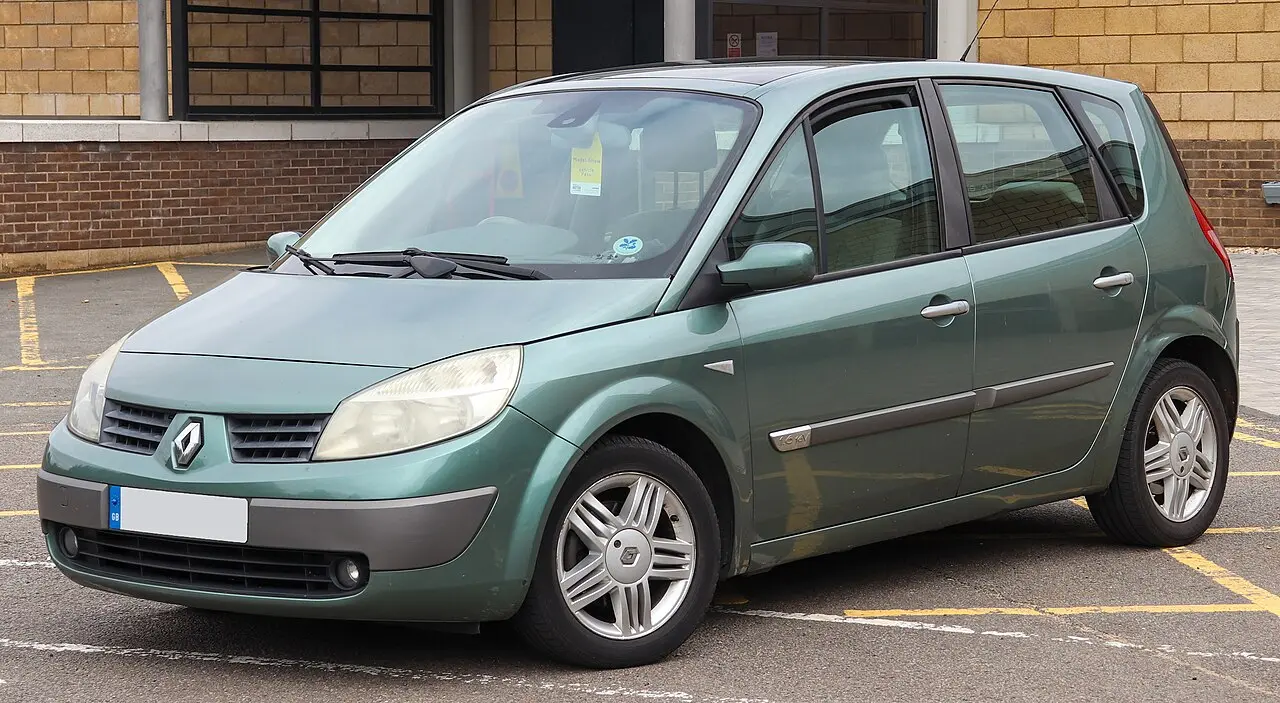
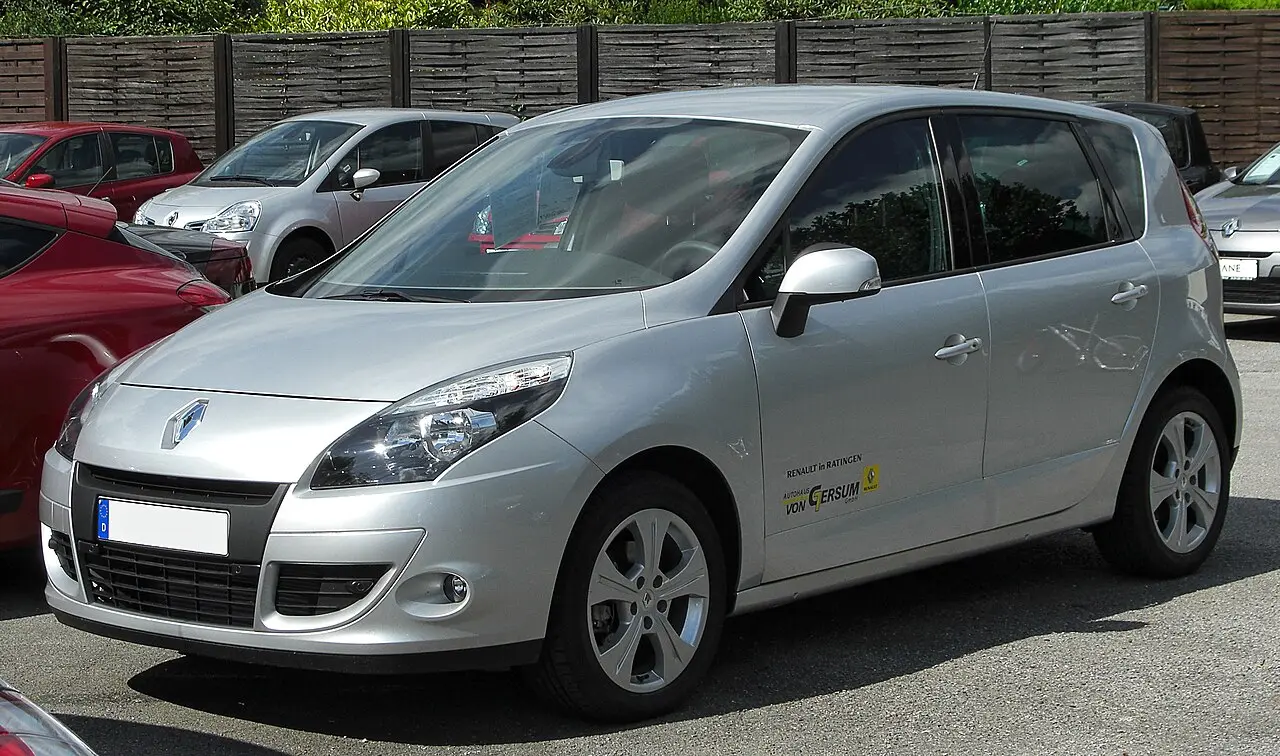
The first-generation Scénic (I, 1996–2003) established the compact MPV in Renault’s range. The second generation (II, 2003–2009) expanded the line with short and longer Grand Scénic forms. The third generation (III, 2009–2016) continued the family-focused MPV approach, followed by the fourth (IV, 2016–2022), which adopted a crossover-influenced design. The fifth generation (V, 2024–today) is the electric Scénic E-Tech.
Engines, power and official economy
European Union registration figures cover Scénics from 2010 to 2025, with engines from 1.2 to 2.0 litres and power from 70 kW (95 PS) to 160 kW (218 PS). Listed fuel types include petrol, diesel, hybrid, LPG and electric. The lowest listed consumption is 4.8 L/100 km on WLTP for petrol, diesel or hybrid versions.
UK VCA figures cover 2000–2026 and span 1.2–2.0-litre engines, with power from 60 kW (81 PS) to 220 kW (299 PS). The lowest listed consumption is 3.5 L/100 km on NEDC. French ADEME figures cover 2012–2026, listing petrol, diesel and E85 flex-fuel versions with 81 kW (110 PS) to 110 kW (150 PS); the lowest listed consumption is 4.1 L/100 km on NEDC. WLTP and NEDC are different European test procedures, which helps explain why official figures vary.
Where was the Scénic sold?
Official figures cover the Scénic in the European Union, the UK and France. EU registration figures run from 2010 to 2025, while UK and French figures extend from 2000 and 2012 respectively through 2026. In EU registrations, the most registered listed version was the 1.5-litre diesel with 81 kW (110 PS).
Questions and answers
What kind of car was the Renault Scénic?
The first four generations were compact family MPVs, with the fourth adopting crossover styling; the fifth generation is the electric Scénic E-Tech family car.
What are the Scénic generation years?
The generations are I (1996–2003), II (2003–2009), III (2009–2016), IV (2016–2022) and V (2024–today).
What is the lowest listed Scénic consumption?
The lowest listed figures are 4.8 L/100 km on EU WLTP, 3.5 L/100 km on UK NEDC and 4.1 L/100 km on French NEDC.
Model codes: HCB · Sold in: European Union, United Kingdom, and France · References: youtube.com, media.renault.com
European Union 6 versions
New cars registered in the EU (plus Norway and Iceland), from the European Environment Agency. Figures on the NEDC procedure until 2020 and on WLTP from 2021; versions are grouped by engine and power, with their number of registrations.
Years and version
Engine
Power
Fuel
Consumption (combined)
CO₂
Electric range
EU registrations
2025
Electric motor
160 kW (218 PS)
Electric
17.2 kWh/100 km WLTP
0 g/km
611 km
25,567
2025
Electric motor
125 kW (170 PS)
Electric
19.2 kWh/100 km WLTP
0 g/km
400 km
3,333
2025
Electric motor
55 kW (75 PS)
Electric
17.1 kWh/100 km WLTP
0 g/km
592 km
1,520
2024
Electric motor
160 kW (218 PS)
Electric
17.2 kWh/100 km WLTP
0 g/km
609 km
17,393
2024
Electric motor
125 kW (170 PS)
Electric
16.4 kWh/100 km WLTP
0 g/km
426 km
2,236
2024
1.3 L
103 kW (140 PS)
Petrol
6.6 L/100 km WLTP
150 g/km
–
87
United Kingdom 13 versions
New cars on sale in the UK, from the Vehicle Certification Agency. NEDC figures until 2018 and WLTP figures after; years are the editions a version appeared in.
Years and version
Engine
Power
Fuel
Consumption (combined)
CO₂
Electric range
2025–2026techno EV60 comfort range · techno 170 hp comfort range
Electric motor
125 kW (170 PS)
Electric
16.7 kWh/100 km WLTP
0 g/km
420 km
2025–2026esprit Alpine 220 hp long range
Electric motor
160 kW (218 PS)
Electric
17.6 kWh/100 km WLTP
0 g/km
599 km
2025–2026iconic 220 hp long range
Electric motor
160 kW (218 PS)
Electric
17.7 kWh/100 km WLTP
0 g/km
594 km
2025–2026techno 220 hp long range · techno EV87 long range
Electric motor
160 kW (218 PS)
Electric
17.2 kWh/100 km WLTP
0 g/km
610 km
2025–2026iconic esprit Alpine 220 hp long range my26
Electric motor
160 kW (218 PS)
Electric
17.7 kWh/100 km WLTP
0 g/km
596 km
2025–2026techno 220 hp long range my26
Electric motor
160 kW (218 PS)
Electric
17.1 kWh/100 km WLTP
0 g/km
614 km
2026techno esprit Alpine 220 hp long range my26
Electric motor
160 kW (218 PS)
Electric
17.5 kWh/100 km WLTP
0 g/km
601 km
2025techno 220 hp long range my26
Electric motor
164 kW (223 PS)
Electric
17.1 kWh/100 km WLTP
0 g/km
614 km
2024techno EV60 comfort range
Electric motor
170 kW (231 PS)
Electric
16.7 kWh/100 km WLTP
0 g/km
420 km
2024techno EV87 long range
Electric motor
217 kW (295 PS)
Electric
17.2 kWh/100 km WLTP
0 g/km
610 km
2024esprit Alpine 220 hp long range
Electric motor
220 kW (299 PS)
Electric
17.6 kWh/100 km WLTP
0 g/km
599 km
2024iconic 220 hp long range
Electric motor
220 kW (299 PS)
Electric
17.7 kWh/100 km WLTP
0 g/km
594 km
2024techno 220 hp long range
Electric motor
220 kW (299 PS)
Electric
17.2 kWh/100 km WLTP
0 g/km
610 km
France 2 versions
New cars on sale in France, from ADEME Car Labelling. NEDC figures until 2015, WLTP figures in the current catalogue.
Years and version
Engine
Power
Fuel
Gearbox
Consumption (combined)
CO₂
2026Grand SCENIC (140ch)
1.3 L
103 kW (140 PS)
Petrol
6-speed manual
6.3 L/100 km WLTP
143 g/km
2026Grand SCENIC (140ch)
1.3 L
103 kW (140 PS)
Petrol
7-speed automatic
6.5 L/100 km WLTP
147 g/km
Versions outside these generations
European Union 1 version
New cars registered in the EU (plus Norway and Iceland), from the European Environment Agency. Figures on the NEDC procedure until 2020 and on WLTP from 2021; versions are grouped by engine and power, with their number of registrations.
Years and version
Engine
Power
Fuel
Consumption (combined)
CO₂
Electric range
EU registrations
2023
Electric motor
160 kW (218 PS)
Electric
17.4 kWh/100 km WLTP
0 g/km
604 km
31
Official figures are measured on standard test procedures and differ between markets. Your consumption depends on how, where and in what conditions you drive.