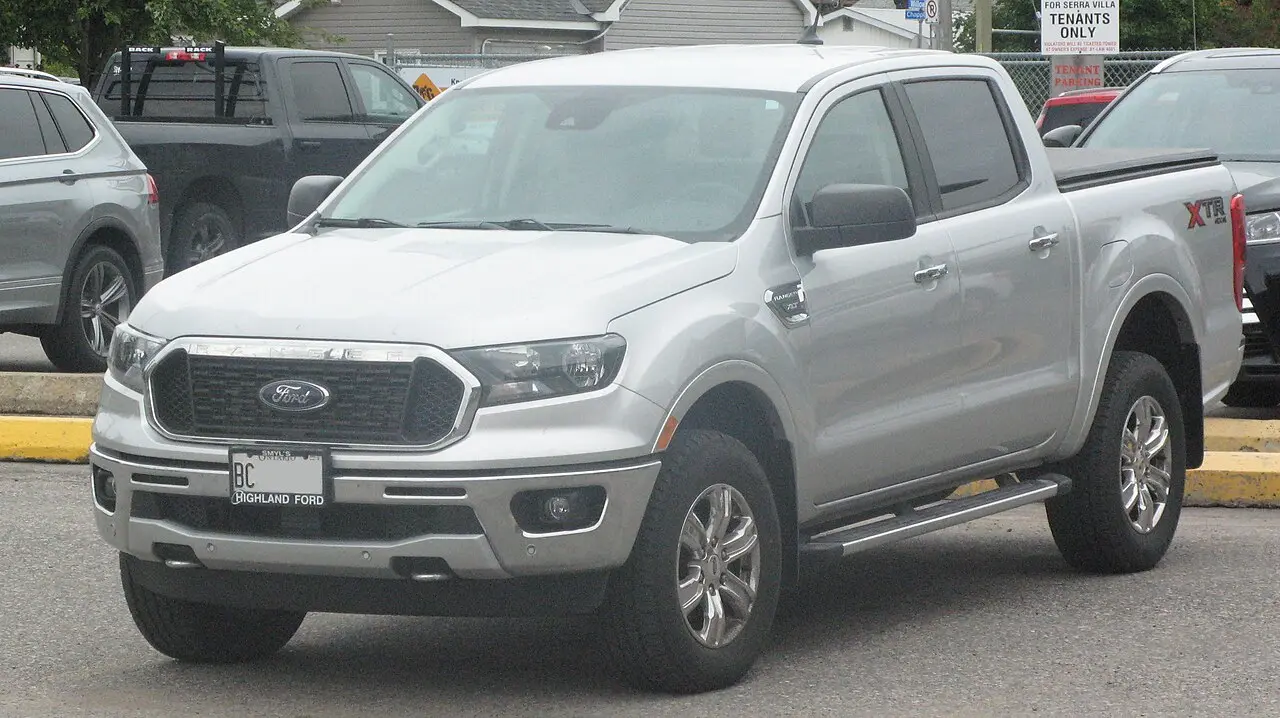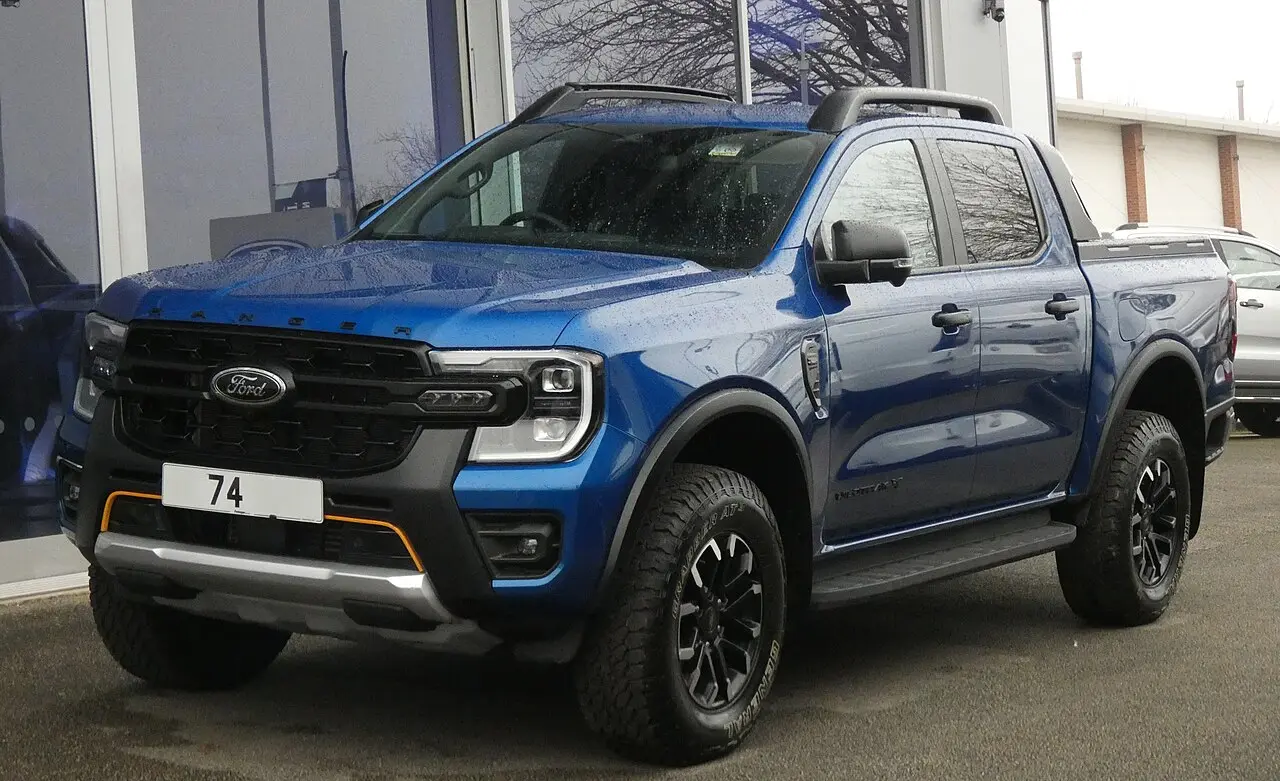
Ford

Ford Ranger

Ford Ranger
Photo: Harvey Bold / Wikimedia Commons · CC0

The official data lists 394 versions of the Ford Ranger (1984–2026), in the European Union, the United States, and Canada. Each market publishes its own figures, measured on its own test procedure.

At a glance

Years in the data
1984–2026
Markets
European Union, United States, Canada
Engines
2.3 L to 4.0 L
Fuels
Diesel, Petrol, Flex fuel (E85), Electric
Lowest consumption (United States)
8.7 L/100 km (EPA)
Lowest consumption (Canada)
9.9 L/100 km (5-cycle)
New registrations in the EU
28

What is the Ford Ranger?

The Ranger is Ford’s pickup for carrying people and gear, with an open load bed and a choice of cab styles. In North America it is a midsize truck, while the T6 generation brought the name back to Ford’s European range. It sits below Ford’s full-size F-Series pickups in the US lineup.

Ranger generations

The American Ranger’s first generation ran from 1983 to 1992, followed by the second from 1993 to 1997 and the third from 1998 to 2011. The T6, counted here as generation IV, was sold in Europe from 2011 to 2023 and returned to the US and Canada from 2019 to 2023. Generation V, code P703, followed in North America from 2024. The Ranger’s timeline varies by market: the T6 arrived in Europe before its North American return.

Engines and fuel consumption

The US EPA range spans petrol, flex-fuel E85, electric and diesel versions, with engine sizes from 2.2 to 4.0 litres. Its best combined rating is 27 MPG, and the lowest listed consumption is 8.7 L/100 km under EPA testing. Canadian NRCan figures cover petrol and E85 models with engines from 2.3 to 4.0 litres; the lowest listed consumption is 9.9 L/100 km on the 5-cycle test. EPA and NRCan use different procedures, so their results are not directly equivalent.

Where was the Ranger sold?

The Ranger has a long North American history, with US figures spanning 1984 to 2026 and Canadian figures from 1995 to 2026. European Union registration figures show a 2.0-litre diesel Ranger in 2018. The North American generation dates differ from those of the European T6.

Questions and answers

When did the T6 Ford Ranger reach North America?

It returned to the US and Canada for 2019, after beginning its European run in 2011.

What is the Ranger’s best combined EPA rating?

The best listed combined rating is 27 MPG.

What fuel economy does NRCan list for the Ranger?

The lowest listed Canadian figure is 9.9 L/100 km on the NRCan 5-cycle test.
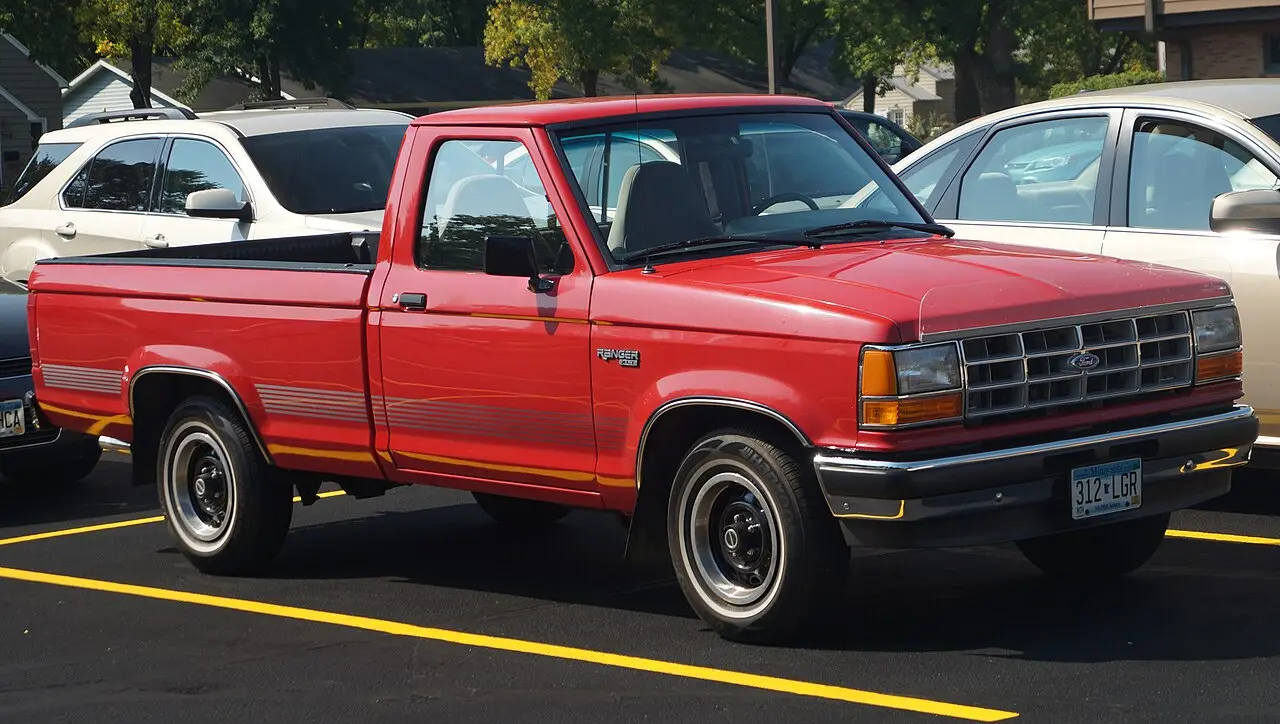
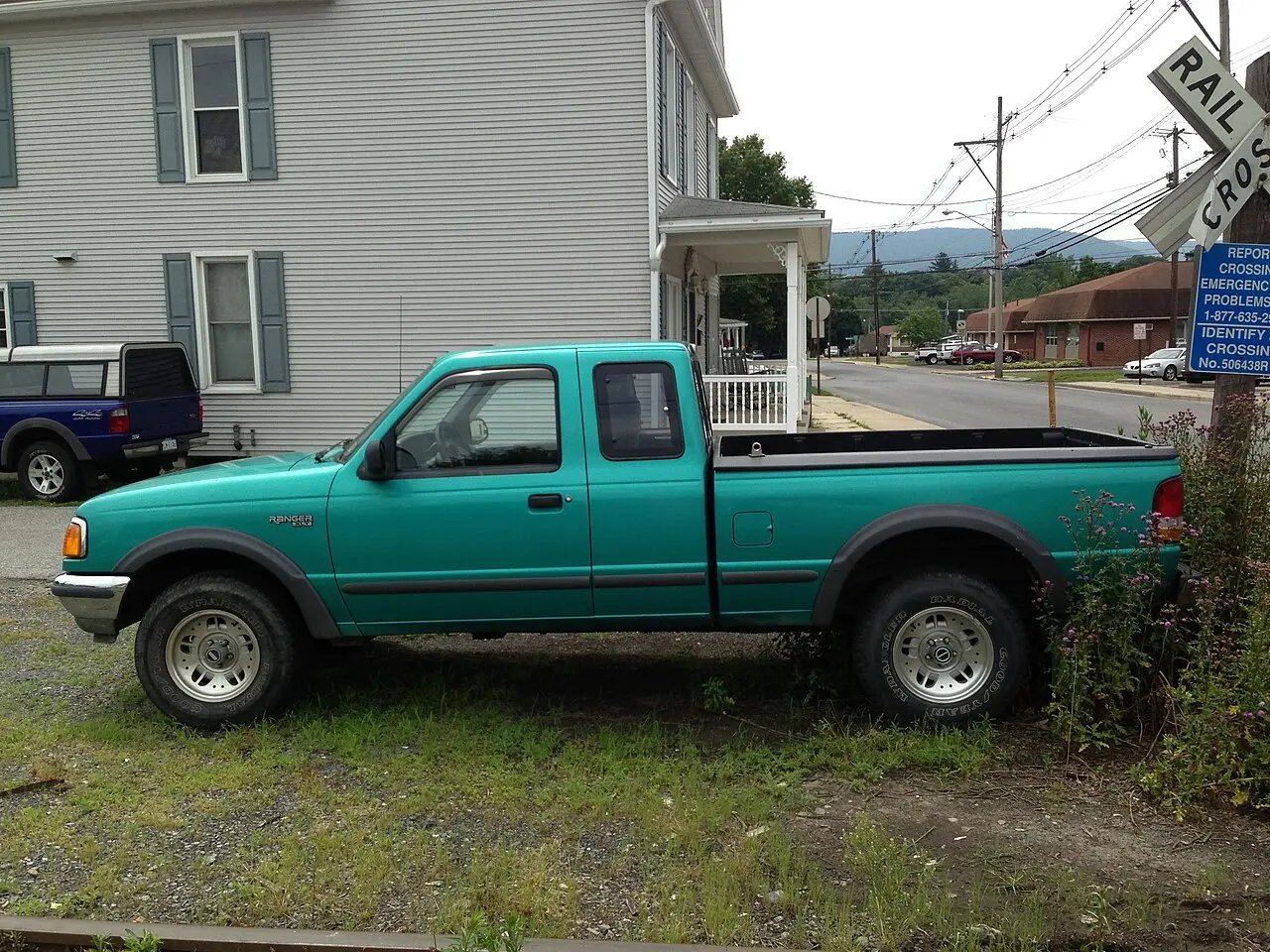
Ranger I (1983–1992)

Ford Ranger I
Photo: Greg Gjerdingen / Wikimedia Commons · CC BY 2.0

Model codes: · Sold in: United States · References: en.wikipedia.org, therangerstation.com

Show all 103 versions

Ranger II (1993–1997)

Ford Ranger II
Photo: User:Mhsr69 / Wikimedia Commons · CC BY-SA 3.0

Model codes: · Sold in: United States and Canada · References: en.wikipedia.org, therangerstation.com

Show all 63 versions

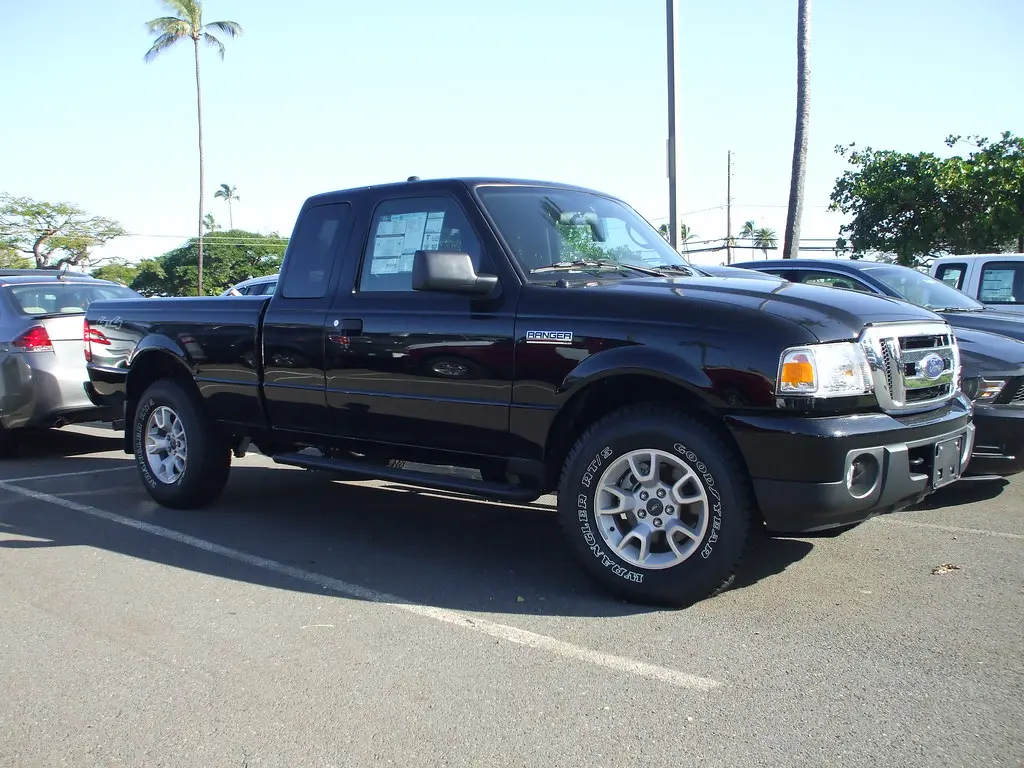
Ranger III (1998–2011)

Ford Ranger III
Photo: CC-BY-CarImages / Wikimedia Commons · CC BY-SA 2.0

Model codes: · Sold in: United States and Canada · References: en.wikipedia.org, therangerstation.com

Show all 192 versions

Ranger IV (2011–2023)

Ford Ranger IV
Photo: SsmIntrigue / Wikimedia Commons · CC BY-SA 4.0

Model codes: T6 · Sold in: European Union and United Kingdom · References: en.wikipedia.org, therangerstation.com

Show 1 version

Ranger IV (2019–2023)

Ford Ranger IV
Photo: SsmIntrigue / Wikimedia Commons · CC BY-SA 4.0

Model codes: T6 · Sold in: United States and Canada · References: therangerstation.com, en.wikipedia.org

Show all 18 versions

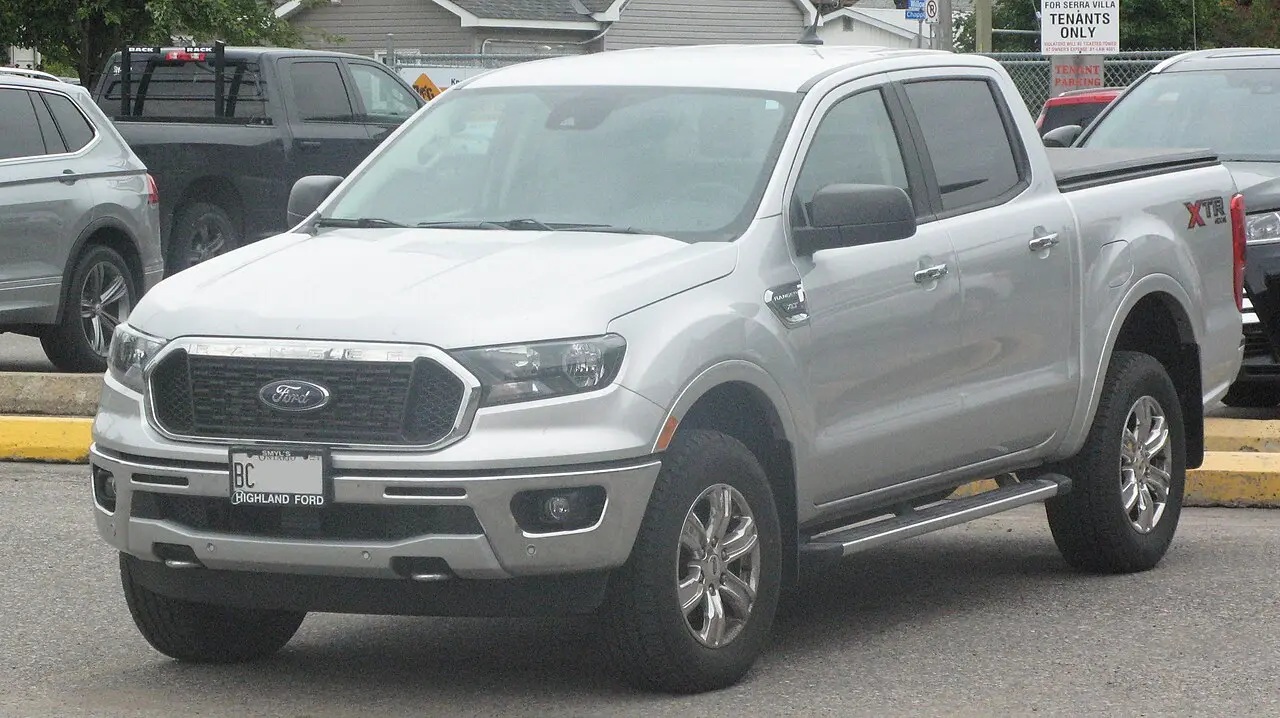
Ranger V (since 2024)

Ford Ranger V
Photo: Harvey Bold / Wikimedia Commons · CC0

Model codes: P703 · Sold in: United States and Canada · References: media.ford.com, en.wikipedia.org

United States 10 versions

Model years sold in the USA, from the EPA and the Department of Energy (fueleconomy.gov). MPG on the EPA test; litres per 100 km = 235.215 ÷ MPG.

Years and versionEngineFuelGearboxDriveConsumption (combined)CO₂
2026SIDI & PFI2.3 LPetrol10-speed automaticRear-wheel drive23 MPG (10.2 L/100 km) EPA245 g/km
2026SIDI & PFI2.3 LPetrol10-speed automaticPart-time four-wheel drive21 MPG (11.2 L/100 km) EPA262 g/km
2026SIDI & PFI2.7 LPetrol10-speed automaticPart-time four-wheel drive20 MPG (11.8 L/100 km) EPA276 g/km
2024–2026SIDI3.0 LPetrol10-speed automaticPart-time four-wheel drive17 MPG (13.8 L/100 km) EPA326 g/km
2025SIDI & PFI2.3 LPetrol10-speed automaticRear-wheel drive23 MPG (10.2 L/100 km) EPA236 g/km
2025SIDI & PFI2.3 LPetrol10-speed automaticPart-time four-wheel drive22 MPG (10.7 L/100 km) EPA252 g/km
2025SIDI & PFI2.7 LPetrol10-speed automaticPart-time four-wheel drive20 MPG (11.8 L/100 km) EPA268 g/km
2024SIDI2.3 LPetrol10-speed automaticRear-wheel drive22 MPG (10.7 L/100 km) EPA250 g/km
2024SIDI2.3 LPetrol10-speed automaticPart-time four-wheel drive22 MPG (10.7 L/100 km) EPA250 g/km
2024SIDI & PFI2.7 LPetrol10-speed automaticPart-time four-wheel drive20 MPG (11.8 L/100 km) EPA277 g/km

Canada 7 versions

Model years sold in Canada, from Natural Resources Canada fuel consumption ratings (5-cycle test).

Years and versionEngineFuelGearboxConsumption (combined)CO₂
2026Pickup truck: Standard2.3 LPetrol10-speed automatic11.2 L/100 km 5-cycle262 g/km
2026Pickup truck: Standard2.7 LPetrol10-speed automatic11.6 L/100 km 5-cycle273 g/km
2024–2026Pickup truck: Standard3.0 LPetrol10-speed automatic14.0 L/100 km 5-cycle326 g/km
2025Pickup truck: Standard2.3 LPetrol10-speed automatic10.7 L/100 km 5-cycle252 g/km
2025Pickup truck: Standard2.7 LPetrol10-speed automatic11.5 L/100 km 5-cycle270 g/km
2024Pickup truck: Standard2.3 LPetrol10-speed automatic11.0 L/100 km 5-cycle257 g/km
2024Pickup truck: Standard2.7 LPetrol10-speed automatic11.5 L/100 km 5-cycle270 g/km

Official figures are measured on standard test procedures and differ between markets. Your consumption depends on how, where and in what conditions you drive.