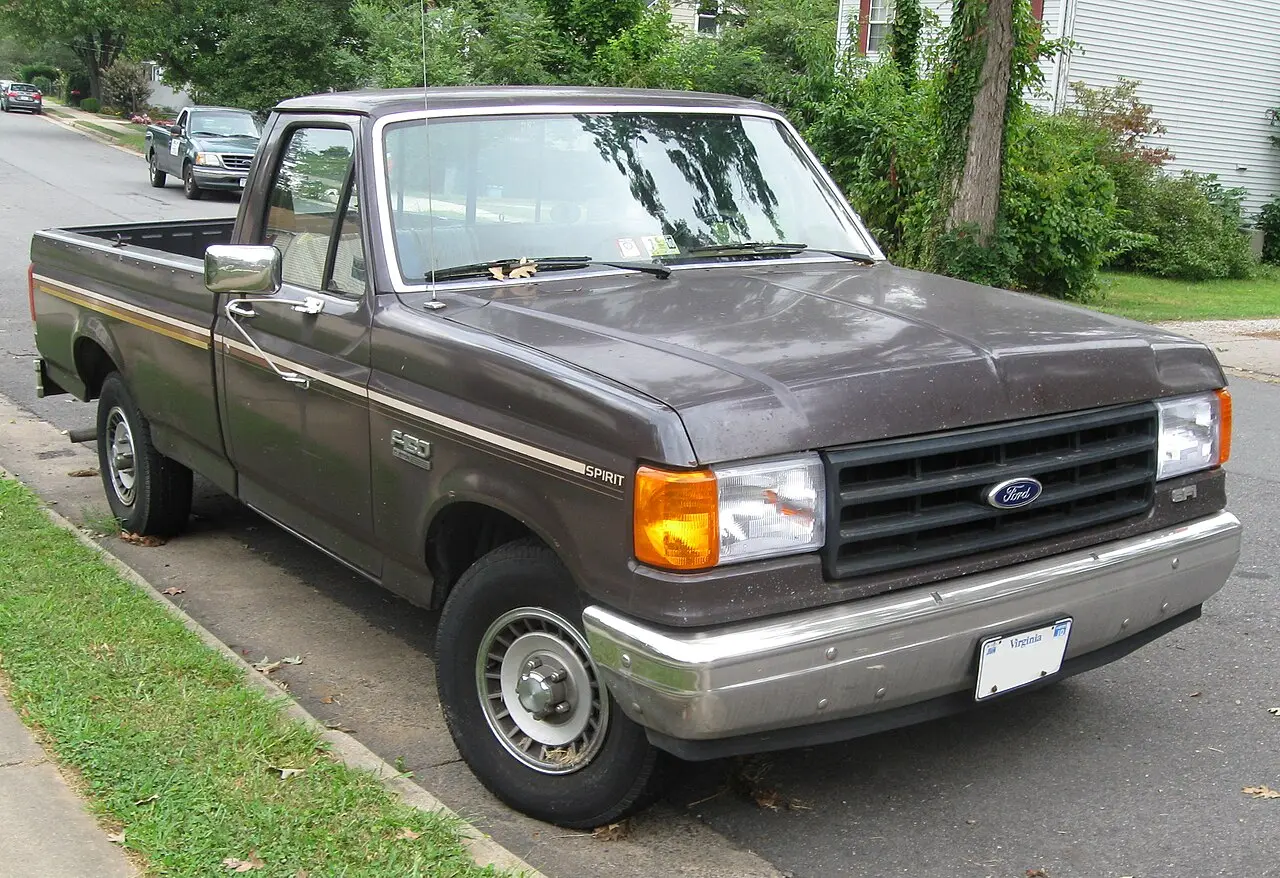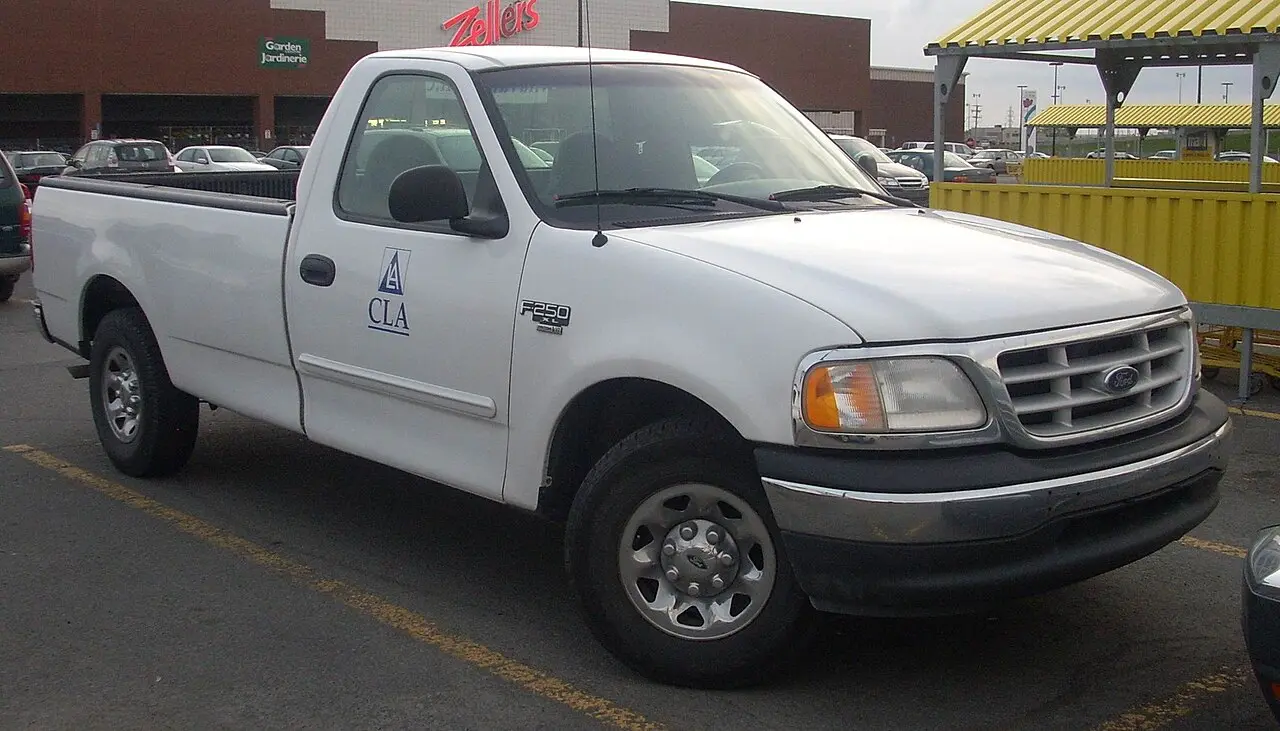
What is the Ford F-250?
The F-250 is a heavy-duty pickup in Ford’s F-Series, a line of trucks built for work and everyday use. It sits between the F-150 and F-350 in the range, with a larger-duty role than the F-150.
The generations covered here run from the later years of the conventional F-Series F-250 to the introduction of Super Duty. The model appears in US EPA figures from 1984 to 1999 and Canadian NRCan figures from 1995 to 1999.
F-250 generations
The seventh-generation F-Series ran from 1984 to 1986, followed by the eighth generation from 1987 to 1991. The ninth generation arrived in 1992 and continued through 1997. The tenth-generation F-250 overlapped the ninth generation from 1997 to 1999. In 1999, Ford introduced the first-generation F-Series Super Duty, a distinct line for its heavier pickups.
Engines and fuel consumption
The listed US and Canadian engines range from 4.6 to 5.8 litres. Across the EPA figures, the best combined result is 16 MPG. The lowest listed US consumption is 14.7 L/100 km under the EPA procedure; Canada’s lowest is 15.7 L/100 km under NRCan’s 5-cycle test. These procedures differ, so the market figures are best read within their own testing systems.
Canada’s listed fuel choices include petrol and natural gas, while the US figures identify petrol. Engine and cab combinations changed across generations, so these figures describe a range of F-250 versions.
Where was the F-250 sold?
The F-250 appears in US EPA figures for 1984–1999 and Canadian NRCan figures for 1995–1999. Its history in these markets reflects the F-Series’ role as a North American truck line serving both personal and work use.
Questions and answers
What kind of vehicle is the Ford F-250?
It is a heavy-duty pickup in Ford’s F-Series, positioned between the F-150 and F-350.
Which F-250 generations are covered?
The seventh through tenth F-Series generations and the first-generation Super Duty began in 1999.
What is the F-250’s best listed EPA fuel economy?
The best listed combined result is 16 MPG under the EPA procedure.
How do the US and Canadian consumption figures differ?
The lowest listed figure is 14.7 L/100 km under the EPA test in the US and 15.7 L/100 km under NRCan’s 5-cycle test in Canada.