Ford

Ford Explorer Sport Trac

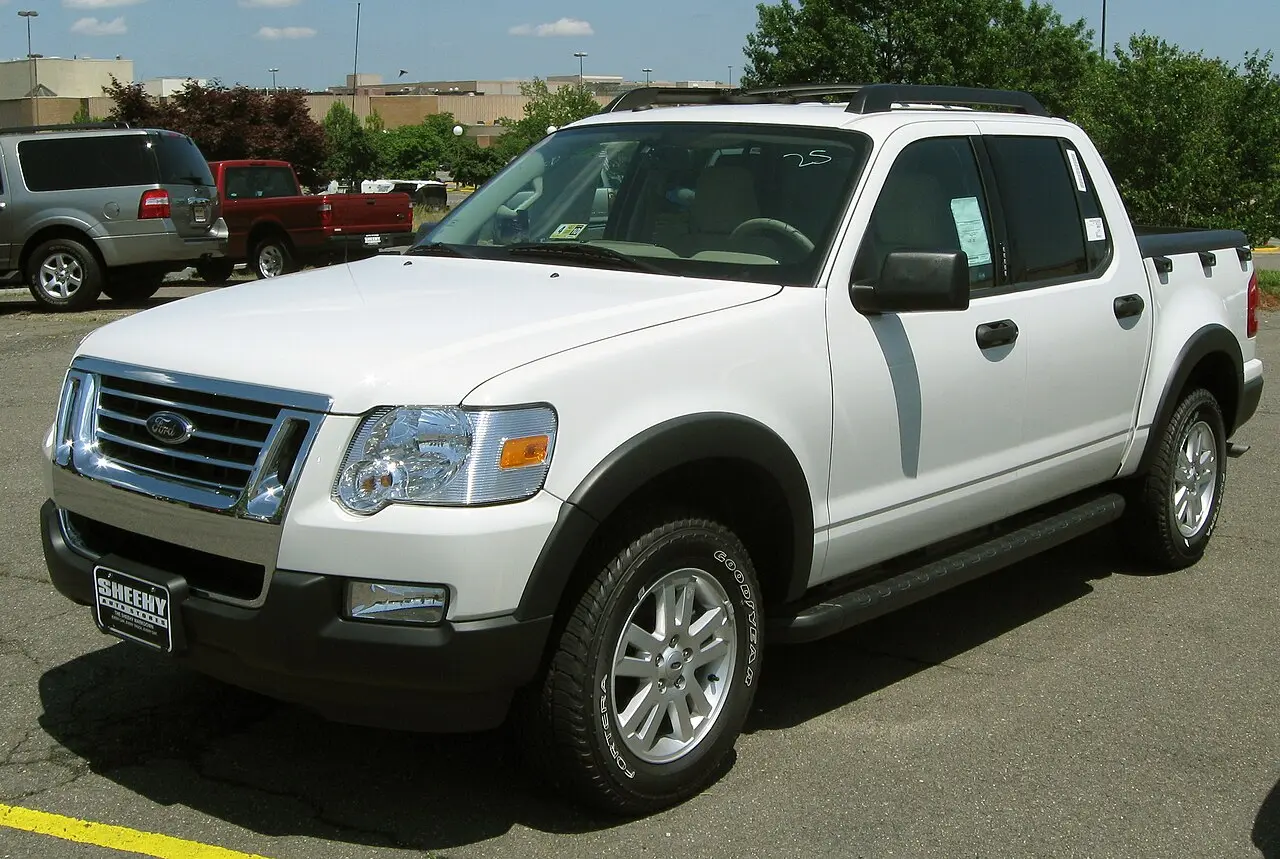
Ford Explorer Sport Trac
Photo: IFCAR / Wikimedia Commons · Public domain

The official data lists 55 versions of the Ford Explorer Sport Trac (2001–2010), in the United States and Canada. Each market publishes its own figures, measured on its own test procedure.

At a glance

Years in the data
2001–2010
Markets
United States, Canada
Engines
4.0 L to 4.6 L
Fuels
Petrol, Flex fuel (E85)
Lowest consumption (United States)
13.8 L/100 km (EPA)
Lowest consumption (Canada)
13.8 L/100 km (5-cycle)

What is the Ford Explorer Sport Trac?

The Explorer Sport Trac paired an Explorer-style four-door cabin with an open pickup bed. It offered passenger space alongside a separate area for carrying bulky or dirty loads, giving it a distinctive place in Ford’s North American range. Ford introduced it as an Explorer-based pickup, with a dedicated bed behind the passenger section.

Explorer Sport Trac generations

The first generation ran from 2001 to 2005, followed by the second from 2007 to 2010. The model skipped 2006 between those runs. Both generations kept the same core idea: Explorer-based passenger accommodation paired with pickup utility.

Engines and power

U.S. EPA entries cover 2001–2010 and engine sizes from 4.0 to 4.6 litres, with petrol and E85 flex-fuel versions. Canadian NRCan entries cover the same years and engine-size range, with the same fuel types.

How economical was the Explorer Sport Trac?

The lowest listed consumption is 13.8 L/100 km in both the U.S. EPA and Canadian NRCan entries. The U.S. listing also gives a best combined result of 17 MPG on the EPA test. Canada uses the NRCan 5-cycle procedure; those results differ from EPA and European WLTP and NEDC figures.

Questions and answers

Was the Explorer Sport Trac an SUV or a pickup?

It blended an Explorer-style four-door cabin with an open pickup bed.

When were its generations sold?

The first generation ran from 2001–2005 and the second from 2007–2010.

Which engines and fuels appear in the market listings?

The listings show 4.0- to 4.6-litre engines, offered with petrol or E85 flex fuel.

How much fuel did it use in official tests?

The lowest listed figure is 13.8 L/100 km in both the EPA and Canadian 5-cycle entries; the best U.S. combined figure is 17 MPG on EPA testing.
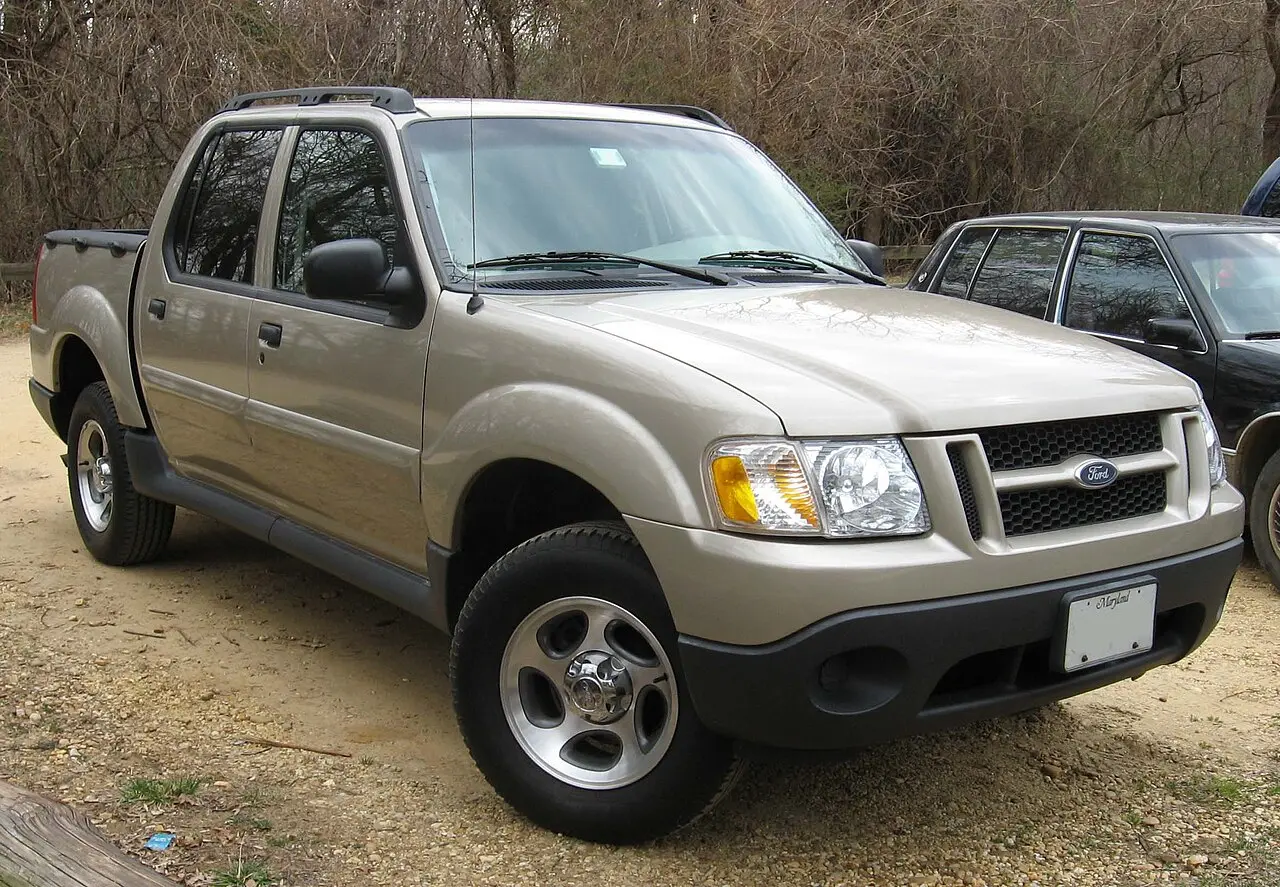
Explorer Sport Trac first generation (2001–2005)

Ford Explorer Sport Trac first generation
Photo: IFCAR / Wikimedia Commons · Public domain

Model codes: UN105 · Sold in: United States and Canada · References: en.wikipedia.org

Show all 31 versions

Explorer Sport Trac second generation (2007–2010)

Ford Explorer Sport Trac second generation
Photo: IFCAR / Wikimedia Commons · Public domain

Model codes: U251 · Sold in: United States and Canada · References: en.wikipedia.org

United States 11 versions

Model years sold in the USA, from the EPA and the Department of Energy (fueleconomy.gov). MPG on the EPA test; litres per 100 km = 235.215 ÷ MPG.

Years and versionEngineFuelGearboxDriveConsumption (combined)CO₂
2008–2010CLKUP4.0 LPetrol5-speed automaticRear-wheel drive16 MPG (14.7 L/100 km) EPA345 g/km
20104.0 LPetrol5-speed automaticFour-wheel drive15 MPG (15.7 L/100 km) EPA368 g/km
2009–2010CLKUP4.6 LPetrol6-speed automaticRear-wheel drive17 MPG (13.8 L/100 km) EPA325 g/km
20104.6 LPetrol6-speed automaticFour-wheel drive16 MPG (14.7 L/100 km) EPA345 g/km
2008–2009CLKUP4.0 LPetrol5-speed automaticFour- or all-wheel drive15 MPG (15.7 L/100 km) EPA368 g/km
2009CLKUP4.6 LPetrol6-speed automaticFour- or all-wheel drive16 MPG (14.7 L/100 km) EPA345 g/km
2007–2008CLKUP4.6 LPetrol6-speed automaticRear-wheel drive16 MPG (14.7 L/100 km) EPA345 g/km
2008CLKUP4.6 LPetrol6-speed automaticFour- or all-wheel drive15 MPG (15.7 L/100 km) EPA368 g/km
2007CLKUP4.0 LPetrol5-speed automaticFour- or all-wheel drive15 MPG (15.7 L/100 km) EPA368 g/km
2007CLKUP4.0 LPetrol5-speed automaticRear-wheel drive15 MPG (15.7 L/100 km) EPA368 g/km
2007CLKUP4.6 LPetrol6-speed automaticFour- or all-wheel drive15 MPG (15.7 L/100 km) EPA368 g/km

Canada 13 versions

Model years sold in Canada, from Natural Resources Canada fuel consumption ratings (5-cycle test).

Years and versionEngineFuelGearboxConsumption (combined)CO₂
2010Pickup truck: Standard4.0 LPetrol5-speed automatic15.6 L/100 km 5-cycle359 g/km
2010Pickup truck: Standard4.6 LPetrol6-speed automatic14.8 L/100 km 5-cycle340 g/km
2008–2009Pickup truck: Standard4.0 LPetrol5-speed automatic15.4 L/100 km 5-cycle354 g/km
2009Pickup truck: Standard4.0 LPetrol5-speed automatic15.7 L/100 km 5-cycle361 g/km
2009Pickup truck: Standard4.6 LPetrol6-speed automatic14.0 L/100 km 5-cycle322 g/km
2009Pickup truck: Standard4.6 LPetrol6-speed automatic15.0 L/100 km 5-cycle345 g/km
2008Pickup truck: Standard4.0 LPetrol5-speed automatic15.2 L/100 km 5-cycle350 g/km
2008Pickup truck: Standard4.6 LPetrol6-speed automatic15.5 L/100 km 5-cycle357 g/km
2008Pickup truck: Standard4.6 LPetrol6-speed automatic15.8 L/100 km 5-cycle363 g/km
2007Pickup truck: Standard4.0 LPetrol5-speed automatic15.1 L/100 km 5-cycle347 g/km
2007Pickup truck: Standard4.0 LPetrol5-speed automatic16.2 L/100 km 5-cycle373 g/km
2007Pickup truck: Standard4.6 LPetrol6-speed automatic15.7 L/100 km 5-cycle361 g/km
2007Pickup truck: Standard4.6 LPetrol6-speed automatic16.1 L/100 km 5-cycle370 g/km

Official figures are measured on standard test procedures and differ between markets. Your consumption depends on how, where and in what conditions you drive.