The official data lists 239 versions of the Toyota Yaris (2000 - 2026), in the European Union, the United Kingdom, France, the United States, and Canada. Each market publishes its own figures, measured on its own test procedure.
At a glance
Years in the data
2000 - 2026
Markets
European Union, United Kingdom, France, United States, Canada
Engines
1.0 L to 1.8 L
Power
51 kW (69 PS) to 156 kW (212 PS)
Fuels
Petrol, Hybrid, Diesel, Plug-in hybrid, LPG, Electric
Lowest consumption (France)
3.3 L/100 km (NEDC)
Lowest consumption (United Kingdom)
3.3 L/100 km (NEDC)
Lowest consumption (European Union)
3.9 L/100 km (WLTP)
Plug-in hybrid, weighted (European Union)
2.9 L/100 km (WLTP)
New registrations in the EU
4,714,910
What is the Toyota Yaris?
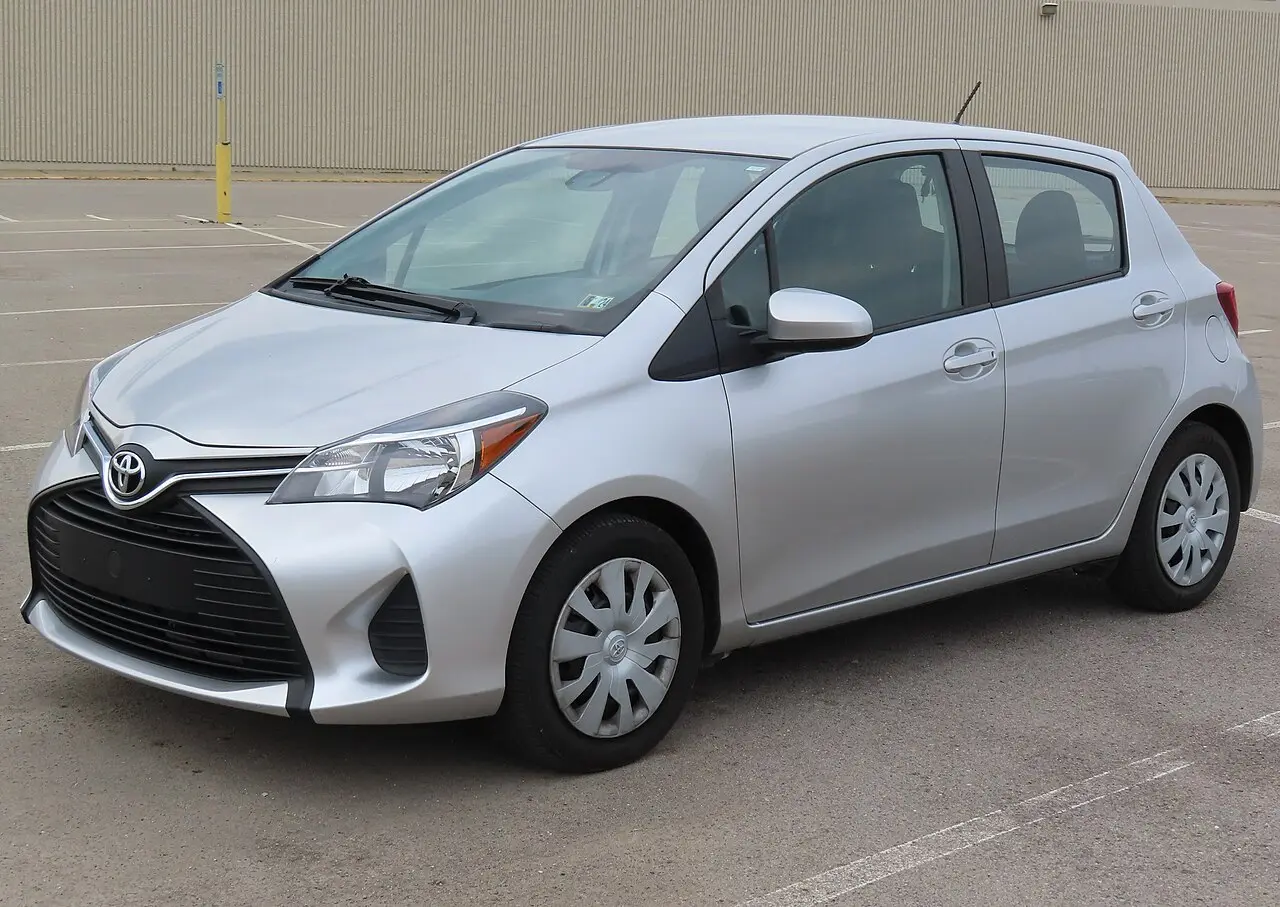
The Yaris is Toyota’s small hatchback, built for everyday journeys where compact dimensions and easy manoeuvring matter. It sits near the entry point of Toyota’s passenger-car range. Across its history, different body styles and powertrains have broadened the line-up while its small-car role has remained consistent.
The Yaris has a long-standing connection to Europe, where Toyota has built the car at its Valenciennes plant in France. Hybrid power joined the European range in 2012, bringing Toyota’s hybrid technology to a small hatchback.
Yaris generations
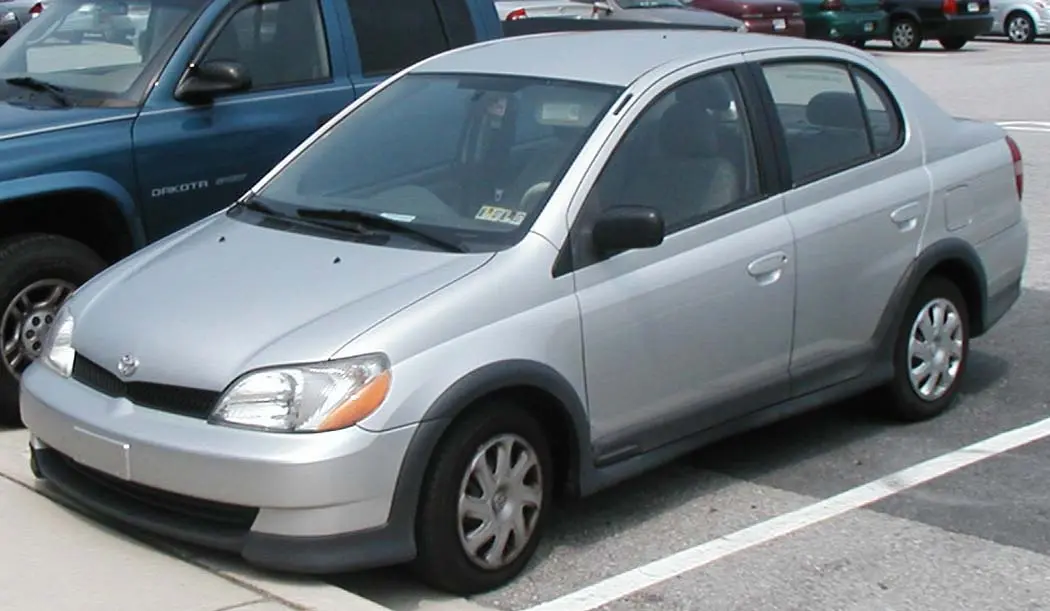
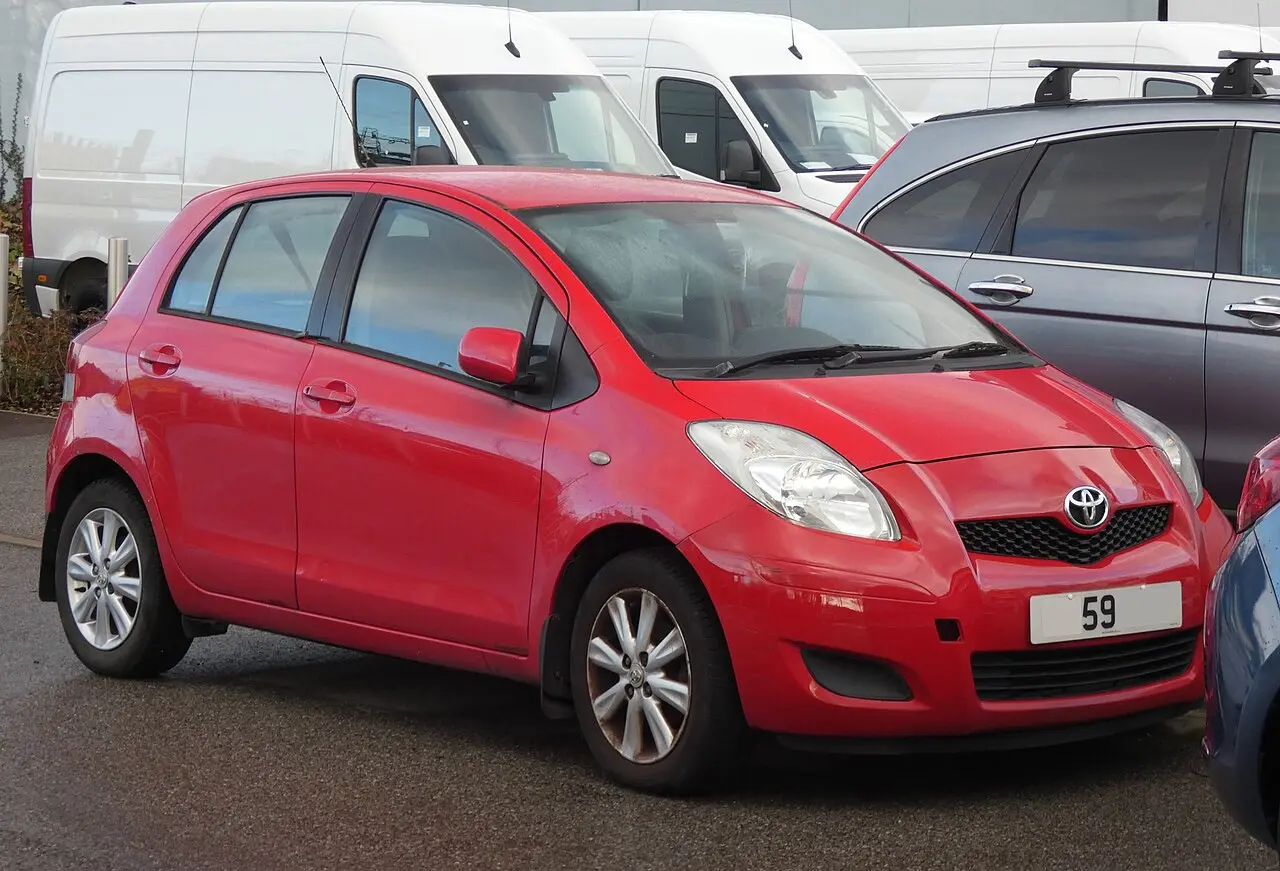
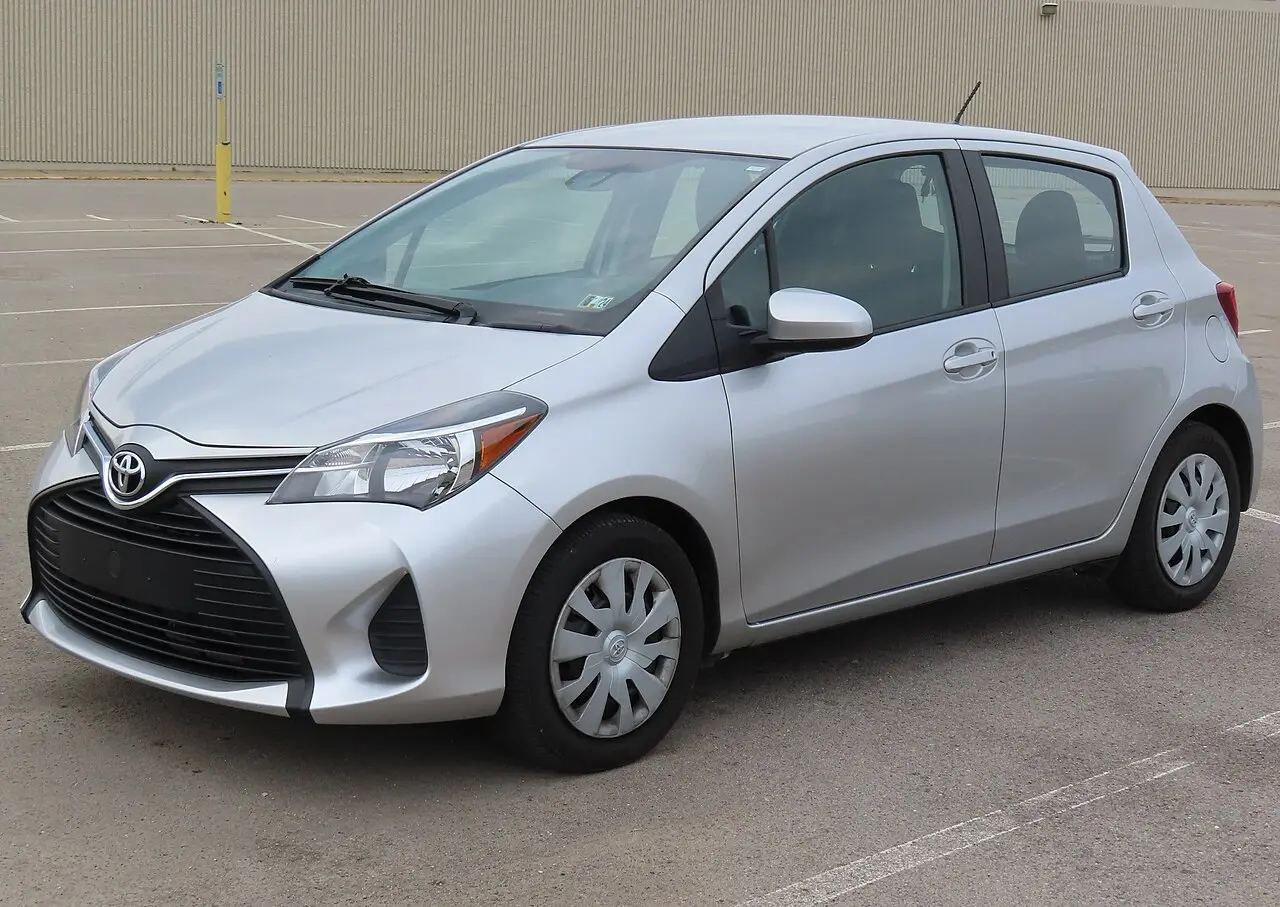
The first generation (1999-2005) established the Yaris as a small hatchback. The second generation (2006-2011) brought a new design and more room. The third generation (2011-2020 in Europe and the UK; 2012-2018 in the United States and Canada) added a hybrid version in Europe. In the US and Canada, Toyota also sold a Mazda2-based Yaris in 2019-2020.
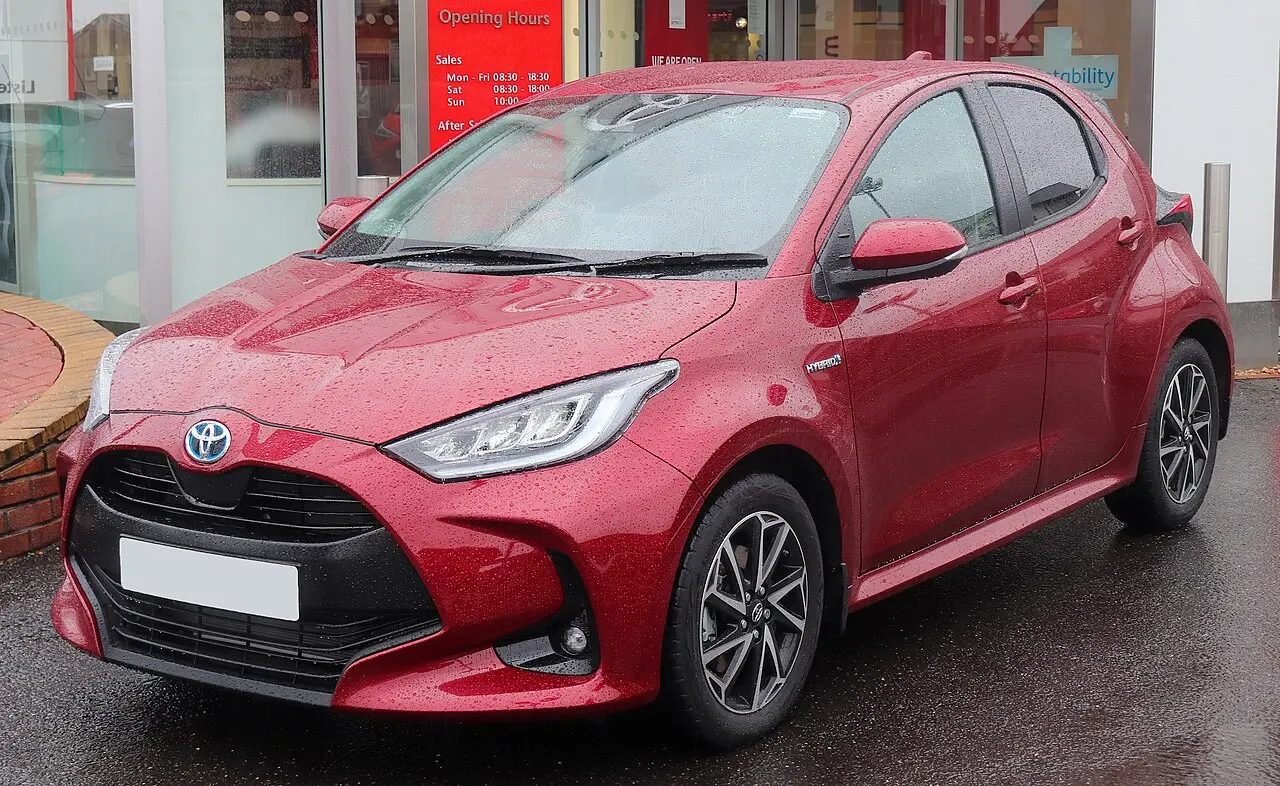
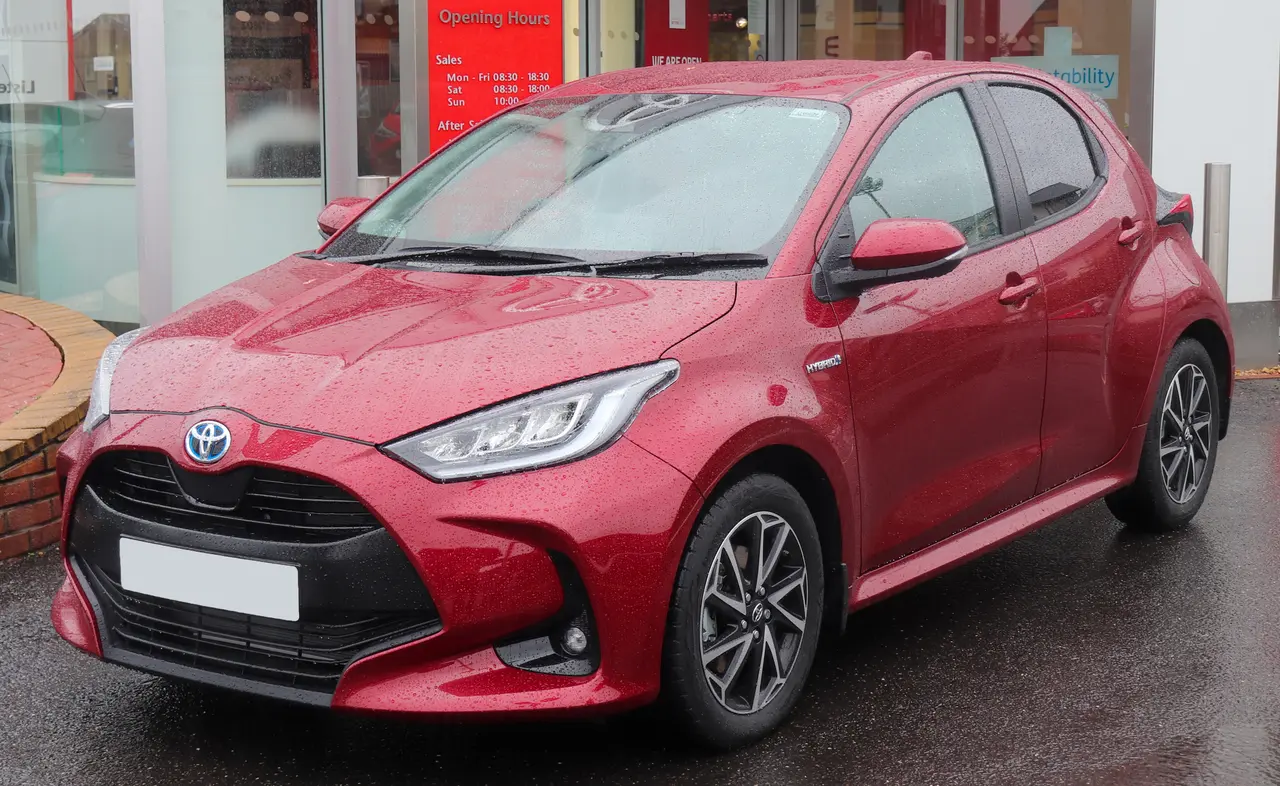
The fourth generation (2020-today in Europe and the UK) adopted Toyota’s GA-B platform for small cars. Over time, hybrid power became a central part of the Yaris range in Europe.
Engines, power and fuel consumption
EU registrations cover engines from 1.0 L to 1.8 L and power from 51 kW (69 PS) to 156 kW (212 PS). The UK figures span 1.0 L to 1.5 L and 51 kW (69 PS) to 96 kW (131 PS); French figures cover 1.0 L to 1.5 L and 51 kW (69 PS) to 92 kW (125 PS). Petrol, diesel and hybrid versions appear in these markets, along with other fuel types in EU registrations.
The lowest listed conventional Yaris consumption is 3.9 L/100 km on the EU WLTP test. The lowest listed EU plug-in hybrid figure is 2.9 L/100 km WLTP, a weighted result that assumes some driving is electric. UK and French listings reach 3.3 L/100 km on NEDC. These test procedures differ, so figures from different markets are not directly equivalent.
In the United States, the EPA combined rating reaches 35 MPG, with a lowest listed consumption of 6.7 L/100 km. Canada’s lowest listed figure is 6.4 L/100 km on the NRCan 5-cycle test. The US EPA and Canadian 5-cycle procedures differ from European WLTP and NEDC tests.
Where was the Yaris sold?
The Yaris has been sold in Europe, the UK, France, the United States and Canada, with engines and powertrains varying by market. US and Canadian listings cover petrol 1.5 L models, while European markets include hybrids and a broader range of engine sizes and fuels. EU registrations total 4,714,910 for 2010-2025.
Questions and answers
When did the Toyota Yaris first go on sale?
The first generation began in 1999. In Europe and the UK, the fourth generation has been listed from 2020 to today.
Was the Toyota Yaris available as a hybrid?
Yes. The third-generation European Yaris added a hybrid powertrain in 2012, and hybrid versions appear in EU, UK and French figures.
What is the lowest official Yaris fuel consumption listed?
The lowest conventional figure in the EU listings is 3.9 L/100 km on WLTP. The plug-in hybrid’s weighted figure is 2.9 L/100 km WLTP and assumes some electric driving.
How do Yaris fuel economy figures differ between Europe and North America?
European figures use WLTP or NEDC, the US uses EPA, and Canada uses its 5-cycle test. The procedures differ, so results are best read within their own market.
Yaris first generation (1999 - 2005)
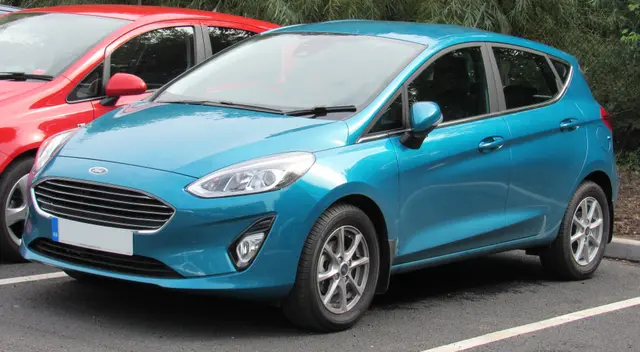
The photo shows the Toyota Echo, a closely related model.Photo: IFCAR / Wikimedia Commons · Public domain
At a glance: Length 3,620 - 3,860 mm · Kerb weight 815 - 980 kg · Top speed 155 - 190 km/h · MOT first-time pass at 13 years and older: 67.5% (UK average 69.2%) Specifications, reliability and all versions
At a glance: Length 3,790 - 3,800 mm · Kerb weight 955 - 1,030 kg · Top speed 155 - 175 km/h · MOT first-time pass at 13 years and older: 74.4% (UK average 69.2%) Specifications, reliability and all versions
At a glance: Length 3,890 - 3,950 mm · Kerb weight 955 - 1,075 kg · Top speed 155 - 175 km/h · MOT first-time pass at 6 - 8 years: 91.4% (UK average 86.4%) Specifications, reliability and all versions
At a glance: Length 3,890 - 3,950 mm · Kerb weight 955 - 1,075 kg · Top speed 155 - 175 km/h · MOT first-time pass at 6 - 8 years: 91.4% (UK average 86.4%) Specifications, reliability and all versions
At a glance: Length 3,940 - 3,950 mm · Kerb weight 1,055 - 1,115 kg · Top speed 175 km/h · MOT first-time pass at 3 years: 96.8% (UK average 92.2%) Specifications, reliability and all versions
Show all 34 versions
European Union 18 versions
New cars registered in the EU (plus Norway and Iceland), from the European Environment Agency. Figures on the NEDC procedure until 2020 and on WLTP from 2021; versions are grouped by engine and power, with their number of registrations.
Years and version
Engine
Power
Fuel
Consumption (combined)
CO₂
Electric range
EU registrations
2023 - 2025
1.5 L
68 kW (92 PS)
Hybrid
4.0 L/100 km WLTP
91 g/km
-
376,690
2021 - 2025
1.5 L
92 kW (125 PS)
Petrol
5.1 - 5.2 L/100 km WLTP
122 - 123 g/km
-
71,522
2021 - 2025
1.0 L
53 kW (72 PS)
Petrol
5.3 - 5.6 L/100 km WLTP
126 - 127 g/km
-
54,519
2021 - 2025
1.5 L
68 kW (92 PS)
Petrol
3.9 - 4.2 L/100 km WLTP
90 - 98 g/km
-
15,350
2021 - 2025
1.5 L
68 kW (92 PS)
Hybrid
2.9 - 4.0 L/100 km WLTP
89 - 90 g/km
-
1,489
2025
1.5 L
85 kW (116 PS)
Hybrid
4.1 L/100 km WLTP
93 g/km
-
12
2025
1.5 L
58 kW (79 PS)
Hybrid
4.1 L/100 km WLTP
92 g/km
-
10
2021 - 2022
1.5 L
68 kW (92 PS)
Hybrid
3.9 - 4.0 L/100 km WLTP6.8 - 7.2 kWh/100 km WLTP
91 - 92 g/km
-
331,914
2022
1.5 L
92 kW (125 PS)
Petrol
5.1 L/100 km WLTP16.6 kWh/100 km WLTP
122 g/km
75 km
18,042
2021 - 2022
1.0 L
53 kW (72 PS)
LPG
-
128 - 134 g/km
-
349
2021 - 2022
1.5 L
92 kW (125 PS)
LPG
4.9 L/100 km WLTP
117 - 120 g/km
-
182
2022
1.0 L
53 kW (72 PS)
Hybrid
4.4 L/100 km WLTP
134 g/km
-
171
2021 - 2022
1.6 L
-
Petrol
8.0 - 8.2 L/100 km WLTP
186 g/km
-
48
2022
1.5 L
68 kW (92 PS)
LPG
3.3 L/100 km WLTP
86 g/km
-
30
2021
1.5 L
82 kW (111 PS)
Petrol
5.9 L/100 km WLTP
134 g/km
-
2,430
2021
1.5 L
54 kW (73 PS)
Hybrid
4.5 L/100 km WLTP
108 g/km
-
857
2021
1.5 L
82 kW (111 PS)
LPG
5.8 L/100 km WLTP
132 g/km
-
45
2021
1.5 L
54 kW (73 PS)
Petrol
4.8 L/100 km WLTP
109 g/km
-
27
United Kingdom 11 versions
New cars on sale in the UK, from the Vehicle Certification Agency. NEDC figures until 2018 and WLTP figures after; years are the editions a version appeared in.
Years and version
Engine
Power
Fuel
Gearbox
Consumption (combined)
CO₂
2025 - 2026Design 1.5 · Design 1.5 + Safety Pack
1.5 L
68 kW (92 PS)
Hybrid
Continuously variable (CVT)
4.9 L/100 km WLTP
91 g/km
2025 - 2026Excel 1.5 (130hp)
1.5 L
Not listed
Hybrid
Continuously variable (CVT)
4.3 L/100 km WLTP
95 g/km
2025 - 2026Excel 1.5 + Pan Roof (130hp) · GR SPORT 1.5 (130hp) · GR SPORT 1.5 + Bi-tone (130hp) and 2 more trims
1.5 L
Not listed
Hybrid
Continuously variable (CVT)
4.3 L/100 km WLTP
96 g/km
2025 - 2026Icon 1.5
1.5 L
68 kW (92 PS)
Hybrid
Continuously variable (CVT)
4.9 L/100 km WLTP
92 g/km
2026Icon 1.5
1.5 L
85 kW (116 PS)
Hybrid
Continuously variable (CVT)
4.0 L/100 km WLTP
91 g/km
2026Design 1.5 · Design 1.5 + Safety Pack
1.5 L
85 kW (116 PS)
Hybrid
Continuously variable (CVT)
4.2 L/100 km WLTP
96 g/km
2026Excel 1.5 (130hp) · Excel 1.5 + Pan Roof (130hp)
1.5 L
Not listed
Hybrid
Continuously variable (CVT)
4.2 L/100 km WLTP
95 g/km
2026GR SPORT 1.5 (130hp) · GR SPORT 1.5 + Safety Pack (130hp) · GR SPORT 1.5 + Bi-tone (130hp) and 1 more trim
New cars registered in the EU (plus Norway and Iceland), from the European Environment Agency. Figures on the NEDC procedure until 2020 and on WLTP from 2021; versions are grouped by engine and power, with their number of registrations.
Years and version
Engine
Power
Fuel
CO₂
EU registrations
2020
1.5 L
68 kW (92 PS)
Hybrid
68 g/km
99,122
2020
1.5 L
82 kW (111 PS)
Petrol
116 g/km
87,066
2020
1.5 L
54 kW (73 PS)
Petrol
86 g/km
9,614
2020
1.5 L
92 kW (125 PS)
Petrol
112 g/km
7,349
2020
1.5 L
68 kW (92 PS)
Petrol
70 g/km
5,675
2020
1.5 L
82 kW (111 PS)
LPG
124 g/km
137
2020
1.5 L
68 kW (92 PS)
Hybrid
66 g/km
49
2020
1.0 L
53 kW (72 PS)
LPG
127 g/km
32
2020
1.5 L
82 kW (111 PS)
Hybrid
117 g/km
10
2011
1.3 L
73 kW (99 PS)
Petrol
121 g/km
110,292
2011
1.0 L
51 kW (69 PS)
Petrol
116 g/km
78,862
2011
1.4 L
66 kW (90 PS)
Diesel
108 g/km
55,594
2011
-
Not listed
Petrol
121 g/km
9,172
2011
1.3 L
74 kW (101 PS)
Petrol
122 g/km
1,416
2011
-
Not listed
Diesel
108 g/km
826
2011
1.0 L
51 kW (69 PS)
LPG
117 g/km
400
2011
1.3 L
73 kW (99 PS)
LPG
124 g/km
236
2011
1.3 L
64 kW (87 PS)
Petrol
138 g/km
22
United Kingdom 11 versions
New cars on sale in the UK, from the Vehicle Certification Agency. NEDC figures until 2018 and WLTP figures after; years are the editions a version appeared in.
62 official safety recalls for the Toyota Yaris from NHTSA (United States), DVSA (United Kingdom) and the EU Safety Gate, newest first. Recall repairs are normally free at the maker’s dealers.
Combination meter display may fail at start-up2023 - 2025
Data module may fail to restart, disabling e-call2021 - 2023
Right-side wheel nuts may be incorrectly tightened2023
Hybrid system may not enter failsafe mode2020
Radar sensor may not be initialized correctly2020 - 2021
Official figures are measured on standard test procedures and differ between markets. Your consumption depends on how, where and in what conditions you drive.