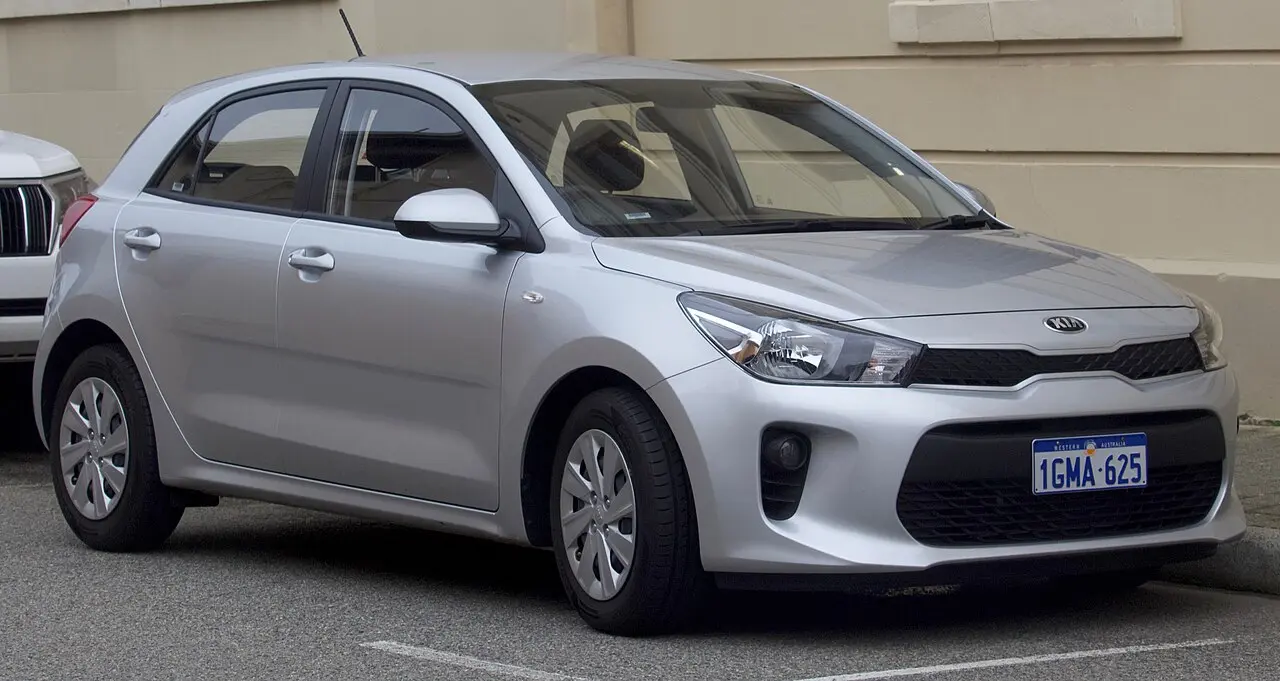
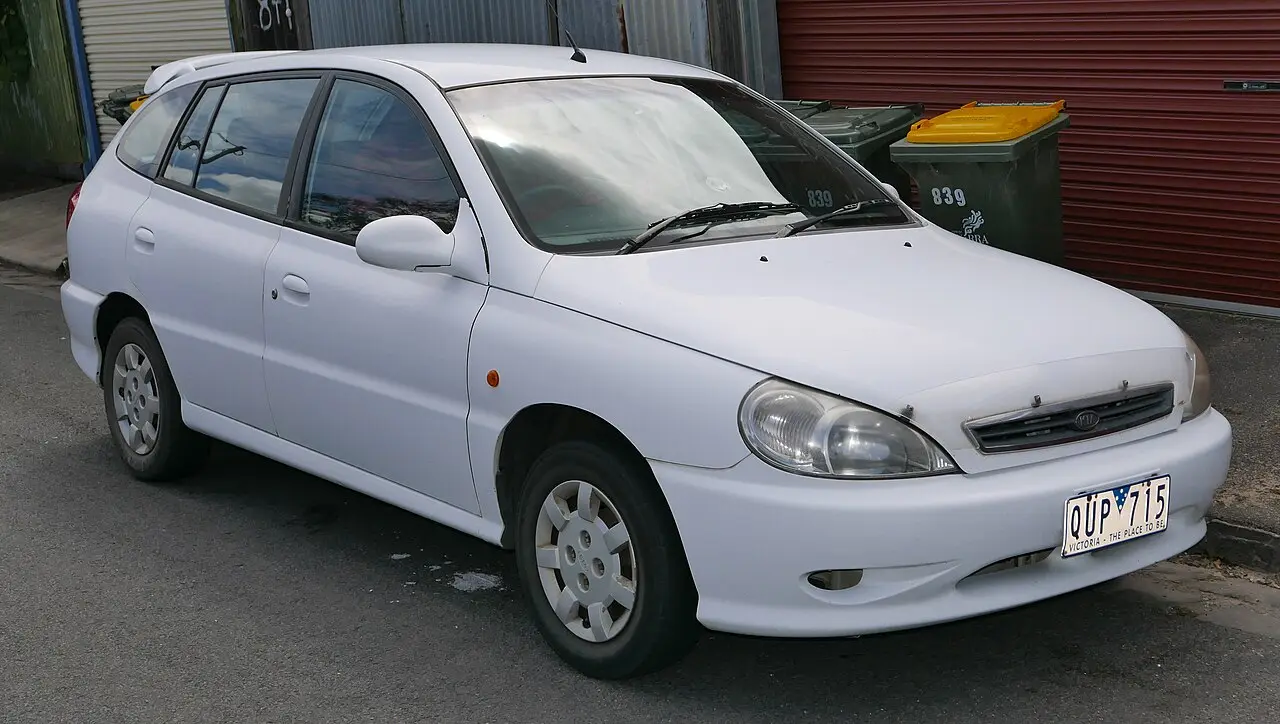
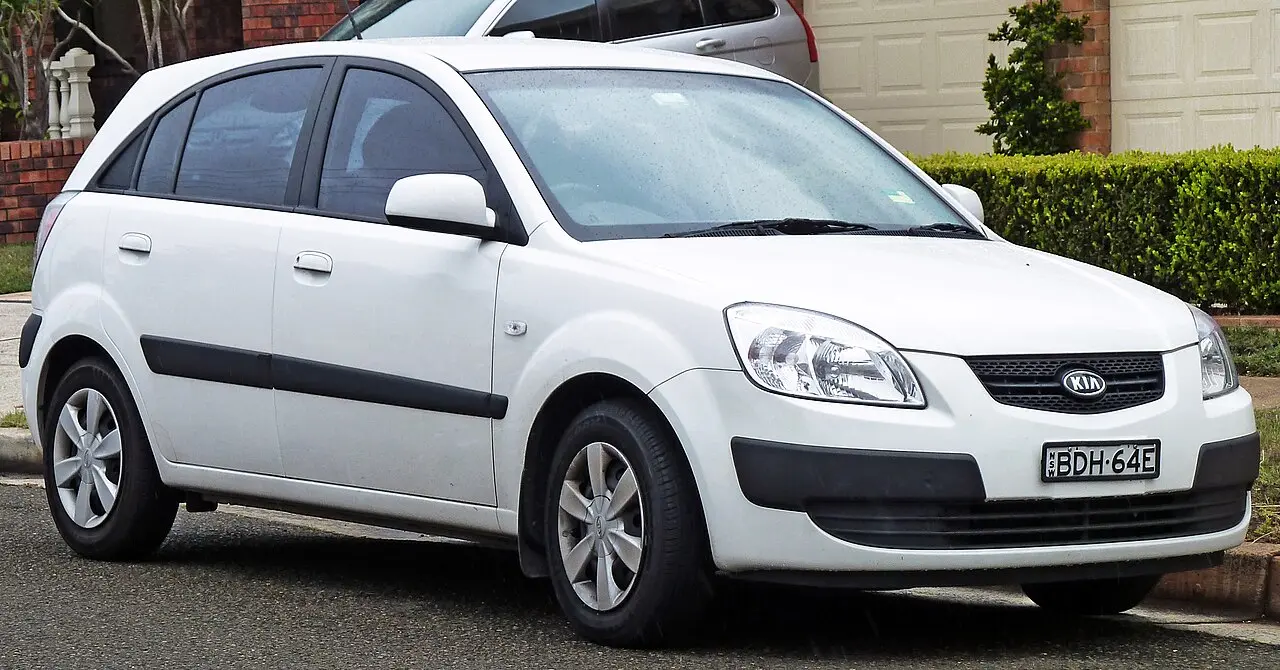
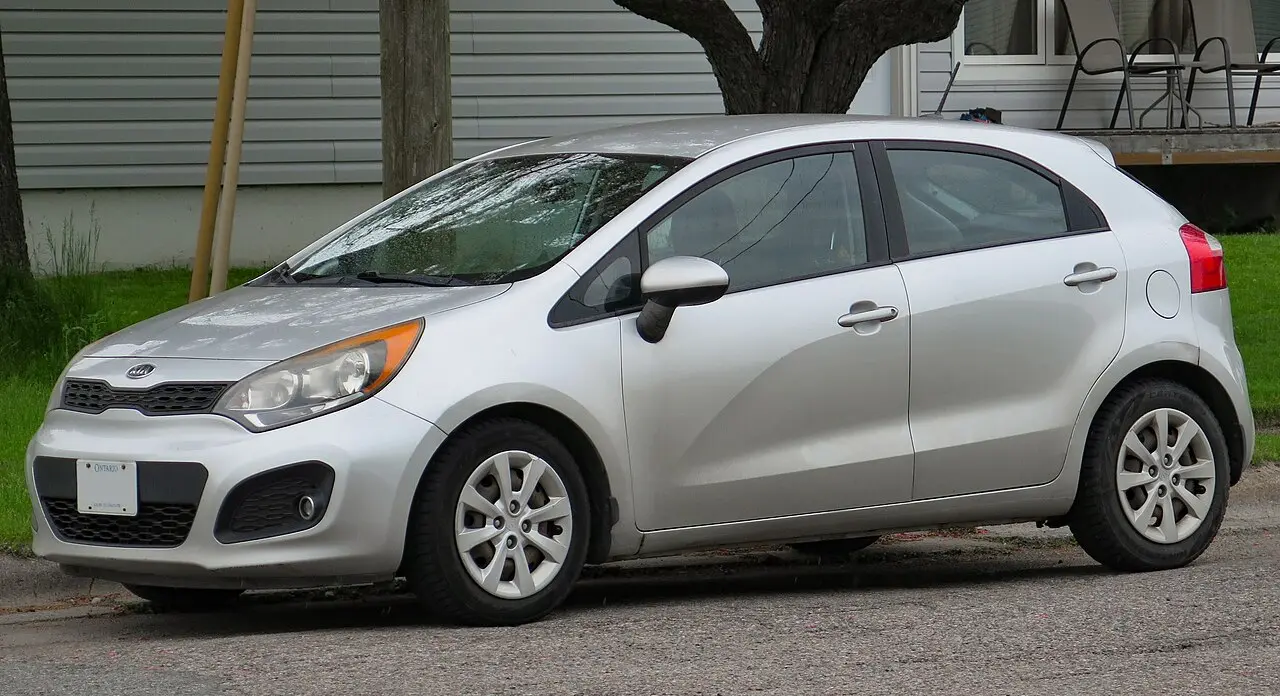
The official data lists 370 versions of the Kia Rio (2001–2026), in the European Union, the United Kingdom, France, the United States, and Canada. Each market publishes its own figures, measured on its own test procedure.
At a glance
Years in the data
2001–2026
Markets
European Union, United Kingdom, France, United States, Canada
Engines
1.0 L to 1.6 L
Power
51 kW (69 PS) to 118 kW (160 PS)
Fuels
Petrol, Hybrid, Diesel, LPG, Natural gas
Lowest consumption (France)
3.2 L/100 km (NEDC)
Lowest consumption (United Kingdom)
3.2 L/100 km (NEDC)
Lowest consumption (European Union)
4.3 L/100 km (WLTP)
New registrations in the EU
1,203,593
What is the Kia Rio?
The Rio is Kia’s small passenger car, sold as a hatchback and, in some markets, a sedan. Its compact shape suits city streets and daily trips, while the hatchback offers a useful load area. It sits at the smaller end of Kia’s range.
The Rio’s four generations span 2001–2023: the first ran from 2001–2005, the second from 2005–2011, the third from 2012–2017 and the fourth from 2017–2023. Each brought updated styling and equipment, with body styles and availability varying by market.
Engines and power
Across EU registrations, the Rio spans 1.0- to 1.6-litre engines, with listed power from 51 kW (69 PS) to 120 kW (163 PS). Fuel choices include petrol, diesel, hybrid, LPG and natural gas. UK versions span 1.0 to 1.5 litres and 55 kW (75 PS) to 118 kW (160 PS; US and Canadian versions use 1.5- or 1.6-litre petrol engines.
The 1.2-litre petrol Rio was a common configuration in EU registrations. Among the most registered versions were 62 kW (84 PS) models.
How economical is the Kia Rio?
The lowest listed EU consumption is 4.3 L/100 km on WLTP. UK and French figures reach 3.2 L/100 km on NEDC. In the US, the EPA figure reaches 6.5 L/100 km, or 36 MPG combined; Canada’s 5-cycle rating reaches 6.6 L/100 km. WLTP and NEDC in Europe, EPA in the US and Canada’s 5-cycle procedure use different tests, so their results are not directly comparable.
The Rio appears in EU registration figures for 2010–2025 and in UK, US and Canadian figures dating back to 2001.
Questions and answers
What generations of Kia Rio are listed?
Four: the first generation (2001–2005), second (2005–2011), third (2012–2017) and fourth (2017–2023).
What is the lowest listed Rio fuel consumption?
The EU figure is 4.3 L/100 km on WLTP. UK and French figures reach 3.2 L/100 km on NEDC. The procedures differ.
Was the Rio sold in North America?
Yes. US and Canadian figures span 2001–2023 and include 1.5- and 1.6-litre petrol versions.
New cars registered in the EU (plus Norway and Iceland), from the European Environment Agency. Figures on the NEDC procedure until 2020 and on WLTP from 2021; versions are grouped by engine and power, with their number of registrations.
Years and version
Engine
Power
Fuel
Consumption (combined)
CO₂
EU registrations
2023
1.2 L
62 kW (84 PS)
Petrol
5.5 L/100 km WLTP
125 g/km
14,656
2023
1.0 L
74 kW (101 PS)
Petrol
5.5 L/100 km WLTP
125 g/km
7,344
2023
1.0 L
88 kW (120 PS)
Hybrid
5.5 L/100 km WLTP
125 g/km
1,893
2023
1.0 L
74 kW (101 PS)
Hybrid
5.2 L/100 km WLTP
119 g/km
1,550
2022
1.2 L
62 kW (84 PS)
Petrol
5.4 L/100 km WLTP
126 g/km
9,813
2022
1.0 L
74 kW (101 PS)
Petrol
5.3 L/100 km WLTP
123 g/km
6,125
2022
1.2 L
61 kW (83 PS)
Petrol
5.5 L/100 km WLTP
126 g/km
5,187
2022
1.0 L
88 kW (120 PS)
Hybrid
5.3 L/100 km WLTP
124 g/km
2,016
2022
1.0 L
73 kW (99 PS)
Hybrid
5.5 L/100 km WLTP
120 g/km
1,879
2022
1.2 L
62 kW (84 PS)
LPG
5.0 L/100 km WLTP
117 g/km
1,617
2022
1.0 L
73 kW (99 PS)
Petrol
5.5 L/100 km WLTP
124 g/km
1,409
2022
1.0 L
74 kW (101 PS)
Hybrid
4.6 L/100 km WLTP
120 g/km
1,382
2022
1.2 L
61 kW (83 PS)
LPG
4.9 L/100 km WLTP
123 g/km
140
2022
1.0 L
206 kW (280 PS)
Petrol
–
126 g/km
98
2022
1.2 L
206 kW (280 PS)
Petrol
–
127 g/km
70
2021
1.2 L
61 kW (83 PS)
Petrol
5.5 L/100 km WLTP
128 g/km
19,370
2021
1.2 L
62 kW (84 PS)
Petrol
5.3 L/100 km WLTP
125 g/km
14,789
2021
1.0 L
73 kW (99 PS)
Petrol
5.4 L/100 km WLTP
124 g/km
11,257
2021
1.0 L
74 kW (101 PS)
Petrol
5.2 L/100 km WLTP
124 g/km
8,506
2021
1.0 L
88 kW (120 PS)
Hybrid
5.4 L/100 km WLTP
124 g/km
5,182
2021
1.0 L
74 kW (101 PS)
Hybrid
4.3 L/100 km WLTP
121 g/km
3,822
2021
1.0 L
73 kW (99 PS)
Hybrid
5.5 L/100 km WLTP
122 g/km
3,255
2021
1.2 L
62 kW (84 PS)
LPG
5.1 L/100 km WLTP
118 g/km
1,775
2021
1.0 L
88 kW (120 PS)
Petrol
5.4 L/100 km WLTP
130 g/km
1,120
2021
1.2 L
62 kW (84 PS)
Petrol
6.0 L/100 km WLTP
139 g/km
414
2021
1.2 L
61 kW (83 PS)
Petrol
5.8 L/100 km WLTP
140 g/km
300
2021
1.2 L
62 kW (84 PS)
LPG
5.5 L/100 km WLTP
135 g/km
120
2021
1.4 L
73 kW (99 PS)
Petrol
6.2 L/100 km WLTP
141 g/km
20
2020
1.2 L
62 kW (84 PS)
Petrol
–
122 g/km
21,000
2020
1.0 L
88 kW (120 PS)
Petrol
–
117 g/km
13,187
2020
1.0 L
74 kW (101 PS)
Petrol
–
113 g/km
8,670
2020
1.2 L
61 kW (83 PS)
Petrol
–
127 g/km
7,642
2020
1.0 L
73 kW (99 PS)
Petrol
–
113 g/km
7,225
2020
1.2 L
62 kW (84 PS)
Petrol
–
115 g/km
3,687
2020
1.2 L
61 kW (83 PS)
Petrol
–
117 g/km
2,172
2020
1.2 L
62 kW (84 PS)
LPG
–
105 g/km
1,896
2020
1.4 L
73 kW (99 PS)
Petrol
–
135 g/km
1,227
2020
1.0 L
88 kW (120 PS)
Hybrid
–
106 g/km
1,179
2020
1.0 L
74 kW (101 PS)
Hybrid
–
98 g/km
317
2018–2020
1.6 L
85 kW (116 PS)
Diesel
–
106 g/km
214
2020
1.0 L
73 kW (99 PS)
Hybrid
–
100 g/km
149
2020
1.2 L
62 kW (84 PS)
LPG
–
112 g/km
40
2019–2020
1.6 L
100 kW (136 PS)
Diesel
–
108 g/km
34
2020
1.2 L
62 kW (84 PS)
Hybrid
–
115 g/km
33
2019
1.2 L
62 kW (84 PS)
Petrol
–
128 g/km
25,387
2019
1.2 L
61 kW (83 PS)
Petrol
–
125 g/km
12,658
2019
1.0 L
88 kW (120 PS)
Petrol
–
119 g/km
12,533
2019
1.4 L
73 kW (99 PS)
Petrol
–
136 g/km
10,834
2019
1.0 L
73 kW (99 PS)
Petrol
–
115 g/km
6,656
2019
1.0 L
74 kW (101 PS)
Petrol
–
115 g/km
6,202
2019
1.2 L
62 kW (84 PS)
LPG
–
105 g/km
593
2019
1.4 L
57 kW (77 PS)
Diesel
–
92 g/km
264
2019
1.4 L
66 kW (90 PS)
Diesel
–
98 g/km
164
2019
1.2 L
73 kW (99 PS)
Petrol
–
118 g/km
10
2019
1.4 L
62 kW (84 PS)
Petrol
–
143 g/km
10
2018
1.2 L
61 kW (83 PS)
Petrol
–
113 g/km
26,026
2018
1.2 L
62 kW (84 PS)
Petrol
–
112 g/km
18,614
2018
1.0 L
74 kW (101 PS)
Petrol
–
100 g/km
12,020
2018
1.4 L
73 kW (99 PS)
Petrol
–
126 g/km
9,618
2018
1.0 L
73 kW (99 PS)
Petrol
–
104 g/km
7,558
2018
1.0 L
88 kW (120 PS)
Petrol
–
111 g/km
5,168
2018
1.4 L
66 kW (90 PS)
Diesel
–
98 g/km
4,658
2018
1.4 L
57 kW (77 PS)
Diesel
–
92 g/km
2,820
2018
1.2 L
62 kW (84 PS)
LPG
–
107 g/km
1,976
2017–2018
1.6 L
81 kW (110 PS)
Diesel
–
109 g/km
360
2018
1.4 L
80 kW (109 PS)
Petrol
–
126 g/km
54
2017
1.2 L
62 kW (84 PS)
Petrol
–
110 g/km
54,540
2017
1.0 L
74 kW (101 PS)
Petrol
–
96 g/km
18,110
2017
1.4 L
66 kW (90 PS)
Diesel
–
98 g/km
13,246
2017
1.2 L
61 kW (83 PS)
Petrol
–
110 g/km
12,234
2017
1.4 L
73 kW (99 PS)
Petrol
–
133 g/km
10,288
2017
1.1 L
55 kW (75 PS)
Diesel
–
97 g/km
5,898
2017
1.2 L
62 kW (84 PS)
Other fuel
–
108 g/km
4,082
2017
1.2 L
93 kW (126 PS)
LPG
–
109 g/km
3,984
2017
1.4 L
57 kW (77 PS)
Diesel
–
91 g/km
3,846
2017
1.0 L
88 kW (120 PS)
Petrol
–
107 g/km
3,116
2017
1.4 L
80 kW (109 PS)
Petrol
–
124 g/km
2,500
2017
1.2 L
93 kW (126 PS)
Petrol
–
114 g/km
1,530
2017
1.4 L
110 kW (150 PS)
Petrol
–
116 g/km
1,306
2017
1.4 L
120 kW (163 PS)
Petrol
–
124 g/km
636
2017
1.4 L
99 kW (135 PS)
Diesel
–
99 g/km
240
2017
1.2 L
51 kW (69 PS)
Petrol
–
115 g/km
70
2017
1.2 L
63 kW (86 PS)
Petrol
–
116 g/km
68
2017
1.1 L
83 kW (113 PS)
Diesel
–
99 g/km
14
United Kingdom 51 versions
New cars on sale in the UK, from the Vehicle Certification Agency. NEDC figures until 2018 and WLTP figures after; years are the editions a version appeared in.
Model years sold in the USA, from the EPA and the Department of Energy (fueleconomy.gov). MPG on the EPA test; litres per 100 km = 235.215 ÷ MPG.
Years and version
Engine
Fuel
Gearbox
Drive
Consumption (combined)
CO₂
2023
1.6 L
Petrol
Continuously variable (CVT)
Front-wheel drive
36 MPG (6.5 L/100 km) EPA
155 g/km
2020–2022
1.6 L
Petrol
Continuously variable (CVT)
Front-wheel drive
36 MPG (6.5 L/100 km) EPA
155 g/km
2019SIDI
1.6 L
Petrol
6-speed manual
Front-wheel drive
32 MPG (7.4 L/100 km) EPA
173 g/km
2018–2019SIDI
1.6 L
Petrol
6-speed automatic
Front-wheel drive
32 MPG (7.4 L/100 km) EPA
174 g/km
2018SIDI
1.6 L
Petrol
6-speed manual
Front-wheel drive
32 MPG (7.4 L/100 km) EPA
172 g/km
2017SIDI
1.6 L
Petrol
6-speed automatic
Front-wheel drive
30 MPG (7.8 L/100 km) EPA
181 g/km
Canada 8 versions
Model years sold in Canada, from Natural Resources Canada fuel consumption ratings (5-cycle test).
Years and version
Engine
Fuel
Gearbox
Consumption (combined)
CO₂
2020–2023Compact
1.6 L
Petrol
6-speed manual
7.0 L/100 km 5-cycle
166 g/km
2023Compact
1.6 L
Petrol
Continuously variable (CVT)
6.7 L/100 km 5-cycle
160 g/km
2021–2022Compact
1.6 L
Petrol
Continuously variable (CVT)
6.7 L/100 km 5-cycle
159 g/km
2020Compact
1.6 L
Petrol
Continuously variable (CVT)
6.6 L/100 km 5-cycle
151 g/km
2018–2019Compact
1.6 L
Petrol
6-speed automatic
7.5 L/100 km 5-cycle
177 g/km
2018–2019Compact
1.6 L
Petrol
6-speed manual
7.5 L/100 km 5-cycle
175 g/km
2017Compact
1.6 L
Petrol
6-speed automatic
7.8 L/100 km 5-cycle
181 g/km
2017Compact
1.6 L
Petrol
6-speed manual
7.8 L/100 km 5-cycle
181 g/km
Versions outside these generations
European Union 8 versions
New cars registered in the EU (plus Norway and Iceland), from the European Environment Agency. Figures on the NEDC procedure until 2020 and on WLTP from 2021; versions are grouped by engine and power, with their number of registrations.
Years and version
Engine
Power
Fuel
Consumption (combined)
CO₂
EU registrations
2025
1.0 L
74 kW (101 PS)
Petrol
5.6 L/100 km WLTP
128 g/km
527
2025
1.2 L
58 kW (79 PS)
Petrol
6.1 L/100 km WLTP
136 g/km
318
2025
1.0 L
74 kW (101 PS)
Hybrid
5.4 L/100 km WLTP
123 g/km
60
2025
1.2 L
62 kW (84 PS)
Petrol
6.1 L/100 km WLTP
132 g/km
15
2024
1.2 L
62 kW (84 PS)
Petrol
5.6 L/100 km WLTP
126 g/km
648
2024
1.0 L
74 kW (101 PS)
Petrol
5.5 L/100 km WLTP
124 g/km
328
2024
1.0 L
88 kW (120 PS)
Hybrid
5.4 L/100 km WLTP
123 g/km
34
2024
1.0 L
74 kW (101 PS)
Hybrid
5.2 L/100 km WLTP
118 g/km
13
United Kingdom 7 versions
New cars on sale in the UK, from the Vehicle Certification Agency. NEDC figures until 2018 and WLTP figures after; years are the editions a version appeared in.
Years and version
Engine
Power
Fuel
Gearbox
Consumption (combined)
CO₂
20242 1.0 T-GDi 99bhp
1.0 L
99 kW (135 PS)
Petrol
6-speed manual
5.3 L/100 km WLTP
120 g/km
20242 1.0 T-GDi 99bhp DCT
1.0 L
99 kW (135 PS)
Petrol
7-speed automatic
5.4 L/100 km WLTP
123 g/km
20243 1.0 T-GDi 48V 118bhp iMT
1.0 L
118 kW (160 PS)
Petrol
6-speed manual
5.2 L/100 km WLTP
118 g/km
20243 1.0 T-GDi 48V 118bhp DCT
1.0 L
118 kW (160 PS)
Petrol
7-speed automatic
5.2 L/100 km WLTP
119 g/km
2024GT-Line S 1.0 T-GDi 48V 118bhp iMT
1.0 L
118 kW (160 PS)
Petrol
6-speed manual
5.5 L/100 km WLTP
125 g/km
20241 1.2 DPi 83bhp
1.2 L
83 kW (113 PS)
Petrol
5-speed manual
5.3 L/100 km WLTP
120 g/km
20242 1.2 DPi 83bhp
1.2 L
83 kW (113 PS)
Petrol
5-speed manual
5.4 L/100 km WLTP
122 g/km
France 6 versions
New cars on sale in France, from ADEME Car Labelling. NEDC figures until 2015, WLTP figures in the current catalogue.
Years and version
Engine
Power
Fuel
Gearbox
Consumption (combined)
CO₂
2026RIO 1.0 essence T-GDi (100ch) ISG BVM6
1.0 L
74 kW (100 PS)
Petrol
6-speed manual
5.2 L/100 km WLTP
118 g/km
2026RIO 1.0 essence T-GDi (100ch) MHEV iBVM6
1.0 L
74 kW (100 PS)
Hybrid
6-speed manual
5.0 L/100 km WLTP
114 g/km
2026RIO 1.0 essence T-GDi (100ch) ISG DCT7
1.0 L
74 kW (100 PS)
Petrol
7-speed automatic
5.3 L/100 km WLTP
120 g/km
2026RIO 1.0 essence T-GDi (120ch) MHEV DCT7
1.0 L
88 kW (120 PS)
Hybrid
7-speed automatic
5.1 L/100 km WLTP
116 g/km
2026RIO 1.0 essence T-GDi (120ch) MHEV iBVM6
1.0 L
88 kW (120 PS)
Hybrid
6-speed manual
5.1 L/100 km WLTP
115 g/km
2026RIO 1.2 essence DPi (84ch) ISG BVM5
1.2 L
62 kW (84 PS)
Petrol
5-speed manual
5.2 L/100 km WLTP
118 g/km
Official figures are measured on standard test procedures and differ between markets. Your consumption depends on how, where and in what conditions you drive.