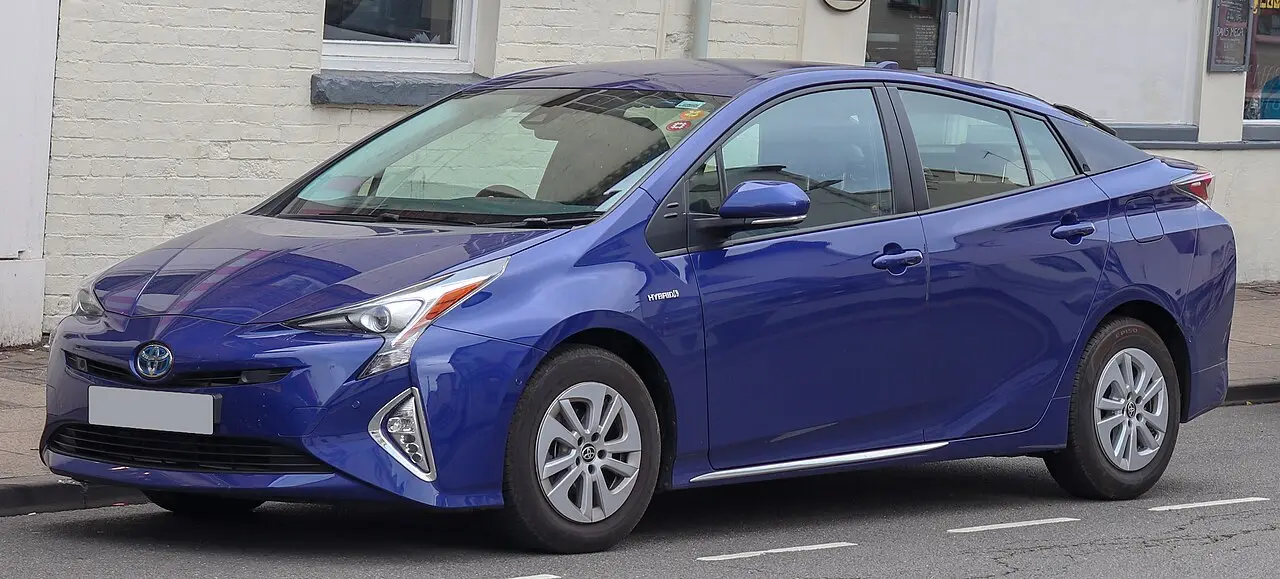
The official data lists 198 versions of the Toyota Prius (2001–2027), in the European Union, the United Kingdom, France, the United States, and Canada. Each market publishes its own figures, measured on its own test procedure.
At a glance
Years in the data
2001–2027
Markets
European Union, United Kingdom, France, United States, Canada
The Prius is a passenger car built around Toyota’s petrol-electric hybrid system. It became the world’s first mass-produced hybrid passenger car when it launched in 1997, and helped establish hybrid technology as a central part of Toyota’s engineering. Plug-in hybrid versions later joined the range, allowing some driving on electric power before the engine and hybrid system take over.
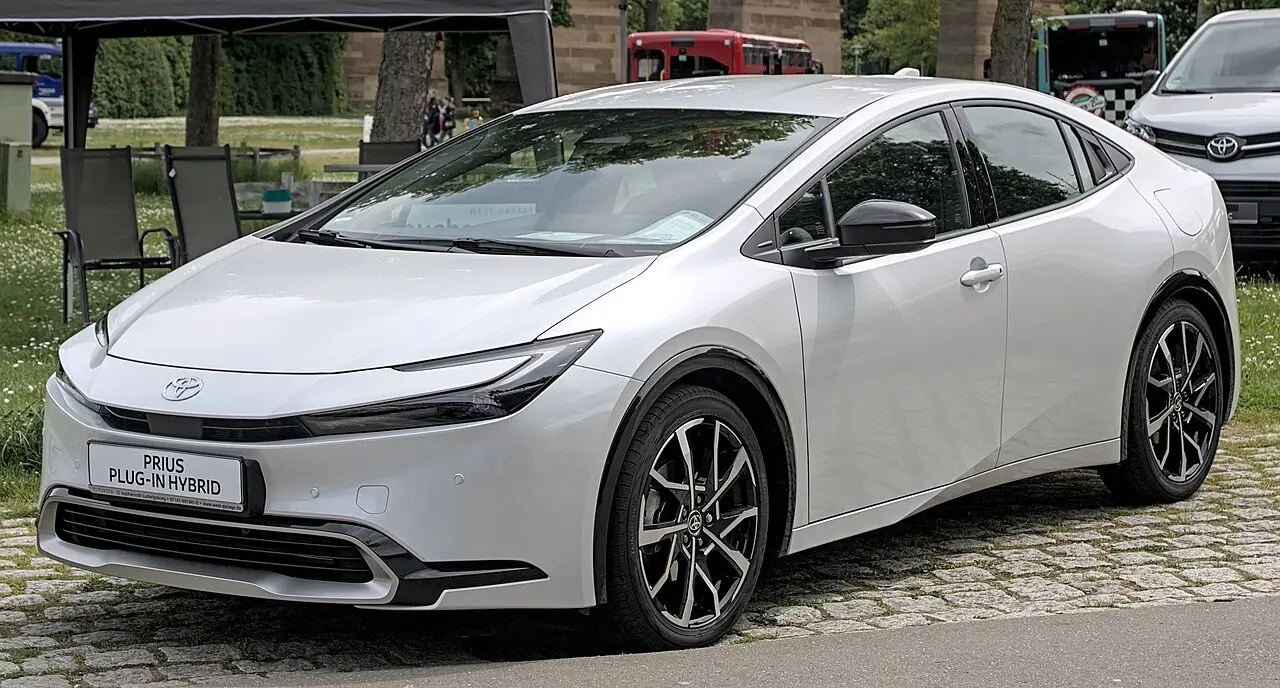
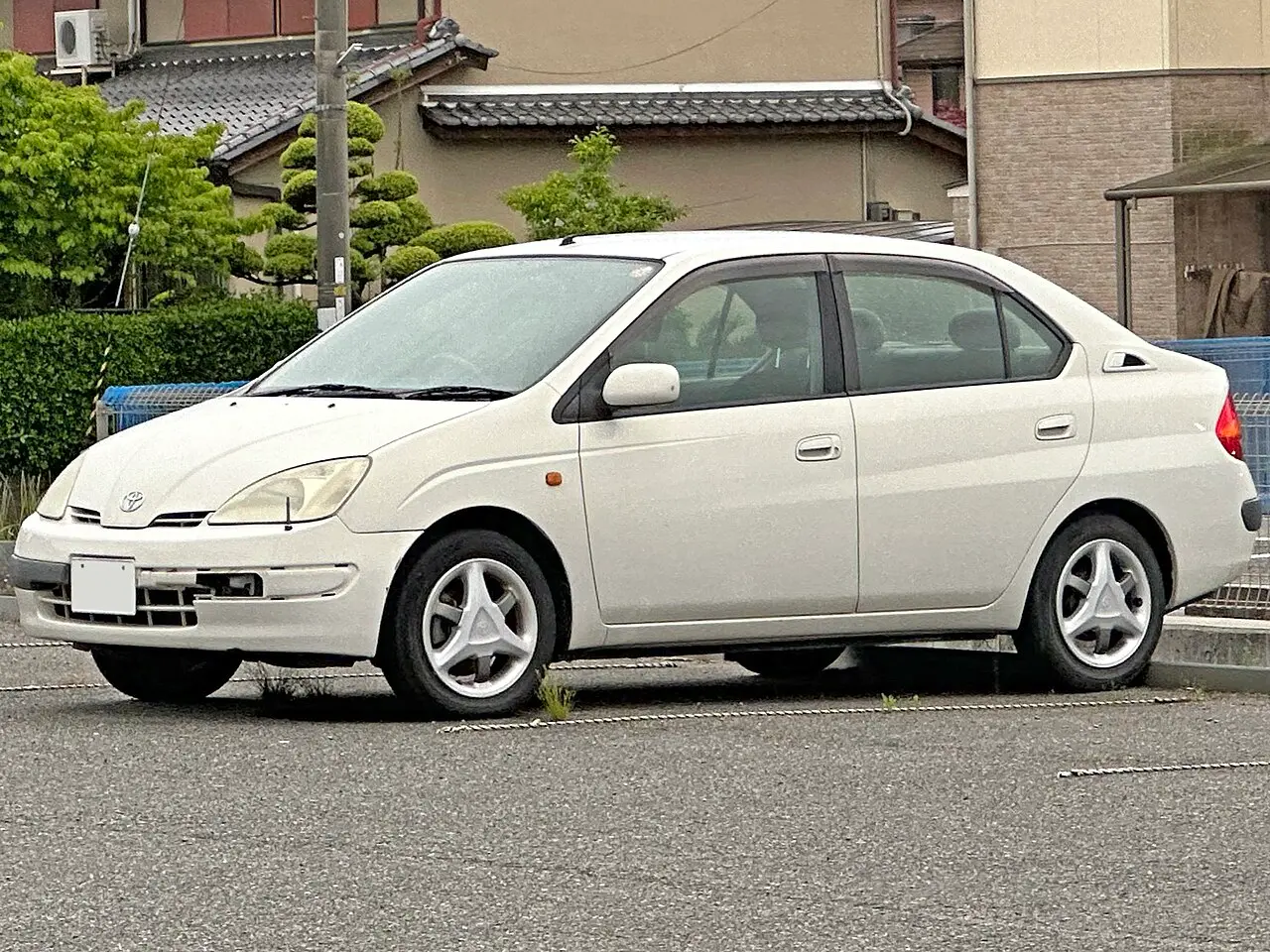
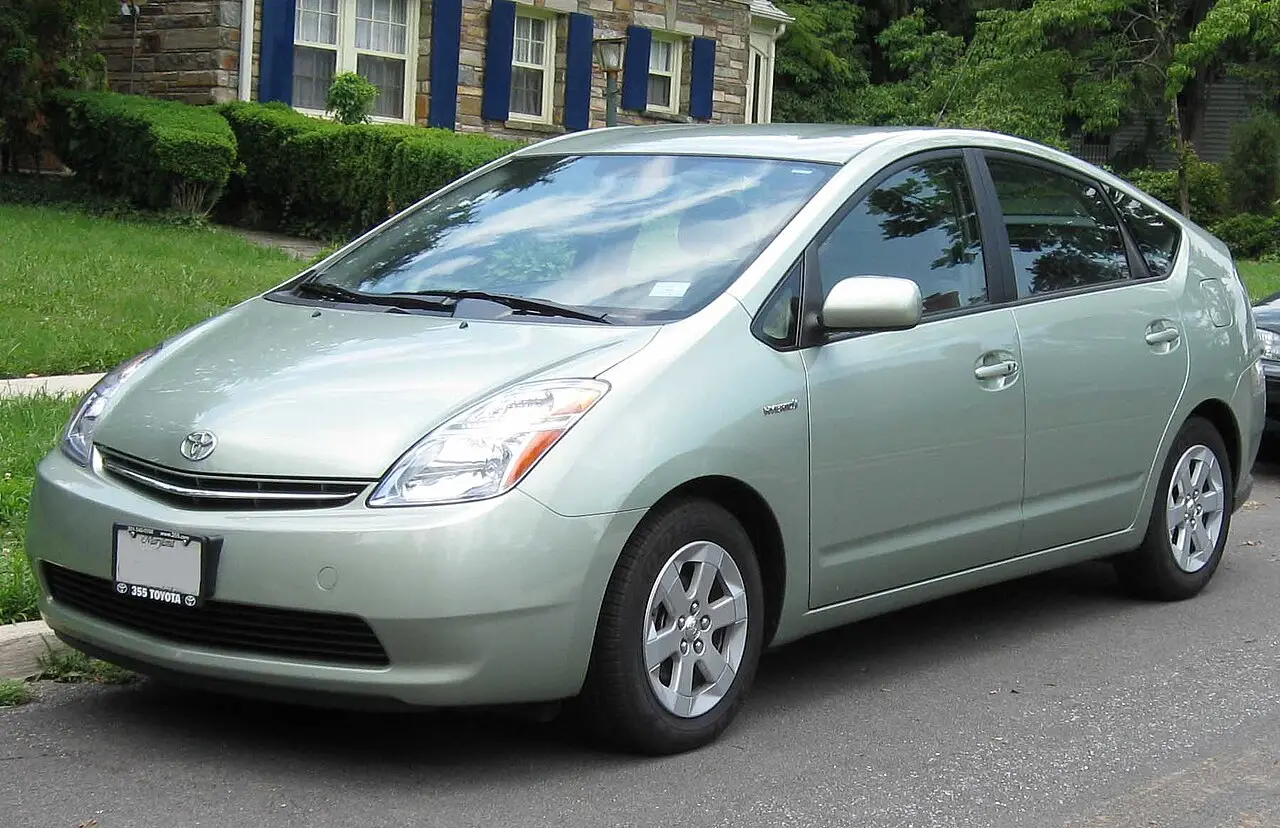
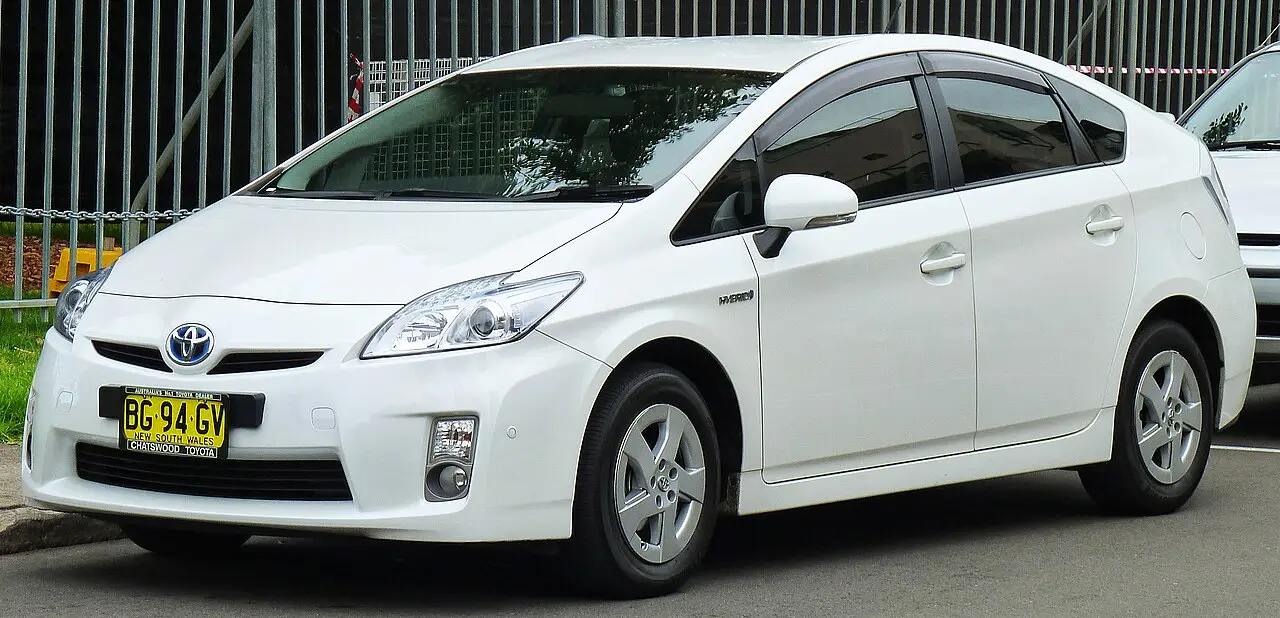
The Prius has changed shape over its generations. The second generation introduced the distinctive, sloping silhouette associated with the model, while the third adopted a 1.8-litre engine. The fourth was the first Toyota model based on the Toyota New Global Architecture. The fifth-generation range includes hybrid and plug-in hybrid versions.
Prius generations and power
The generations covered here are the first (2001–2003), second (2004–2009), third (2010–2015), fourth (2016–2022) and fifth (2023–today).
In EU registrations, engine sizes range from 1.8 to 2.0 litres and power from 37 kW (50 PS) to 111 kW (151 PS). UK records cover 1.5 to 2.0-litre engines, with power from 72 kW (98 PS) to 223 kW (303 PS). These ranges reflect versions recorded in each market.
How economical is the Toyota Prius?
In the EU, the lowest listed consumption for conventional hybrid versions is 4.3 L/100 km on WLTP. For plug-in hybrids, the lowest figure is 0.7 L/100 km WLTP. That official weighted figure assumes that part of the driving is electric. In the UK, the corresponding figures are 1.2 L/100 km and 1 L/100 km on NEDC. France lists 3.9 L/100 km for hybrids and 2.1 L/100 km for plug-in hybrids, also on NEDC.
In the USA, the EPA’s lowest listed figure is 4.1 L/100 km, with a best combined rating of 57 MPG. Canada lists 4.4 L/100 km under the NRCan 5-cycle test. European WLTP and NEDC, US EPA and Canadian 5-cycle tests use different procedures, so their results are not directly comparable.
Where was the Prius sold?
The Prius appears in EU, UK, French, US and Canadian records. The recorded year spans begin in 2001 in the USA and Canada, and continue through 2025 in EU registrations, 2026 in the UK and Canada, and 2027 in the USA.
Questions and answers
Is the Prius a hybrid or a plug-in hybrid?
It has been sold as both. The fifth-generation range includes hybrid and plug-in hybrid versions.
What is the lowest official Prius consumption figure listed in the EU?
The lowest listed figure is 0.7 L/100 km WLTP for a plug-in hybrid. It is a weighted figure that assumes some electric driving.
How do the US and Canadian figures differ from European figures?
The USA uses EPA ratings, Canada uses the NRCan 5-cycle test, and European figures use WLTP or NEDC. The procedures differ, so the results are not directly comparable.
New cars registered in the EU (plus Norway and Iceland), from the European Environment Agency. Figures on the NEDC procedure until 2020 and on WLTP from 2021; versions are grouped by engine and power, with their number of registrations.
Years and version
Engine
Power
Fuel
Consumption (combined)
CO₂
Electric range
EU registrations
2025
2.0 L
111 kW (151 PS)
Plug-in hybrid
0.8 L/100 km WLTP13.0 kWh/100 km WLTP
22 g/km
73 km
1,453
2025
2.0 L
111 kW (151 PS)
Hybrid
–
–
–
74
2025
2.0 L
120 kW (163 PS)
Plug-in hybrid
0.2 L/100 km WLTP14.9 kWh/100 km WLTP
9 g/km
77 km
10
2024
2.0 L
111 kW (151 PS)
Plug-in hybrid
0.7 L/100 km WLTP12.6 kWh/100 km WLTP
15 g/km
74 km
2,238
2023
2.0 L
111 kW (151 PS)
Plug-in hybrid
0.7 L/100 km WLTP12.5 kWh/100 km WLTP
16 g/km
73 km
1,920
2023
1.8 L
72 kW (98 PS)
Plug-in hybrid
1.2 L/100 km WLTP9.9 kWh/100 km WLTP
28 g/km
45 km
71
2023
1.8 L
72 kW (98 PS)
Hybrid
4.4 L/100 km WLTP
99 g/km
–
58
United Kingdom 11 versions
New cars on sale in the UK, from the Vehicle Certification Agency. NEDC figures until 2018 and WLTP figures after; years are the editions a version appeared in.
Years and version
Engine
Power
Fuel
Gearbox
Consumption (combined)
CO₂
Electric range
2025–2026Design
2.0 L
164 kW (223 PS)
Plug-in hybrid
Continuously variable (CVT)
4.1 L/100 km WLTP12.8 kWh/100 km WLTP
93 g/km
86 km
2025–2026Excel
2.0 L
164 kW (223 PS)
Plug-in hybrid
Continuously variable (CVT)
4.6 L/100 km WLTP13.3 kWh/100 km WLTP
105 g/km
71 km
2025–2026Design
2.0 L
164 kW (223 PS)
Plug-in hybrid
Continuously variable (CVT)
4.1 L/100 km WLTP9.8 kWh/100 km WLTP
93 g/km
84 km
2025–2026Excel
2.0 L
164 kW (223 PS)
Plug-in hybrid
Continuously variable (CVT)
4.6 L/100 km WLTP9.5 kWh/100 km WLTP
105 g/km
71 km
2024Active 5dr 1.8 · Business Edition with Space Saver 5dr 1.8 · Business Edition+ 5dr 1.8 15" wheels and 1 more trim
1.8 L
97 kW (132 PS)
Hybrid
Continuously variable (CVT)
4.2 L/100 km WLTP
94 g/km
–
2024Business Edition+ 5dr 1.8 · Excel 5dr 1.8
1.8 L
97 kW (132 PS)
Hybrid
Continuously variable (CVT)
4.6 L/100 km WLTP
104 g/km
–
2024Business Edition+ 5dr 1.8 4x4
1.8 L
97 kW (132 PS)
Hybrid
Continuously variable (CVT)
4.8 L/100 km WLTP
109 g/km
–
20241.8L HYB Icon
1.8 L
97 kW (132 PS)
Hybrid
Continuously variable (CVT)
5.8 L/100 km WLTP
132 g/km
–
20241.8L HYB Excel
1.8 L
97 kW (132 PS)
Hybrid
Continuously variable (CVT)
6.0 L/100 km WLTP
135 g/km
–
2024Excel
2.0 L
223 kW (303 PS)
Plug-in hybrid
Continuously variable (CVT)
13.3 kWh/100 km WLTP
–
71 km
2024Design
2.0 L
223 kW (303 PS)
Plug-in hybrid
Continuously variable (CVT)
12.8 kWh/100 km WLTP
–
86 km
United States 12 versions
Model years sold in the USA, from the EPA and the Department of Energy (fueleconomy.gov). MPG on the EPA test; litres per 100 km = 235.215 ÷ MPG.
Years and version
Engine
Fuel
Gearbox
Drive
Consumption (combined)
CO₂
2027SIDI & PFI; Hybrid
2.0 L
Hybrid
Continuously variable (CVT)
All-wheel drive
53 MPG (4.4 L/100 km) EPA
103 g/km
2027SIDI & PFI; Hybrid
2.0 L
Hybrid
Continuously variable (CVT)
All-wheel drive
48 MPG (4.9 L/100 km) EPA
114 g/km
2027SIDI & PFI; Hybrid
2.0 L
Hybrid
Continuously variable (CVT)
Front-wheel drive
51 MPG (4.6 L/100 km) EPA
109 g/km
2027SIDI & PFI; Hybrid
2.0 L
Hybrid
Continuously variable (CVT)
Front-wheel drive
55 MPG (4.3 L/100 km) EPA
92 g/km
2023–2026SIDI & PFI; Hybrid
2.0 L
Hybrid
Continuously variable (CVT)
Front-wheel drive
57 MPG (4.1 L/100 km) EPA
96 g/km
2023–2026SIDI & PFI; Hybrid
2.0 L
Hybrid
Continuously variable (CVT)
Front-wheel drive
52 MPG (4.5 L/100 km) EPA
105 g/km
2026SIDI & PFI; Hybrid
2.0 L
Hybrid
Continuously variable (CVT)
All-wheel drive
54 MPG (4.4 L/100 km) EPA
101 g/km
2026SIDI & PFI; Hybrid
2.0 L
Hybrid
Continuously variable (CVT)
All-wheel drive
49 MPG (4.8 L/100 km) EPA
111 g/km
2023–2025SIDI & PFI; Hybrid
2.0 L
Hybrid
Continuously variable (CVT)
Part-time four-wheel drive
54 MPG (4.4 L/100 km) EPA
101 g/km
2023–2025SIDI & PFI; Hybrid
2.0 L
Hybrid
Continuously variable (CVT)
Part-time four-wheel drive
49 MPG (4.8 L/100 km) EPA
111 g/km
2023–2025SIDI & PFI; PHEV
2.0 L
Plug-in hybrid
Continuously variable (CVT)
Front-wheel drive
48 MPG (4.9 L/100 km) EPA
37 g/km
2023–2025SIDI & PFI; PHEV
2.0 L
Plug-in hybrid
Continuously variable (CVT)
Front-wheel drive
52 MPG (4.5 L/100 km) EPA
31 g/km
Canada 3 versions
Model years sold in Canada, from Natural Resources Canada fuel consumption ratings (5-cycle test).
Official figures are measured on standard test procedures and differ between markets. Your consumption depends on how, where and in what conditions you drive.