The official data lists 21 versions of the Škoda Enyaq (2020 - 2026), in the European Union and the United Kingdom. Each market publishes its own figures, measured on its own test procedure.
At a glance
Years in the data
2020 - 2026
Markets
European Union, United Kingdom
Power
109 kW (148 PS) to 250 kW (340 PS)
Fuels
Electric
New registrations in the EU
313,018
What is the Škoda Enyaq?
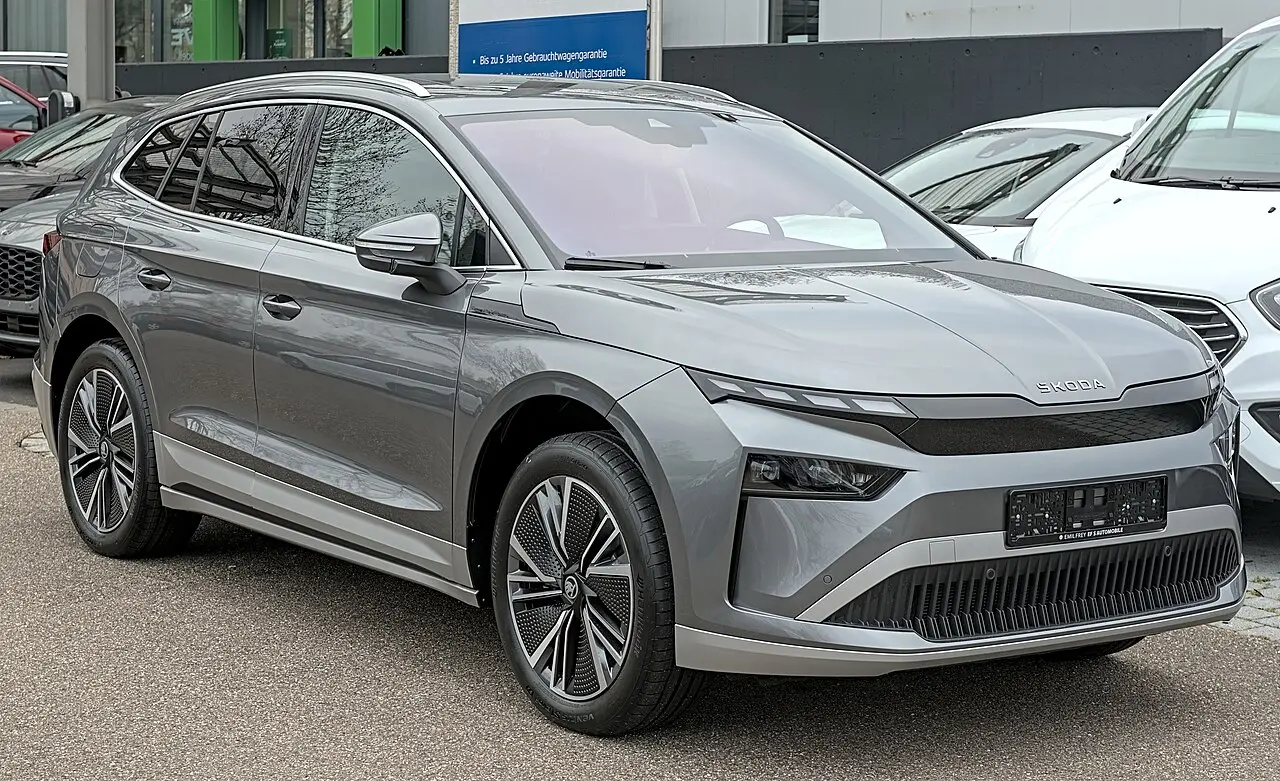
The Enyaq is Škoda’s fully electric SUV, introduced in 2020 as the brand’s first production model built on the Volkswagen Group’s MEB electric-car platform. Its SUV shape brings electric power into Škoda’s practical family-car range. A coupé-shaped version later joined the line.
The MEB platform was designed for electric drive. That gave Škoda a new foundation for its electric SUV, rather than adapting a conventional petrol or diesel model.
Generations
The Enyaq has one generation: Generation I (2020-today). The model line has grown to include the Enyaq Coupé, while remaining fully electric.
Electric power
EU figures from 2020-2025 list electric versions from 125 kW (170 PS) to 250 kW (340 PS). UK listings for 2025-2026 range from 150 kW (204 PS) to 250 kW (340 PS). Every listed version in both markets is electric.
Where was the Enyaq sold?
In official EU registration figures, the Enyaq recorded 313,018 registrations from 2020-2025. The most registered listed version was rated at 210 kW (286 PS) in 2025, followed by a version with no power figure listed in 2021 and another 210 kW (286 PS) version in 2024. UK listings cover 2025-2026.
Questions and answers
Is the Škoda Enyaq electric?
Yes. The listed EU and UK versions are all electric.
How much power does the Enyaq have?
The listed range is 109 kW (148 PS) to 250 kW (340 PS) in the EU and 150 kW (204 PS) to 250 kW (340 PS) in the UK.
When did the Enyaq arrive?
Its first generation began in 2020 and continues today.
Where was the Enyaq sold?
The figures include EU registrations and UK market listings.
At a glance: Length 4,650 - 4,700 mm · Kerb weight 1,865 - 2,054 kg · Top speed 160 - 180 km/h · MOT first-time pass at 3 years: 88.4% (UK average 92.2%) Specifications, reliability and all versions
Show all 21 versions
European Union 13 versions
New cars registered in the EU (plus Norway and Iceland), from the European Environment Agency. Figures on the NEDC procedure until 2020 and on WLTP from 2021; versions are grouped by engine and power, with their number of registrations.
Years and version
Engine
Power
Fuel
Consumption (combined)
CO₂
Electric range
EU registrations
2023 - 2025
Electric motor
210 kW (286 PS)
Electric
15.5 - 15.8 kWh/100 km WLTP
0 g/km
545 - 555 km
81,715
2021 - 2025
Electric motor
150 kW (204 PS)
Electric
15.9 - 19.0 kWh/100 km WLTP
0 g/km
401 - 532 km
73,564
2021 - 2025
Electric motor
Not listed
Electric
15.3 - 20.3 kWh/100 km WLTP
0 g/km
397 - 566 km
72,346
2021 - 2025
Electric motor
132 kW (179 PS)
Electric
15.9 - 16.3 kWh/100 km WLTP
0 g/km
393 - 407 km
34,060
2021 - 2025
Electric motor
195 kW (265 PS)
Electric
16.3 - 18.0 kWh/100 km WLTP
0 g/km
479 - 531 km
27,273
2023 - 2025
Electric motor
250 kW (340 PS)
Electric
16.2 - 16.3 kWh/100 km WLTP
0 g/km
531 - 539 km
9,462
2022 - 2025
Electric motor
220 kW (299 PS)
Electric
16.5 - 17.2 kWh/100 km WLTP
0 g/km
493 - 514 km
7,445
2024 - 2025
Electric motor
125 kW (170 PS)
Electric
15.9 - 16.6 kWh/100 km WLTP
0 g/km
366 - 372 km
438
2021 - 2024
Electric motor
109 kW (148 PS)
Electric
14.1 - 16.1 kWh/100 km WLTP
0 g/km
355 - 366 km
5,203
2023
Electric motor
110 kW (150 PS)
Electric
16.4 kWh/100 km WLTP
0 g/km
479 km
20
2023
Electric motor
140 kW (190 PS)
Electric
16.4 kWh/100 km WLTP
0 g/km
456 km
10
2020
Electric motor
150 kW (204 PS)
Electric
15.5 kWh/100 km NEDC
0 g/km
502 km
1,410
2020
Electric motor
132 kW (179 PS)
Electric
15.1 kWh/100 km NEDC
0 g/km
409 km
72
United Kingdom 8 versions
New cars on sale in the UK, from the Vehicle Certification Agency. NEDC figures until 2018 and WLTP figures after; years are the editions a version appeared in.
Official figures are measured on standard test procedures and differ between markets. Your consumption depends on how, where and in what conditions you drive.