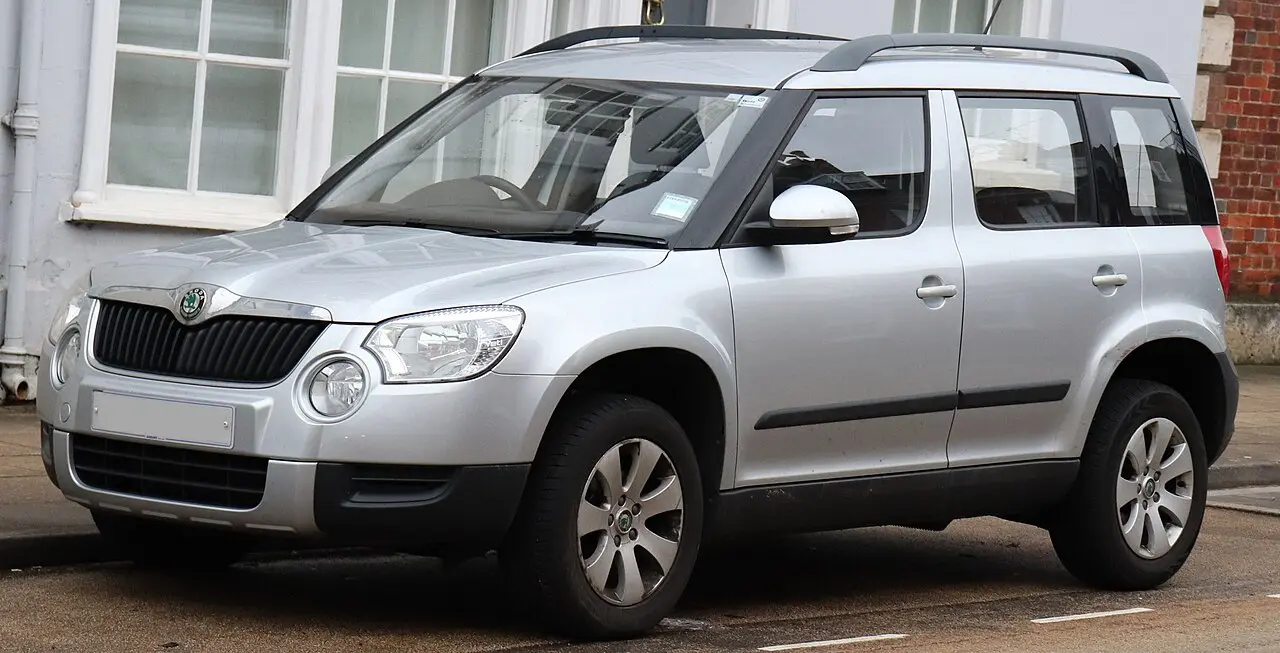
The official data lists 195 versions of the Škoda Yeti (2010–2018), in the European Union, the United Kingdom, and France. Each market publishes its own figures, measured on its own test procedure.
At a glance
Years in the data
2010–2018
Markets
European Union, United Kingdom, France
Engines
1.2 L to 2.0 L
Power
77 kW (105 PS) to 138 kW (188 PS)
Fuels
Diesel, Petrol
Lowest consumption (United Kingdom)
4.4 L/100 km (NEDC)
Lowest consumption (France)
4.6 L/100 km (NEDC)
New registrations in the EU
798,991
What is the Škoda Yeti?
The Yeti was a compact SUV and Škoda’s first modern entry into the SUV segment. Its upright shape gave it a distinctive look, while the higher seating position and versatile cabin made it practical for everyday family use. VarioFlex rear seats could slide separately or be removed, and the range included four-wheel-drive versions.
The Yeti became the first member of Škoda’s SUV family, followed by the Kodiaq, Karoq and Kamiq. It was listed in EU and UK figures from 2010 to 2018, and in French figures from 2012 to 2015.
Generations
The first generation, known by the code 5L, ran from 2010 to 2017. A substantial update in 2013 refreshed the model and expanded its engine and equipment range. The Yeti’s mix of compact size, distinctive design and flexible interior established Škoda’s presence in the SUV segment.
Engines and power
Across EU versions, engine sizes ranged from 1.2 to 2.0 litres and power from 77 kW (105 PS) to 165 kW (224 PS). The EU range included petrol, diesel and other fuel categories. UK versions covered 1.2- to 2.0-litre engines with 77 kW (105 PS) to 125 kW (170 PS); French figures show the same power range.
The 1.2-litre petrol with 81 kW (110 PS) led EU registrations in 2016 and 2017. A 2.0-litre diesel was also among the most registered versions in 2010.
Fuel consumption and CO₂
The lowest listed consumption is 4.4 L/100 km in UK figures and 4.6 L/100 km in French figures, both measured on the NEDC test. NEDC was the European test procedure used for these figures. The figures come from different markets and cover different versions and years.
Questions and answers
When was the Škoda Yeti sold?
EU and UK figures cover 2010–2018, while French figures cover 2012–2015.
What engines did the Yeti have?
EU versions ranged from 1.2 to 2.0 litres, with petrol, diesel and other fuel categories represented.
What is the lowest listed Yeti fuel consumption?
The lowest listed figure is 4.4 L/100 km in UK figures on the NEDC test.
New cars registered in the EU (plus Norway and Iceland), from the European Environment Agency. Figures on the NEDC procedure until 2020 and on WLTP from 2021; versions are grouped by engine and power, with their number of registrations.
Years and version
Engine
Power
Fuel
CO₂
EU registrations
2017
1.2 L
81 kW (110 PS)
Petrol
128 g/km
41,438
2017
2.0 L
81 kW (110 PS)
Diesel
130 g/km
18,248
2017
1.4 L
92 kW (125 PS)
Petrol
134 g/km
13,210
2017
2.0 L
110 kW (150 PS)
Diesel
137 g/km
6,562
2017
1.4 L
110 kW (150 PS)
Petrol
147 g/km
4,662
2017
1.4 L
138 kW (188 PS)
Diesel
134 g/km
1,542
2017
1.4 L
165 kW (224 PS)
Petrol
147 g/km
558
2017
1.2 L
77 kW (105 PS)
Petrol
137 g/km
282
2017
2.0 L
122 kW (166 PS)
Diesel
132 g/km
190
2017
1.2 L
122 kW (166 PS)
Petrol
128 g/km
188
2017
1.4 L
138 kW (188 PS)
Petrol
134 g/km
166
2017
2.0 L
165 kW (224 PS)
Diesel
136 g/km
144
2017
2.0 L
103 kW (140 PS)
Diesel
149 g/km
18
2016
1.2 L
81 kW (110 PS)
Petrol
128 g/km
44,206
2016
2.0 L
81 kW (110 PS)
Diesel
130 g/km
29,452
2016
1.4 L
92 kW (125 PS)
Petrol
134 g/km
17,716
2016
2.0 L
110 kW (150 PS)
Diesel
138 g/km
14,104
2016
1.4 L
110 kW (150 PS)
Petrol
147 g/km
6,830
2016
1.6 L
77 kW (105 PS)
Diesel
122 g/km
646
2016
1.2 L
77 kW (105 PS)
Petrol
143 g/km
210
2016
1.4 L
110 kW (150 PS)
Diesel
147 g/km
136
2016
1.4 L
90 kW (122 PS)
Petrol
151 g/km
92
2016
2.0 L
110 kW (150 PS)
Petrol
131 g/km
80
2016
2.0 L
103 kW (140 PS)
Diesel
155 g/km
52
2016
2.0 L
125 kW (170 PS)
Diesel
161 g/km
10
2015
2.0 L
81 kW (110 PS)
Diesel
140 g/km
32,290
2015
1.2 L
77 kW (105 PS)
Petrol
144 g/km
29,587
2015
1.2 L
81 kW (110 PS)
Petrol
128 g/km
11,361
2015
1.4 L
90 kW (122 PS)
Petrol
151 g/km
10,723
2015
2.0 L
103 kW (140 PS)
Diesel
154 g/km
10,098
2015
1.4 L
92 kW (125 PS)
Petrol
134 g/km
8,826
2015
2.0 L
110 kW (150 PS)
Diesel
138 g/km
6,789
2015
1.6 L
77 kW (105 PS)
Diesel
125 g/km
4,904
2015
1.4 L
110 kW (150 PS)
Petrol
147 g/km
2,364
2015
2.0 L
125 kW (170 PS)
Diesel
159 g/km
2,015
2015
1.8 L
118 kW (160 PS)
Petrol
184 g/km
920
2015
1.8 L
112 kW (152 PS)
Petrol
183 g/km
664
2014
2.0 L
81 kW (110 PS)
Diesel
147 g/km
33,946
2014
1.2 L
77 kW (105 PS)
Petrol
145 g/km
33,648
2014
1.4 L
90 kW (122 PS)
Petrol
152 g/km
18,004
2014
2.0 L
103 kW (140 PS)
Diesel
154 g/km
17,186
2014
1.6 L
77 kW (105 PS)
Diesel
124 g/km
9,358
2014
2.0 L
125 kW (170 PS)
Diesel
157 g/km
4,222
2014
1.8 L
118 kW (160 PS)
Petrol
185 g/km
1,788
2014
1.8 L
112 kW (152 PS)
Petrol
186 g/km
1,240
2014
1.4 L
90 kW (122 PS)
Diesel
150 g/km
48
2014
–
–
Petrol
149 g/km
26
2014
–
–
Diesel
134 g/km
16
2014
2.0 L
81 kW (110 PS)
Petrol
134 g/km
12
2013
2.0 L
81 kW (110 PS)
Diesel
155 g/km
36,974
2013
1.2 L
77 kW (105 PS)
Petrol
149 g/km
28,820
2013
2.0 L
103 kW (140 PS)
Diesel
156 g/km
14,934
2013
1.4 L
90 kW (122 PS)
Petrol
156 g/km
13,548
2013
1.6 L
77 kW (105 PS)
Diesel
120 g/km
7,040
2013
1.2 L
–
Other fuel
147 g/km
2,606
2013
2.0 L
125 kW (170 PS)
Diesel
157 g/km
2,198
2013
1.8 L
118 kW (160 PS)
Petrol
189 g/km
1,696
2013
1.8 L
112 kW (152 PS)
Petrol
189 g/km
930
2013
2.0 L
–
Other fuel
151 g/km
640
2013
–
–
Petrol
157 g/km
102
2013
1.6 L
–
Other fuel
126 g/km
36
2013
–
–
Diesel
151 g/km
30
2013
1.4 L
–
Other fuel
159 g/km
28
2013
2.0 L
125 kW (170 PS)
Diesel
153 g/km
26
2013
1.8 L
–
Other fuel
189 g/km
20
2012
2.0 L
81 kW (110 PS)
Diesel
150 g/km
24,028
2012
1.2 L
77 kW (105 PS)
Petrol
150 g/km
18,672
2012
2.0 L
103 kW (140 PS)
Diesel
159 g/km
7,062
2012
1.6 L
77 kW (105 PS)
Diesel
123 g/km
6,456
2012
1.4 L
90 kW (122 PS)
Petrol
158 g/km
4,902
2011–2012
2.0 L
125 kW (170 PS)
Diesel
155 g/km
3,062
2012
1.8 L
118 kW (160 PS)
Petrol
189 g/km
1,566
2012
–
–
Diesel
143 g/km
1,162
2012
–
–
Petrol
161 g/km
840
2012
1.8 L
112 kW (152 PS)
Petrol
189 g/km
102
2011
1.2 L
77 kW (105 PS)
Petrol
151 g/km
32,558
2011
2.0 L
81 kW (110 PS)
Diesel
149 g/km
29,200
2011
2.0 L
103 kW (140 PS)
Diesel
162 g/km
12,118
2011
1.4 L
90 kW (122 PS)
Petrol
159 g/km
9,990
2011
1.6 L
77 kW (105 PS)
Diesel
119 g/km
5,930
2011
1.8 L
118 kW (160 PS)
Petrol
189 g/km
4,674
2011
–
–
Petrol
162 g/km
1,844
2011
–
–
Diesel
148 g/km
326
2011
1.8 L
112 kW (152 PS)
Petrol
189 g/km
126
2010
2.0 L
–
Diesel
154 g/km
39,598
2010
1.2 L
–
Petrol
151 g/km
30,744
2010
1.8 L
–
Petrol
189 g/km
5,764
2010
–
–
Petrol
169 g/km
2,946
2010
1.4 L
–
Petrol
161 g/km
2,922
2010
–
–
Other fuel
153 g/km
372
2010
1.6 L
–
Diesel
119 g/km
84
United Kingdom 59 versions
New cars on sale in the UK, from the Vehicle Certification Agency. NEDC figures until 2018 and WLTP figures after; years are the editions a version appeared in.
Years and version
Engine
Power
Fuel
Gearbox
Consumption (combined)
CO₂
2015–20181.2 TSI 110PS 7speed DSG Stop-Start · 1.2 TSI 110PS 7speed DSG Stop-Start 17'' wheels · 1.2 TSI 110PS 7speed DSG Stop-Start Outdoor
1.2 L
81 kW (110 PS)
Petrol
7-speed automatic
5.5 L/100 km NEDC
128 g/km
2015–20181.2 TSI 110PS Stop-Start · 1.2 TSI 110PS Stop-Start 17'' wheels · 1.2 TSI 110PS Stop-Start Outdoor
1.2 L
81 kW (110 PS)
Petrol
6-speed manual
5.5 L/100 km NEDC
128 g/km
2016–20181.2 TSI 110PS 7speed DSG Stop-Start 16'' wheels
New cars registered in the EU (plus Norway and Iceland), from the European Environment Agency. Figures on the NEDC procedure until 2020 and on WLTP from 2021; versions are grouped by engine and power, with their number of registrations.
Years and version
Engine
Power
Fuel
CO₂
EU registrations
2018
1.2 L
81 kW (110 PS)
Petrol
128 g/km
600
2018
2.0 L
81 kW (110 PS)
Diesel
125 g/km
472
2018
1.4 L
92 kW (125 PS)
Petrol
134 g/km
228
2018
2.0 L
110 kW (150 PS)
Diesel
137 g/km
192
2018
1.4 L
110 kW (150 PS)
Petrol
147 g/km
46
United Kingdom 2 versions
New cars on sale in the UK, from the Vehicle Certification Agency. NEDC figures until 2018 and WLTP figures after; years are the editions a version appeared in.
Official figures are measured on standard test procedures and differ between markets. Your consumption depends on how, where and in what conditions you drive.