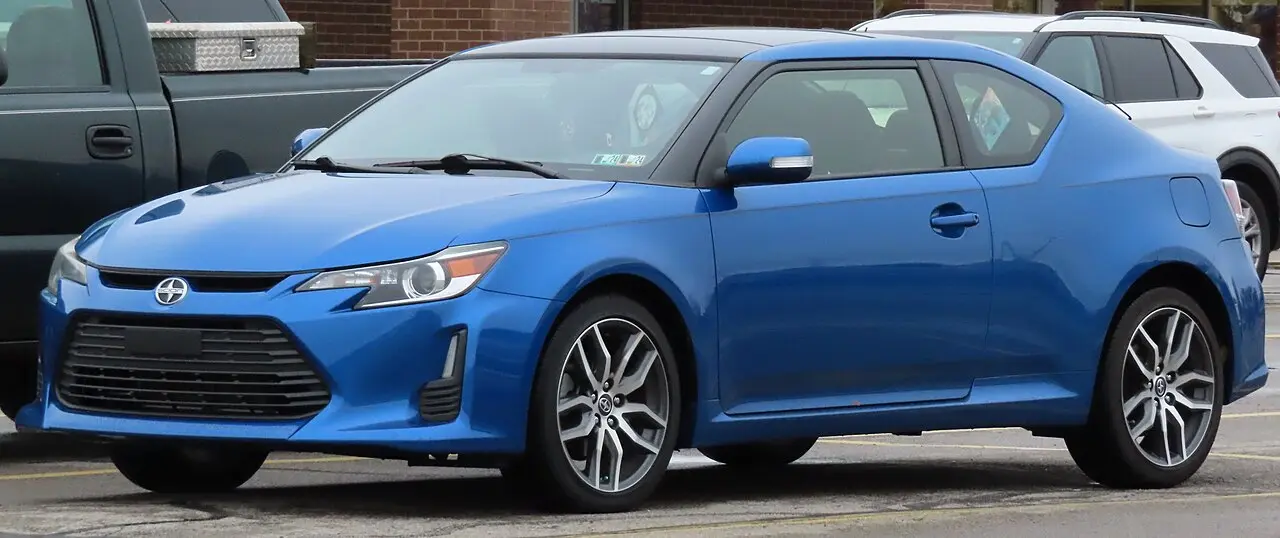
Scion tC

Scion tC
Photo: MercurySable99 / Wikimedia Commons · CC BY-SA 4.0

The official data lists 6 versions of the Scion tC (2005 - 2016), in the United States and Canada. Each market publishes its own figures, measured on its own test procedure.

At a glance

Years in the data
2005 - 2016
Markets
United States, Canada
Engines
2.4 L to 2.5 L
Fuels
Petrol
Lowest consumption (United States)
9.0 L/100 km (EPA)
Lowest consumption (Canada)
9.0 L/100 km (5-cycle)

What is the Scion tC?

The tC is a compact sport coupe with a useful hatchback opening. Toyota described it as a sport coupe with the functionality of a hatchback, giving the Scion lineup a practical take on the coupe shape. Scion was Toyota’s youth-focused US brand, created to explore new products and attract younger customers.

The tC was sold in the United States from 2005 to 2016 and in Canada from 2011 to 2016.

Generations and engines

The first-generation tC ran from 2005 to 2010 with a 2.4 L petrol engine. The second generation, sold from 2011 to 2016, brought a 2.5 L engine and a restyled version of the same compact coupe concept.

US versions used engines from 2.4 L to 2.5 L. Canadian versions used a 2.5 L petrol engine.

How economical is the Scion tC?

The best combined US EPA rating is 26 MPG, and the lowest EPA consumption figure is 9 L/100 km. Canada’s lowest NRCan figure is also 9 L/100 km. The EPA and Canadian 5-cycle procedures differ, so these figures are not directly comparable.

Questions and answers

When was the Scion tC sold?

It was sold in the United States from 2005 to 2016 and in Canada from 2011 to 2016.

How many tC generations were there?

Two: the first generation ran from 2005 to 2010, followed by the second generation from 2011 to 2016.

What engine sizes did the tC have?

US versions used 2.4 L to 2.5 L petrol engines; Canadian versions used a 2.5 L petrol engine.

What is its best official fuel economy figure?

The best US EPA combined rating is 26 MPG. The lowest consumption figure is 9 L/100 km in both US EPA and Canadian 5-cycle results.
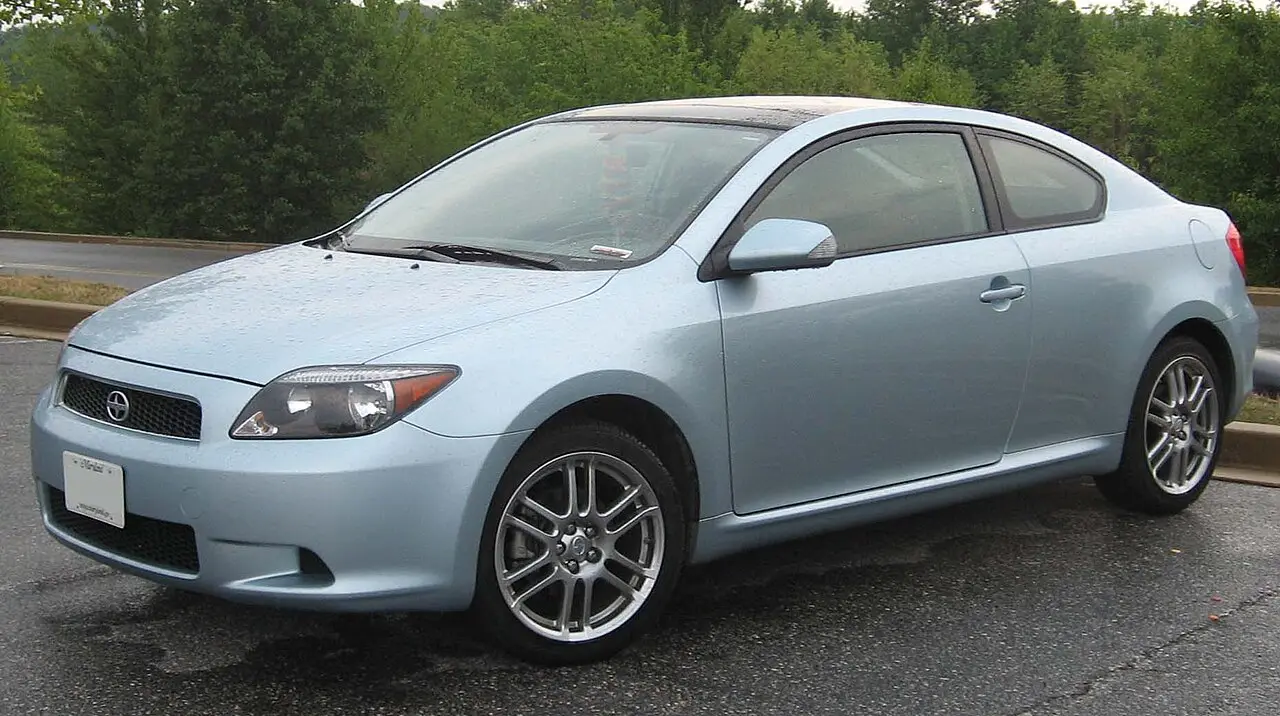
tC first generation (2005 - 2010)

Scion tC first generation
Photo: IFCAR / Wikimedia Commons · Public domain

Model codes: ANT10 · Sold in: United States · References: en.wikipedia.org

At a glance: Length 4,420 mm · Kerb weight 1,318 - 1,347 kg Specifications, reliability and all versions

Show all 2 versions

tC second generation (2011 - 2016)

Scion tC second generation
Photo: MercurySable99 / Wikimedia Commons · CC BY-SA 4.0

Model codes: AGT20 · Sold in: United States and Canada · References: en.wikipedia.org, pressroom.toyota.com

At a glance: Length 4,420 - 4,490 mm · Kerb weight 1,377 - 1,417 kg Specifications, reliability and all versions

United States 2 versions

Model years sold in the USA, from the EPA and the Department of Energy (fueleconomy.gov). MPG on the EPA test; litres per 100 km = 235.215 ÷ MPG.

Years and versionEngineFuelGearboxDriveConsumption (combined)CO₂
2011 - 20162.5 LPetrol6-speed automaticFront-wheel drive25 - 26 MPG (9.0 - 9.4 L/100 km) EPA213 - 221 g/km
2011 - 20162.5 LPetrol6-speed manualFront-wheel drive25 - 26 MPG (9.0 - 9.4 L/100 km) EPA213 - 221 g/km

Canada 2 versions

Model years sold in Canada, from Natural Resources Canada fuel consumption ratings (5-cycle test).

Years and versionEngineFuelGearboxConsumption (combined)CO₂
2011 - 2016Compact2.5 LPetrol6-speed automatic9.0 L/100 km 5-cycle207 - 211 g/km
2011 - 2016Compact2.5 LPetrol6-speed manual9.0 - 9.2 L/100 km 5-cycle207 - 212 g/km

Scion tC recalls

10 official safety recalls for the Scion tC from NHTSA (United States), DVSA (United Kingdom) and the EU Safety Gate, newest first. Recall repairs are normally free at the maker’s dealers.

  • Load capacity label may show incorrect weight2015 - 2016
  • Load capacity label may show incorrect accessory weight2016
  • Loose rear suspension components may detach2015
  • Weight label may be inaccurate2012
  • Load capacity labels may be missing2006 - 2010

See all 10 recalls

Official figures are measured on standard test procedures and differ between markets. Your consumption depends on how, where and in what conditions you drive.