Mitsubishi

Mitsubishi Eclipse

Mitsubishi Eclipse
Photo: Ethan Llamas / Wikimedia Commons · CC BY-SA 4.0

The official data lists 113 versions of the Mitsubishi Eclipse (1990–2021), in the European Union, the United States, and Canada. Each market publishes its own figures, measured on its own test procedure.

At a glance

Years in the data
1990–2021
Markets
European Union, United States, Canada
Engines
1.5 L to 3.8 L
Power
72 kW (98 PS) to 120 kW (163 PS)
Fuels
Petrol, Plug-in hybrid, Hybrid, Diesel
Lowest consumption (European Union)
2.0 L/100 km (WLTP)
Lowest consumption (United States)
9.8 L/100 km (EPA)
Lowest consumption (Canada)
10.0 L/100 km (5-cycle)
Plug-in hybrid, weighted (European Union)
2.0 L/100 km (WLTP)
New registrations in the EU
17,388

What is the Mitsubishi Eclipse?

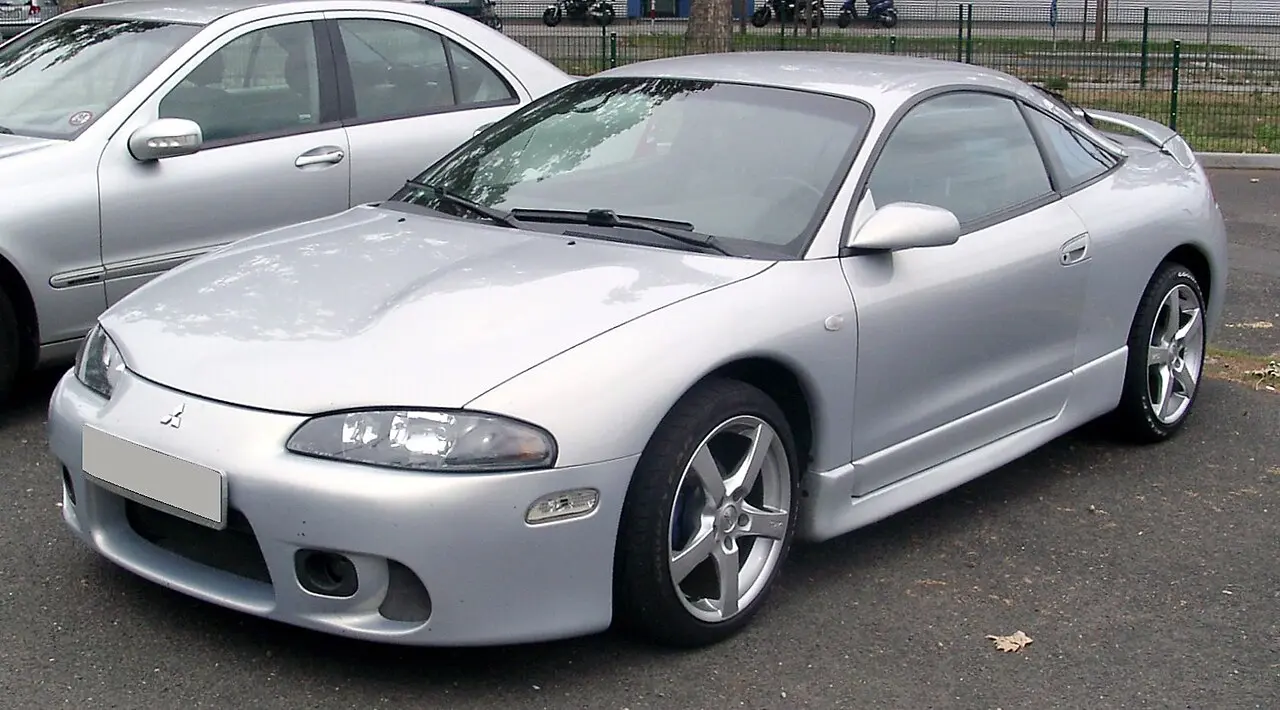
The Eclipse is a compact sport coupe with a low, wide shape and a driver-focused character. Mitsubishi designed it with an American influence, and it became the company’s North American sport compact. A convertible version, the Eclipse Spyder, joined the range during the second generation.

The Eclipse coupe is distinct from the later Eclipse Cross, which is a crossover SUV. Across four generations, the coupe’s styling and engine choices evolved over more than two decades.

Eclipse generations

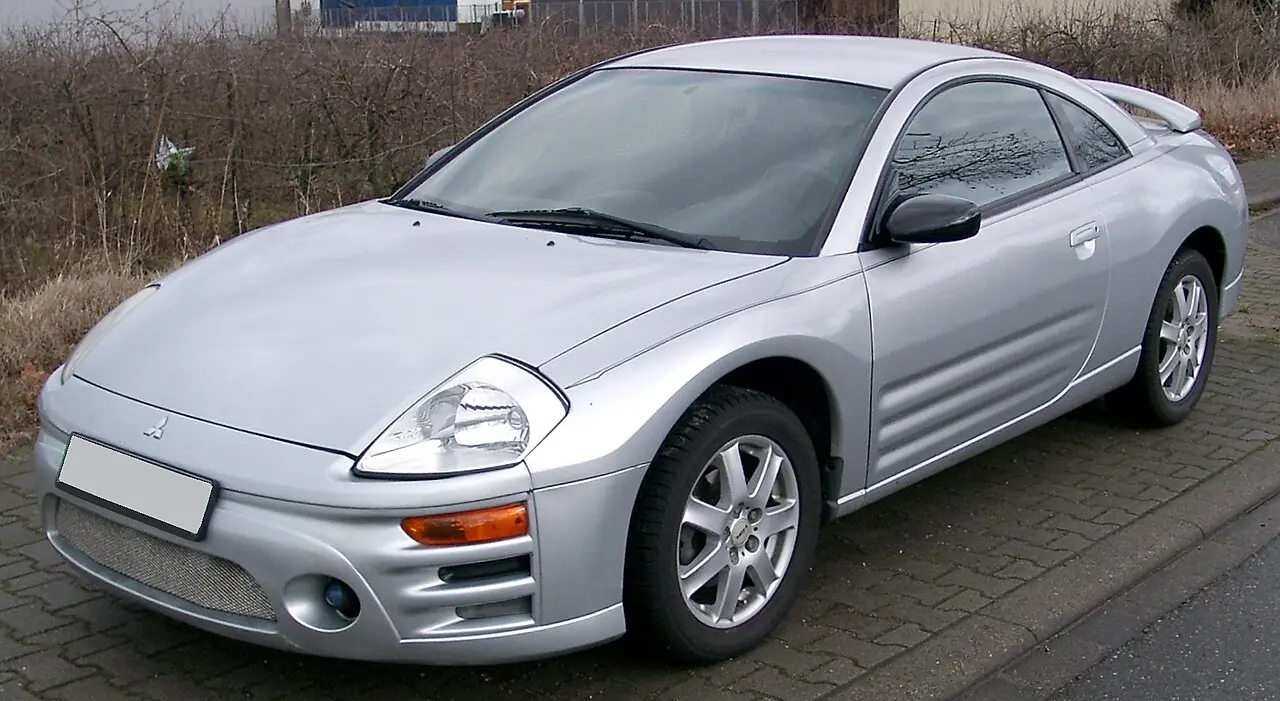
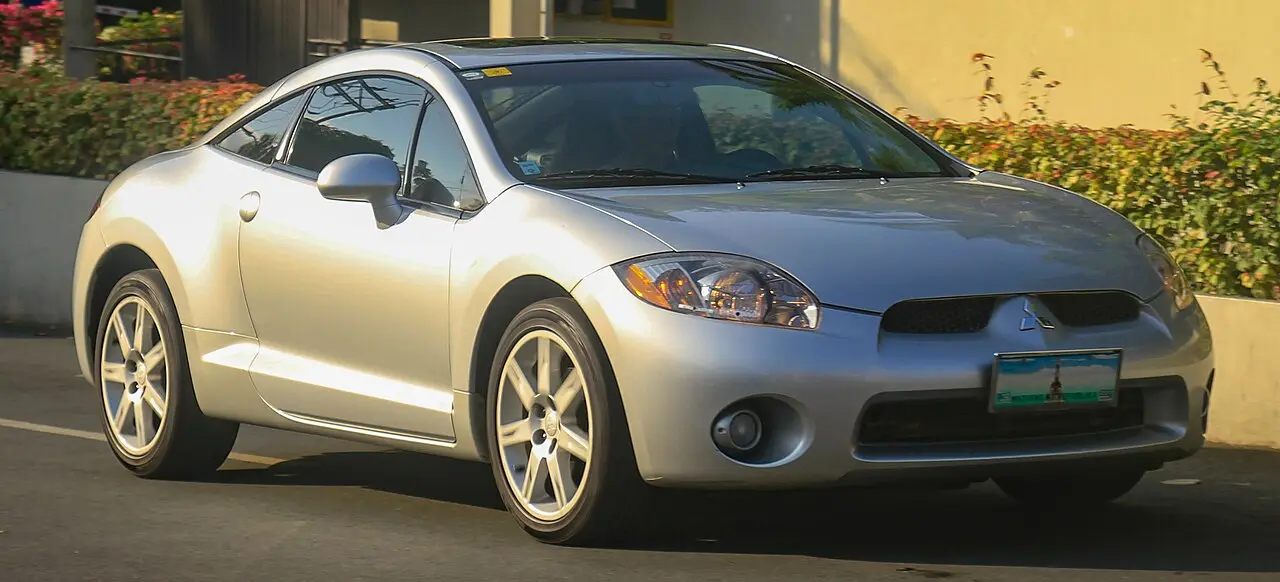
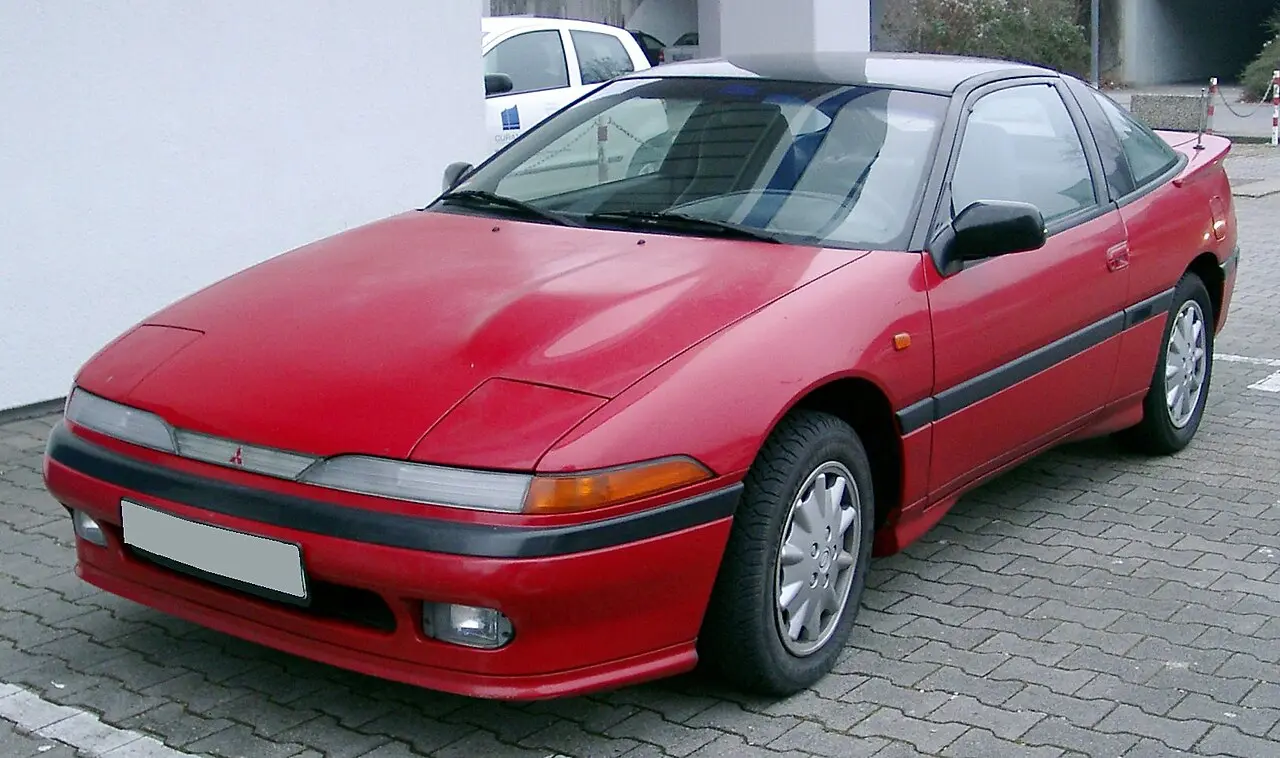
The first generation (1990–1994) introduced the sporty coupe, with turbocharged versions and available all-wheel drive. The second generation (1995–1999) brought the Spyder convertible. The third generation (2000–2005) and fourth generation (2006–2012) continued the nameplate, with the fourth generation marking the end of the coupe’s run.

Mitsubishi described the Eclipse as a distinctive, low and wide sport coupe. It offered a style-led alternative within the company’s range for drivers drawn to compact coupes.

Engines and power

European Union registration figures cover 1.5- to 2.4-litre engines and power from 72 kW (98 PS) to 120 kW (163 PS). The listed European fuels include petrol, diesel, hybrid and plug-in hybrid. The most prominent EU registration entries are 1.5-litre petrol versions rated at 120 kW (163 PS).

US EPA figures span petrol engines from 1.8 to 3.8 litres, while Canadian NRCan entries cover 2.4- to 3.8-litre petrol versions.

Fuel consumption and markets

The lowest listed EU figure is 2 L/100 km under WLTP for a plug-in hybrid. This official weighted figure assumes some driving is electric, so it does not represent petrol use alone. The US EPA’s lowest listed figure is 9.8 L/100 km, with a best combined rating of 24 MPG. Canada’s lowest listed figure is 10 L/100 km on the NRCan 5-cycle test. These results use different procedures: WLTP in the EU, EPA in the US, and 5-cycle in Canada, so they are not directly comparable.

EU registration figures cover 2017 to 2021, US EPA figures 1990 to 2012, and Canadian NRCan figures 2003 to 2012.

Questions and answers

What type of car is the Mitsubishi Eclipse?

It is a compact sport coupe; the second generation also had a convertible version called the Eclipse Spyder.

When was the last Eclipse generation sold?

The fourth generation ran from 2006 to 2012.

What does the EU plug-in hybrid figure of 2 L/100 km mean?

It is a WLTP weighted figure that assumes part of the driving is electric.

Is the Eclipse the same car as the Eclipse Cross?

No. The Eclipse is the sport coupe; the Eclipse Cross is a crossover SUV.
Eclipse I (1990–1994)

Mitsubishi Eclipse I
Photo: Rudolf Stricker / Wikimedia Commons · CC BY-SA 3.0

Model codes: D20 · References: en.wikipedia.org

Show all 11 versions

Eclipse II (1995–1999)

Mitsubishi Eclipse II
Photo: Rudolf Stricker / Wikimedia Commons · Attribution

Model codes: D30 · References: en.wikipedia.org

Show all 23 versions

Eclipse III (2000–2005)

Mitsubishi Eclipse III
Photo: Rudolf Stricker / Wikimedia Commons · CC BY-SA 3.0

Model codes: D50 · References: en.wikipedia.org

Show all 39 versions

Eclipse IV (2006–2012)

Mitsubishi Eclipse IV
Photo: Ethan Llamas / Wikimedia Commons · CC BY-SA 4.0

Model codes: D80 · References: en.wikipedia.org

United States 12 versions

Model years sold in the USA, from the EPA and the Department of Energy (fueleconomy.gov). MPG on the EPA test; litres per 100 km = 235.215 ÷ MPG.

Years and versionEngineFuelGearboxDriveConsumption (combined)CO₂
2011–20122.4 LPetrol5-speed manualFront-wheel drive23 MPG (10.2 L/100 km) EPA240 g/km
2010–20122.4 LPetrol4-speed automaticFront-wheel drive23 MPG (10.2 L/100 km) EPA240 g/km
2011–20122.4 LPetrol4-speed automaticFront-wheel drive23 MPG (10.2 L/100 km) EPA240 g/km
2007–2012SOHC, 2MODE CLKUP · PR3.8 LPetrol5-speed automaticFront-wheel drive19 MPG (12.4 L/100 km) EPA291 g/km
2011–20123.8 LPetrol5-speed automaticFront-wheel drive20 MPG (11.8 L/100 km) EPA276 g/km
2007–2010SOHC, 2MODE CLKUP2.4 LPetrol4-speed automaticFront-wheel drive22 MPG (10.7 L/100 km) EPA251 g/km
2006–2010SOHC · PR3.8 LPetrol6-speed manualFront-wheel drive19 MPG (12.4 L/100 km) EPA291 g/km
2007–2009SOHC2.4 LPetrol5-speed manualFront-wheel drive22 MPG (10.7 L/100 km) EPA251 g/km
2006–2008SOHC, 2MODE CLKUP2.4 LPetrol4-speed automaticFront-wheel drive22 MPG (10.7 L/100 km) EPA251 g/km
2008SOHC, 2MODE CLKUP3.8 LPetrol5-speed automaticFront-wheel drive20 MPG (11.8 L/100 km) EPA276 g/km
2006–2007SOHC, 2MODE CLKUP3.8 LPetrol5-speed automaticFront-wheel drive20 MPG (11.8 L/100 km) EPA276 g/km
2007SOHC3.8 LPetrol6-speed manualFront-wheel drive18 MPG (13.1 L/100 km) EPA307 g/km

Canada 20 versions

Model years sold in Canada, from Natural Resources Canada fuel consumption ratings (5-cycle test).

Years and versionEngineFuelGearboxConsumption (combined)CO₂
2011–2012Subcompact · Minicompact2.4 LPetrol5-speed manual10.5 L/100 km 5-cycle242 g/km
2011–2012Subcompact2.4 LPetrol4-speed automatic10.1 L/100 km 5-cycle232 g/km
2011–2012Minicompact2.4 LPetrol4-speed automatic10.2 L/100 km 5-cycle235 g/km
2011–2012Subcompact · Minicompact3.8 LPetrol6-speed manual12.3 L/100 km 5-cycle283 g/km
2011–2012Subcompact · Minicompact3.8 LPetrol5-speed automatic12.1 L/100 km 5-cycle278 g/km
2007–2009Minicompact2.4 LPetrol4-speed automatic10.8 L/100 km 5-cycle248 g/km
2008–2009Subcompact2.4 LPetrol4-speed automatic10.7 L/100 km 5-cycle246 g/km
2008–2009Subcompact · Minicompact2.4 LPetrol5-speed manual10.5 L/100 km 5-cycle242 g/km
2009Subcompact · Minicompact3.8 LPetrol5-speed automatic12.4 L/100 km 5-cycle285 g/km
2009Subcompact · Minicompact3.8 LPetrol6-speed manual12.3 L/100 km 5-cycle283 g/km
2008Subcompact · Minicompact3.8 LPetrol5-speed automatic12.1 L/100 km 5-cycle278 g/km
2008Subcompact · Minicompact3.8 LPetrol6-speed manual12.3 L/100 km 5-cycle283 g/km
2007Subcompact2.4 LPetrol4-speed automatic10.5 L/100 km 5-cycle242 g/km
2007Subcompact · Minicompact2.4 LPetrol5-speed manual10.5 L/100 km 5-cycle242 g/km
2007Subcompact · Minicompact3.8 LPetrol5-speed automatic12.0 L/100 km 5-cycle276 g/km
2007Subcompact · Minicompact3.8 LPetrol6-speed manual12.6 L/100 km 5-cycle290 g/km
2006Subcompact2.4 LPetrol4-speed automatic10.6 L/100 km 5-cycle244 g/km
2006Subcompact2.4 LPetrol5-speed manual10.4 L/100 km 5-cycle239 g/km
2006Subcompact3.8 LPetrol5-speed automatic11.7 L/100 km 5-cycle269 g/km
2006Subcompact3.8 LPetrol6-speed manual12.5 L/100 km 5-cycle288 g/km

Versions outside these generations

European Union 8 versions

New cars registered in the EU (plus Norway and Iceland), from the European Environment Agency. Figures on the NEDC procedure until 2020 and on WLTP from 2021; versions are grouped by engine and power, with their number of registrations.

Years and versionEnginePowerFuelConsumption (combined)CO₂Electric rangeEU registrations
20211.5 L120 kW (163 PS)Petrol8.1 L/100 km WLTP183 g/km–1,346
20212.4 L72 kW (98 PS)Plug-in hybrid2.0 L/100 km WLTP17.5 kWh/100 km WLTP46 g/km45 km722
20212.4 L72 kW (98 PS)Hybrid2.0 L/100 km WLTP17.5 kWh/100 km WLTP46 g/km45 km708
20201.5 L120 kW (163 PS)Petrol–161 g/km–3,506
2019–20202.3 L109 kW (148 PS)Diesel–183 g/km–374
20191.5 L120 kW (163 PS)Petrol–162 g/km–6,926
20181.5 L120 kW (163 PS)Petrol–153 g/km–3,686
20171.5 L–Petrol–155 g/km–120

Official figures are measured on standard test procedures and differ between markets. Your consumption depends on how, where and in what conditions you drive.