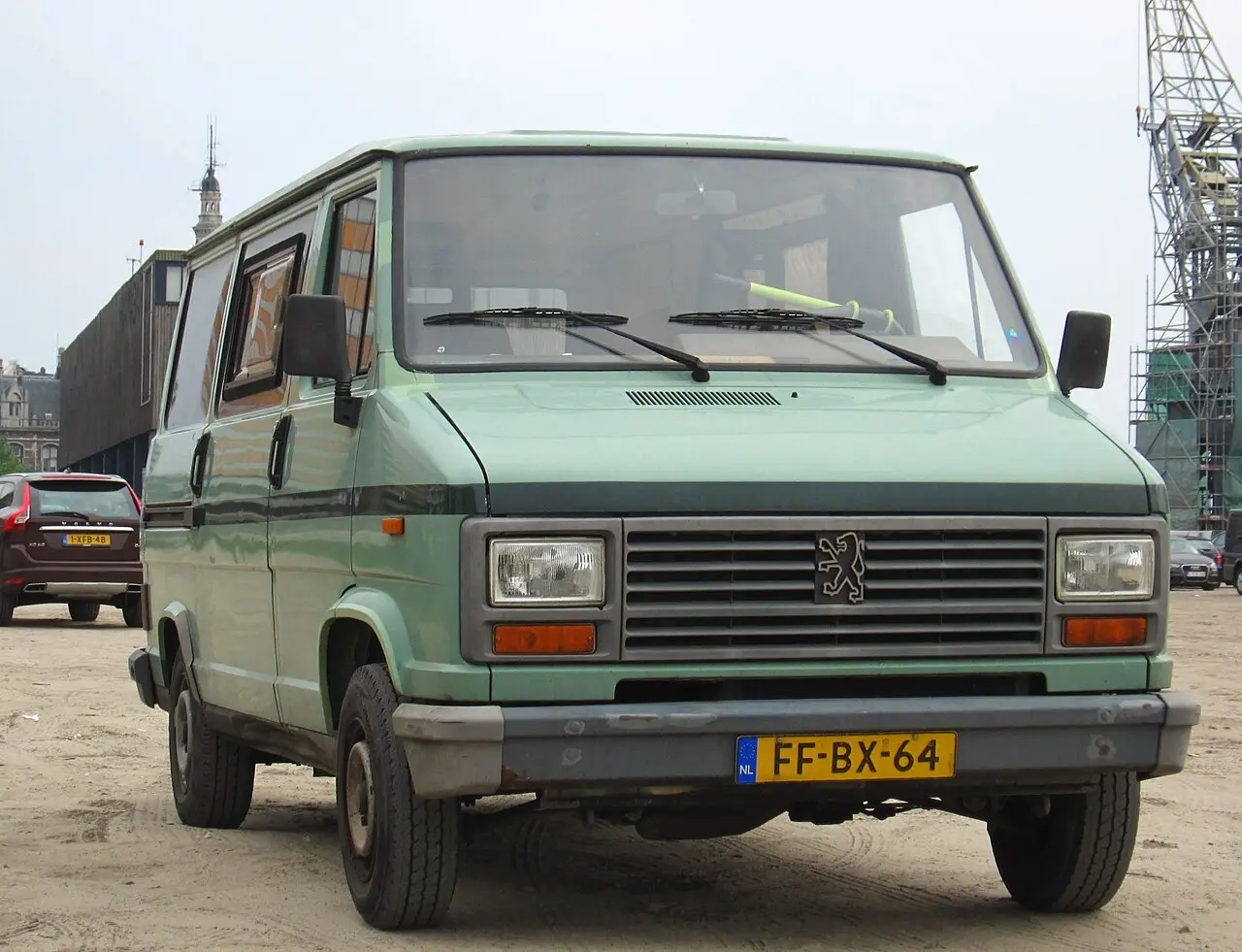
What is the Peugeot J5?
The Peugeot J5 was a light commercial van developed for businesses and tradespeople carrying goods or equipment. It was part of a shared project with Fiat, and closely related vans were sold under other brands. The J5 also served as a base for conversions, including camper vans.
The J5 followed earlier Peugeot work vans and was replaced by the Boxer, which continued the brand’s large-van range.
Generations and engines
The J5 was part of the first generation of vans developed through the Peugeot-Fiat partnership. Peugeot’s commercial vehicle history dates the J5 to 1981-1994. The Boxer took its place in the range.
The J5 was offered with petrol and diesel engines. Peugeot’s history also records a turbo-diesel version, four-wheel drive developed by Dangel, and an electric version intended for fleets. Engine choices varied by version.
Fuel consumption, CO₂ and markets
Fuel consumption and CO₂ figures depend on the specific version and market. European figures may use NEDC procedures, while US EPA and Canadian 5-cycle ratings use different test methods, so figures from different markets are not directly comparable.
The J5’s shared origins meant closely related vans were sold under other manufacturers’ names. Its successor, the Boxer, carried Peugeot’s large-van role forward.
Questions and answers
When was the Peugeot J5 sold?
Peugeot dates the J5 to 1981-1994. The Boxer replaced it in the brand’s range.
What kind of vehicle was the Peugeot J5?
It was a light commercial van for carrying goods and equipment, and it was also used as a base for specialist conversions.
What engines did the Peugeot J5 use?
The J5 came with petrol and diesel engines, including a turbo-diesel option. Peugeot also offered an electric version and four-wheel drive developed by Dangel.
How did the Peugeot J5 compare across markets?
Fuel-consumption and CO₂ figures vary by version and market. European NEDC, US EPA and Canadian 5-cycle ratings use different test procedures.