Toyota

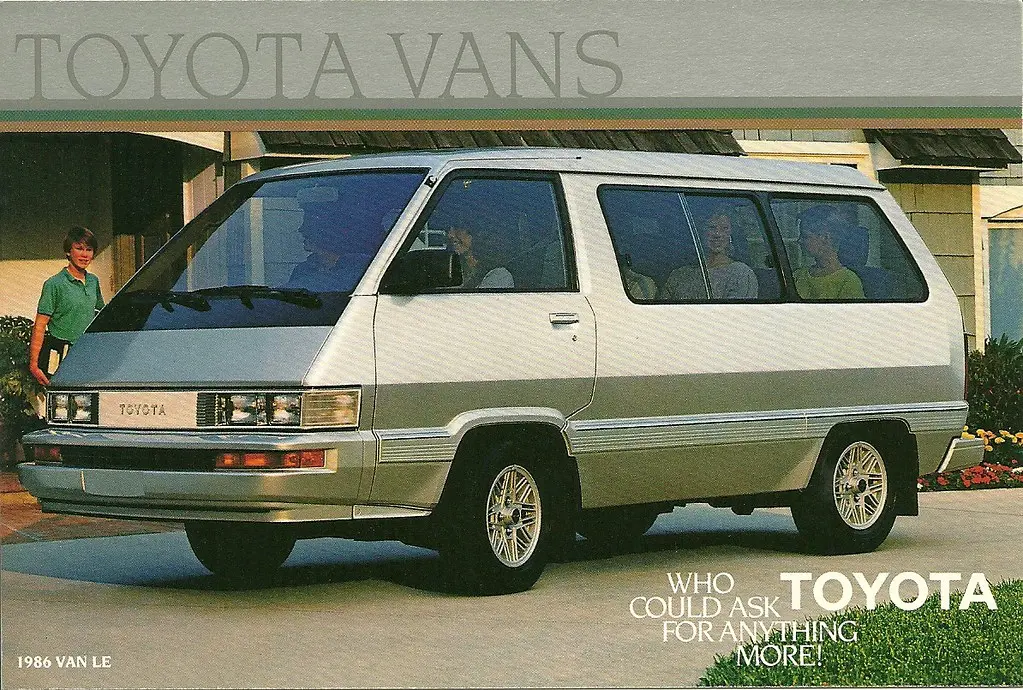
Toyota Toyota Van

Toyota Toyota Van
Photo: Hugo-90 / Wikimedia Commons · CC BY 2.0

The official data lists 12 versions of the Toyota Toyota Van (1984–1989), in the United States. Each market publishes its own figures, measured on its own test procedure.

At a glance

Years in the data
1984–1989
Markets
United States
Engines
2.0 L to 2.2 L
Fuels
Petrol
Lowest consumption (United States)
11.2 L/100 km (EPA)

What is the Toyota Van?

The Toyota Van was a boxy passenger van sold in the United States. Its tall shape gave the cabin room for passengers and everyday cargo, making it a distinct people carrier in Toyota’s range.

Generation and engines

The first generation, known by the codes R20 and R30, ran from 1984 to 1989. It had petrol engines ranging from 2.0 L to 2.2 L. US EPA listings cover 12 versions.

How economical is the Toyota Van?

The best listed US EPA rating is 21 MPG combined. The lowest listed combined consumption is 11.2 L/100 km. EPA figures use the US test procedure; European figures use WLTP or NEDC procedures.

Questions and answers

What kind of vehicle is the Toyota Van?

It is a box-shaped passenger van sold in the United States.

When was the Toyota Van sold?

Its US model years ran from 1984 to 1989.

What engines did it have?

Its petrol engines ranged from 2.0 L to 2.2 L.

What is its best official fuel economy figure?

The best listed EPA rating is 21 MPG combined.

Toyota Van First generation (1984–1989)

Model codes: R20, R30 · Sold in: United States · References: pressroom.toyota.com, cruisers.space

United States 12 versions

Model years sold in the USA, from the EPA and the Department of Energy (fueleconomy.gov). MPG on the EPA test; litres per 100 km = 235.215 ÷ MPG.

Years and versionEngineFuelGearboxDriveConsumption (combined)CO₂
1988–1989(FFS)2.2 LPetrol4-speed automaticRear-wheel drive20 MPG (11.8 L/100 km) EPA276 g/km
1986–1989(FFS)2.2 LPetrol5-speed manualRear-wheel drive20 MPG (11.8 L/100 km) EPA276 g/km
1987–1989(FFS)2.2 LPetrol5-speed manualFour- or all-wheel drive19 MPG (12.4 L/100 km) EPA291 g/km
1989(FFS)2.2 LPetrol4-speed automaticFour- or all-wheel drive18 MPG (13.1 L/100 km) EPA307 g/km
1988(FFS)2.2 LPetrol4-speed automaticFour- or all-wheel drive18 MPG (13.1 L/100 km) EPA307 g/km
1987(FFS)2.2 LPetrol4-speed automaticRear-wheel drive19 MPG (12.4 L/100 km) EPA291 g/km
1987(FFS)2.2 LPetrol4-speed automaticFour- or all-wheel drive18 MPG (13.1 L/100 km) EPA307 g/km
1986(FFS)2.2 LPetrol4-speed automaticRear-wheel drive20 MPG (11.8 L/100 km) EPA276 g/km
1985(FFS)2.0 LPetrol4-speed automaticRear-wheel drive20 MPG (11.8 L/100 km) EPA276 g/km
1985(FFS)2.0 LPetrol5-speed manualRear-wheel drive21 MPG (11.2 L/100 km) EPA263 g/km
1984(FFS) · CA model · (FFS) CA model2.0 LPetrol4-speed automatic–20 MPG (11.8 L/100 km) EPA276 g/km
1984(FFS) · CA model · (FFS) CA model2.0 LPetrol5-speed manual–21 MPG (11.2 L/100 km) EPA263 g/km

Official figures are measured on standard test procedures and differ between markets. Your consumption depends on how, where and in what conditions you drive.