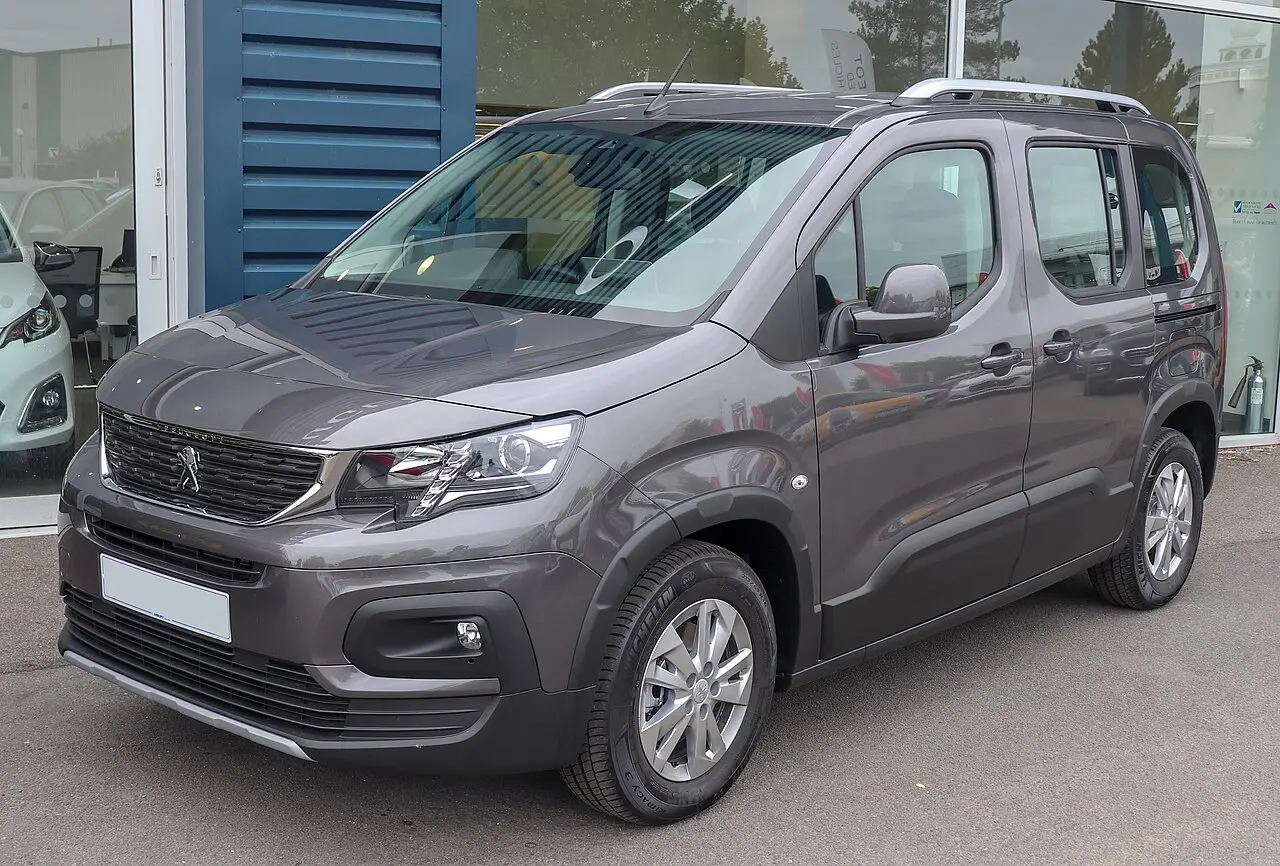
The official data lists 94 versions of the Peugeot Rifter (2018–2026), in the European Union, the United Kingdom, and France. Each market publishes its own figures, measured on its own test procedure.
At a glance
Years in the data
2018–2026
Markets
European Union, United Kingdom, France
Engines
1.2 L to 1.5 L
Power
56 kW (76 PS) to 136 kW (185 PS)
Fuels
Electric, Petrol, Diesel
Lowest consumption (United Kingdom)
4.1 L/100 km (NEDC)
Lowest consumption (France)
4.9 L/100 km (WLTP)
Lowest consumption (European Union)
5.2 L/100 km (WLTP)
New registrations in the EU
246,715
What is the Peugeot Rifter?
The Peugeot Rifter is a passenger vehicle with a van-derived shape and a flexible interior. Its first generation began in 2018. The Rifter shares its K9 generation code with the third-generation Partner, placing it within Peugeot’s practical van-based range.
Generation, engines and power
The Rifter’s first generation began in 2018. EU figures cover 1.2 to 1.5-litre engines, with power from 56 kW (76 PS) to 100 kW (136 PS); electric versions are also listed. UK figures span the same engine sizes and 56–136 kW (76–185 PS), while French figures list 57–96 kW (77–131 PS). Petrol, diesel and electric versions appear across these markets.
How economical is the Peugeot Rifter?
The lowest listed EU consumption is 5.2 L/100 km on WLTP. France lists 4.9 L/100 km, also on WLTP; the UK low is 4.1 L/100 km on NEDC. WLTP and NEDC are different European test procedures, so their results are not directly equivalent. EU registration figures span 2018 to 2025, with 246,715 registrations overall.
Where was the Rifter sold?
The Rifter appears in EU, UK and French figures. EU listings include diesel, petrol and electric versions, with diesel and petrol among the most registered configurations. Its van-derived shape and flexible layout give it a practical role in Peugeot’s passenger range.
Questions and answers
When did the Peugeot Rifter arrive?
The first Rifter generation began in 2018.
What engine sizes and power are listed?
EU figures cover 1.2 to 1.5-litre engines and 56–100 kW (76–136 PS). UK figures reach 136 kW (185 PS), and French figures reach 96 kW (131 PS).
What is the Rifter’s lowest listed consumption?
France lists 4.9 L/100 km and the EU 5.2 L/100 km, both on WLTP; the UK low is 4.1 L/100 km on NEDC.
Which markets list the Rifter?
It appears in European Union registration figures, UK VCA figures and French ADEME figures.
New cars registered in the EU (plus Norway and Iceland), from the European Environment Agency. Figures on the NEDC procedure until 2020 and on WLTP from 2021; versions are grouped by engine and power, with their number of registrations.
Years and version
Engine
Power
Fuel
Consumption (combined)
CO₂
Electric range
EU registrations
2025
1.5 L
96 kW (131 PS)
Diesel
5.8 L/100 km WLTP
152 g/km
–
5,166
2025
1.5 L
75 kW (102 PS)
Diesel
5.4 L/100 km WLTP
142 g/km
–
3,062
2025
Electric motor
100 kW (136 PS)
Electric
18.8 kWh/100 km WLTP
0 g/km
331 km
1,188
2025
Electric motor
62 kW (84 PS)
Electric
18.6 kWh/100 km WLTP
0 g/km
334 km
432
2025
1.2 L
81 kW (110 PS)
Petrol
6.6 L/100 km WLTP
148 g/km
–
122
2025
Electric motor
57 kW (77 PS)
Electric
20.2 kWh/100 km WLTP
0 g/km
277 km
30
2024
1.5 L
96 kW (131 PS)
Diesel
5.8 L/100 km WLTP
151 g/km
–
3,973
2024
1.5 L
75 kW (102 PS)
Diesel
5.4 L/100 km WLTP
141 g/km
–
2,593
2024
Electric motor
100 kW (136 PS)
Electric
19.7 kWh/100 km WLTP
0 g/km
301 km
1,593
2024
1.2 L
81 kW (110 PS)
Petrol
6.5 L/100 km WLTP
147 g/km
–
355
2024
Electric motor
57 kW (77 PS)
Electric
20.3 kWh/100 km WLTP
0 g/km
276 km
235
2024
Electric motor
62 kW (84 PS)
Electric
18.7 kWh/100 km WLTP
0 g/km
334 km
179
2023
Electric motor
100 kW (136 PS)
Electric
20.2 kWh/100 km WLTP
0 g/km
275 km
3,225
2023
1.5 L
96 kW (131 PS)
Diesel
5.5 L/100 km WLTP
143 g/km
–
1,368
2023
1.2 L
96 kW (131 PS)
Petrol
7.1 L/100 km WLTP
159 g/km
–
903
2023
1.5 L
75 kW (102 PS)
Diesel
5.3 L/100 km WLTP
139 g/km
–
780
2023
1.2 L
81 kW (110 PS)
Petrol
6.6 L/100 km WLTP
149 g/km
–
713
2023
Electric motor
57 kW (77 PS)
Electric
20.2 kWh/100 km WLTP
0 g/km
274 km
126
2022
1.5 L
96 kW (131 PS)
Diesel
5.3 L/100 km WLTP
141 g/km
–
4,867
2022
1.5 L
75 kW (102 PS)
Diesel
5.2 L/100 km WLTP
137 g/km
–
4,292
2022
1.2 L
81 kW (110 PS)
Petrol
6.5 L/100 km WLTP
149 g/km
–
2,339
2022
1.2 L
96 kW (131 PS)
Petrol
7.0 L/100 km WLTP
159 g/km
–
2,327
2022
Electric motor
100 kW (136 PS)
Electric
20.2 kWh/100 km WLTP
0 g/km
274 km
1,167
2022
Electric motor
57 kW (77 PS)
Electric
20.1 kWh/100 km WLTP
0 g/km
276 km
305
2021
1.5 L
96 kW (131 PS)
Diesel
5.3 L/100 km WLTP
142 g/km
–
18,354
2021
1.5 L
75 kW (102 PS)
Diesel
5.2 L/100 km WLTP
138 g/km
–
15,365
2021
1.2 L
81 kW (110 PS)
Petrol
6.5 L/100 km WLTP
150 g/km
–
6,396
2021
1.2 L
96 kW (131 PS)
Petrol
6.9 L/100 km WLTP
158 g/km
–
5,803
2021
Electric motor
57 kW (77 PS)
Electric
21.1 kWh/100 km WLTP
0 g/km
263 km
644
2021
Electric motor
100 kW (136 PS)
Electric
20.3 kWh/100 km WLTP
0 g/km
273 km
193
2020
1.5 L
96 kW (131 PS)
Diesel
–
113 g/km
–
27,330
2020
1.5 L
75 kW (102 PS)
Diesel
–
112 g/km
–
11,684
2020
1.2 L
81 kW (110 PS)
Petrol
–
124 g/km
–
7,660
2020
1.2 L
96 kW (131 PS)
Petrol
–
124 g/km
–
6,723
2020
1.5 L
–
Diesel
–
111 g/km
–
2,210
2020
1.5 L
–
Diesel
–
112 g/km
–
1,897
2020
1.2 L
–
Petrol
–
124 g/km
–
50
2020
1.5 L
56 kW (76 PS)
Diesel
–
112 g/km
–
34
2019
1.2 L
81 kW (110 PS)
Petrol
–
127 g/km
–
26,996
2019
1.5 L
96 kW (131 PS)
Diesel
–
116 g/km
–
26,868
2019
1.5 L
75 kW (102 PS)
Diesel
–
113 g/km
–
21,806
2019
1.5 L
–
Diesel
–
113 g/km
–
3,198
2019
1.5 L
–
Diesel
–
115 g/km
–
2,614
2019
1.2 L
96 kW (131 PS)
Petrol
–
124 g/km
–
1,806
2019
1.2 L
81 kW (110 PS)
Petrol
–
114 g/km
–
790
2019
1.5 L
56 kW (76 PS)
Diesel
–
109 g/km
–
676
2019
1.5 L
88 kW (120 PS)
Diesel
–
115 g/km
–
16
2018
1.5 L
96 kW (131 PS)
Diesel
–
117 g/km
–
7,777
2018
1.5 L
75 kW (102 PS)
Diesel
–
111 g/km
–
5,171
2018
1.2 L
81 kW (110 PS)
Petrol
–
127 g/km
–
2,178
2018
1.5 L
–
Diesel
–
114 g/km
–
532
2018
1.5 L
–
Diesel
–
113 g/km
–
436
2018
1.5 L
56 kW (76 PS)
Diesel
–
110 g/km
–
152
2018
1.2 L
–
Petrol
–
126 g/km
–
16
United Kingdom 36 versions
New cars on sale in the UK, from the Vehicle Certification Agency. NEDC figures until 2018 and WLTP figures after; years are the editions a version appeared in.
New cars on sale in France, from ADEME Car Labelling. NEDC figures until 2015, WLTP figures in the current catalogue.
Years and version
Engine
Power
Fuel
Gearbox
Consumption (combined)
CO₂
Electric range
2026e-RIFTER Standard (57Kw)
Electric motor
57 kW (77 PS)
Electric
Continuously variable (CVT)
18.7 kWh/100 km WLTP
–
293 km
2026RIFTER Long (110ch)
1.2 L
81 kW (110 PS)
Petrol
6-speed manual
6.2 L/100 km WLTP
140 g/km
–
2026RIFTER Standard (102ch)
1.5 L
75 kW (102 PS)
Diesel
6-speed manual
4.9 L/100 km WLTP
129 g/km
–
2026RIFTER Long (130ch)
1.5 L
96 kW (131 PS)
Diesel
6-speed manual
5.0 L/100 km WLTP
130 g/km
–
Official figures are measured on standard test procedures and differ between markets. Your consumption depends on how, where and in what conditions you drive.