The official data lists 21 versions of the MG HS (2019 - 2026), in the European Union and the United Kingdom. Each market publishes its own figures, measured on its own test procedure.
At a glance
Years in the data
2019 - 2026
Markets
European Union, United Kingdom
Engines
1.5 L to 1.5 L
Power
105 kW (143 PS) to 245 kW (333 PS)
Fuels
Plug-in hybrid, Petrol, Hybrid
Lowest consumption (United Kingdom)
5.5 L/100 km (WLTP)
Lowest consumption (European Union)
5.8 L/100 km (WLTP)
Plug-in hybrid, weighted (European Union)
0.5 L/100 km (WLTP)
New registrations in the EU
83,776
What is the MG HS?
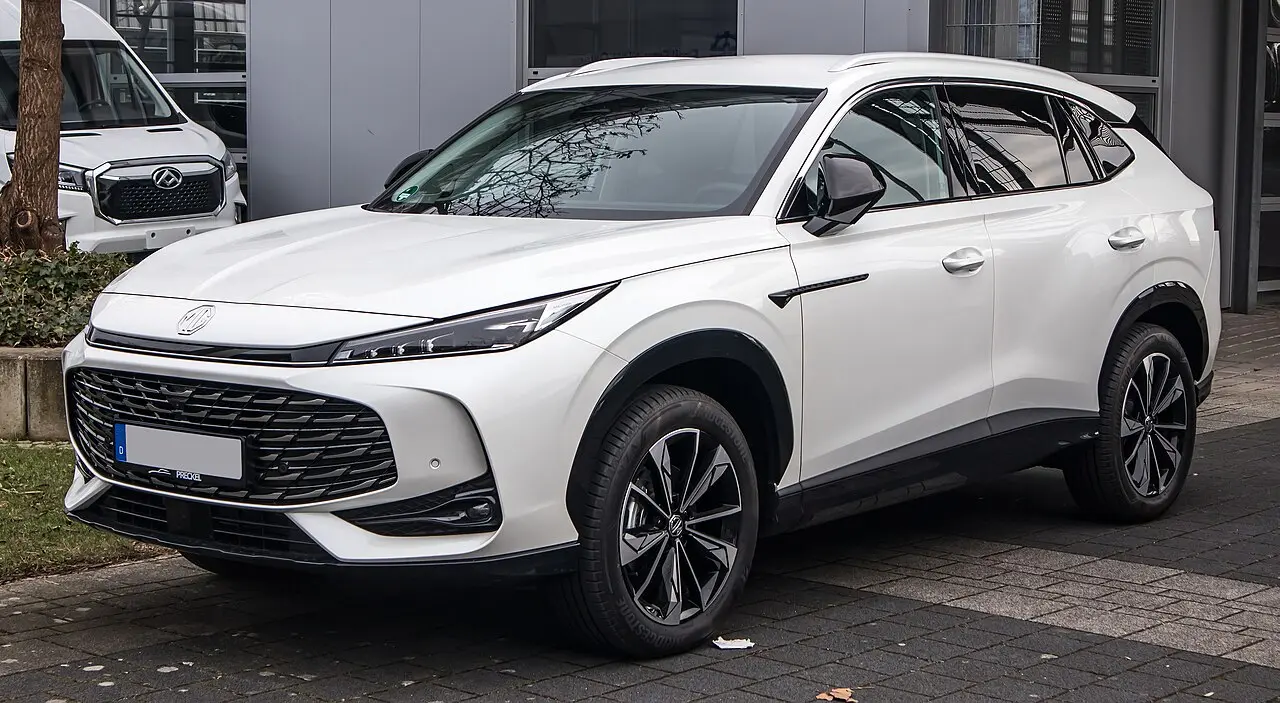
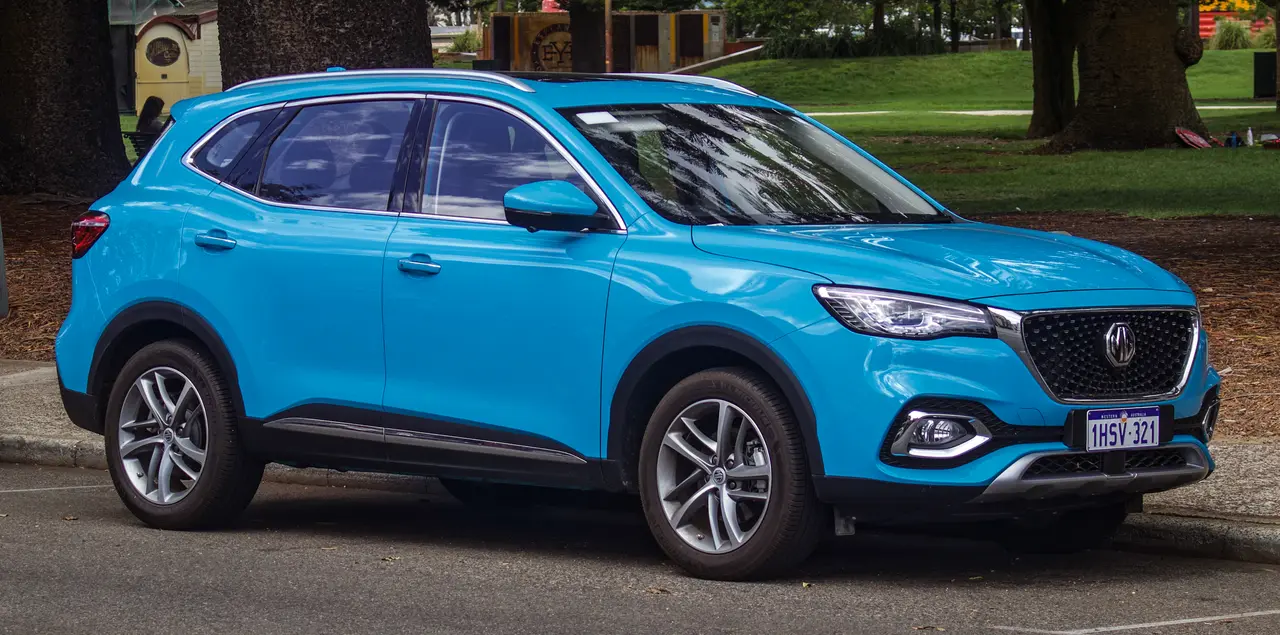
The MG HS is a family SUV with a raised driving position and a roomy cabin. It sits above the smaller ZS in MG’s range, giving families a larger option for everyday journeys and longer trips. MG has British roots and is now part of China’s SAIC Motor group.
The first HS arrived in 2019. Its second generation followed in 2024 with revised styling, more cabin space and updated technology. Across its generations, the HS has been offered with petrol, hybrid and plug-in hybrid power.
Generations and engines
The first generation ran from 2019 to 2023, followed by the second generation from 2024. Both carried the HS name in European and UK line-ups, with a 1.5-litre engine across the versions listed in those markets.
In the EU, power ranges from 105 kW (143 PS) to 245 kW (333 PS). In the UK, it ranges from 105 kW (143 PS) to 125 kW (170 PS). The HS has been offered as a petrol, hybrid or plug-in hybrid.
How economical is the MG HS?
The lowest listed EU consumption figure for petrol or hybrid versions is 5.8 L/100 km on the WLTP test. The lowest official weighted figure for the plug-in hybrid is 0.5 L/100 km WLTP. That figure assumes some driving is electric, so it does not represent fuel use in the same way as a conventional petrol car. In the UK, the lowest listed figure for petrol or hybrid versions is 5.5 L/100 km WLTP.
Official EU registration figures cover 2019-2025, with 83,776 HS registrations across 15 versions. UK VCA figures cover 2020-2026 and 7 versions. Test procedures differ between markets: Europe uses WLTP, the USA uses EPA tests, and Canada uses the 5-cycle procedure.
Questions and answers
When did the MG HS generations run?
The first generation ran from 2019 to 2023; the second began in 2024.
What engines and fuels were offered?
A 1.5-litre engine was offered with petrol, hybrid and plug-in hybrid power.
What is the lowest official plug-in hybrid consumption figure?
The EU weighted WLTP figure is 0.5 L/100 km. It assumes some driving is electric.
Where was the MG HS sold?
It appears in official EU registration figures and UK VCA figures.
New cars registered in the EU (plus Norway and Iceland), from the European Environment Agency. Figures on the NEDC procedure until 2020 and on WLTP from 2021; versions are grouped by engine and power, with their number of registrations.
Years and version
Engine
Power
Fuel
Consumption (combined)
CO₂
Electric range
EU registrations
2024 - 2025
1.5 L
-
Plug-in hybrid
0.5 - 0.6 L/100 km WLTP21.6 - 21.8 kWh/100 km WLTP
14 - 17 g/km
127 km
22,577
2024 - 2025
1.5 L
125 kW (170 PS)
Petrol
7.5 - 7.6 L/100 km WLTP
172 g/km
-
17,271
2025
1.5 L
105 kW (143 PS)
Hybrid
5.8 L/100 km WLTP
126 g/km
-
7,970
2024 - 2025
1.5 L
119 kW (162 PS)
Petrol
7.5 L/100 km WLTP
171 - 172 g/km
-
14,015
2025
1.5 L
110 kW (150 PS) (engine only)
Plug-in hybrid
0.5 L/100 km WLTP21.8 kWh/100 km WLTP
14 g/km
127 km
161
2024 - 2025
1.5 L
245 kW (333 PS) (engine only)
Plug-in hybrid
0.5 L/100 km WLTP21.8 kWh/100 km WLTP
14 g/km
127 km
392
2024
1.5 L
135 kW (184 PS) (engine only)
Plug-in hybrid
0.5 L/100 km WLTP21.8 kWh/100 km WLTP
14 g/km
127 km
137
2024
1.5 L
105 kW (143 PS)
Petrol
6.2 L/100 km WLTP
122 g/km
-
102
2024
-
119 kW (162 PS)
Hybrid
8.0 L/100 km WLTP
-
-
35
United Kingdom 4 versions
New cars on sale in the UK, from the Vehicle Certification Agency. NEDC figures until 2018 and WLTP figures after; years are the editions a version appeared in.
Official figures are measured on standard test procedures and differ between markets. Your consumption depends on how, where and in what conditions you drive.