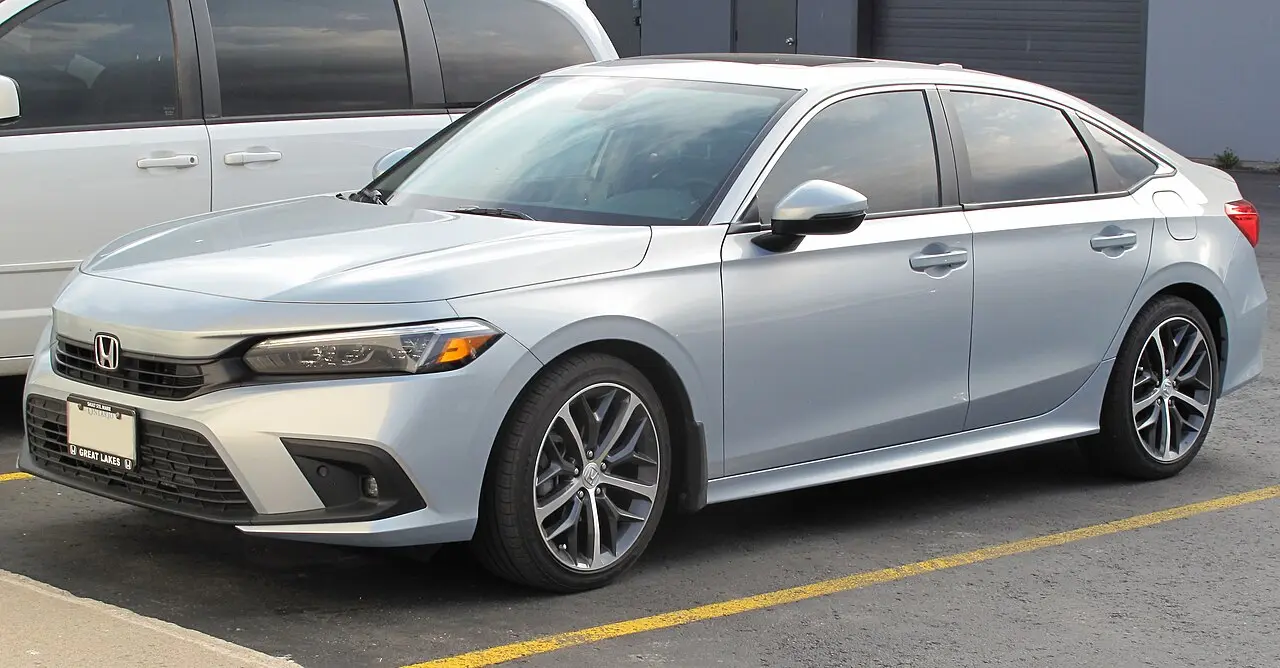
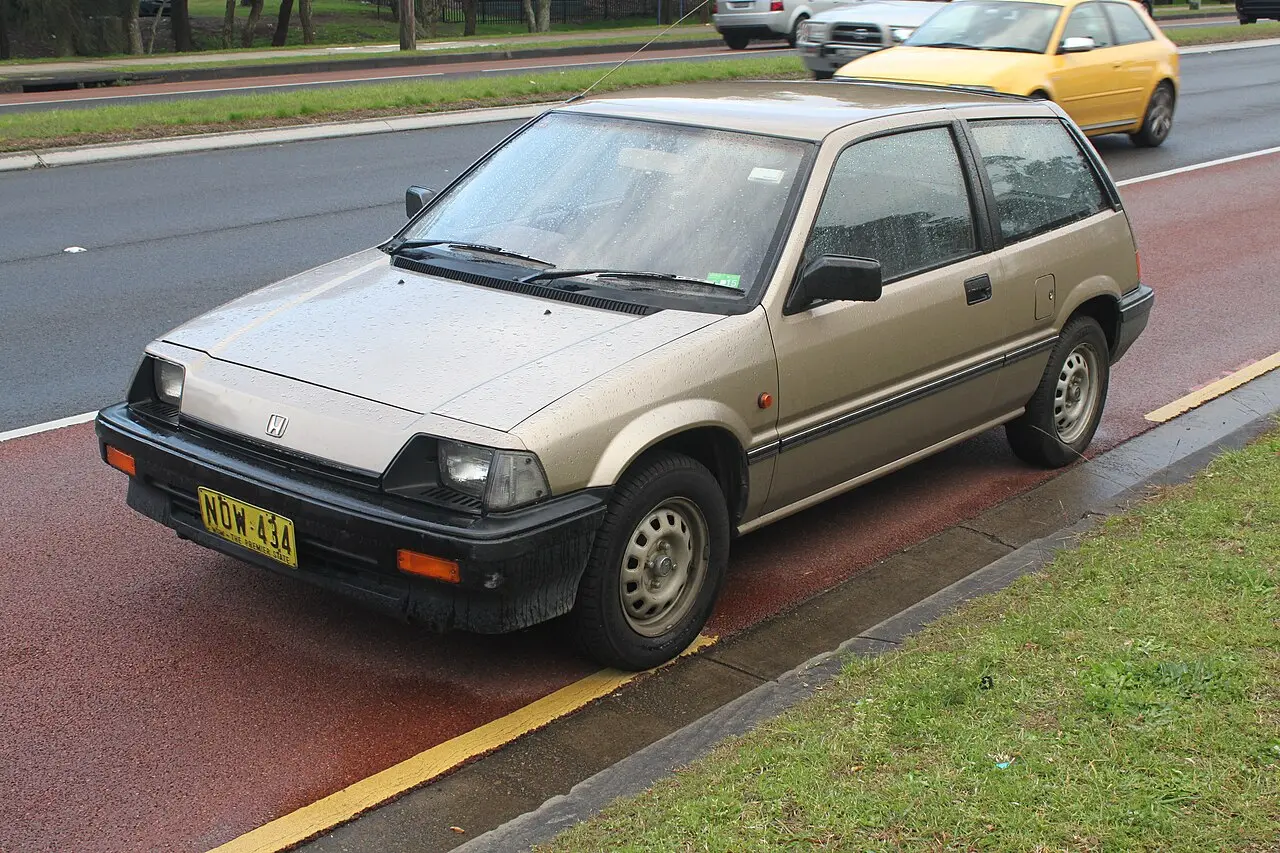
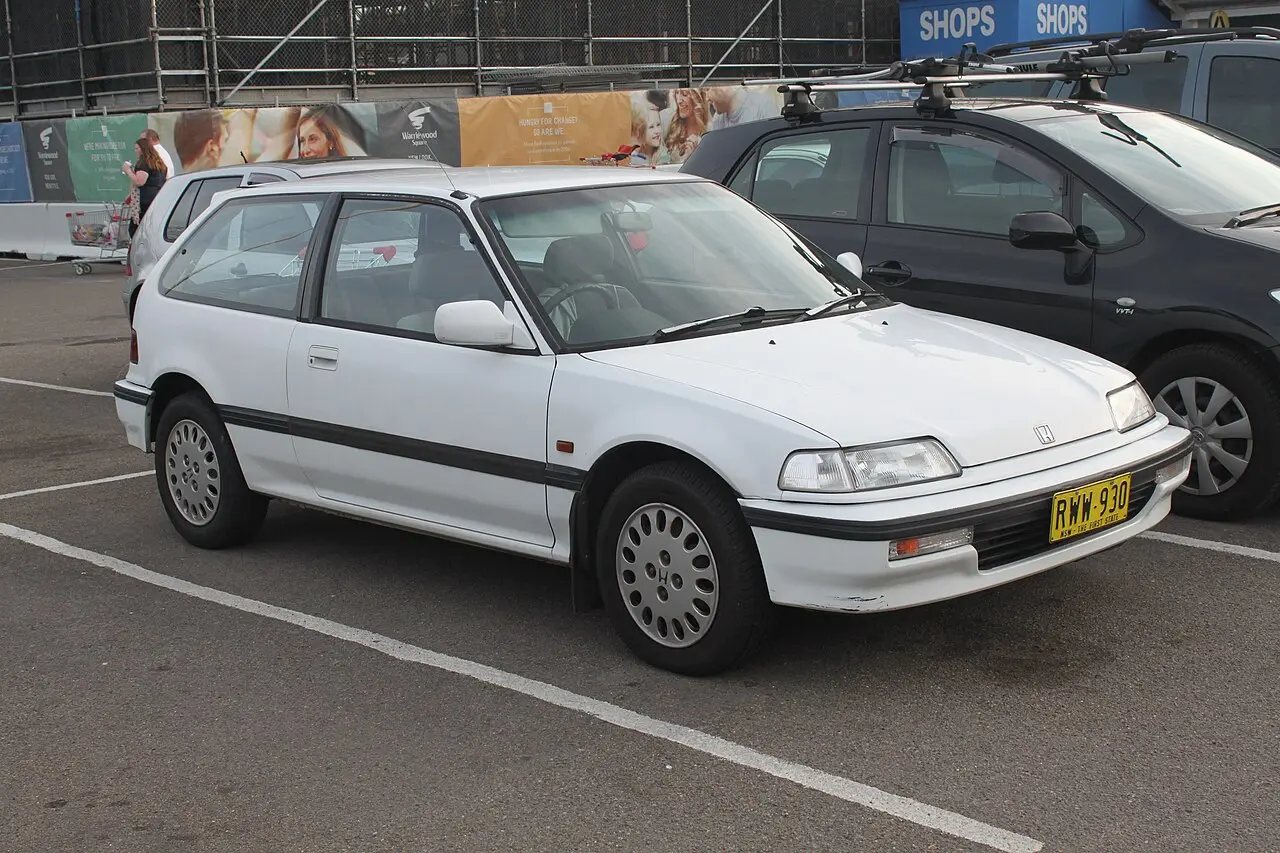
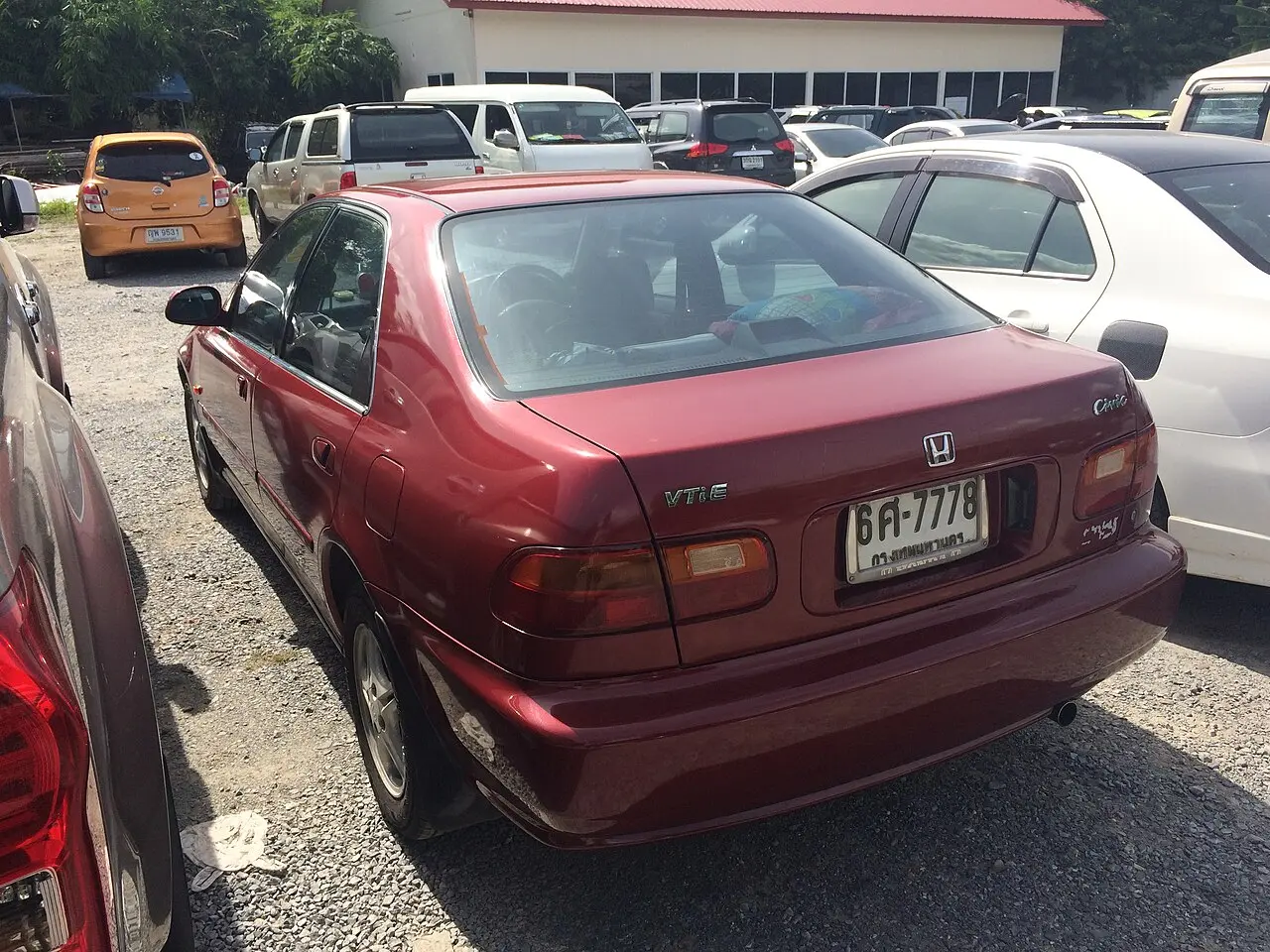
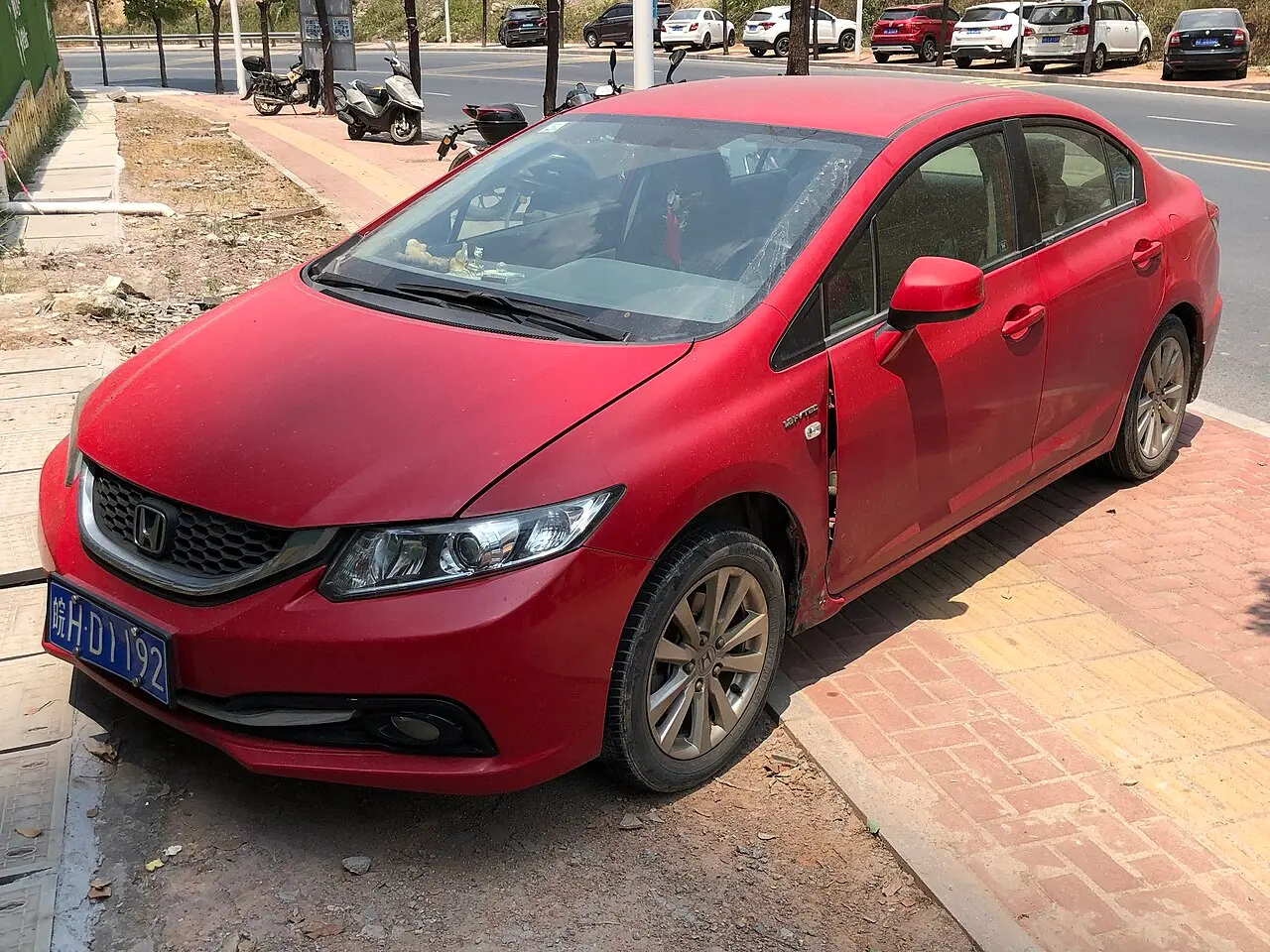
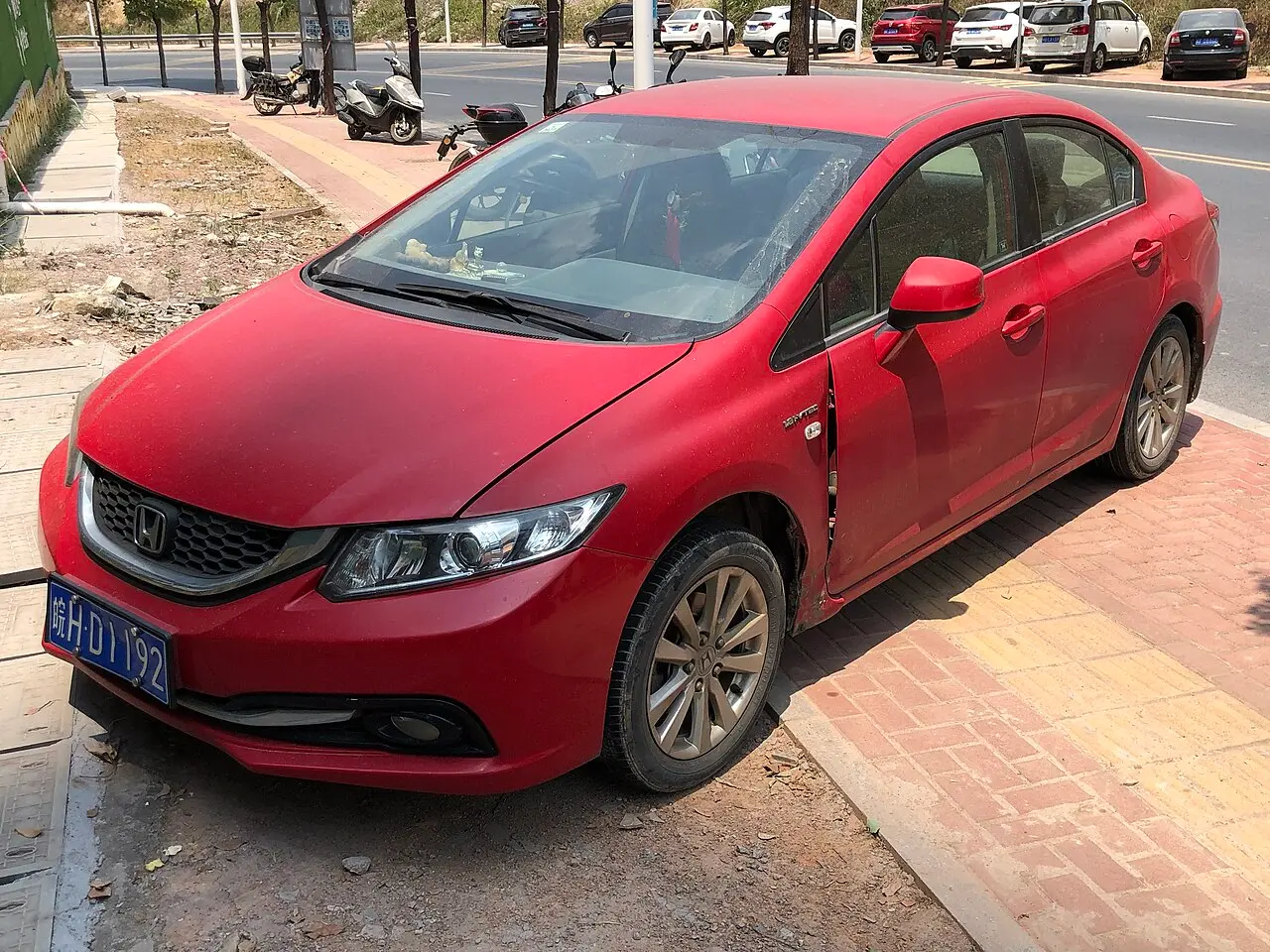
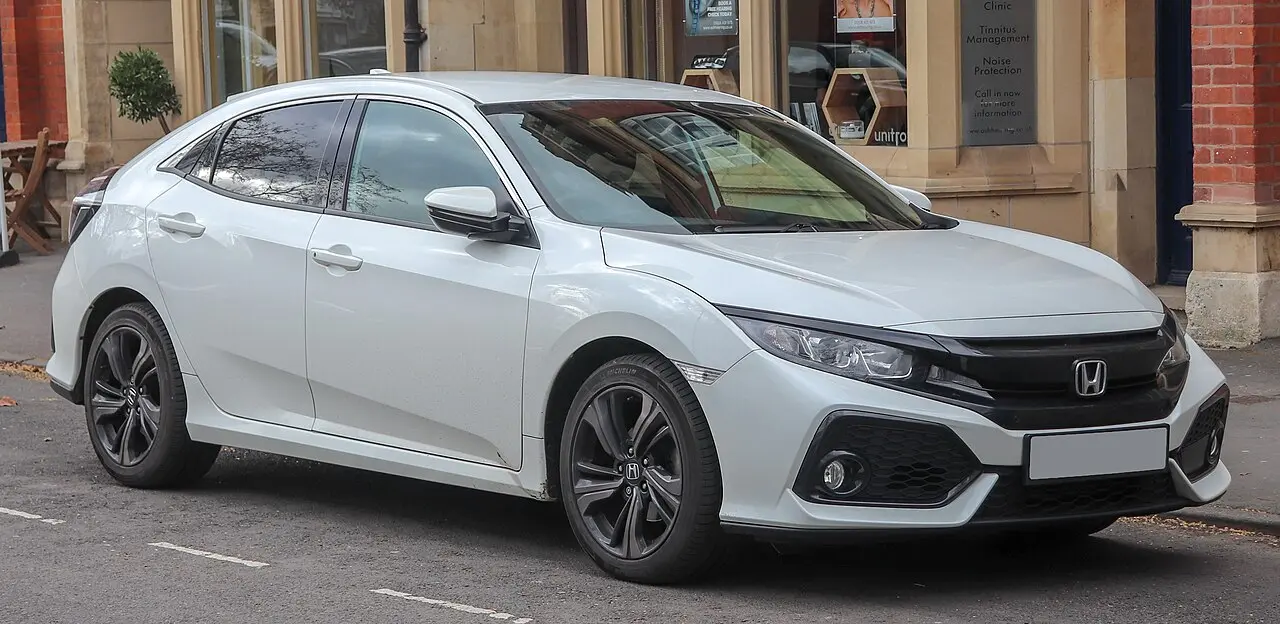
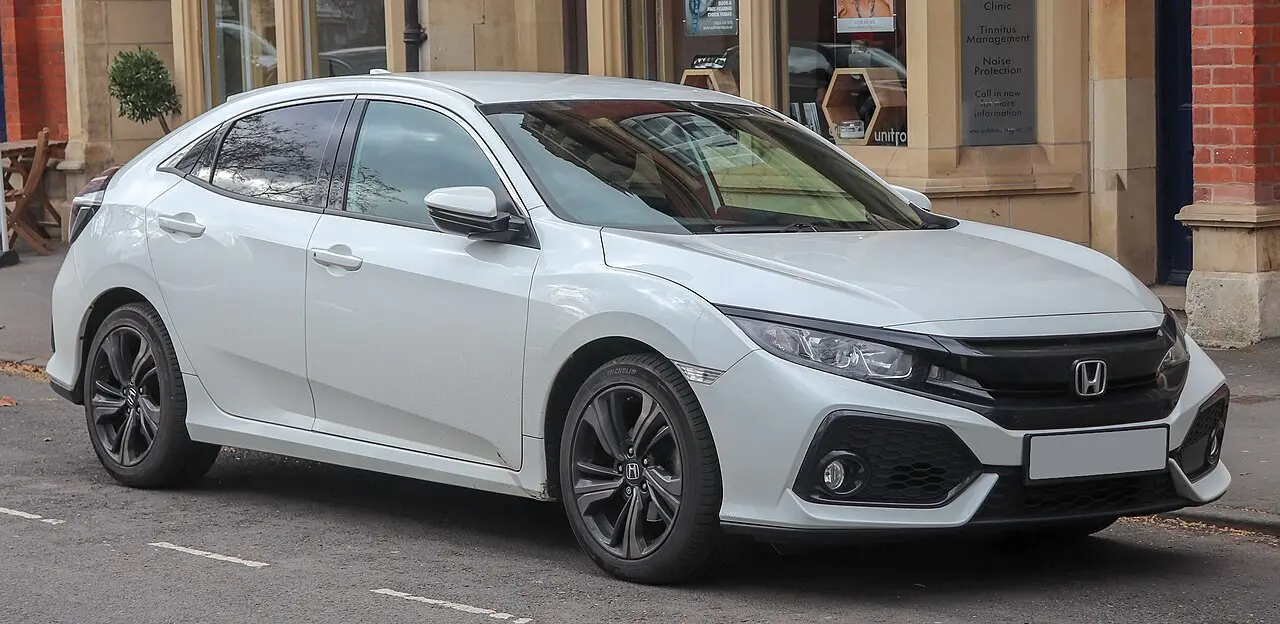
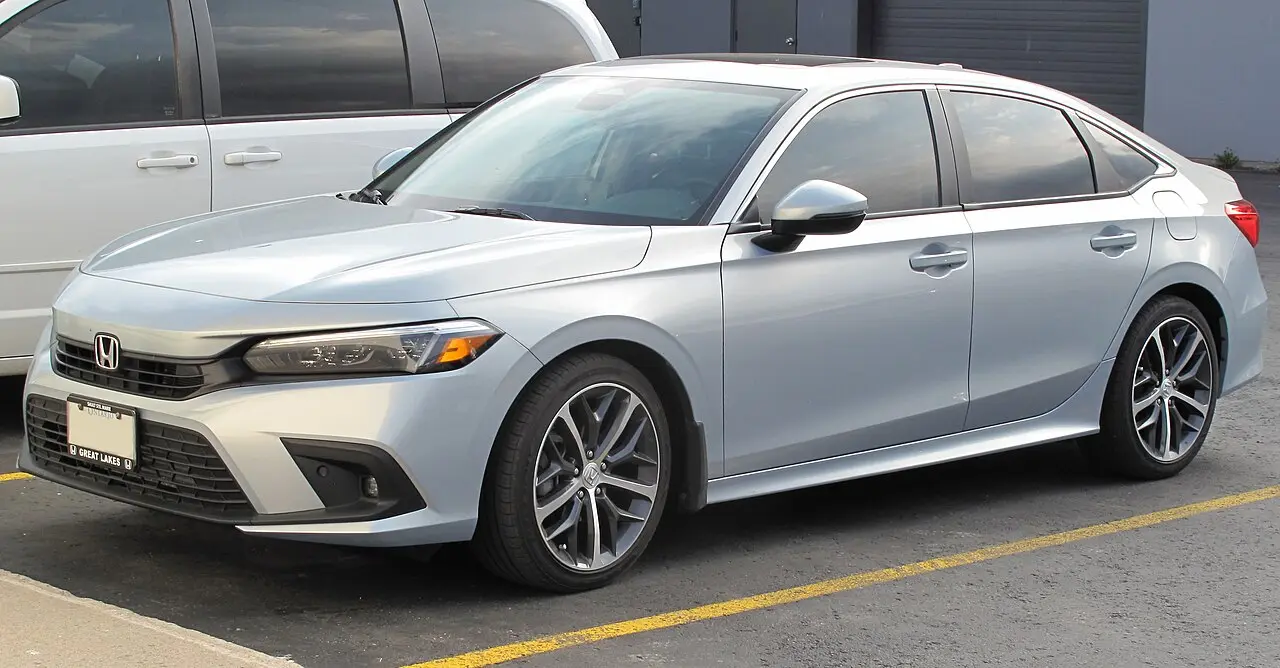
The official data lists 377 versions of the Honda Civic (1984 - 2026), in the European Union, the United Kingdom, France, the United States, and Canada. Each market publishes its own figures, measured on its own test procedure.
At a glance
Years in the data
1984 - 2026
Markets
European Union, United Kingdom, France, United States, Canada
Engines
1.0 L to 2.4 L
Power
70 kW (95 PS) to 242 kW (329 PS)
Fuels
Hybrid, Petrol, Diesel, Plug-in hybrid, LPG, Electric, Natural gas
Lowest consumption (France)
3.6 L/100 km (NEDC)
Lowest consumption (United Kingdom)
3.6 L/100 km (NEDC)
Lowest consumption (European Union)
4.5 L/100 km (WLTP)
New registrations in the EU
880,488
What is the Honda Civic?
The Civic is Honda’s compact car, offered in hatchback and saloon forms in different markets. Its manageable size and useful cabin make it a familiar choice for everyday driving and family duties.
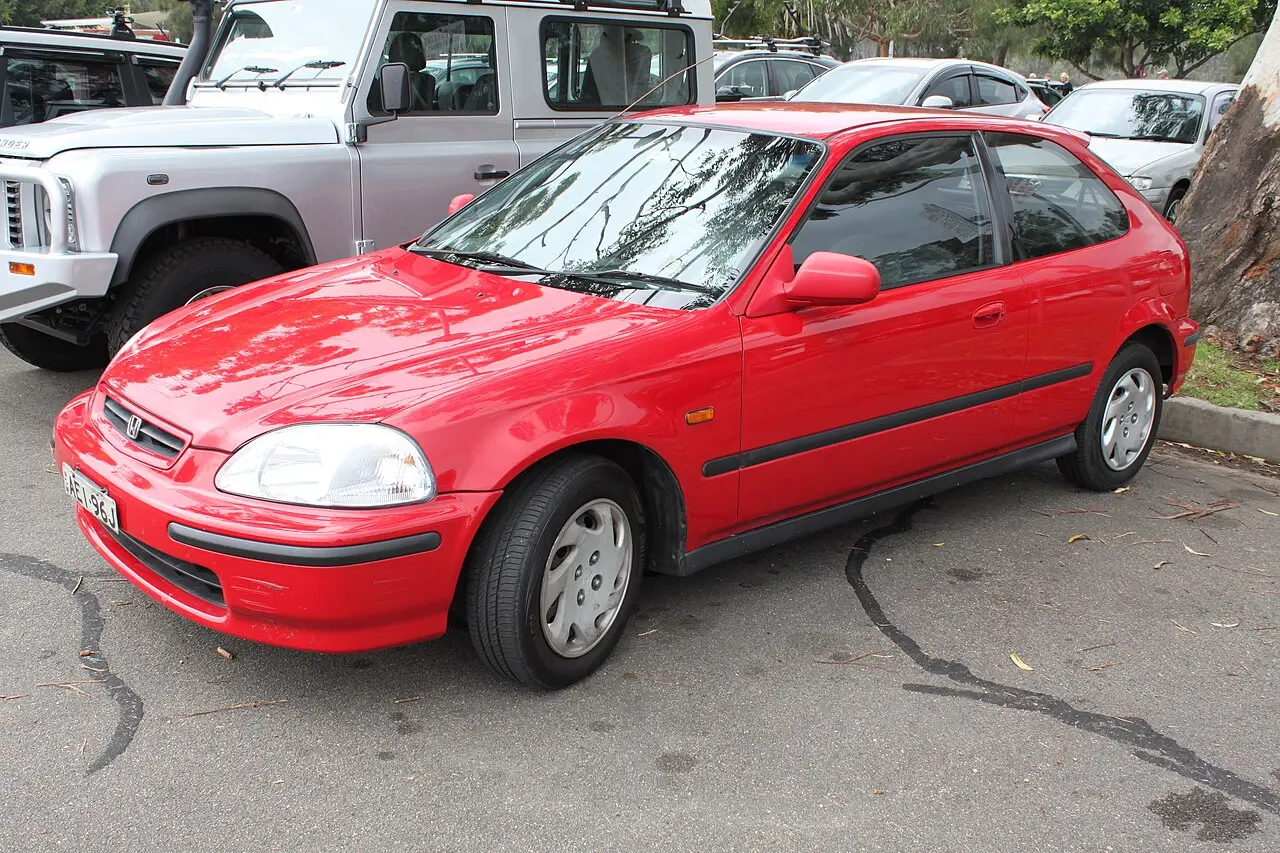
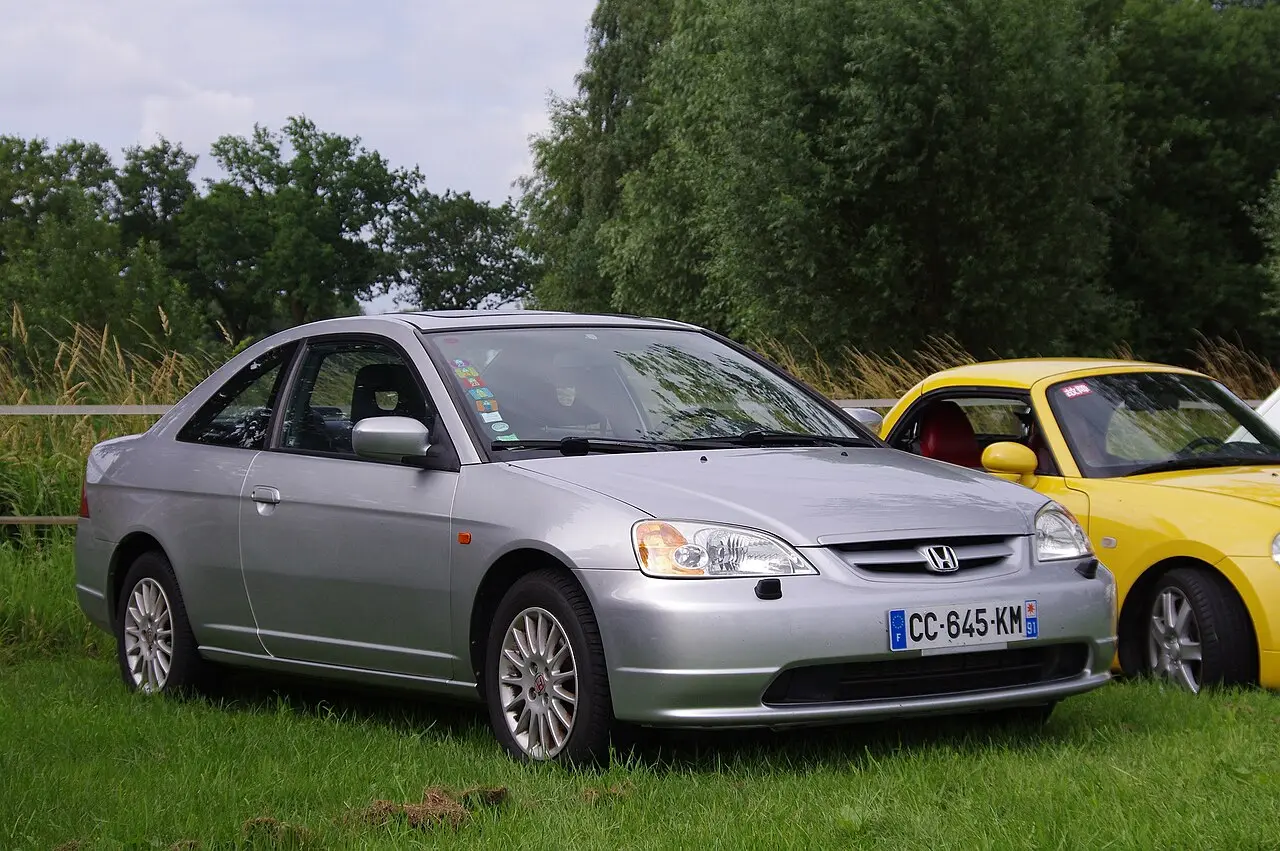
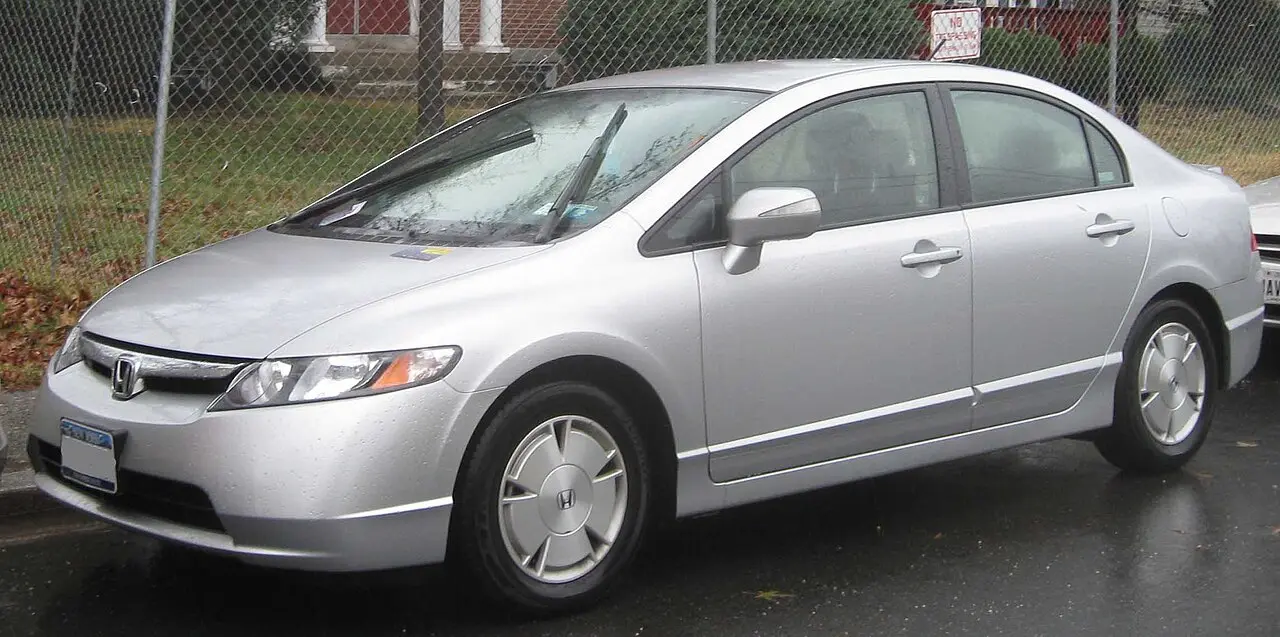
The Civic has been one of Honda’s defining models. Its design has shifted over the generations, from the distinctive shape of the European eighth generation to the cleaner lines of the eleventh.
Civic generations
In Europe, the UK and France, the generations listed are VIII (2006-2011), IX (2012-2016), X (2017-2022) and XI (2022-today). In the United States and Canada, they are VIII (2006-2011), IX (2012-2015), X (2016-2021) and XI (2022-today).
The eighth generation stood out for its design, particularly in Europe. The tenth brought a lower, more assertive shape, while the eleventh adopted a more restrained look.
Engines, power and official economy
In the EU, Civic engines range from 1.0 L to 2.2 L, with power from 70 kW (95 PS) to 242 kW (329 PS). Fuel types include petrol, diesel, hybrid, plug-in hybrid, LPG and electric. UK versions also span 1.0 L to 2.2 L and 88 kW (120 PS) to 242 kW (329 PS). The French range listed here has 2.0 L engines and power from 73 kW (99 PS) to 110 kW (150 PS).
The lowest EU figure for petrol, diesel and hybrid versions is 4.5 L/100 km on WLTP. The UK and French lows are 3.6 L/100 km on NEDC. In the United States, the EPA low is 4.8 L/100 km, or 49 MPG combined; in Canada, the NRCan 5-cycle low is 4.9 L/100 km. Test procedures differ between markets, so the figures are not directly comparable.
Where was the Civic sold?
The Civic appears in official figures for the EU, UK, France, the United States and Canada. EU registrations total 880,488. Among the leading EU entries is the 1.6 L diesel rated at 88 kW (120 PS).
Questions and answers
What is the lowest official Civic fuel consumption?
The lowest EU figure for petrol, diesel or hybrid versions is 4.5 L/100 km on WLTP.
How much power does the Civic have?
EU versions range from 70 kW (95 PS) to 242 kW (329 PS). The UK range starts at 88 kW (120 PS).
Which Civic generations are listed in Europe?
The European series covers generations VIII (2006-2011), IX (2012-2016), X (2017-2022) and XI (2022-today).
How do US and Canadian economy figures differ from European ones?
US figures use the EPA procedure and Canadian figures use the NRCan 5-cycle test. European figures use WLTP or, for some entries, NEDC; the procedures differ.
Model codes: ES, EM, EP, EU · Sold in: United States, Canada, and United Kingdom · References: en.wikipedia.org
At a glance: Length 4,277 - 4,455 mm · Kerb weight 1,091 - 1,245 kg · MOT first-time pass at 13 years and older: 65.8% (UK average 69.2%) Specifications, reliability and all versions
Show all 38 versions
Civic VIII (European Union, United Kingdom, and France) (2006 - 2011)
Model codes: FN, FK · Sold in: European Union, United Kingdom, and France · References: en.wikipedia.org
At a glance: Length 4,140 - 4,550 mm · Kerb weight 1,095 - 1,268 kg · Top speed 170 - 205 km/h · MOT first-time pass at 13 years and older: 68.5% (UK average 69.2%) Specifications, reliability and all versions
Show all 45 versions
Civic VIII (United States and Canada) (2006 - 2011)
Model codes: FK, FB · Sold in: European Union, United Kingdom, and France · References: en.wikipedia.org
At a glance: Length 4,320 - 4,590 mm · Kerb weight 1,151 - 1,338 kg · Top speed 187 - 270 km/h · MOT first-time pass at 9 - 12 years: 87.0% (UK average 77.9%) Specifications, reliability and all versions
Model codes: FB, FG · Sold in: United States and Canada · References: en.wikipedia.org
At a glance: Length 4,320 - 4,590 mm · Kerb weight 1,151 - 1,338 kg · Top speed 187 - 270 km/h · MOT first-time pass at 9 - 12 years: 87.0% (UK average 77.9%) Specifications, reliability and all versions
Model codes: FC, FK · Sold in: United States and Canada · References: en.wikipedia.org
At a glance: Length 4,520 - 4,650 mm · Kerb weight 1,246 - 1,351 kg · Top speed 200 - 272 km/h · MOT first-time pass at 4 - 5 years: 93.3% (UK average 91.0%) Specifications, reliability and all versions
Model codes: FC, FK · Sold in: European Union, United Kingdom, and France · References: en.wikipedia.org
At a glance: Length 4,520 - 4,650 mm · Kerb weight 1,246 - 1,351 kg · Top speed 200 - 272 km/h · MOT first-time pass at 4 - 5 years: 93.3% (UK average 91.0%) Specifications, reliability and all versions
Show all 93 versions
Civic XI (European Union, United Kingdom, and France) (since 2022)
Model years sold in the USA, from the EPA and the Department of Energy (fueleconomy.gov). MPG on the EPA test; litres per 100 km = 235.215 ÷ MPG.
Years and version
Engine
Fuel
Gearbox
Drive
Consumption (combined)
CO₂
2022 - 2026SIDI
1.5 L
Petrol
6-speed manual
Front-wheel drive
31 MPG (7.6 L/100 km) EPA
175 - 177 g/km
2023 - 2026SIDI
2.0 L
Petrol
6-speed manual
Front-wheel drive
24 MPG (9.8 L/100 km) EPA
226 g/km
2025 - 2026SIDI
2.0 L
Petrol
Continuously variable (CVT)
Front-wheel drive
34 - 36 MPG (6.5 - 6.9 L/100 km) EPA
154 - 167 g/km
2025 - 2026SIDI; Hybrid
2.0 L
Hybrid
Continuously variable (CVT)
Front-wheel drive
48 - 49 MPG (4.8 - 4.9 L/100 km) EPA
112 - 116 g/km
2022 - 2024SIDI
1.5 L
Petrol
Continuously variable (CVT)
Front-wheel drive
33 - 36 MPG (6.5 - 7.1 L/100 km) EPA
151 - 166 g/km
2022 - 2024
2.0 L
Petrol
Continuously variable (CVT)
Front-wheel drive
33 - 35 MPG (6.7 - 7.1 L/100 km) EPA
158 - 165 g/km
2022 - 2024
2.0 L
Petrol
6-speed manual
Front-wheel drive
29 MPG (8.1 L/100 km) EPA
189 g/km
Canada 7 versions
Model years sold in Canada, from Natural Resources Canada fuel consumption ratings (5-cycle test).
Years and version
Engine
Fuel
Gearbox
Consumption (combined)
CO₂
2022 - 2026Mid-size
1.5 L
Petrol
6-speed manual
7.7 L/100 km 5-cycle
180 g/km
2022 - 2026Full-size
2.0 L
Petrol
Continuously variable (CVT)
5.0 - 7.2 L/100 km 5-cycle
119 - 167 g/km
2022 - 2026Mid-size
2.0 L
Petrol
Continuously variable (CVT)
4.9 - 7.1 L/100 km 5-cycle
114 - 165 g/km
2022 - 2025Full-size
2.0 L
Petrol
6-speed manual
8.0 - 9.7 L/100 km 5-cycle
186 - 224 g/km
2022 - 2024Full-size
1.5 L
Petrol
Continuously variable (CVT)
7.1 L/100 km 5-cycle
166 g/km
2022 - 2024Full-size
1.5 L
Petrol
6-speed manual
7.5 L/100 km 5-cycle
175 g/km
2022 - 2024Mid-size
1.5 L
Petrol
Continuously variable (CVT)
6.9 L/100 km 5-cycle
162 g/km
Versions outside these generations
Show all 11 versions
European Union 7 versions
New cars registered in the EU (plus Norway and Iceland), from the European Environment Agency. Figures on the NEDC procedure until 2020 and on WLTP from 2021; versions are grouped by engine and power, with their number of registrations.
Years and version
Engine
Power
Fuel
Consumption (combined)
CO₂
EU registrations
2022 - 2025
2.0 L
242 kW (329 PS)
Petrol
8.2 L/100 km WLTP
186 g/km
1,826
2022
2.0 L
105 kW (143 PS)
Hybrid
4.7 L/100 km WLTP
113 g/km
1,689
2022
1.0 L
93 kW (126 PS)
Petrol
5.8 L/100 km WLTP
139 g/km
845
2022
1.5 L
134 kW (182 PS)
Petrol
5.8 L/100 km WLTP
141 g/km
473
2022
2.0 L
105 kW (143 PS)
Petrol
4.5 L/100 km WLTP
110 g/km
399
2022
2.0 L
135 kW (184 PS)
Hybrid
5.0 L/100 km WLTP
113 g/km
64
2022
2.0 L
235 kW (320 PS)
Petrol
8.1 L/100 km WLTP
191 g/km
45
United Kingdom 4 versions
New cars on sale in the UK, from the Vehicle Certification Agency. NEDC figures until 2018 and WLTP figures after; years are the editions a version appeared in.
Years and version
Engine
Power
Fuel
Gearbox
Consumption (combined)
CO₂
2022CIVIC 2.0 i-MMD ADVANCE 5 door (Standard) · CIVIC 2.0 i-MMD SPORT 5 door (Standard)
2.0 L
105 kW (143 PS)
Petrol
5-speed automatic
5.0 L/100 km WLTP
114 g/km
2022CIVIC 2.0 i-MMD ADVANCE 5 door (Standard)
2.0 L
105 kW (143 PS)
Petrol
5-speed automatic
5.0 - 5.1 L/100 km WLTP
115 - 116 g/km
2022CIVIC 2.0 i-MMD ELEGANCE 5 door (Standard)
2.0 L
105 kW (143 PS)
Petrol
5-speed automatic
4.7 - 4.8 L/100 km WLTP
108 - 109 g/km
2022CIVIC 2.0 i-MMD SPORT 5 door (Standard)
2.0 L
105 kW (143 PS)
Petrol
5-speed automatic
5.0 L/100 km WLTP
113 g/km
Honda Civic recalls
123 official safety recalls for the Honda Civic from NHTSA (United States), DVSA (United Kingdom) and the EU Safety Gate, newest first. Recall repairs are normally free at the maker’s dealers.
Front passenger seat weight sensor may short circuit2016 - 2022
Missing wheel bushes may allow wheel nuts to fall off2017 - 2021
Steering gear may stick or make abnormal noise2021 - 2024
Official figures are measured on standard test procedures and differ between markets. Your consumption depends on how, where and in what conditions you drive.