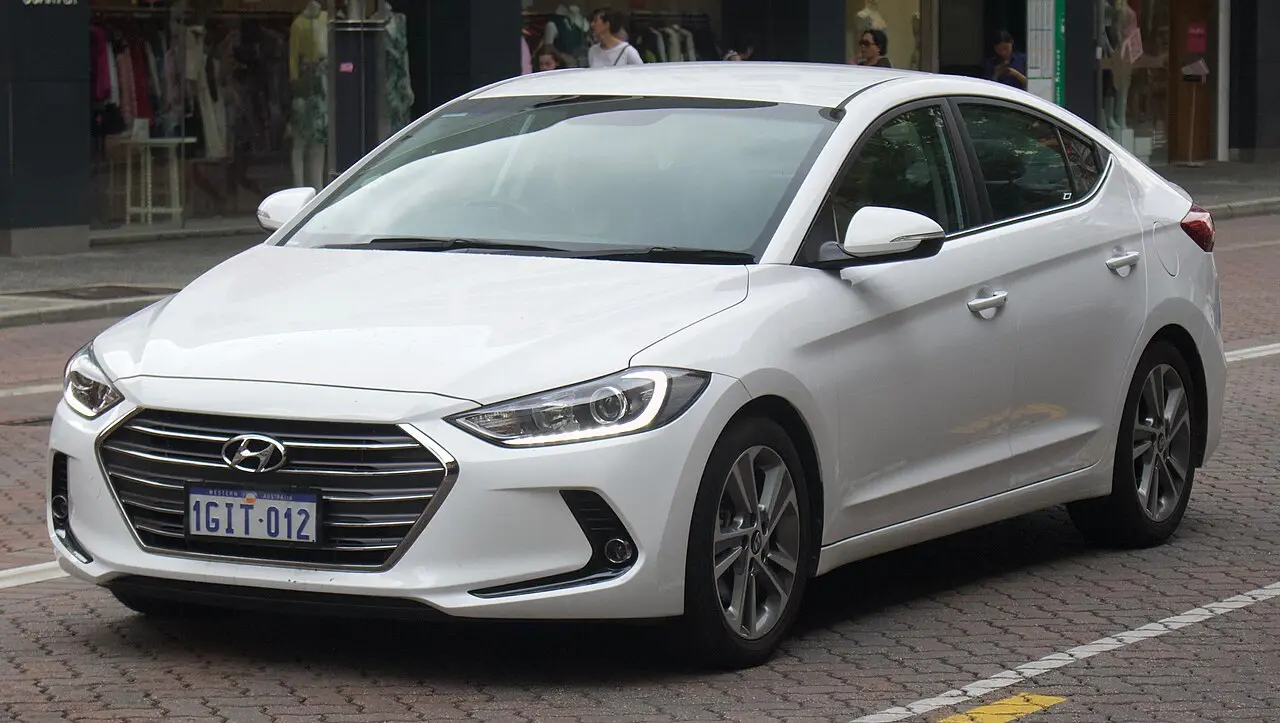
Hyundai

Hyundai Elantra

Hyundai Elantra
Photo: Mr.choppers / Wikimedia Commons · CC BY-SA 3.0

The official data lists 248 versions of the Hyundai Elantra (1992–2026), in the European Union, the United Kingdom, the United States, and Canada. Each market publishes its own figures, measured on its own test procedure.

At a glance

Years in the data
1992–2026
Markets
European Union, United Kingdom, United States, Canada
Engines
1.6 L to 2.0 L
Power
67 kW (91 PS) to 150 kW (204 PS)
Fuels
Petrol, Diesel, LPG, Hybrid
Lowest consumption (United States)
4.4 L/100 km (EPA)
Lowest consumption (Canada)
4.4 L/100 km (5-cycle)
Lowest consumption (European Union)
6.0 L/100 km (WLTP)
New registrations in the EU
43,935

What is the Hyundai Elantra?

The Elantra is Hyundai’s compact car, best known as a four-door sedan. It sits among the brand’s core passenger cars, with a shape and cabin aimed at everyday driving. In South Korea, it is known as the Avante.

Over its generations, the Elantra has moved from a straightforward compact car to a more sharply styled sedan. The seventh generation brought Hyundai’s Parametric Dynamics design language and hybrid power in some markets.

Elantra generations

The generations listed here are I (1992–1995), II (1996–2000), III (2001–2006), IV (2007–2010), V (2011–2016), VI (2017–2020) and VII (2021–today).

The Elantra’s design and powertrain choices have changed over that run, while its role as a compact Hyundai passenger car has remained. The seventh generation has a distinctive look built around intersecting body creases.

Engines, power and economy

In EU registrations, Elantras from 2011 to 2024 span petrol, diesel, LPG and other fuel types. The listed engines are 1.6 litres, with power from 67 kW (91 PS) to 150 kW (204 PS). The lowest listed consumption is 6 L/100 km on WLTP, across petrol, diesel and hybrid versions.

In the US, petrol and hybrid models have engines from 1.4 to 2.0 litres. The lowest listed consumption is 4.4 L/100 km, and the best combined EPA rating is 54 MPG. Canada’s petrol listings cover 1.6- to 2.0-litre engines, with a lowest figure of 4.4 L/100 km on the NRCan 5-cycle test. WLTP and older NEDC procedures in Europe, the EPA test in the US and Canada’s 5-cycle test differ, so figures are most useful within their own markets.

Where was the Elantra sold?

The Elantra appears in official figures for the EU, the UK, the US and Canada. EU registrations cover 2011–2024; US figures span 1992–2026, Canadian figures 1995–2026 and UK figures 2001–2004. The name and lineup have varied across markets, but the Elantra remains Hyundai’s compact passenger car.

Questions and answers

Is the Hyundai Elantra a sedan?

It is best known as Hyundai’s compact four-door sedan, though the name and lineup have varied across markets.

What engines and power are listed for EU Elantras?

The EU figures list 1.6-litre engines and power from 67 kW (91 PS) to 150 kW (204 PS), across petrol, diesel, LPG and other fuel types.

What is the lowest listed Elantra consumption?

The lowest listed figure is 4.4 L/100 km in US EPA ratings and Canadian NRCan 5-cycle figures. The EU low is 6 L/100 km on WLTP.

When did the Elantra generations run?

The listed generations run from I (1992–1995) through VII (2021–today).
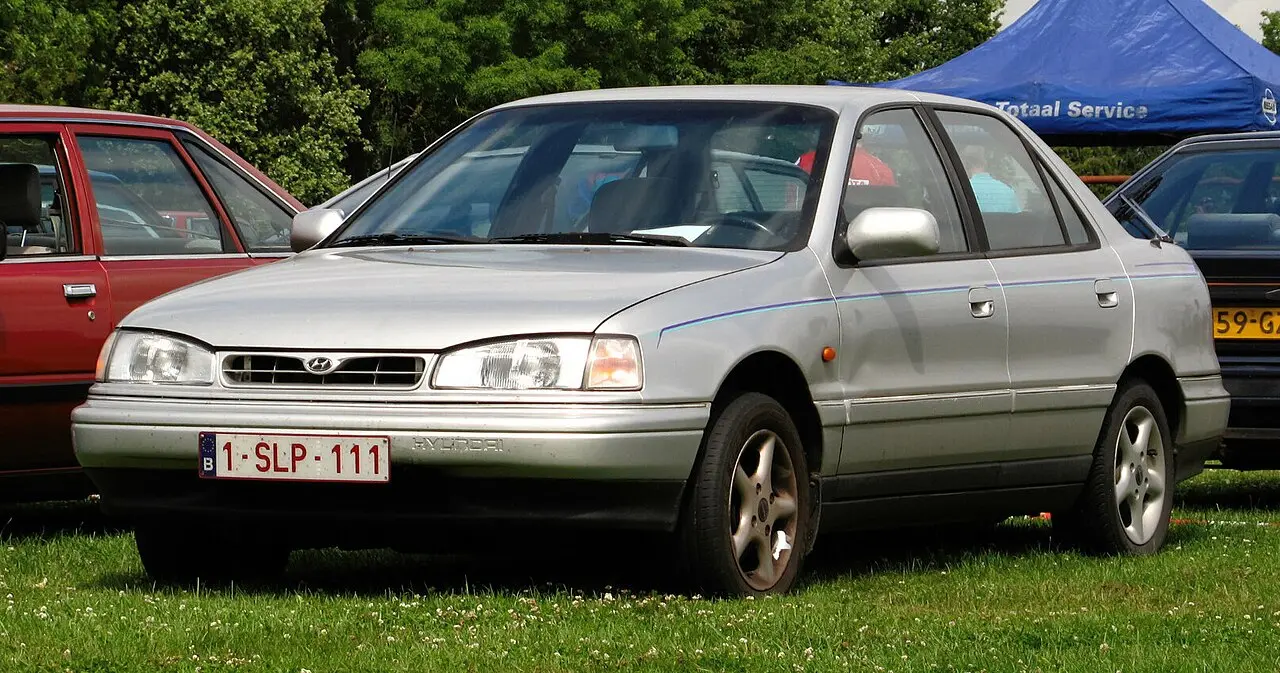
Elantra I (1992–1995)

Hyundai Elantra I
Photo: Rutger van der Maar / Wikimedia Commons · CC BY 2.0

Model codes: J1 · Sold in: United States and Canada · References: en.wikipedia.org

Show all 10 versions

Elantra II (1996–2000)

Hyundai Elantra II
Photo: OSX / Wikimedia Commons · Public domain

Model codes: J2, J3 · Sold in: United States and Canada · References: en.wikipedia.org

Show all 25 versions

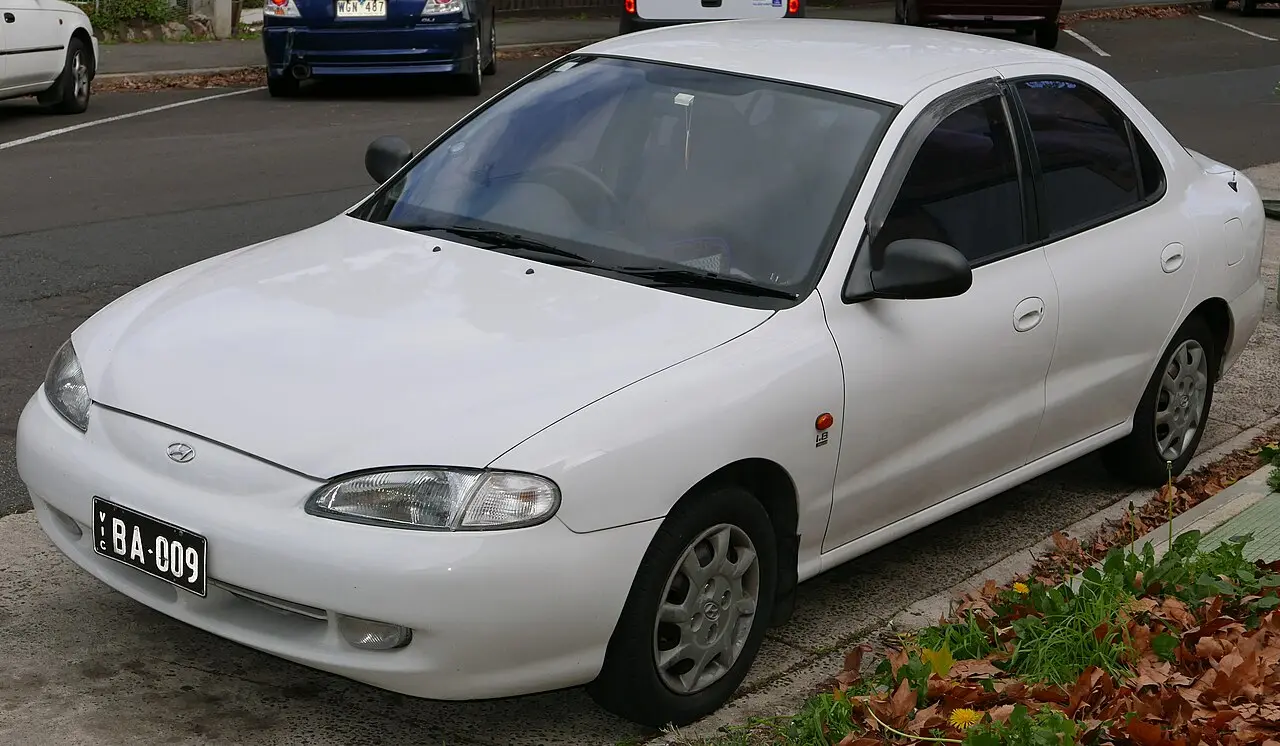
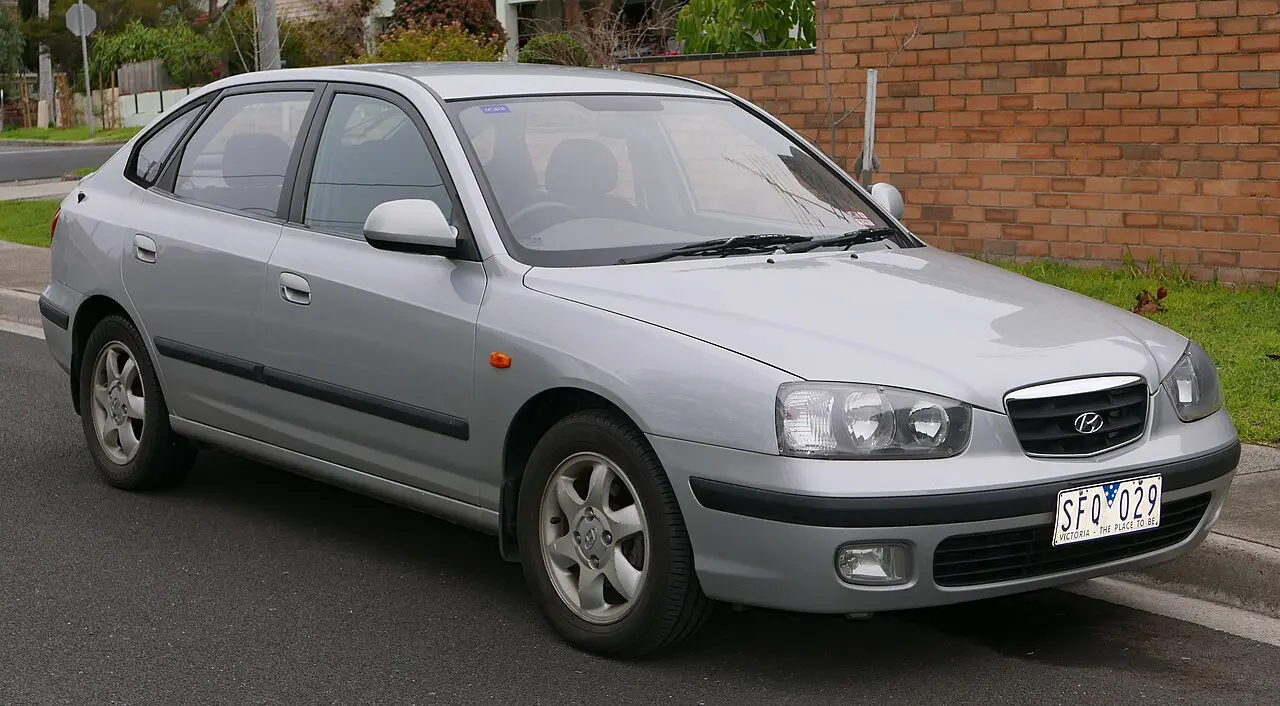
Elantra III (2001–2006)

Hyundai Elantra III
Photo: OSX / Wikimedia Commons · Public domain

Model codes: XD, XD2 · References: en.wikipedia.org

Show all 20 versions

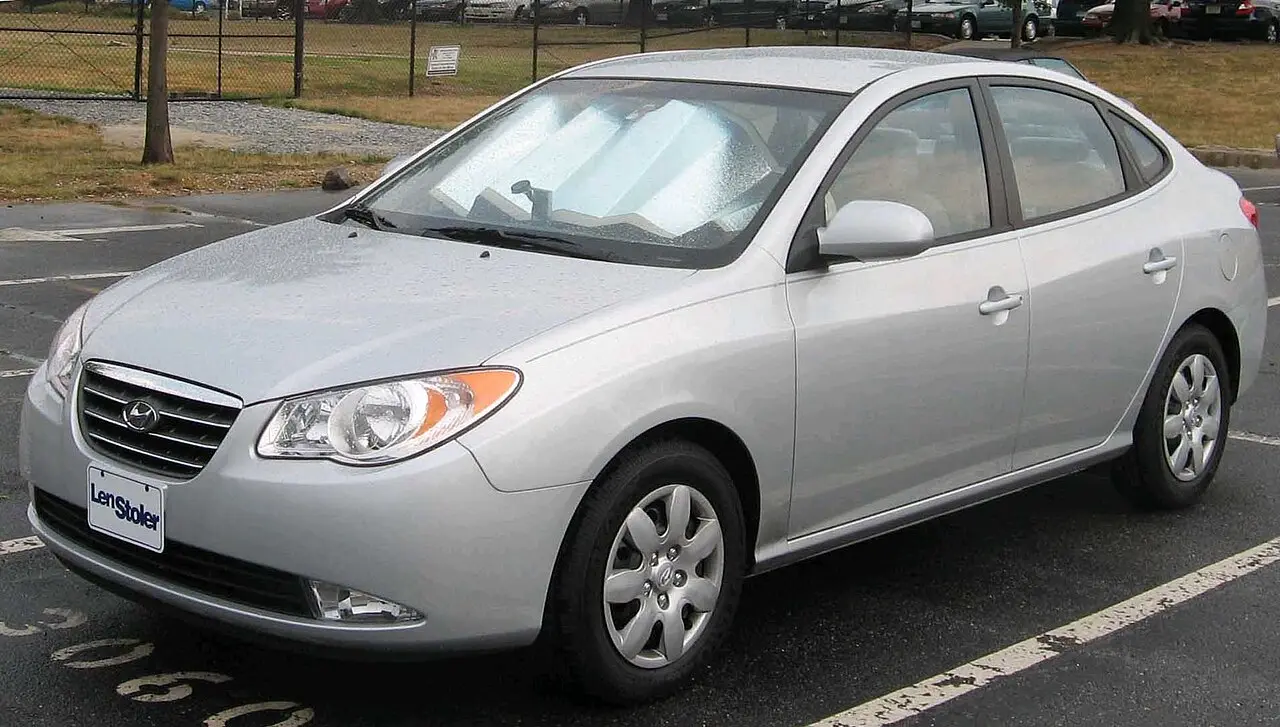
Elantra IV (2007–2010)

Hyundai Elantra IV
Photo: IFCAR / Wikimedia Commons · Public domain

Model codes: HD · References: en.wikipedia.org

Show all 16 versions

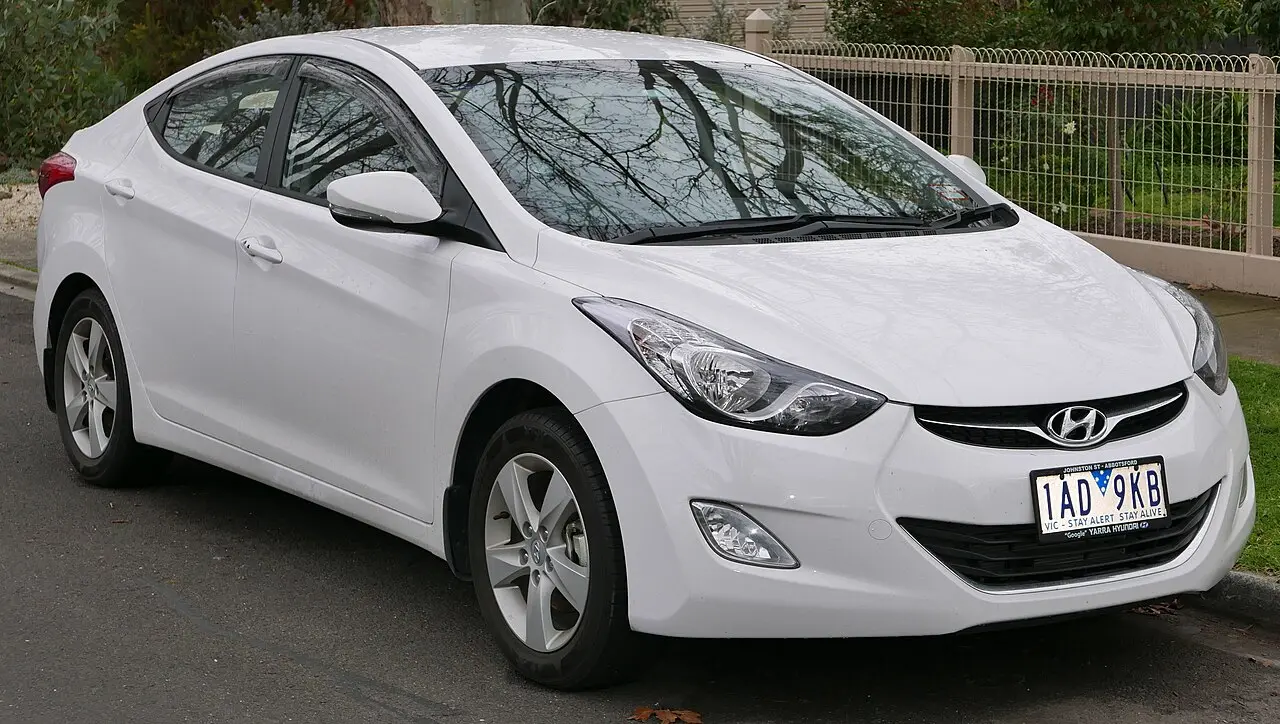
Elantra V (2011–2016)

Hyundai Elantra V
Photo: OSX / Wikimedia Commons · Public domain

Model codes: MD, UD · References: en.wikipedia.org

Show all 60 versions

Elantra VI (2017–2020)

Hyundai Elantra VI
Photo: EurovisionNim / Wikimedia Commons · CC BY-SA 4.0

Model codes: AD · References: en.wikipedia.org

Show all 52 versions

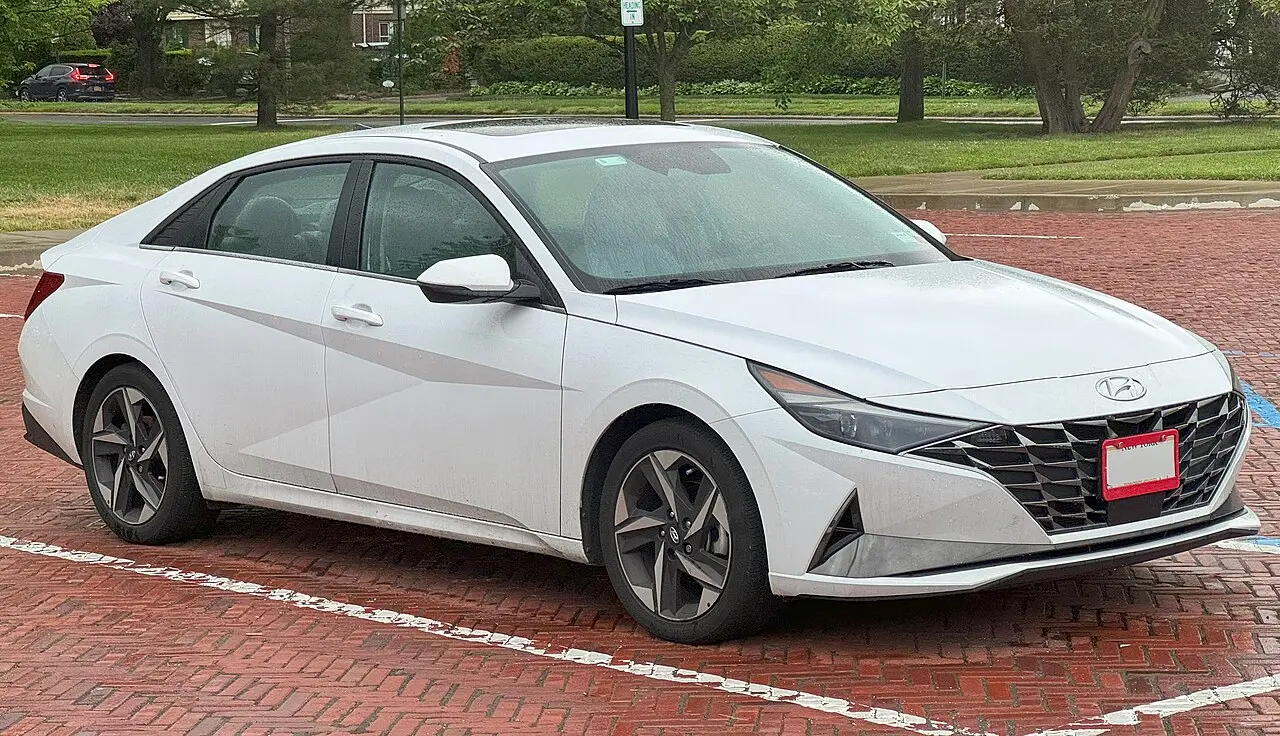
Elantra VII (since 2021)

Hyundai Elantra VII
Photo: Mr.choppers / Wikimedia Commons · CC BY-SA 3.0

Model codes: CN7 · References: en.wikipedia.org

European Union 27 versions

New cars registered in the EU (plus Norway and Iceland), from the European Environment Agency. Figures on the NEDC procedure until 2020 and on WLTP from 2021; versions are grouped by engine and power, with their number of registrations.

Years and versionEnginePowerFuelConsumption (combined)CO₂EU registrations
20241.6 L90 kW (122 PS)Petrol6.2 L/100 km WLTP141 g/km1,964
20231.6 L90 kW (122 PS)Petrol6.0 L/100 km WLTP140 g/km1,648
20231.6 L67 kW (91 PS)Petrol6.1 L/100 km WLTP138 g/km250
20231.6 L110 kW (150 PS)Petrol6.1 L/100 km WLTP138 g/km109
20231.6 L81 kW (110 PS)Petrol6.1 L/100 km WLTP138 g/km66
20231.6 L84 kW (114 PS)Petrol6.1 L/100 km WLTP138 g/km45
20231.6 L95 kW (129 PS)Petrol6.0 L/100 km WLTP137 g/km37
20231.6 L61 kW (83 PS)Petrol6.1 L/100 km WLTP137 g/km27
20231.6 L112 kW (152 PS)Petrol6.1 L/100 km WLTP138 g/km25
20231.6 L132 kW (179 PS)Petrol6.0 L/100 km WLTP136 g/km24
20231.6 L85 kW (116 PS)Petrol6.2 L/100 km WLTP139 g/km22
20231.6 L96 kW (131 PS)Petrol6.1 L/100 km WLTP138 g/km22
20231.6 L72 kW (98 PS)Petrol6.1 L/100 km WLTP137 g/km21
20231.6 L68 kW (92 PS)Petrol6.1 L/100 km WLTP138 g/km20
20231.6 L70 kW (95 PS)Petrol6.1 L/100 km WLTP139 g/km17
20231.6 L131 kW (178 PS)Petrol6.1 L/100 km WLTP139 g/km17
20231.6 L150 kW (204 PS)Petrol6.1 L/100 km WLTP138 g/km17
20231.6 L120 kW (163 PS)Petrol6.0 L/100 km WLTP137 g/km16
20231.6 L69 kW (94 PS)Petrol6.1 L/100 km WLTP139 g/km15
20231.6 L91 kW (124 PS)Petrol6.1 L/100 km WLTP138 g/km15
20231.6 L147 kW (200 PS)Petrol6.0 L/100 km WLTP136 g/km14
20231.6 L80 kW (109 PS)Petrol6.1 L/100 km WLTP137 g/km13
20231.6 L117 kW (159 PS)Petrol6.1 L/100 km WLTP138 g/km12
20231.6 L140 kW (190 PS)Petrol6.1 L/100 km WLTP138 g/km12
20231.6 L74 kW (101 PS)Petrol6.0 L/100 km WLTP137 g/km11
20221.6 L90 kW (122 PS)Petrol6.1 L/100 km WLTP139 g/km2,184
20211.6 L90 kW (122 PS)Petrol6.1 L/100 km WLTP139 g/km2,712

United States 19 versions

Model years sold in the USA, from the EPA and the Department of Energy (fueleconomy.gov). MPG on the EPA test; litres per 100 km = 235.215 ÷ MPG.

Years and versionEngineFuelGearboxDriveConsumption (combined)CO₂
2021–2026SIDI; Hybrid1.6 LHybrid6-speed automated manualFront-wheel drive50 MPG (4.7 L/100 km) EPA110 g/km
2024–2026SIDI; Hybrid1.6 LHybrid6-speed automated manualFront-wheel drive54 MPG (4.4 L/100 km) EPA103 g/km
2024–2026SIDI1.6 LPetrol7-speed automated manualFront-wheel drive31 MPG (7.6 L/100 km) EPA179 g/km
20262.0 LPetrolContinuously variable (CVT)Front-wheel drive34 MPG (6.9 L/100 km) EPA163 g/km
2024–2026SIDI2.0 LPetrol8-speed automated manualFront-wheel drive23 MPG (10.2 L/100 km) EPA244 g/km
2024–2026SIDI2.0 LPetrol6-speed manualFront-wheel drive24 MPG (9.8 L/100 km) EPA227 g/km
20262.0 LPetrolContinuously variable (CVT)Front-wheel drive35 MPG (6.7 L/100 km) EPA158 g/km
2024–2025with Stop-Start2.0 LPetrolContinuously variable (CVT)Front-wheel drive36 MPG (6.5 L/100 km) EPA153 g/km
20252.0 LPetrolContinuously variable (CVT)Front-wheel drive34 MPG (6.9 L/100 km) EPA163 g/km
20242.0 LPetrolContinuously variable (CVT)Front-wheel drive34 MPG (6.9 L/100 km) EPA160 g/km
2021–2023SIDI1.6 LPetrol7-speed automated manualFront-wheel drive31 MPG (7.6 L/100 km) EPA179 g/km
2021–2023SIDI; Hybrid1.6 LHybrid6-speed automated manualFront-wheel drive54 MPG (4.4 L/100 km) EPA103 g/km
2022–2023SIDI2.0 LPetrol8-speed automated manualFront-wheel drive23 MPG (10.2 L/100 km) EPA241 g/km
2022–2023SIDI2.0 LPetrol6-speed manualFront-wheel drive25 MPG (9.4 L/100 km) EPA222 g/km
20232.0 LPetrolContinuously variable (CVT)Front-wheel drive34 MPG (6.9 L/100 km) EPA163 g/km
2023Stop-Start2.0 LPetrolContinuously variable (CVT)Front-wheel drive37 MPG (6.4 L/100 km) EPA152 g/km
2021–2022SIDI1.6 LPetrol6-speed manualFront-wheel drive28 MPG (8.4 L/100 km) EPA198 g/km
2021–20222.0 LPetrolContinuously variable (CVT)Front-wheel drive35 MPG (6.7 L/100 km) EPA160 g/km
2021–2022Stop-Start2.0 LPetrolContinuously variable (CVT)Front-wheel drive37 MPG (6.4 L/100 km) EPA152 g/km

Canada 19 versions

Model years sold in Canada, from Natural Resources Canada fuel consumption ratings (5-cycle test).

Years and versionEngineFuelGearboxConsumption (combined)CO₂
2023–2026Mid-size1.6 LPetrol6-speed automated manual4.7 L/100 km 5-cycle110 g/km
2026Mid-size1.6 LPetrol7-speed automated manual7.6 L/100 km 5-cycle179 g/km
2024–2026Mid-size2.0 LPetrol8-speed automated manual10.4 L/100 km 5-cycle244 g/km
2024–2026Mid-size2.0 LPetrol6-speed manual9.7 L/100 km 5-cycle227 g/km
2026Mid-size2.0 LPetrolContinuously variable (CVT)6.9 L/100 km 5-cycle162 g/km
2026Mid-size2.0 LPetrolContinuously variable (CVT)6.8 L/100 km 5-cycle158 g/km
2024–2025Mid-size1.6 LPetrol7-speed automated manual7.6 L/100 km 5-cycle179 g/km
2024–2025Mid-size2.0 LPetrolContinuously variable (CVT)6.5 L/100 km 5-cycle153 g/km
2025Mid-size2.0 LPetrolContinuously variable (CVT)6.9 L/100 km 5-cycle160 g/km
2024Mid-size2.0 LPetrolContinuously variable (CVT)6.8 L/100 km 5-cycle160 g/km
2021–2023Mid-size1.6 LPetrol7-speed automated manual7.6 L/100 km 5-cycle179 g/km
2022–2023Mid-size2.0 LPetrolContinuously variable (CVT)6.7 L/100 km 5-cycle158 g/km
2022–2023Mid-size2.0 LPetrolContinuously variable (CVT)6.4 L/100 km 5-cycle151 g/km
2022–2023Mid-size2.0 LPetrol8-speed automated manual10.2 L/100 km 5-cycle241 g/km
2022–2023Mid-size2.0 LPetrol6-speed manual9.4 L/100 km 5-cycle223 g/km
2021–2022Mid-size1.6 LPetrol6-speed automated manual4.4 L/100 km 5-cycle103 g/km
2021–2022Mid-size2.0 LPetrol6-speed manual7.8 L/100 km 5-cycle185 g/km
2021Mid-size2.0 LPetrolContinuously variable (CVT)6.7 L/100 km 5-cycle157 g/km
2021Mid-size2.0 LPetrolContinuously variable (CVT)6.4 L/100 km 5-cycle152 g/km

Official figures are measured on standard test procedures and differ between markets. Your consumption depends on how, where and in what conditions you drive.