What is the Citroën BX?
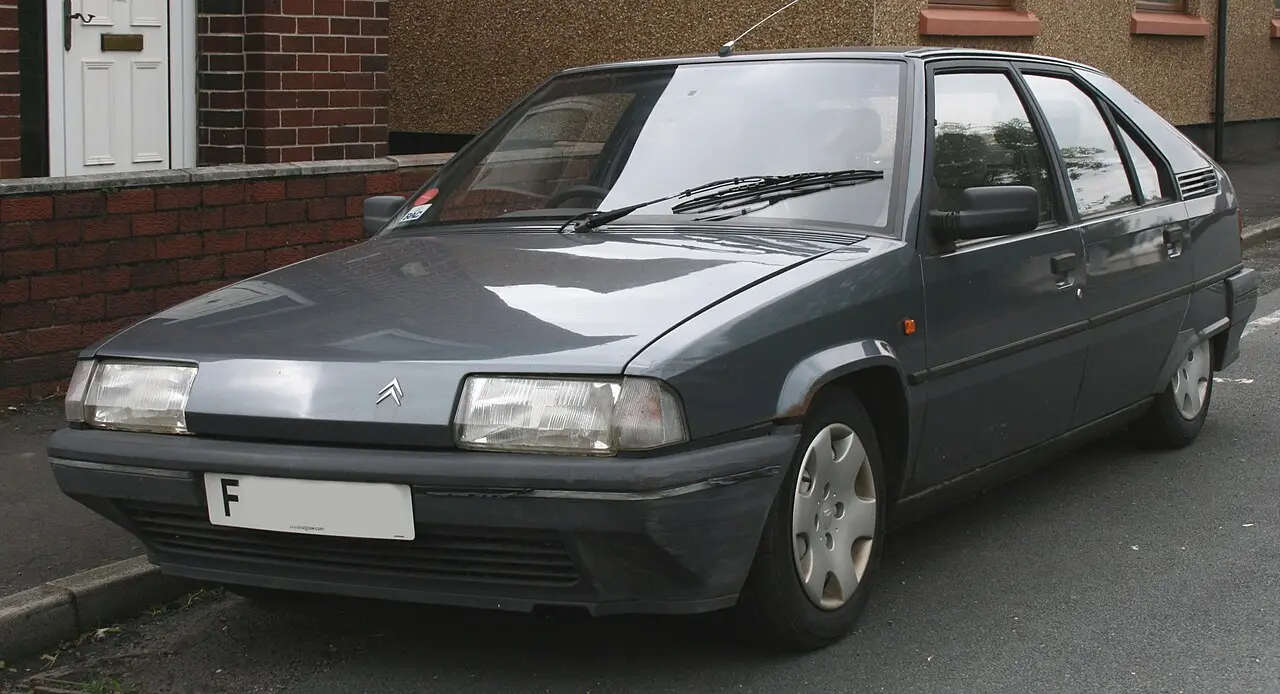
The BX was Citroën’s family car for drivers who wanted everyday space with the marque’s distinctive approach to comfort. It was offered as a practical hatchback, with an estate body for buyers needing more room. In Citroën’s range, it sat in the upper-middle part of the family-car market: larger and more substantial than a small runabout, while designed for ordinary daily use.
Its angular shape was created by the Italian design house Bertone, giving the BX a crisp, modern look that stood apart from more rounded family cars. The cabin and body were built around usability, while the car’s hydropneumatic suspension carried forward a technology associated with Citroën’s larger models. The system helped the BX maintain its ride height as loads changed and gave it a notably supple ride.
Generations and engines
The BX was one continuous model line rather than a car with separately named generations. Its range developed over its production life, adding body styles and updated equipment while retaining the same basic identity as a roomy, comfort-focused Citroën.
The engine range included petrol and diesel choices, with outputs varying by version. More powerful variants gave the BX a livelier character, while the diesel models suited drivers covering longer distances. The BX also became a place for Citroën to try new cabin technology: the BX Digit, for example, introduced digital instruments to the model.
Fuel consumption and CO₂
Fuel use and CO₂ emissions depend on the particular BX engine and version, and the official figures are tied to the market and test procedure used. European figures may follow the NEDC procedure; later European tests use WLTP. These results are not directly interchangeable with US EPA ratings or Canada’s five-cycle method.
The BX predates today’s familiar mix of standardized emissions labels, so a figure should always be read alongside its test procedure and market. The full version tables are the place to compare the official figures for individual engines and body styles.
Where was it sold?
The BX was a European family-car staple, with production in France and Spain. Its role in Citroën’s range helped the marque reach buyers looking for a larger everyday car with hydropneumatic comfort and distinctive styling. The hatchback suited family and commuter use; the estate offered a more flexible alternative for carrying luggage or equipment.
Questions and answers
Was the Citroën BX a hatchback or an estate?
It was sold as a hatchback and as an estate, giving buyers a choice between a conventional family car and a more spacious load area.
What suspension did the BX use?
It used Citroën’s hydropneumatic suspension, a system associated with the brand’s emphasis on ride comfort.
Did the BX have diesel engines?
Yes. The range included both petrol and diesel engines, with the available output depending on the version.