Opel

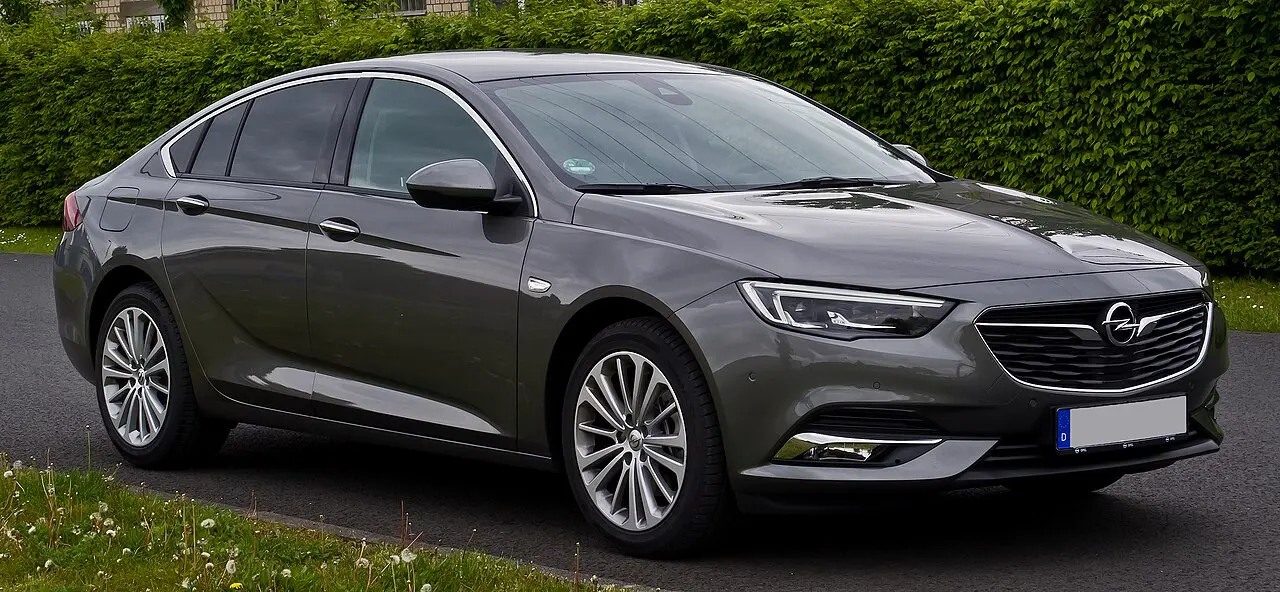
Opel Insignia

Opel Insignia
Photo: © M 93 / Wikimedia Commons · CC BY-SA 3.0 de

The official data lists 377 versions of the Opel Insignia (2010–2024), in the European Union and France. Each market publishes its own figures, measured on its own test procedure.

At a glance

Years in the data
2010–2024
Markets
European Union, France
Engines
1.4 L to 2.8 L
Power
81 kW (110 PS) to 239 kW (325 PS)
Fuels
Diesel, Petrol, LPG, Flex fuel (E85), Natural gas
Lowest consumption (France)
3.7 L/100 km (NEDC)
Lowest consumption (European Union)
4.8 L/100 km (WLTP)
New registrations in the EU
1,150,389

What is the Opel Insignia?

The Insignia is a large family car from Opel, offered as a liftback and an estate called Sports Tourer. Its first generation replaced the Vectra, bringing a new name to this part of the range. The second generation adopted the Grand Sport name for the liftback and continued as a Sports Tourer estate.

In EU registration figures, the Insignia appears from 2010 to 2024, with 1,150,389 registrations. France’s ADEME listings cover 2012 to 2015.

Generations, engines and power

The Insignia A ran from 2008 to 2017. It was offered as a saloon, liftback and estate. The Insignia B followed from 2017 to 2022, with the liftback known as the Grand Sport and the estate as the Sports Tourer.

Across EU versions, engine sizes ranged from 1.4 to 2.8 litres and power from 81 kW (110 PS) to 239 kW (325 PS). The range included petrol and diesel, as well as LPG, E85 flex fuel, natural gas and other fuel classifications. France’s ADEME listings include petrol and diesel versions, with power from 81 kW (110 PS) to 239 kW (325 PS).

How economical is the Opel Insignia?

The lowest listed EU consumption is 4.8 L/100 km on the WLTP test. In France, the lowest listed figure is 3.7 L/100 km on NEDC. European figures may use WLTP or NEDC; the USA uses EPA testing, and Canada uses a five-cycle procedure, so results from different markets are not directly equivalent.

The leading EU registration entries include a 2.0-litre diesel in 2010 and 2.0-litre diesels rated at 118 kW (160 PS) in 2011 and 120 kW (163 PS) in 2014.

Questions and answers

What generations of Opel Insignia are listed?

The Insignia A ran from 2008 to 2017, followed by the Insignia B from 2017 to 2022.

What is the lowest official fuel consumption listed for the Insignia?

The lowest EU figure is 4.8 L/100 km on WLTP. France’s lowest listed figure is 3.7 L/100 km on NEDC.

How much power does the Insignia have?

EU versions range from 81 kW (110 PS) to 239 kW (325 PS).
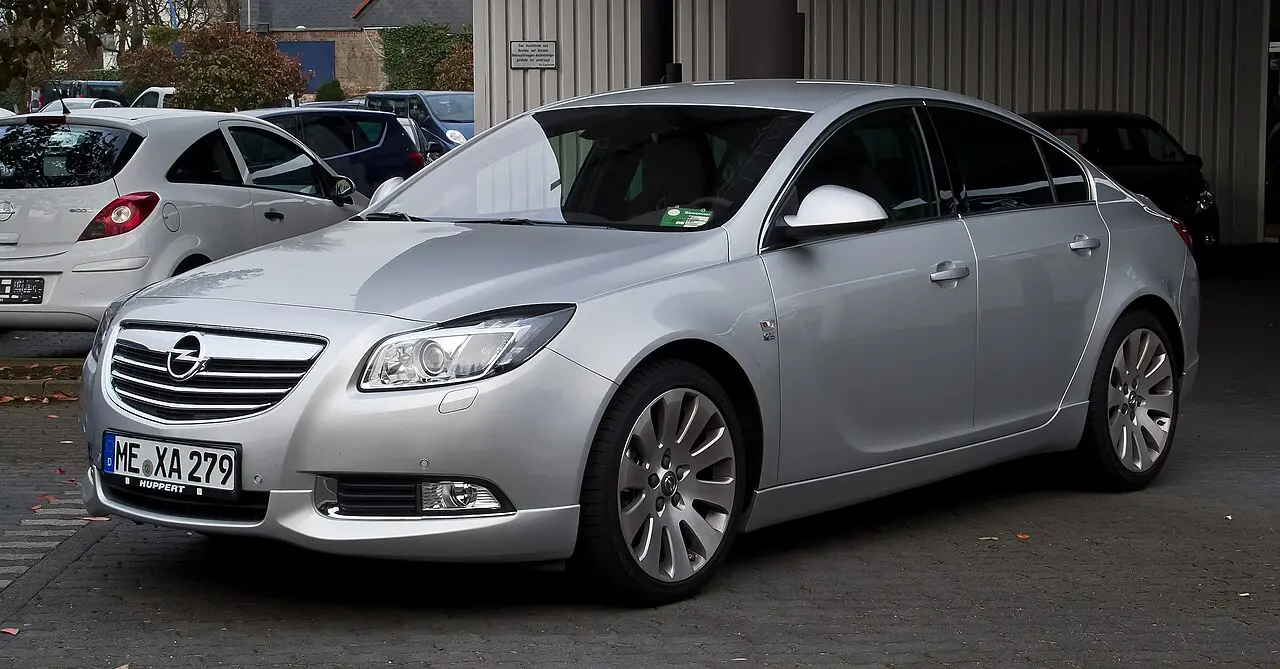
Insignia A (2008–2017)

Opel Insignia A
Photo: M 93 / Wikimedia Commons · CC BY-SA 3.0 de

Model codes: G09 · References: en.wikipedia.org

Show all 314 versions

Insignia B (2017–2022)

Opel Insignia B
Photo: © M 93 / Wikimedia Commons · CC BY-SA 3.0 de

Model codes: Z18 · References: en.wikipedia.org

European Union 91 versions

New cars registered in the EU (plus Norway and Iceland), from the European Environment Agency. Figures on the NEDC procedure until 2020 and on WLTP from 2021; versions are grouped by engine and power, with their number of registrations.

Years and versionEnginePowerFuelConsumption (combined)CO₂EU registrations
20222.0 L128 kW (174 PS)Diesel5.0 L/100 km WLTP134 g/km6,478
20221.5 L90 kW (122 PS)Diesel5.1 L/100 km WLTP132 g/km1,853
20222.0 L169 kW (230 PS)Petrol8.6 L/100 km WLTP194 g/km870
20222.0 L147 kW (200 PS)Petrol7.6 L/100 km WLTP170 g/km793
20222.0 L125 kW (170 PS)Petrol7.4 L/100 km WLTP169 g/km487
20221.4 L103 kW (140 PS)Petrol–124 g/km37
20222.0 L103 kW (140 PS)Diesel–98 g/km36
20212.0 L128 kW (174 PS)Diesel5.0 L/100 km WLTP134 g/km23,007
20211.5 L90 kW (122 PS)Diesel4.9 L/100 km WLTP129 g/km7,135
20212.0 L147 kW (200 PS)Petrol7.4 L/100 km WLTP170 g/km2,599
20212.0 L169 kW (230 PS)Petrol8.5 L/100 km WLTP194 g/km2,574
20212.0 L125 kW (170 PS)Petrol7.4 L/100 km WLTP169 g/km1,942
20211.6 L100 kW (136 PS)Diesel4.9 L/100 km WLTP139 g/km802
20211.5 L121 kW (165 PS)Petrol6.4 L/100 km WLTP155 g/km255
20212.0 L125 kW (170 PS)Diesel5.9 L/100 km WLTP155 g/km110
20211.6 L81 kW (110 PS)Diesel4.8 L/100 km WLTP130 g/km88
20212.0 L154 kW (209 PS)Diesel7.4 L/100 km WLTP195 g/km80
20211.6 L147 kW (200 PS)Petrol7.3 L/100 km WLTP167 g/km32
20211.5 L103 kW (140 PS)Petrol6.0 L/100 km WLTP143 g/km18
20211.5 L–Petrol5.5 L/100 km WLTP123 g/km10
20201.6 L100 kW (136 PS)Diesel–117 g/km9,145
20201.5 L121 kW (165 PS)Petrol–126 g/km7,317
20202.0 L125 kW (170 PS)Diesel–138 g/km6,991
20202.0 L128 kW (174 PS)Diesel–113 g/km5,134
20201.5 L90 kW (122 PS)Diesel–108 g/km4,002
20202.0 L154 kW (209 PS)Diesel–183 g/km1,780
20202.0 L147 kW (200 PS)Petrol–146 g/km1,204
20202.0 L169 kW (230 PS)Petrol–164 g/km922
20201.5 L103 kW (140 PS)Petrol–124 g/km798
20201.6 L81 kW (110 PS)Diesel–110 g/km714
20201.6 L147 kW (200 PS)Petrol–146 g/km451
20201.3 L107 kW (145 PS)Petrol–158 g/km62
20202.0 L125 kW (170 PS)Petrol–162 g/km16
20192.0 L125 kW (170 PS)Diesel–146 g/km22,020
20191.5 L121 kW (165 PS)Petrol–134 g/km16,680
20191.6 L100 kW (136 PS)Diesel–129 g/km15,892
20191.6 L147 kW (200 PS)Petrol–148 g/km5,624
20192.0 L154 kW (209 PS)Diesel–185 g/km5,384
20191.5 L103 kW (140 PS)Petrol–129 g/km3,846
20191.6 L81 kW (110 PS)Diesel–116 g/km2,210
20192.0 L191 kW (260 PS)Petrol–197 g/km226
20192.0 L149 kW (203 PS)Petrol–153 g/km72
20191.5 L91 kW (124 PS)Diesel–139 g/km66
20192.0 L118 kW (160 PS)Diesel–156 g/km52
20191.3 L107 kW (145 PS)Petrol–138 g/km40
20191.3 L107 kW (145 PS)Petrol–138 g/km36
20192.0 L125 kW (170 PS)Diesel–118 g/km24
20191.4 L100 kW (136 PS)Petrol–156 g/km14
20191.5 L90 kW (122 PS)Diesel–123 g/km10
20182.0 L125 kW (170 PS)Diesel–146 g/km34,064
20181.5 L121 kW (165 PS)Petrol–138 g/km25,511
20181.6 L100 kW (136 PS)Diesel–126 g/km22,980
20182.0 L154 kW (209 PS)Diesel–187 g/km6,390
20182.0 L191 kW (260 PS)Petrol–198 g/km6,168
20181.5 L103 kW (140 PS)Petrol–133 g/km5,964
20181.6 L81 kW (110 PS)Diesel–111 g/km3,766
20181.6 L147 kW (200 PS)Petrol–147 g/km1,428
20181.6 L125 kW (170 PS)Petrol–163 g/km26
20172.0 L125 kW (170 PS)Diesel–144 g/km33,610
20171.6 L100 kW (136 PS)Diesel–121 g/km24,560
20171.5 L121 kW (165 PS)Petrol–138 g/km16,634
20171.6 L100 kW (136 PS)Other fuel–123 g/km7,648
20171.5 L103 kW (140 PS)Petrol–132 g/km4,026
20172.0 L191 kW (260 PS)Petrol–199 g/km3,968
20172.0 L188 kW (256 PS)Diesel–139 g/km3,132
20171.6 L125 kW (170 PS)Petrol–158 g/km2,272
20172.0 L125 kW (170 PS)Other fuel–145 g/km1,710
20171.6 L81 kW (110 PS)Diesel–108 g/km1,646
20171.4 L103 kW (140 PS)Petrol–131 g/km1,544
20171.5 L182 kW (247 PS)Petrol–137 g/km1,482
20171.6 L88 kW (120 PS)Diesel–112 g/km626
20171.6 L150 kW (204 PS)Diesel–119 g/km568
20172.0 L287 kW (390 PS)Petrol–198 g/km516
20172.0 L184 kW (250 PS)Petrol–188 g/km420
20171.5 L121 kW (165 PS)Diesel–145 g/km316
20172.0 L154 kW (209 PS)Diesel–187 g/km252
20171.6 L188 kW (256 PS)Petrol–155 g/km120
20171.5 L155 kW (211 PS)Petrol–133 g/km100
20171.8 L155 kW (211 PS)Petrol–169 g/km86
20171.4 L103 kW (140 PS)LPG–137 g/km78
20172.0 L231 kW (314 PS)Diesel–202 g/km46
20171.5 L121 kW (165 PS)Other fuel–138 g/km28
20172.0 L191 kW (260 PS)Other fuel–198 g/km28
20171.4 L103 kW (140 PS)Other fuel–146 g/km22
20172.0 L276 kW (375 PS)Petrol–189 g/km22
20171.6 L88 kW (120 PS)Other fuel–116 g/km18
20171.8 L103 kW (140 PS)Petrol–169 g/km16
20171.6 L122 kW (166 PS)Diesel–111 g/km14
20171.4 L155 kW (211 PS)LPG–143 g/km12
20171.4 L155 kW (211 PS)Petrol–126 g/km10
20172.0 L118 kW (160 PS)Diesel–141 g/km10

Versions outside these generations

European Union 5 versions

New cars registered in the EU (plus Norway and Iceland), from the European Environment Agency. Figures on the NEDC procedure until 2020 and on WLTP from 2021; versions are grouped by engine and power, with their number of registrations.

Years and versionEnginePowerFuelConsumption (combined)CO₂EU registrations
20242.0 L128 kW (174 PS)Diesel5.1 L/100 km WLTP132 g/km15
20232.0 L128 kW (174 PS)Diesel5.1 L/100 km WLTP134 g/km1,885
20231.5 L90 kW (122 PS)Diesel5.3 L/100 km WLTP136 g/km339
20232.0 L169 kW (230 PS)Petrol8.6 L/100 km WLTP195 g/km67
20232.0 L147 kW (200 PS)Petrol7.4 L/100 km WLTP168 g/km39

Official figures are measured on standard test procedures and differ between markets. Your consumption depends on how, where and in what conditions you drive.