

Polestar Polestar 2 first generation
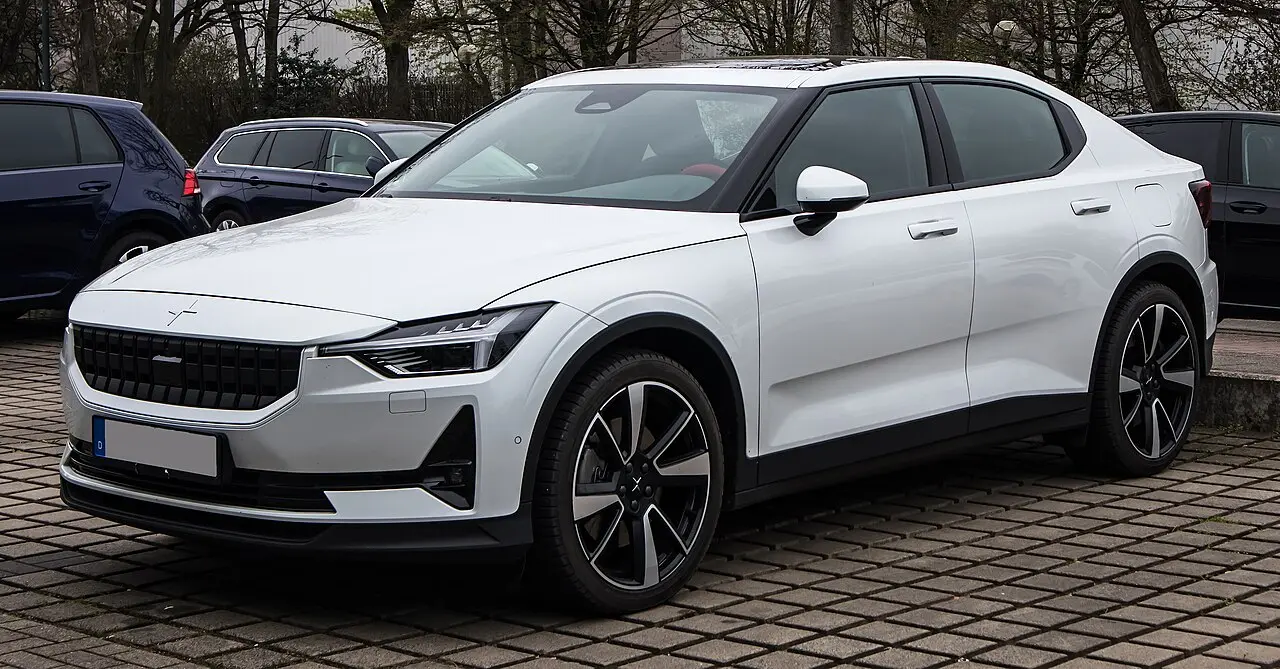
The Polestar Polestar 2 first generation (2020–2025): dimensions, weights, reliability and the official figures of its 33 versions in the European Union, the United States, and Canada.
Dimensions, weights and capacity
| Specification | Europe | North America | Wikipedia |
|---|---|---|---|
| Dimensions | |||
| Length | 4,610 mm RDW | 4,610 mm TC | 4,606 mm |
| Width | 1,860–1,890 mm RDW | 1,860 mm TC | 1,859 mm |
| Height | 1,480 mm RDW | 1,480 mm TC | 1,482 mm |
| Wheelbase | 2,740 mm RDW | 2,740 mm TC | 2,735 mm |
| Front track | 1,602 mm ASTRA | 1,600 mm TC | – |
| Rear track | 1,601 mm ASTRA | 1,600 mm TC | – |
| Weights and towing | |||
| Kerb weight | 1,913–2,098 kg RDW | 2,120 kg TC | 1,940–2,248 kg |
| Mass in running order | 2,013–2,198 kg RDW | – | – |
| Gross vehicle weight | 2,390–2,600 kg RDW | – | – |
| Towing, braked trailer | 1,500 kg RDW | – | – |
| Towing, unbraked trailer | 750 kg RDW | – | – |
| Seats and space | |||
| Seats | 5 RDW | – | – |
| Doors | 5 RDW | – | – |
| Boot space | 405–408 L EV DB | – | 405–440 L |
| Luggage space (EPA) | – | 736 L EPA | – |
| Passenger space (EPA) | – | 2,520 L EPA | – |
| Performance | |||
| Top speed | 160–205 km/h RDW | – | 160–205 km/h |
| 0–100 km/h | 4.2–7.4 s EV DB | – | 7.0 s |
| Torque | 330–740 Nm EV DB | – | 330–740 Nm |
| Electric motor power | – | 170–350 kW NRCan | – |
| Electric | |||
| Battery capacity (usable) | 67.0–79.0 kWh EV DB | – | – |
| Battery capacity (gross) | 69.0–82.0 kWh EV DB | – | – |
| Range (WLTP) | 440–635 km EV DB | – | – |
| Range (EPA/NRCan) | – | 375–515 km EPA | – |
| AC charging power | 11 kW EV DB | – | – |
| DC fast charging power | 150–205 kW EV DB | – | – |
| Charging time at 240 V | – | 8.0 h EPA | – |
Tyre sizes (most common first): 245/40R20, 245/45R19, 245/35R21
NHTSA overall safety rating (US): 2022–2025: ★★★★★
Ranges cover the generation’s versions and body styles; European and North American versions can differ. Sources: RDW type approvals (Netherlands), Transport Canada vehicle specifications, Wikipedia (en, de, fr, es, pl, sv), ASTRA type approvals (Switzerland), open EV databases (EV Compare, Open EV Data, Gaia EVDB), US EPA fuel economy data, Natural Resources Canada, Traficom type approvals (Finland), NHTSA 5-Star Safety Ratings. Wikipedia figures are used under CC BY-SA 4.0.
Reliability and owner reports
UK MOT: first-time pass rate by age
| Age at test | Pass rate | UK average | Tests |
|---|---|---|---|
| 3 years | 90.8% (89.9–91.6) | 92.2% | 4,553 |
| 4–5 years | 87.2% (84.7–89.4) | 91.0% | 767 |
What the MOT finds
| Area | This model | UK average, same ages |
|---|---|---|
| Tyres | 23.6% | 21.0% |
| Brakes | 3.8% | 11.3% |
| Visibility (glass, mirrors, wipers) | 3.7% | 5.7% |
| Lights and electrics | 1.8% | 4.2% |
| Body, chassis and structure | 1.0% | 0.7% |
First MOT test of each car per year in 2022–2024, from the DVSA’s anonymised test results; only ages with at least 500 tests are shown. The figure in brackets is the 95% confidence interval; green or red means clearly above or below the UK average. The second table shows how often an item was noted (defect or advisory) in each area, against the UK average for cars of the same ages. DVSA anonymised MOT tests (Open Government Licence)
Owner complaints to NHTSA (US)
592 complaints for model years 2021–2025. 5 crashes · 4 injuries
- Driver assistance 468
- Electrical system 66
- Visibility and wipers 42
Complaints are reported by owners and not checked by NHTSA; they are not adjusted for how many cars were sold, so popular models have more. NHTSA owner complaints
All 33 versions of the Polestar Polestar 2 first generation
Show all 33 versions
European Union 24 versions
New cars registered in the EU (plus Norway and Iceland), from the European Environment Agency. Figures on the NEDC procedure until 2020 and on WLTP from 2021; versions are grouped by engine and power, with their number of registrations.
| Years and version | Engine | Power | Fuel | Consumption (combined) | CO₂ | Electric range | EU registrations |
|---|---|---|---|---|---|---|---|
| 2023–2025 | Electric motor | 220 kW (299 PS) | Electric | 15.2 kWh/100 km WLTP | 0 g/km | 639–641 km | 14,629 |
| 2023–2025 | Electric motor | 310 kW (421 PS) | Electric | 16.2–16.4 kWh/100 km WLTP | 0 g/km | 578–583 km | 7,049 |
| 2023–2025 | Electric motor | 200 kW (272 PS) | Electric | 15.2–15.6 kWh/100 km WLTP | 0 g/km | 536–564 km | 5,606 |
| 2022–2025 | Electric motor | 350 kW (476 PS) | Electric | 17.1–19.8 kWh/100 km WLTP | 0 g/km | 454–557 km | 3,345 |
| 2023–2025 | Electric motor | 215 kW (292 PS) | Electric | 17.1 kWh/100 km WLTP | 0 g/km | 558–560 km | 271 |
| 2023–2025 | Electric motor | 192 kW (261 PS) | Electric | 16.5 kWh/100 km WLTP | 0 g/km | 575–577 km | 237 |
| 2023–2025 | Electric motor | 141 kW (192 PS) | Electric | 15.1 kWh/100 km WLTP | 0 g/km | 644–645 km | 236 |
| 2023–2025 | Electric motor | 110 kW (150 PS) | Electric | 18.4 kWh/100 km WLTP | 0 g/km | 520 km | 117 |
| 2025 | Electric motor | 109 kW (148 PS) | Electric | 15.2 kWh/100 km WLTP | 0 g/km | 544 km | 10 |
| 2021–2024 | Electric motor | 170 kW (231 PS) | Electric | 17.2–17.5 kWh/100 km WLTP | 0 g/km | 517–534 km | 25,928 |
| 2021–2024 | Electric motor | 300 kW (408 PS) | Electric | 19.6–19.8 kWh/100 km WLTP | 0 g/km | 458–475 km | 10,108 |
| 2021–2023 | Electric motor | 150 kW (204 PS) | Electric | 19.7–19.8 kWh/100 km WLTP | 0 g/km | 460–473 km | 16,268 |
| 2021–2023 | Electric motor | 165 kW (224 PS) | Electric | 17.3–17.4 kWh/100 km WLTP | 0 g/km | 436–440 km | 5,375 |
| 2021–2023 | Electric motor | 80 kW (109 PS) | Electric | 17.1–17.7 kWh/100 km WLTP | 0 g/km | 474–533 km | 2,393 |
| 2021–2023 | Electric motor | 160 kW (218 PS) | Electric | 19.6–20.1 kWh/100 km WLTP | 0 g/km | 457–474 km | 4,657 |
| 2021–2023 | Electric motor | 175 kW (238 PS) | Electric | 19.9–20.1 kWh/100 km WLTP | 0 g/km | 457–463 km | 619 |
| 2023 | Electric motor | 15 kW (20 PS) | Electric | 17.2 kWh/100 km WLTP | 0 g/km | 516 km | 33 |
| 2023 | Electric motor | 133 kW (181 PS) | Electric | 15.0 kWh/100 km WLTP | 0 g/km | 540 km | 25 |
| 2023 | Electric motor | 135 kW (184 PS) | Electric | 18.4 kWh/100 km WLTP | 0 g/km | 520 km | 15 |
| 2021–2022 | Electric motor | 20 kW (27 PS) | Electric | 19.9–21.4 kWh/100 km WLTP | 0 g/km | 423–437 km | 1,294 |
| 2020 | Electric motor | 150 kW (204 PS) | Electric | 19.2 kWh/100 km NEDC | 0 g/km | 471 km | 15,028 |
| 2020 | Electric motor | 80 kW (109 PS) | Electric | 19.9 kWh/100 km NEDC | 0 g/km | 456 km | 2,939 |
| 2020 | Electric motor | 160 kW (218 PS) | Electric | 19.9 kWh/100 km NEDC | 0 g/km | 447 km | 963 |
| 2020 | Electric motor | 300 kW (408 PS) | Electric | 19.9 kWh/100 km NEDC | 0 g/km | 457 km | 409 |
United States 3 versions
Model years sold in the USA, from the EPA and the Department of Energy (fueleconomy.gov). MPG on the EPA test; litres per 100 km = 235.215 ÷ MPG.
| Years and version | Engine | Fuel | Gearbox | Drive | Consumption (combined) | CO₂ | Electric range |
|---|---|---|---|---|---|---|---|
| 2021–2025 | Electric motor | Electric | Automatic | All-wheel drive | 89–106 MPGe EPA | 0 g/km | 375–447 km |
| 2024–2025 | Electric motor | Electric | Automatic | Rear-wheel drive | 109–115 MPGe EPA | 0 g/km | 483–515 km |
| 2022–2023 | Electric motor | Electric | Automatic | Front-wheel drive | 107 MPGe EPA | 0 g/km | 435 km |
Canada 6 versions
Model years sold in Canada, from Natural Resources Canada fuel consumption ratings (5-cycle test).
| Years and version | Engine | Power | Fuel | Gearbox | Consumption (combined) | CO₂ | Electric range |
|---|---|---|---|---|---|---|---|
| 2024–2025Mid-size | Electric motor | 220 kW (299 PS) | Electric | Automatic | 18.2–19.2 kWh/100 km 5-cycle | 0 g/km | 483–515 km |
| 2024–2025Mid-size | Electric motor | 310 kW (421 PS) | Electric | Automatic | 19.7–21.7 kWh/100 km 5-cycle | 0 g/km | 428–447 km |
| 2023–2025Mid-size | Electric motor | 350 kW (476 PS) | Electric | Automatic | 20.9–22.9 kWh/100 km 5-cycle | 0 g/km | 397–418 km |
| 2024Mid-size | Electric motor | 335 kW (455 PS) | Electric | Automatic | 21.7 kWh/100 km 5-cycle | 0 g/km | 397 km |
| 2022–2023Mid-size | Electric motor | 170 kW (231 PS) | Electric | Automatic | 19.6 kWh/100 km 5-cycle | 0 g/km | 435 km |
| 2021–2023Mid-size | Electric motor | 300 kW (408 PS) | Electric | Automatic | 20.9–23.5 kWh/100 km 5-cycle | 0 g/km | 375–418 km |
Similar models from other brands
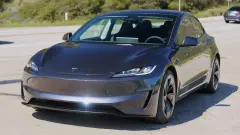
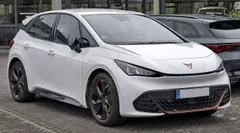
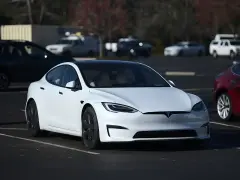
Official figures are measured on standard test procedures and differ between markets. Your consumption depends on how, where and in what conditions you drive.