XPeng

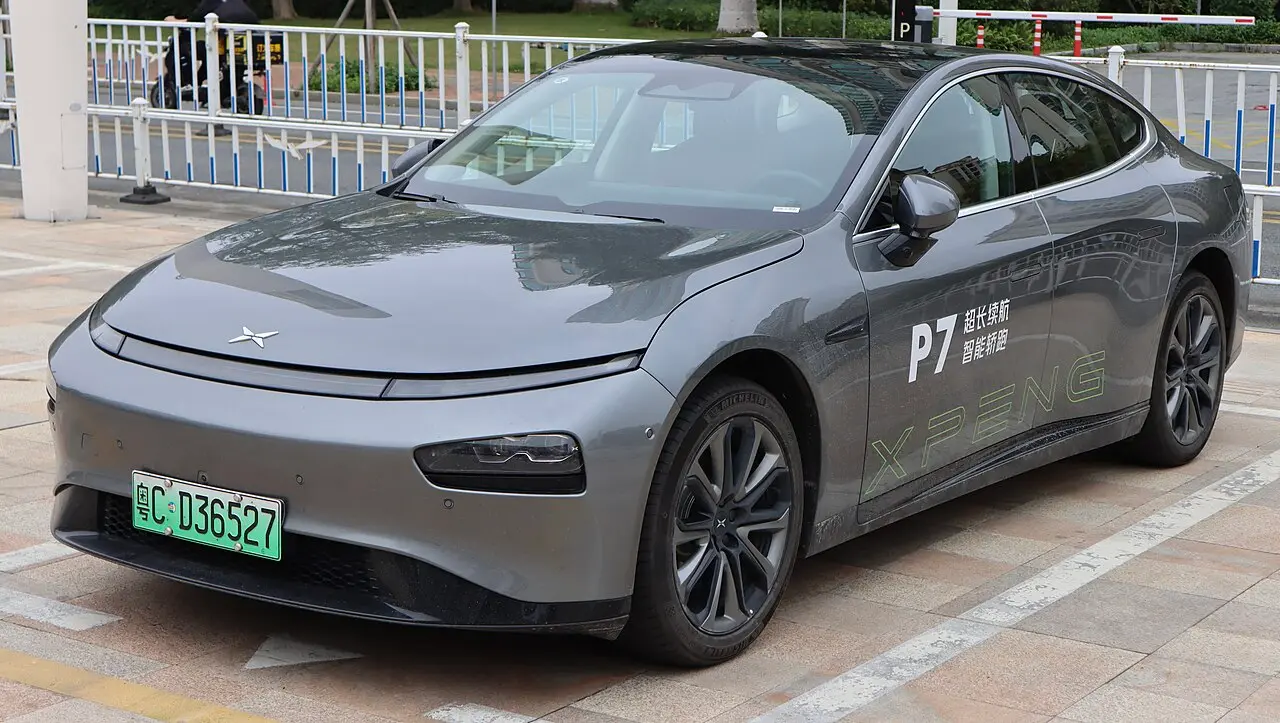
XPeng P7

XPeng P7
Photo: User3204 / Wikimedia Commons · CC BY-SA 4.0

The official data lists 13 versions of the XPeng P7 (2021–2025), in the European Union. Each market publishes its own figures, measured on its own test procedure.

At a glance

Years in the data
2021–2025
Markets
European Union
Power
145 kW (197 PS) to 348 kW (473 PS)
Fuels
Electric
New registrations in the EU
1,578

What is the XPeng P7?

The P7 is an all-electric sports sedan, with a low, streamlined four-door shape. It brought XPeng’s connected-car approach to a sedan, pairing in-car software and driver-assistance features with a sleek exterior.

XPeng launched the P7 in China in 2020 and brought it to Norway in 2021. The company described it as a smart electric sedan. European registration figures begin in 2021.

Generation and power

The P7 is in its first generation, listed from 2021 to today for the EU. The EU figures cover electric versions with power from 145 kW (197 PS) to 348 kW (473 PS). Across 2021–2025, they include 13 versions.

The most registered listed output was 316 kW (430 PS) in 2022. Versions rated at 203 kW (276 PS) also feature among the leading entries, in 2024 and 2025.

Registrations and markets

The P7 recorded 1,578 EU registrations from 2021 to 2025. European consumption and emissions figures can use WLTP or, for some older vehicles, NEDC procedures; the results are not directly comparable.

Questions and answers

Is the XPeng P7 a sedan?

Yes. It is an all-electric sports sedan.

When did the P7 reach European registration figures?

EU registration figures begin in 2021.

What power range is listed for the P7?

The EU versions span 145 kW (197 PS) to 348 kW (473 PS).

How many P7s were registered in the EU?

The P7 recorded 1,578 EU registrations from 2021 to 2025.

P7 first generation (since 2021)

XPeng P7 first generation
Photo: User3204 / Wikimedia Commons · CC BY-SA 4.0

Sold in: European Union · References: xpeng.com, en.wikipedia.org

European Union 13 versions

New cars registered in the EU (plus Norway and Iceland), from the European Environment Agency. Figures on the NEDC procedure until 2020 and on WLTP from 2021; versions are grouped by engine and power, with their number of registrations.

Years and versionEnginePowerFuelConsumption (combined)CO₂Electric rangeEU registrations
2025Electric motor203 kW (276 PS)Electric16.9 kWh/100 km WLTP0 g/km579 km204
2025Electric motor348 kW (473 PS)Electric24.9 kWh/100 km WLTP0 g/km445 km198
2024Electric motor203 kW (276 PS)Electric17.7 kWh/100 km WLTP0 g/km555 km281
2024Electric motor348 kW (473 PS)Electric19.2 kWh/100 km WLTP0 g/km506 km69
2024Electric motor145 kW (197 PS)Electric19.2 kWh/100 km WLTP0 g/km505 km16
2023Electric motor145 kW (197 PS)Electric19.2 kWh/100 km WLTP0 g/km505 km143
2023Electric motor203 kW (276 PS)Electric16.8 kWh/100 km WLTP0 g/km576 km124
2023Electric motor348 kW (473 PS)Electric19.2 kWh/100 km WLTP0 g/km505 km73
2023Electric motor316 kW (430 PS)Electric19.4 kWh/100 km WLTP0 g/km470 km27
2022Electric motor316 kW (430 PS)Electric4.4 kWh/100 km WLTP0 g/km470 km297
2022Electric motor196 kW (266 PS)Electric6.7 kWh/100 km WLTP0 g/km530 km47
2022Electric motor120 kW (163 PS)Electric19.4 kWh/100 km WLTP0 g/km470 km27
2021Electric motor196 kW (266 PS)Electric19.0 kWh/100 km WLTP0 g/km480 km72

Official figures are measured on standard test procedures and differ between markets. Your consumption depends on how, where and in what conditions you drive.