Mazda

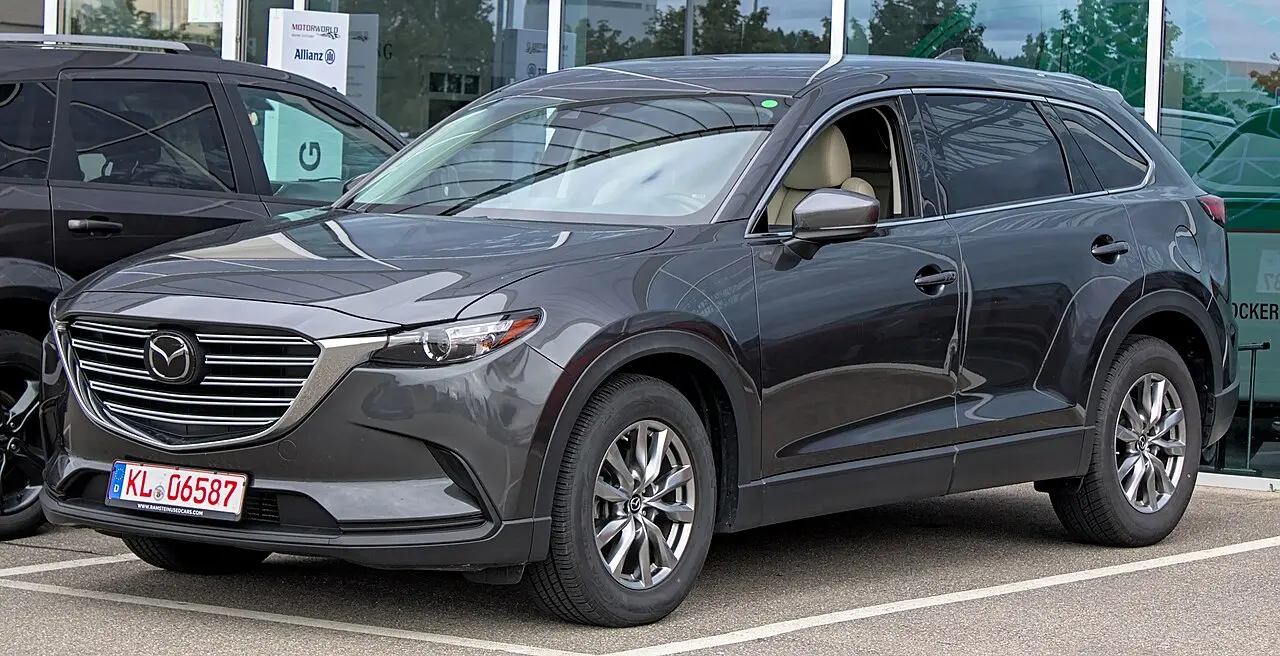
Mazda CX-9

Mazda CX-9
Photo: Alexander Migl / Wikimedia Commons · CC BY-SA 4.0

The official data lists 37 versions of the Mazda CX-9 (2007–2023), in the European Union, the United States, and Canada. Each market publishes its own figures, measured on its own test procedure.

At a glance

Years in the data
2007–2023
Markets
European Union, United States, Canada
Engines
2.5 L to 3.7 L
Power
204 kW (277 PS)
Fuels
Petrol, LPG
Lowest consumption (Canada)
9.6 L/100 km (5-cycle)
Lowest consumption (United States)
9.8 L/100 km (EPA)
New registrations in the EU
3,908

What is the Mazda CX-9?

The CX-9 is a large SUV with three rows of seats, designed to carry passengers and luggage. It sat near the top of Mazda’s SUV range, with more space than the brand’s smaller crossovers. Mazda began as a maker of machinery before building vehicles, and its first Mazda model was a three-wheeled truck.

CX-9 generations

The first-generation CX-9 (2007–2015, code TB) established the model in North America. The second generation (2016–2023, code TC) brought a new design while keeping the three-row format. The CX-9’s North American run ended with the second generation.

Engines and power

In the United States and Canada, the CX-9’s listed engine range runs from 2.5 L to 3.7 L, with petrol as the listed fuel. European Union registration figures include 3.7 L petrol and LPG versions. The 3.7 L petrol version is rated at 204 kW (277 PS). EU registrations span 2010–2016 and include six versions, with 3,908 registrations in total.

How economical is the Mazda CX-9?

The lowest listed US consumption is 9.8 L/100 km, and the best combined EPA rating is 24 MPG. Canada’s lowest listed figure is 9.6 L/100 km on the NRCan 5-cycle test. Test procedures differ by market: Europe uses WLTP or NEDC, the United States uses EPA ratings, and Canada uses the 5-cycle method. Results from different procedures are not directly comparable.

Where was the CX-9 sold?

The CX-9 appears in US EPA figures for 2007–2023 and Canadian NRCan figures for 2008–2023. EU registrations span 2010–2016, covering part of the first generation.

Questions and answers

How many generations of Mazda CX-9 were there?

Two: the first generation ran from 2007 to 2015, and the second from 2016 to 2023.

What power did the European 3.7 L CX-9 have?

The 3.7 L petrol version is rated at 204 kW (277 PS) in EU registration figures.

What is the CX-9’s best combined EPA rating?

Its best combined EPA rating is 24 MPG.

Was the CX-9 sold in Canada?

Yes. Canadian NRCan figures cover 2008–2023, including both generations.
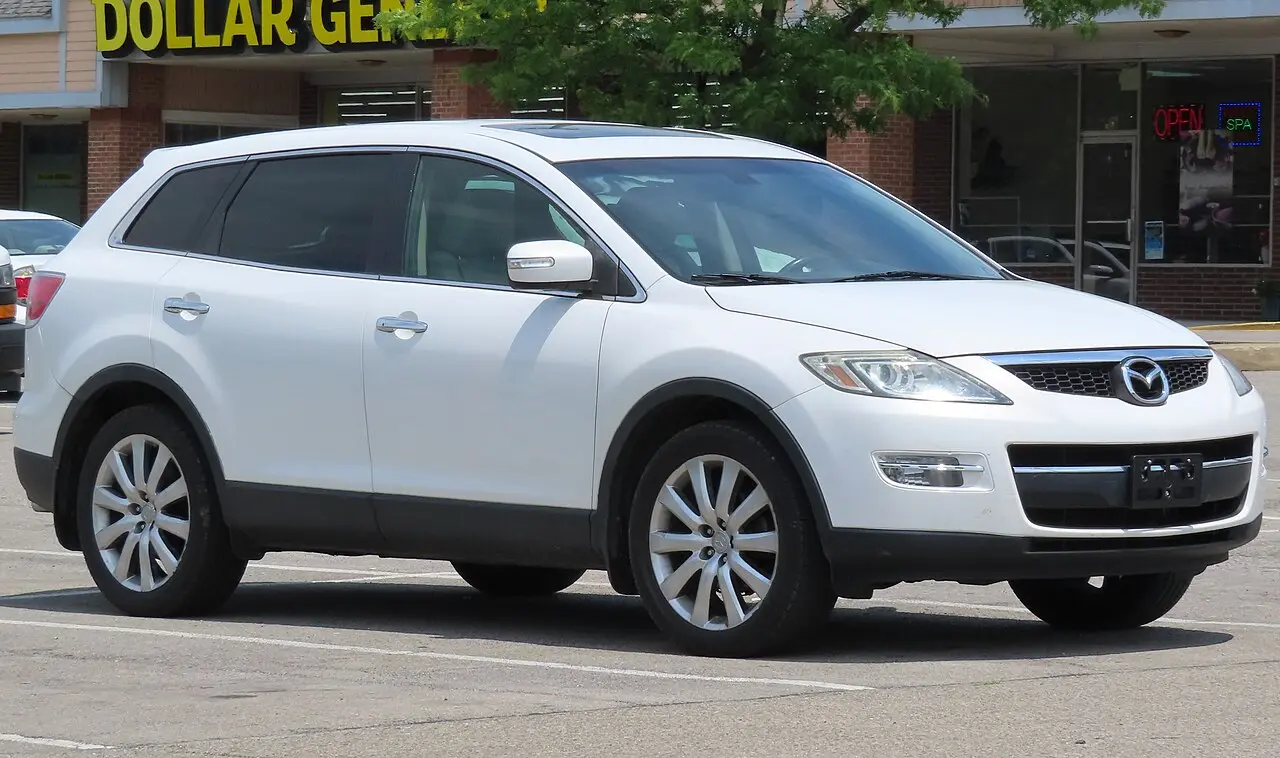
CX-9 I (2007–2015)

Mazda CX-9 I
Photo: MercurySable99 / Wikimedia Commons · CC BY-SA 4.0

Model codes: TB · Sold in: United States and Canada · References: caranddriver.com, en.wikipedia.org

Show all 19 versions

CX-9 II (2016–2023)

Mazda CX-9 II
Photo: Alexander Migl / Wikimedia Commons · CC BY-SA 4.0

Model codes: TC · Sold in: United States and Canada · References: caranddriver.com, en.wikipedia.org

United States 7 versions

Model years sold in the USA, from the EPA and the Department of Energy (fueleconomy.gov). MPG on the EPA test; litres per 100 km = 235.215 ÷ MPG.

Years and versionEngineFuelGearboxDriveConsumption (combined)CO₂
2022–2023SIDI2.5 LPetrol6-speed automaticFour-wheel drive23 MPG (10.2 L/100 km) EPA244 g/km
2020–2021SIDI2.5 LPetrol6-speed automaticFront-wheel drive24 MPG (9.8 L/100 km) EPA226 g/km
2018–2021SIDI2.5 LPetrol6-speed automaticFour-wheel drive23 MPG (10.2 L/100 km) EPA243 g/km
2017–2019SIDI2.5 LPetrol6-speed automaticFront-wheel drive24 MPG (9.8 L/100 km) EPA225 g/km
2017SIDI2.5 LPetrol6-speed automaticFour-wheel drive23 MPG (10.2 L/100 km) EPA242 g/km
2016SIDI2.5 LPetrol6-speed automaticFront-wheel drive24 MPG (9.8 L/100 km) EPA226 g/km
2016SIDI2.5 LPetrol6-speed automaticFour-wheel drive23 MPG (10.2 L/100 km) EPA239 g/km

Canada 5 versions

Model years sold in Canada, from Natural Resources Canada fuel consumption ratings (5-cycle test).

Years and versionEngineFuelGearboxConsumption (combined)CO₂
2023Sport utility vehicle: Small2.5 LPetrol6-speed automatic10.5 L/100 km 5-cycle245 g/km
2022Sport utility vehicle: Small2.5 LPetrol6-speed automatic10.4 L/100 km 5-cycle243 g/km
2019–2021Sport utility vehicle: Small2.5 LPetrol6-speed automatic10.5 L/100 km 5-cycle244 g/km
2017–2019Sport utility vehicle: Small2.5 LPetrol6-speed automatic9.6 L/100 km 5-cycle225 g/km
2017–2018Sport utility vehicle: Small2.5 LPetrol6-speed automatic10.4 L/100 km 5-cycle242 g/km

Versions outside these generations

European Union 6 versions

New cars registered in the EU (plus Norway and Iceland), from the European Environment Agency. Figures on the NEDC procedure until 2020 and on WLTP from 2021; versions are grouped by engine and power, with their number of registrations.

Years and versionEnginePowerFuelCO₂EU registrations
20163.7 L204 kW (277 PS)Petrol261 g/km82
20163.7 L204 kW (277 PS)LPG261 g/km10
20153.7 L204 kW (277 PS)Petrol261 g/km1,934
20143.7 L204 kW (277 PS)Petrol261 g/km114
20113.7 L204 kW (277 PS)Petrol270 g/km678
20103.7 L–Petrol294 g/km1,090

Official figures are measured on standard test procedures and differ between markets. Your consumption depends on how, where and in what conditions you drive.