Mazda

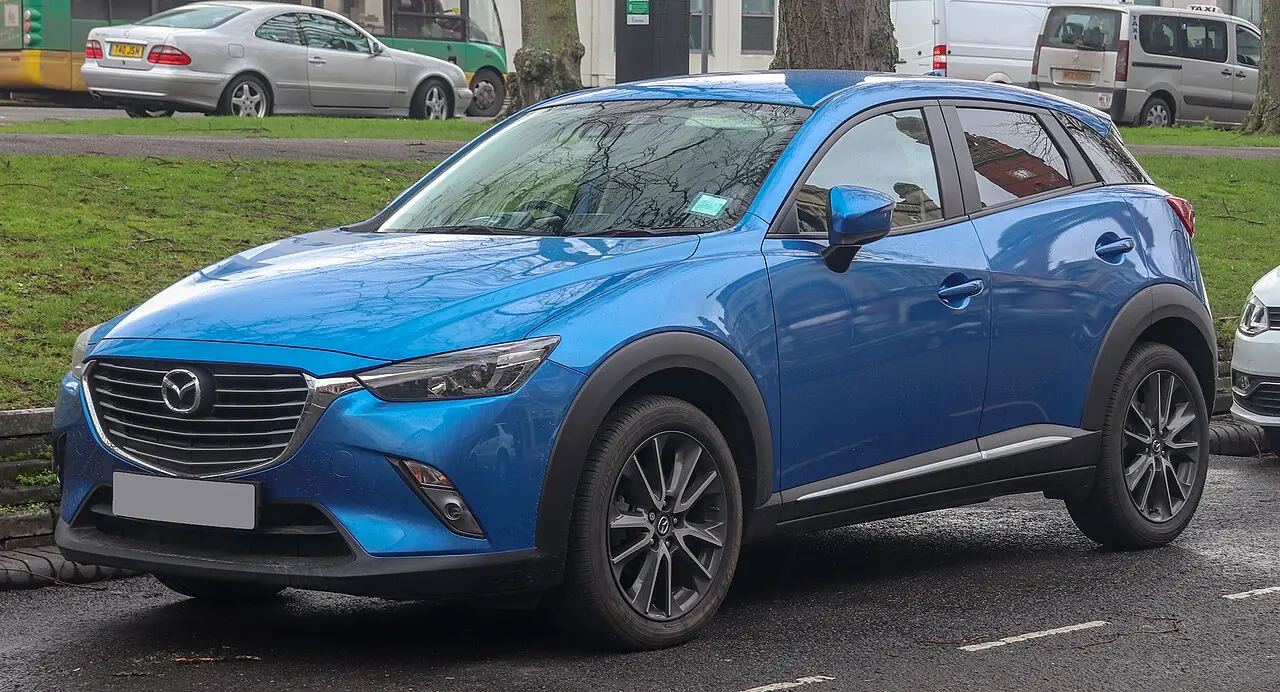
Mazda CX-3

Mazda CX-3
Photo: Vauxford / Wikimedia Commons · CC BY-SA 4.0

The official data lists 67 versions of the Mazda CX-3 (2015–2022), in the European Union, the United Kingdom, the United States, and Canada. Each market publishes its own figures, measured on its own test procedure.

At a glance

Years in the data
2015–2022
Markets
European Union, United Kingdom, United States, Canada
Engines
1.5 L to 2.0 L
Power
77 kW (105 PS) to 165 kW (224 PS)
Fuels
Petrol, Diesel
Lowest consumption (United Kingdom)
4.0 L/100 km (NEDC)
Lowest consumption (European Union)
6.1 L/100 km (WLTP)
Lowest consumption (United States)
7.6 L/100 km (EPA)
New registrations in the EU
519,426

What is the Mazda CX-3?

The CX-3 is a small crossover SUV, with a higher-riding shape and compact-car footprint. It brought crossover styling to Mazda’s smaller-model range, combining Kodo design with Skyactiv technology.

The first generation, code DK, began in 2015 in Europe and the UK, and in 2016 in the United States and Canada. Its listed years end in 2023 for the EU, 2021 for the UK and US, and 2022 for Canada.

Engines and power

Engine choices varied by market. EU versions include petrol and diesel engines from 1.5 L to 2.0 L, with power from 77 kW (105 PS) to 165 kW (224 PS). UK figures cover the same engine-size span and power from 77 kW (105 PS) to 110 kW (150 PS). US and Canadian versions use 2.0 L petrol engines.

Mazda’s CX-3 paired its Kodo design with Skyactiv technology. Its engine line-up included a 1.5 L diesel and a 2.0 L petrol, with availability varying by market.

How economical is the Mazda CX-3?

The lowest listed EU consumption is 6.1 L/100 km on the WLTP test. The UK low is 4 L/100 km on NEDC. European figures may use WLTP or the older NEDC procedure; US ratings use EPA testing and Canadian figures use the 5-cycle procedure.

The US low is 7.6 L/100 km under EPA testing, with a best combined rating of 31 MPG. Canada’s lowest listed figure is also 7.6 L/100 km on NRCan’s 5-cycle test. WLTP, NEDC, EPA and Canada’s 5-cycle procedure differ, so these figures are not directly like-for-like.

Where was the Mazda CX-3 sold?

The CX-3 appears in official figures for the EU, UK, United States and Canada. Listed EU years are 2015–2022; UK figures cover 2015–2021, US figures 2016–2021 and Canadian figures 2016–2022. Availability and end dates varied between markets.

Questions and answers

When was the Mazda CX-3 sold?

The first generation began in 2015 in Europe and the UK and in 2016 in the US and Canada. Listed end years vary by market: 2021 in the UK and US, 2022 in Canada and 2023 in EU generation records.

Was the CX-3 offered with diesel?

Yes. EU and UK figures include petrol and diesel versions; North American figures list 2.0 L petrol versions.

What is the CX-3’s lowest listed fuel consumption?

The UK low is 4 L/100 km under NEDC. The EU low is 6.1 L/100 km under WLTP, while the US EPA and Canadian 5-cycle lows are each 7.6 L/100 km.
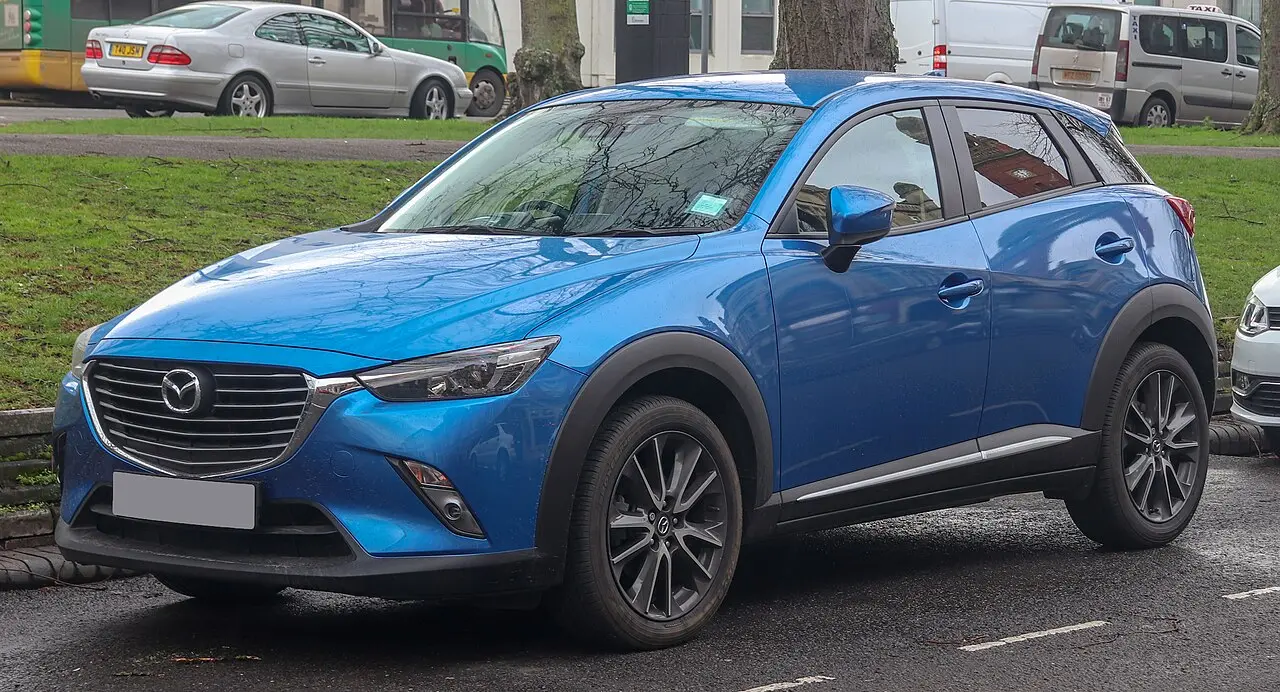
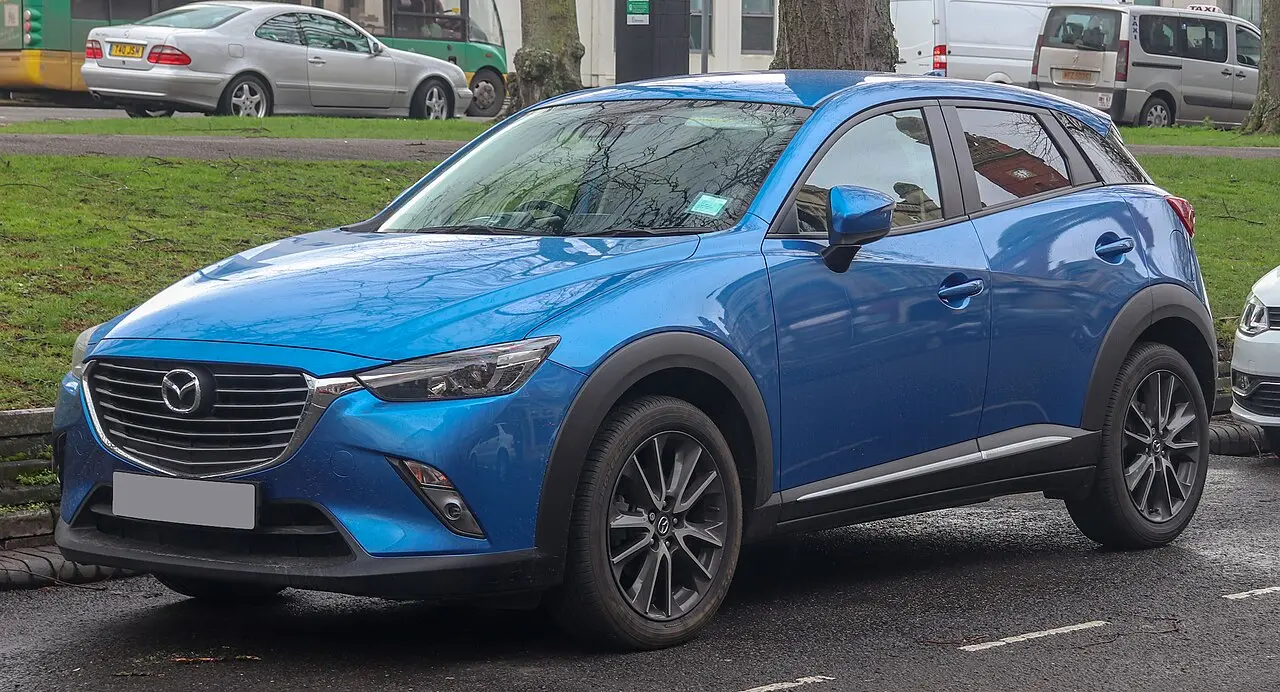
CX-3 first generation (2015–2023)

Mazda CX-3 first generation
Photo: Vauxford / Wikimedia Commons · CC BY-SA 4.0

Model codes: DK · Sold in: European Union and United Kingdom · References: en.wikipedia.org

Show all 53 versions

CX-3 first generation (2016–2021)

Mazda CX-3 first generation
Photo: Vauxford / Wikimedia Commons · CC BY-SA 4.0

Model codes: DK · Sold in: United States · References: en.wikipedia.org

Show all 5 versions

CX-3 first generation (2016–2022)

Mazda CX-3 first generation
Photo: Vauxford / Wikimedia Commons · CC BY-SA 4.0

Model codes: DK · Sold in: Canada · References: en.media.mazda.ca, en.wikipedia.org

Canada 9 versions

Model years sold in Canada, from Natural Resources Canada fuel consumption ratings (5-cycle test).

Years and versionEngineFuelGearboxConsumption (combined)CO₂
2019–2022Compact2.0 LPetrol6-speed automatic7.7 L/100 km 5-cycle179 g/km
2019–2022Compact2.0 LPetrol6-speed manual8.0 L/100 km 5-cycle186 g/km
2019–2022Compact2.0 LPetrol6-speed automatic8.1 L/100 km 5-cycle189 g/km
2017–2018Compact2.0 LPetrol6-speed automatic8.2 L/100 km 5-cycle192 g/km
2018Compact2.0 LPetrol6-speed automatic7.6 L/100 km 5-cycle180 g/km
2018Compact2.0 LPetrol6-speed manual8.1 L/100 km 5-cycle189 g/km
2017Compact2.0 LPetrol6-speed automatic7.6 L/100 km 5-cycle179 g/km
2016Compact2.0 LPetrol6-speed automatic7.6 L/100 km 5-cycle179 g/km
2016Compact2.0 LPetrol6-speed automatic8.1 L/100 km 5-cycle189 g/km

Official figures are measured on standard test procedures and differ between markets. Your consumption depends on how, where and in what conditions you drive.