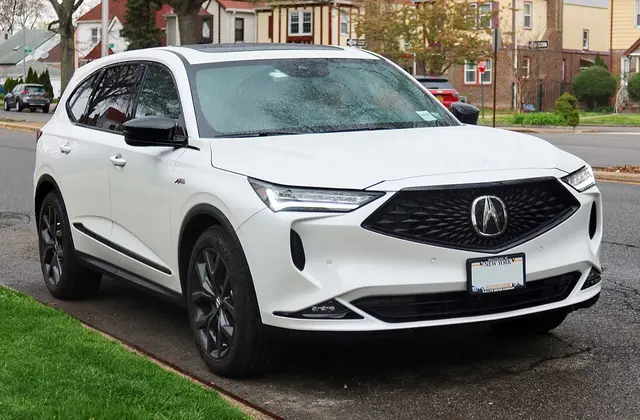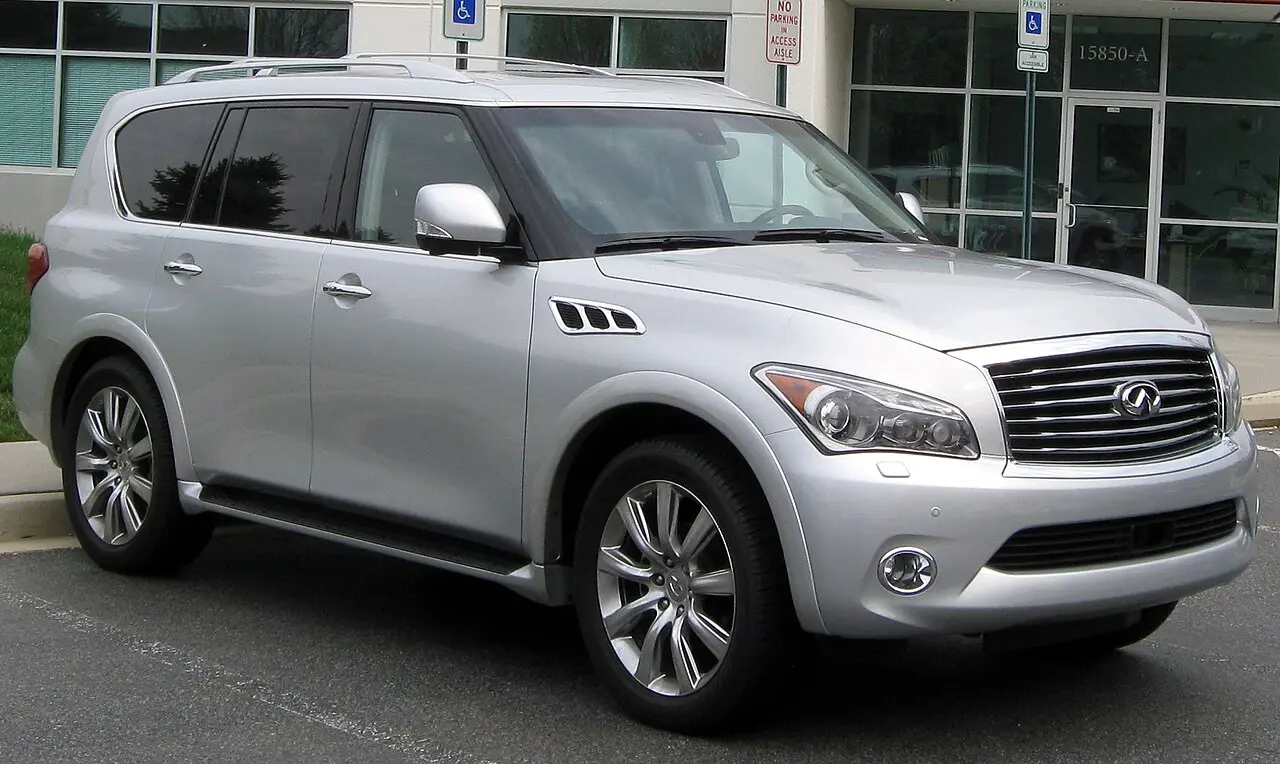
Infiniti QX56

Infiniti QX56
Photo: IFCAR / Wikimedia Commons · Public domain

The official data lists 7 versions of the Infiniti QX56 (2004 - 2013), in the United States and Canada. Each market publishes its own figures, measured on its own test procedure.

At a glance

Years in the data
2004 - 2013
Markets
United States, Canada
Engines
5.6 L
Fuels
Petrol
Lowest consumption (United States)
14.7 L/100 km (EPA)
Lowest consumption (Canada)
15.0 L/100 km (5-cycle)

What is the Infiniti QX56?

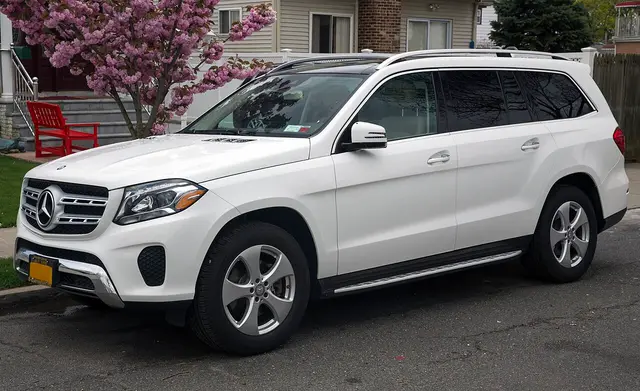
The QX56 was Infiniti’s full-size luxury SUV, with a spacious cabin and a petrol V8. It sat at the top of the brand’s SUV range, offering a roomy alternative to its sedans and crossovers. The QX56 was also the first Infiniti model assembled in the United States. It later gave way to the QX80, which carried on its flagship SUV role.

QX56 generations

The first generation, code JA60, ran from 2004 to 2009. It established the QX56 as Infiniti’s large V8-powered SUV. The second generation, code Z62, followed from 2011 to 2013. It brought a redesigned vehicle and a direct-injection version of the 5.6-litre V8. The Z62 lineage continued under the QX80 name from 2014.

Engines and fuel consumption

The US and Canadian figures list the QX56 with a 5.6-litre petrol engine. The best combined US EPA result is 16 MPG, with lowest listed consumption of 14.7 L/100 km. In Canada, the lowest listed figure is 15 L/100 km on the NRCan 5-cycle test. EPA and Canadian 5-cycle procedures differ, so the results are not directly equivalent.

Where was the QX56 sold?

The QX56 appears in US EPA figures for 2004-2013 and Canadian NRCan figures for 2005-2013. Its two generations served both markets before the QX80 took over its place at the top of Infiniti’s SUV range.

Questions and answers

What engine did the Infiniti QX56 use?

The US and Canadian figures list a 5.6-litre petrol engine.

What replaced the QX56?

The QX80 succeeded it as Infiniti’s full-size flagship SUV.

How economical was the Infiniti QX56?

The best combined US EPA figure was 16 MPG, with lowest listed consumption of 14.7 L/100 km. Canada’s lowest NRCan 5-cycle figure was 15 L/100 km.
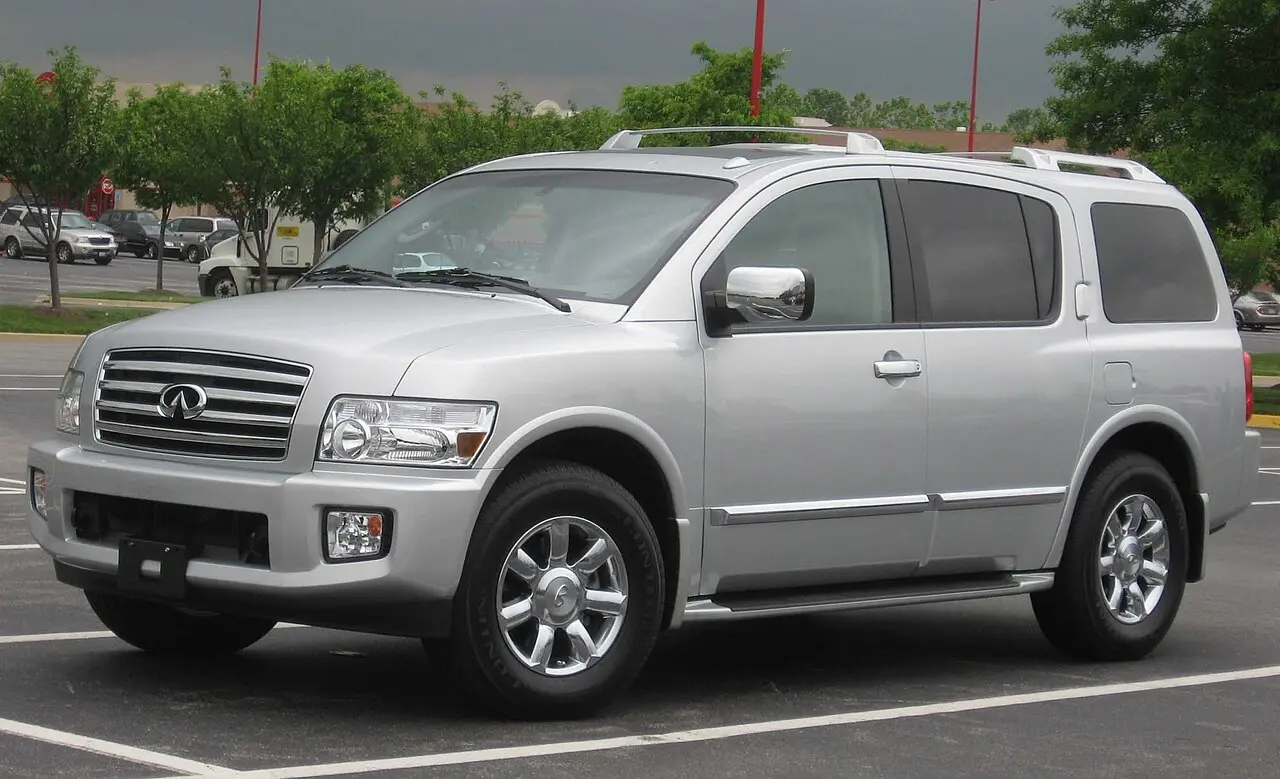
QX56 first generation (2004 - 2010)

Infiniti QX56 first generation
Photo: IFCAR / Wikimedia Commons · Public domain

Model codes: JA60 · References: infinitiusa.com

At a glance: Length 5,255 mm · Kerb weight 2,500 - 2,508 kg · Top speed 210 km/h Specifications, reliability and all versions

Show all 4 versions

QX56 second generation (2011 - 2013)

Infiniti QX56 second generation
Photo: IFCAR / Wikimedia Commons · Public domain

Model codes: Z62 · References: infinitiusa.com, en.wikipedia.org

At a glance: Length 5,290 mm · Kerb weight 2,654 - 2,671 kg · Top speed 210 km/h Specifications, reliability and all versions

United States 2 versions

Model years sold in the USA, from the EPA and the Department of Energy (fueleconomy.gov). MPG on the EPA test; litres per 100 km = 235.215 ÷ MPG.

Years and versionEngineFuelGearboxDriveConsumption (combined)CO₂
2011 - 2013SIDI5.6 LPetrol7-speed automaticRear-wheel drive16 MPG (14.7 L/100 km) EPA345 - 347 g/km
2011 - 2013SIDI5.6 LPetrol7-speed automaticFour-wheel drive16 MPG (14.7 L/100 km) EPA345 - 350 g/km

Canada 1 version

Model years sold in Canada, from Natural Resources Canada fuel consumption ratings (5-cycle test).

Years and versionEngineFuelGearboxConsumption (combined)CO₂
2011 - 2013Sport utility vehicle · Sport utility vehicle: Standard5.6 LPetrol7-speed automatic15.0 L/100 km 5-cycle345 g/km

Infiniti QX56 recalls

10 official safety recalls for the Infiniti QX56 from NHTSA (United States), DVSA (United Kingdom) and the EU Safety Gate, newest first. Recall repairs are normally free at the maker’s dealers.

  • Incorrect weight rating label may allow overloading2011 - 2013
  • Driver air bag inflator may rupture2011 - 2012
  • Fuel pressure sensor may loosen and leak2012 - 2013
  • Driver airbag inflator may rupture2013
  • Engine control relay may cause the engine to stall2004 - 2006

See all 10 recalls

Official figures are measured on standard test procedures and differ between markets. Your consumption depends on how, where and in what conditions you drive.