

Hyundai Veracruz first generation
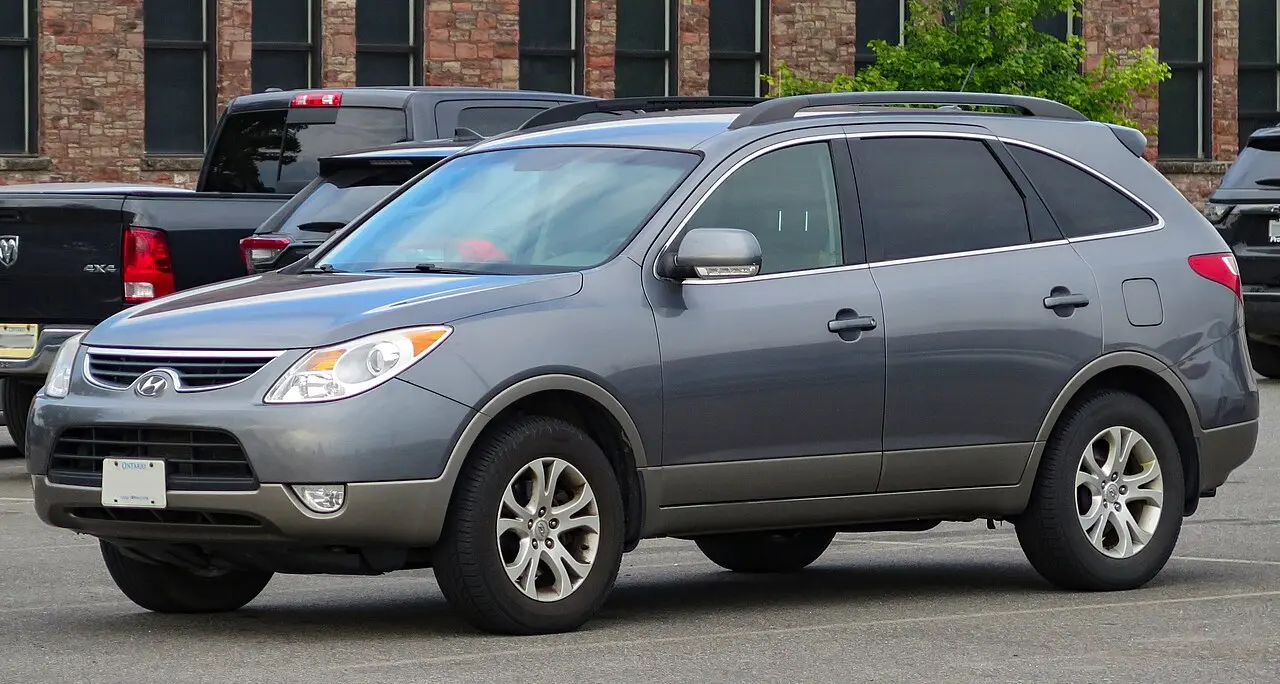
The Hyundai Veracruz first generation (2010–2013): dimensions, weights, reliability and the official figures of its 4 versions in the European Union.
Model codes: EN · Sold in: European Union
Dimensions, weights and capacity
| Specification | North America | Wikipedia |
|---|---|---|
| Dimensions | ||
| Length | 4,840 mm TC | 4,840 mm |
| Width | 1,970 mm TC | 1,945–1,970 mm |
| Height | 1,810 mm TC | 1,750–1,810 mm |
| Wheelbase | 2,810 mm TC | 2,805 mm |
| Front track | 1,650 mm TC | – |
| Rear track | 1,650 mm TC | – |
| Weights and towing | ||
| Kerb weight | 1,935–2,010 kg TC | 1,933–2,200 kg |
| Seats and space | ||
| Fuel tank | – | 78 L |
Ranges cover the generation’s versions and body styles; European and North American versions can differ. Sources: Transport Canada vehicle specifications, Wikipedia (en, pl). Wikipedia figures are used under CC BY-SA 4.0.
Reliability and owner reports
Owner complaints to NHTSA (US)
661 complaints for model years 2007–2012. 14 crashes · 17 fires · 25 injuries
- Engine 329
- Electrical system 175
- Brakes 81
- Stability control 48
- Airbags 35
- Lights 33
Complaints are reported by owners and not checked by NHTSA; they are not adjusted for how many cars were sold, so popular models have more. NHTSA owner complaints
All 4 versions of the Hyundai Veracruz first generation
European Union 4 versions
New cars registered in the EU (plus Norway and Iceland), from the European Environment Agency. Figures on the NEDC procedure until 2020 and on WLTP from 2021; versions are grouped by engine and power, with their number of registrations.
| Years and version | Engine | Power | Fuel | CO₂ | EU registrations |
|---|---|---|---|---|---|
| 2012–2013 | 3.0 L | 184 kW (250 PS) | Diesel | 199 g/km | 448 |
| 2011–2012 | 3.0 L | 176 kW (239 PS) | Diesel | 249 g/km | 1,095 |
| 2010 | 3.0 L | – | Diesel | 249 g/km | 1,350 |
| 2010 | – | – | Other fuel | 248 g/km | 30 |
Similar models from other brands






Official figures are measured on standard test procedures and differ between markets. Your consumption depends on how, where and in what conditions you drive.