Chrysler

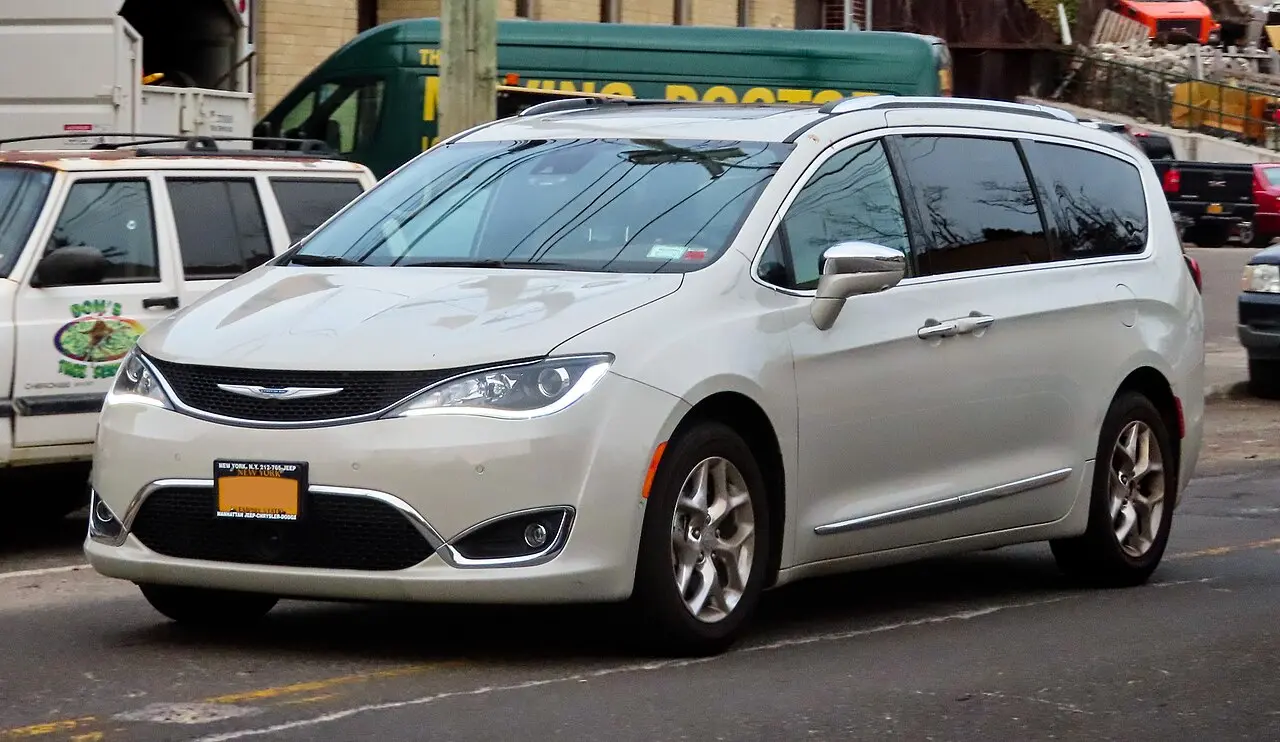
Chrysler Pacifica

Chrysler Pacifica
Photo: Kevauto / Wikimedia Commons · CC BY-SA 4.0

The official data lists 45 versions of the Chrysler Pacifica (2004–2027), in the European Union, the United States, and Canada. Each market publishes its own figures, measured on its own test procedure.

At a glance

Years in the data
2004–2027
Markets
European Union, United States, Canada
Engines
3.5 L to 4.0 L
Power
194 kW (264 PS)
Fuels
Petrol, Plug-in hybrid
Lowest consumption (Canada)
10.6 L/100 km (5-cycle)
Lowest consumption (United States)
10.7 L/100 km (EPA)
Plug-in hybrid, weighted (Canada)
7.3 L/100 km (5-cycle)
Plug-in hybrid, weighted (United States)
7.4 L/100 km (EPA)
New registrations in the EU
453

What is the Chrysler Pacifica?

The Pacifica name has been used for two different kinds of Chrysler vehicle. The first generation, CS, was a crossover sold in the United States and Canada from 2004 to 2008. The name returned with the RU minivan generation, listed from 2017 onward in those markets. The minivan brought the Pacifica into a family-focused role, with space for passengers and flexible seating.

The second-generation minivan features Chrysler’s Stow ’n Go seating and storage system, which lets equipped seats fold into the floor. It also brought a plug-in hybrid option to the range. In European Union registration figures, the Pacifica appears from 2019 to 2025.

Engines and power

In North America, the Pacifica listings span 3.5 L to 4.0 L engines and include petrol and plug-in hybrid versions. The United States listing runs from 2004 to 2027, while Canada’s runs from 2004 to 2026. These ranges cover both the earlier crossover and the later minivan.

The European Union registration listings describe a 3.6 L engine with 194 kW (264 PS) for the version shown. The listed top sellers include a plug-in hybrid at that output and petrol versions rated at 214 kW (291 PS). A plug-in hybrid can use electric power for part of a journey alongside its petrol engine.

Fuel consumption and markets

In the United States, the lowest listed consumption for the broader range is 10.7 L/100 km under EPA testing, with a best combined rating of 22 MPG. The plug-in hybrid’s official weighted figure is 7.4 L/100 km, assuming some driving is electric. Canada’s corresponding figures are 10.6 L/100 km for the broader range and 7.3 L/100 km for the plug-in hybrid, both on the NRCan 5-cycle test. Europe uses WLTP or NEDC procedures, the United States uses EPA testing, and Canada uses a 5-cycle test, so market figures are not direct equivalents.

The EU registration period is 2019–2025, with 453 registrations. The name has a longer history in North America, where it first belonged to a crossover before returning as a minivan.

Questions and answers

Was the Pacifica always a minivan?

No. The first generation, CS, was a crossover sold from 2004 to 2008. The RU minivan generation is listed from 2017 onward.

Which Pacifica generation is the minivan?

The RU generation, listed from 2017 onward in the United States and Canada.

What is the Pacifica plug-in hybrid’s official consumption?

The weighted figure is 7.4 L/100 km under EPA testing in the United States and 7.3 L/100 km on Canada’s NRCan 5-cycle test. Both assume some driving is electric.

How many Pacificas were registered in the EU listing?

The EU registration total for 2019–2025 is 453.
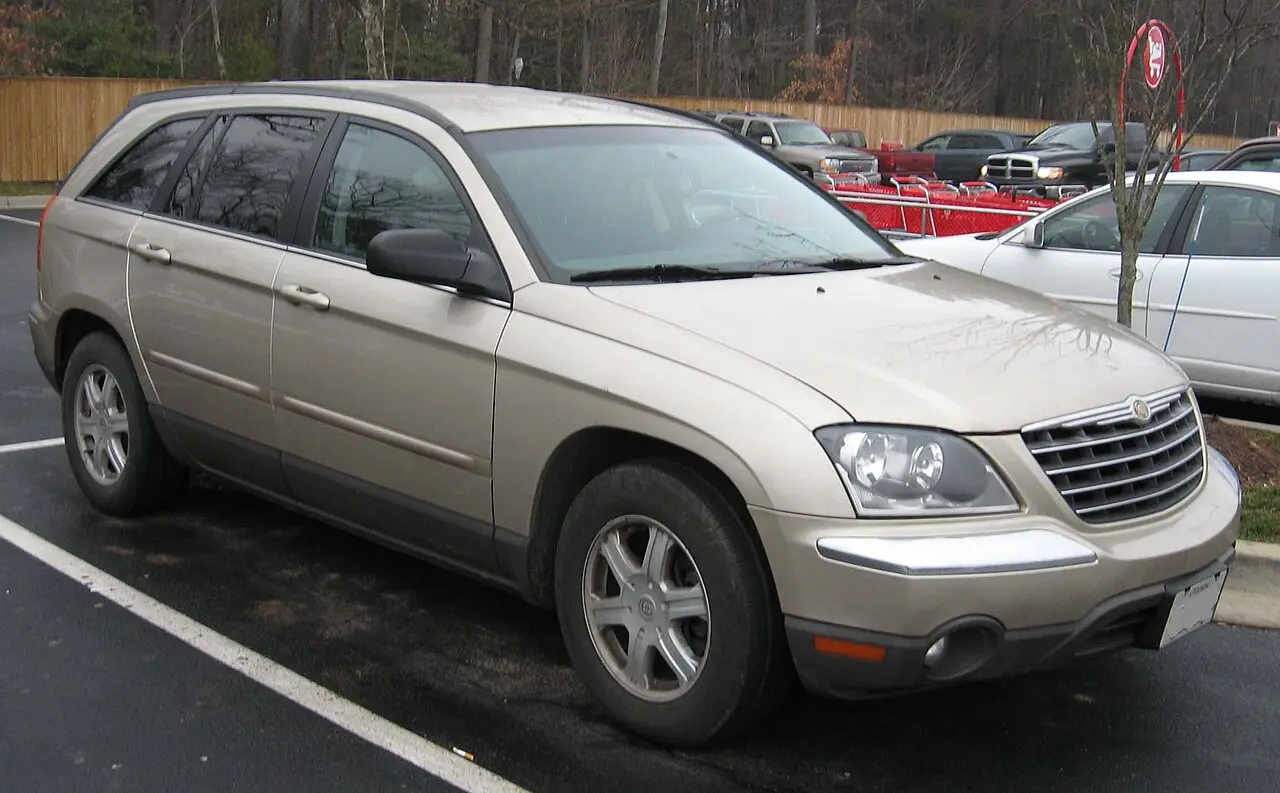
Pacifica first generation (2004–2008)

Chrysler Pacifica first generation
Photo: IFCAR / Wikimedia Commons · Public domain

Model codes: CS · Sold in: United States and Canada · References: en.wikipedia.org

Show all 14 versions

Pacifica second generation (since 2017)

Chrysler Pacifica second generation
Photo: Kevauto / Wikimedia Commons · CC BY-SA 4.0

Model codes: RU · Sold in: United States and Canada · References: en.wikipedia.org

United States 7 versions

Model years sold in the USA, from the EPA and the Department of Energy (fueleconomy.gov). MPG on the EPA test; litres per 100 km = 235.215 ÷ MPG.

Years and versionEngineFuelGearboxDriveConsumption (combined)CO₂
2017–2027Stop-Start3.6 LPetrol9-speed automaticFront-wheel drive22 MPG (10.7 L/100 km) EPA249 g/km
20273.6 LPetrol9-speed automaticAll-wheel drive20 MPG (11.8 L/100 km) EPA280 g/km
2019–2026PHEV3.6 LPlug-in hybridContinuously variable (CVT)Front-wheel drive30 MPG (7.8 L/100 km) EPA74 g/km
2021–20253.6 LPetrol9-speed automaticAll-wheel drive20 MPG (11.8 L/100 km) EPA280 g/km
20203.6 LPetrol9-speed automaticAll-wheel drive20 MPG (11.8 L/100 km) EPA277 g/km
2017–20193.6 LPetrol9-speed automaticFront-wheel drive22 MPG (10.7 L/100 km) EPA258 g/km
2017–2018PHEV3.6 LPlug-in hybridContinuously variable (CVT)Front-wheel drive32 MPG (7.4 L/100 km) EPA66 g/km

Canada 7 versions

Model years sold in Canada, from Natural Resources Canada fuel consumption ratings (5-cycle test).

Years and versionEngineFuelGearboxConsumption (combined)CO₂Electric range
2019–2026Minivan3.6 LPlug-in hybridContinuously variable (CVT)8.0 L/100 km 5-cycle74 g/km51 km
2017–2026Minivan3.6 LPetrol9-speed automatic10.6 L/100 km 5-cycle249 g/km–
2021–2026Minivan3.6 LPetrol9-speed automatic12.0 L/100 km 5-cycle279 g/km–
2020Minivan3.6 LPetrol9-speed automatic11.8 L/100 km 5-cycle276 g/km–
2018–2019Minivan3.6 LPetrol9-speed automatic10.9 L/100 km 5-cycle259 g/km–
2017–2018Minivan3.6 LPlug-in hybridContinuously variable (CVT)7.3 L/100 km 5-cycle66 g/km53 km
2017Minivan3.6 LPetrol9-speed automatic10.9 L/100 km 5-cycle257 g/km–

Versions outside these generations

European Union 17 versions

New cars registered in the EU (plus Norway and Iceland), from the European Environment Agency. Figures on the NEDC procedure until 2020 and on WLTP from 2021; versions are grouped by engine and power, with their number of registrations.

Years and versionEnginePowerFuelConsumption (combined)CO₂Electric rangeEU registrations
20253.6 L214 kW (291 PS)Petrol–308 g/km–20
20253.6 L194 kW (264 PS)Plug-in hybrid9.1 L/100 km WLTP23.2 kWh/100 km WLTP72 g/km50 km16
20243.6 L194 kW (264 PS)Plug-in hybrid9.1 L/100 km WLTP27.7 kWh/100 km WLTP67 g/km47 km25
20243.6 L214 kW (291 PS)Petrol–––20
20233.6 L194 kW (264 PS)Plug-in hybrid35.5 kWh/100 km WLTP67 g/km46 km36
20233.6 L214 kW (291 PS)Petrol–310 g/km–36
20233.6 L162 kW (220 PS)Plug-in hybrid8.1 L/100 km WLTP16.1 kWh/100 km WLTP–51 km10
20223.6 L194 kW (264 PS)Plug-in hybrid35.5 kWh/100 km WLTP66 g/km45 km26
20223.6 L214 kW (291 PS)Petrol–240 g/km–16
20223.6 L162 kW (220 PS)Plug-in hybrid9.1 L/100 km WLTP5.1 kWh/100 km WLTP–51 km14
20213.6 L194 kW (264 PS)Plug-in hybrid–74 g/km45 km74
20213.6 L214 kW (291 PS)Petrol–302 g/km–46
20213.6 L211 kW (287 PS)Petrol–––10
20203.6 L214 kW (291 PS)Petrol–298 g/km–34
20203.6 L211 kW (287 PS)Petrol–292 g/km–12
20203.6 L194 kW (264 PS)Plug-in hybrid–67 g/km–10
20193.6 L214 kW (291 PS)Petrol–300 g/km–48

Official figures are measured on standard test procedures and differ between markets. Your consumption depends on how, where and in what conditions you drive.