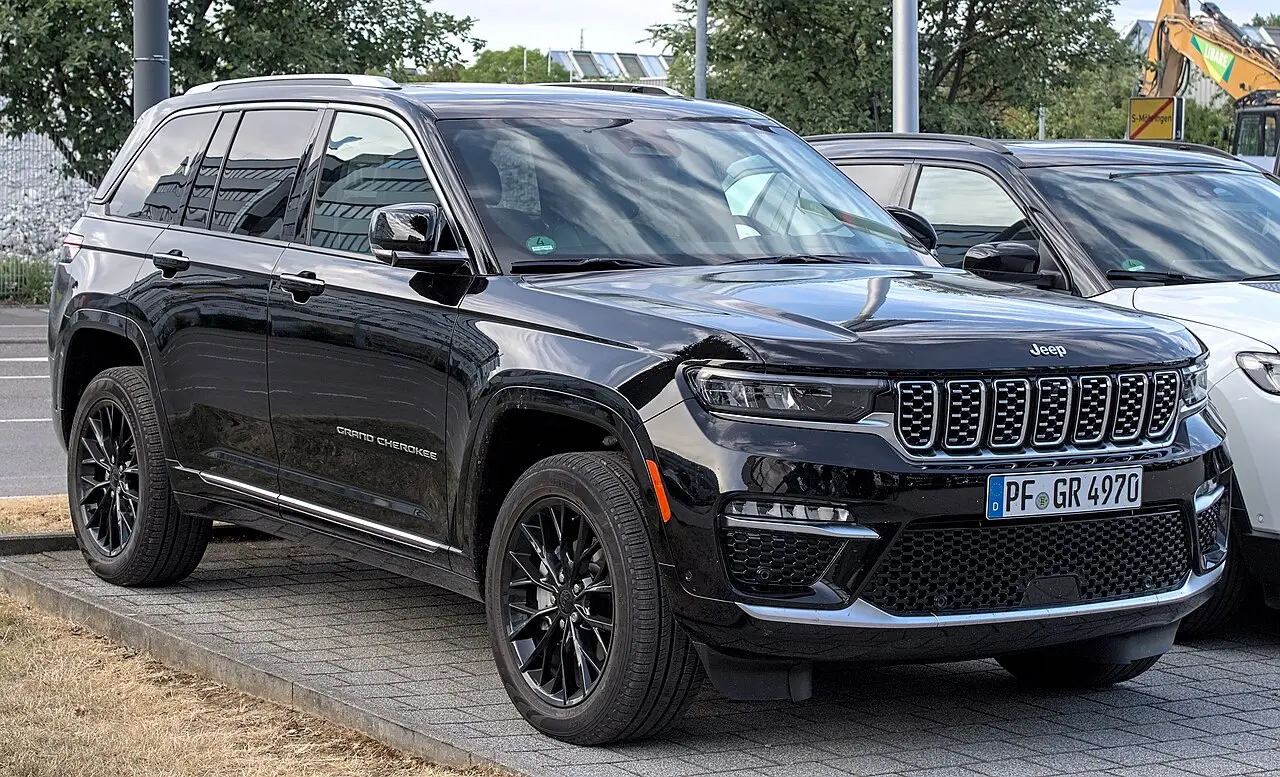
What is the Jeep Grand Cherokee L?
The Grand Cherokee L is the three-row version of Jeep’s Grand Cherokee SUV. Introduced for the WL generation in 2021, it added a third row to the Grand Cherokee range while keeping the nameplate’s SUV format.
The Grand Cherokee name also appears in European registration figures from 2011 to 2023. Those listings cover 3.0-litre petrol and diesel versions. The WL-generation listings for the United States and Canada begin in 2021.
Generation and engines
The WL generation began in 2021. US and Canadian listings cover petrol engines from 2.0 to 5.7 litres. EU registration figures list 3.0-litre petrol and diesel versions.
EU registration figures total 2,609 from 2011 to 2023. The leading recorded versions were 3.0-litre diesels, with the highest number of registrations in 2014. These European registrations predate the WL generation; North American listings describe the WL.
How economical is the Grand Cherokee L?
The best combined US EPA rating listed is 23 MPG, with a lowest listed consumption of 10.2 L/100 km. Canada’s lowest listed figure is 10.7 L/100 km under its 5-cycle test. The US and Canadian results use different procedures. European figures may use NEDC or WLTP, depending on the vehicle and year.
US EPA listings cover 2021 to 2027, while Canadian NRCan listings cover 2021 to 2026. EU registration figures cover 2011 to 2023 and list 3.0-litre versions.
Where was the Grand Cherokee L sold?
The Grand Cherokee appears in EU registration figures and in US and Canadian listings. European registrations show 3.0-litre petrol and diesel versions, while US and Canadian listings show petrol engines from 2.0 to 5.7 litres.
Questions and answers
What generation is the Grand Cherokee L?
The WL generation began in 2021.
What engines are listed for it?
EU registration figures list 3.0-litre petrol and diesel versions. US and Canadian listings cover 2.0- to 5.7-litre petrol engines.
What is its official fuel economy?
The best combined US EPA rating is 23 MPG. The lowest listed consumption is 10.2 L/100 km in US EPA figures and 10.7 L/100 km under Canada’s 5-cycle test.