

Hyundai IONIQ 5 first generation
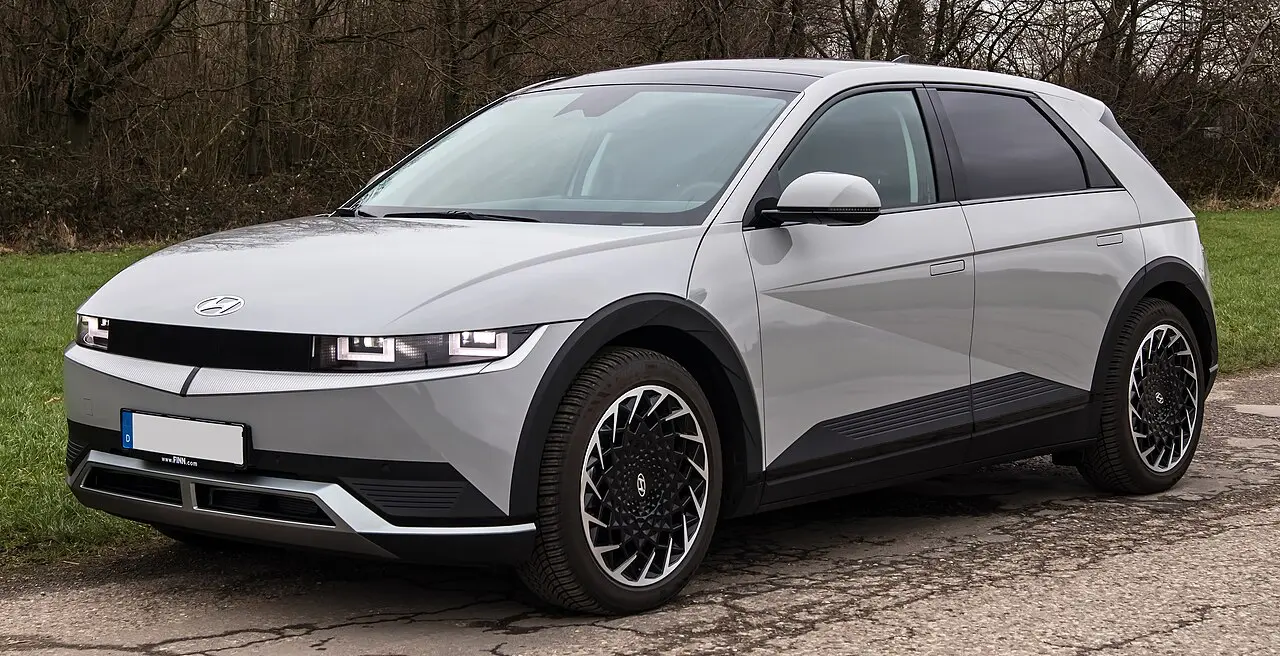
The Hyundai IONIQ 5 first generation (since 2021): dimensions, weights, reliability and the official figures of its 65 versions in the European Union, the United Kingdom, the United States, and Canada.
Model codes: NE
Dimensions, weights and capacity
| Specification | Europe | North America | Wikipedia |
|---|---|---|---|
| Dimensions | |||
| Length | 4,640–4,660 mm RDW | 4,640 mm TC | 4,635–4,715 mm |
| Width | 1,890 mm RDW | 1,890 mm TC | 1,890–1,940 mm |
| Height | 1,610 mm RDW | 1,610 mm TC | 1,585–1,605 mm |
| Wheelbase | 3,000 mm RDW | 3,000 mm TC | 3,000 mm |
| Front track | 1,628–1,667 mm ASTRA | 1,640 mm TC | – |
| Rear track | 1,637–1,672 mm ASTRA | 1,650 mm TC | – |
| Weights and towing | |||
| Kerb weight | 1,805–2,020 kg RDW | 1,800–2,025 kg TC | 1,800–2,540 kg |
| Mass in running order | 1,905–2,120 kg RDW | – | – |
| Gross vehicle weight | 2,370–2,590 kg RDW | – | – |
| Towing, braked trailer | 750–1,600 kg ASTRA | – | – |
| Towing, unbraked trailer | 750 kg RDW | – | – |
| Seats and space | |||
| Seats | 5 RDW | – | – |
| Doors | 5 RDW | – | – |
| Boot space | 490–745 L EV DB | – | 531 L |
| Luggage space (EPA) | – | 765 L EPA | – |
| Passenger space (EPA) | – | 3,002 L EPA | – |
| Performance | |||
| Top speed | 185–260 km/h ASTRA | – | 185–260 km/h |
| 0–100 km/h | 3.4–8.5 s EV DB | – | – |
| Torque | 350 Nm ASTRA | – | – |
| Electric motor power | – | 125–478 kW NRCan | – |
| Electric | |||
| Battery capacity (usable) | 58.0–84.0 kWh EV DB | – | 84.0 kWh |
| Battery capacity (gross) | 63.0–84.0 kWh EV DB | – | – |
| Range (WLTP) | 350–507 km EV DB | – | – |
| Range (EPA/NRCan) | – | 270–512 km EPA | – |
| Energy use | 168–211 Wh/km EV DB | – | – |
| AC charging power | 11 kW EV DB | – | – |
| DC fast charging power | 220–250 kW EV DB | – | – |
| Charging time at 240 V | – | 6.3–10.3 h EPA | – |
Tyre sizes (most common first): 235/55R19, 255/45R20
NHTSA overall safety rating (US): 2022–2024: ★★★★★
Ranges cover the generation’s versions and body styles; European and North American versions can differ. Sources: RDW type approvals (Netherlands), Transport Canada vehicle specifications, Wikipedia (en, de, fr, ja, pl), ASTRA type approvals (Switzerland), open EV databases (EV Compare, Open EV Data, Gaia EVDB), US EPA fuel economy data, Natural Resources Canada, Traficom type approvals (Finland), NHTSA 5-Star Safety Ratings. Wikipedia figures are used under CC BY-SA 4.0.
Reliability and owner reports
UK MOT: first-time pass rate by age
| Age at test | Pass rate | UK average | Tests |
|---|---|---|---|
| 3 years | 96.5% (95.6–97.2) | 92.2% | 2,040 |
What the MOT finds
| Area | This model | UK average, same ages |
|---|---|---|
| Tyres | 14.5% | 20.5% |
| Visibility (glass, mirrors, wipers) | 3.6% | 5.6% |
| Brakes | 1.9% | 10.6% |
| Lights and electrics | 1.1% | 4.1% |
First MOT test of each car per year in 2022–2024, from the DVSA’s anonymised test results; only ages with at least 500 tests are shown. The figure in brackets is the 95% confidence interval; green or red means clearly above or below the UK average. The second table shows how often an item was noted (defect or advisory) in each area, against the UK average for cars of the same ages. DVSA anonymised MOT tests (Open Government Licence)
Owner complaints to NHTSA (US)
1,355 complaints for model years 2022–2026. 27 crashes · 3 fires · 11 injuries · 2 deaths
- Electrical system 990
- Fuel system 277
- Transmission and drivetrain 252
- Engine 119
- Driver assistance 91
- Speed control 76
Complaints are reported by owners and not checked by NHTSA; they are not adjusted for how many cars were sold, so popular models have more. NHTSA owner complaints
All 65 versions of the Hyundai IONIQ 5 first generation
Show all 65 versions
European Union 27 versions
New cars registered in the EU (plus Norway and Iceland), from the European Environment Agency. Figures on the NEDC procedure until 2020 and on WLTP from 2021; versions are grouped by engine and power, with their number of registrations.
| Years and version | Engine | Power | Fuel | Consumption (combined) | CO₂ | Electric range | EU registrations |
|---|---|---|---|---|---|---|---|
| 2022–2025 | Electric motor | 168 kW (228 PS) | Electric | 16.6–17.2 kWh/100 km WLTP | 0 g/km | 501–548 km | 33,649 |
| 2022–2025 | Electric motor | 239 kW (325 PS) | Electric | 18.1–18.3 kWh/100 km WLTP | 0 g/km | 471–516 km | 15,501 |
| 2021–2025 | Electric motor | 125 kW (170 PS) | Electric | 16.4–16.7 kWh/100 km WLTP | 0 g/km | 384–426 km | 7,837 |
| 2024–2025 | Electric motor | 478 kW (650 PS) | Electric | 21.2–21.8 kWh/100 km WLTP | 0 g/km | 442–448 km | 3,241 |
| 2022–2025 | Electric motor | 56 kW (76 PS) | Electric | 16.1–17.2 kWh/100 km WLTP | 0 g/km | 501–562 km | 2,342 |
| 2022–2025 | Electric motor | 81 kW (110 PS) | Electric | 17.4–18.4 kWh/100 km WLTP | 0 g/km | 470–523 km | 1,527 |
| 2021–2025 | Electric motor | 124 kW (169 PS) | Electric | 16.1–16.7 kWh/100 km WLTP | 0 g/km | 384–432 km | 3,204 |
| 2025 | Electric motor | 74 kW (101 PS) | Electric | 17.3 kWh/100 km WLTP | 0 g/km | 526 km | 94 |
| 2025 | Electric motor | 159 kW (216 PS) | Electric | 21.2 kWh/100 km WLTP | 0 g/km | 448 km | 57 |
| 2021–2025 | Electric motor | 42 kW (57 PS) | Electric | 16.1–16.7 kWh/100 km WLTP | 0 g/km | 384–416 km | 3,782 |
| 2021–2025 | Electric motor | 160 kW (218 PS) | Electric | 16.8–17.3 kWh/100 km WLTP | 0 g/km | 468–478 km | 17,604 |
| 2024 | Electric motor | 172 kW (234 PS) | Electric | 18.1 kWh/100 km WLTP | 0 g/km | 360 km | 30 |
| 2022–2023 | Electric motor | 73 kW (99 PS) | Electric | 18.3 kWh/100 km WLTP | 0 g/km | 471–472 km | 2,277 |
| 2022–2023 | Electric motor | 173 kW (235 PS) | Electric | 18.1 kWh/100 km WLTP | 0 g/km | 360–362 km | 511 |
| 2021–2023 | Electric motor | 225 kW (306 PS) | Electric | 18.1–18.7 kWh/100 km WLTP | 0 g/km | 437–450 km | 5,033 |
| 2023 | Electric motor | 135 kW (184 PS) | Electric | 19.1 kWh/100 km WLTP | 0 g/km | 454 km | 28 |
| 2023 | Electric motor | 140 kW (190 PS) | Electric | 19.0 kWh/100 km WLTP | 0 g/km | 457 km | 26 |
| 2023 | Electric motor | 67 kW (91 PS) | Electric | 17.2 kWh/100 km WLTP | 0 g/km | 500 km | 16 |
| 2023 | Electric motor | 240 kW (326 PS) | Electric | 19.1 kWh/100 km WLTP | 0 g/km | 454 km | 15 |
| 2023 | Electric motor | 150 kW (204 PS) | Electric | 17.6 kWh/100 km WLTP | 0 g/km | 480 km | 14 |
| 2022 | Electric motor | 70 kW (95 PS) | Electric | 18.2 kWh/100 km WLTP | 0 g/km | 449 km | 3,093 |
| 2021–2022 | Electric motor | 53 kW (72 PS) | Electric | 17.0–17.2 kWh/100 km WLTP | 0 g/km | 471–477 km | 13,429 |
| 2021–2022 | Electric motor | 76 kW (103 PS) | Electric | 18.5 kWh/100 km WLTP | 0 g/km | 441–442 km | 6,946 |
| 2021–2022 | Electric motor | 224 kW (305 PS) | Electric | 17.9–18.2 kWh/100 km WLTP | 0 g/km | 450–457 km | 527 |
| 2022 | Electric motor | 110 kW (150 PS) | Electric | 17.9 kWh/100 km WLTP | 0 g/km | 447 km | 120 |
| 2021 | Electric motor | 154 kW (209 PS) | Electric | 18.7 kWh/100 km WLTP | 0 g/km | 436 km | 4,846 |
| 2021 | Electric motor | 60 kW (82 PS) | Electric | 18.1 kWh/100 km WLTP | 0 g/km | 360 km | 148 |
United Kingdom 29 versions
New cars on sale in the UK, from the Vehicle Certification Agency. NEDC figures until 2018 and WLTP figures after; years are the editions a version appeared in.
| Years and version | Engine | Power | Fuel | Consumption (combined) | CO₂ | Electric range |
|---|---|---|---|---|---|---|
| 2025–2026IONIQ 5 PRM 58 KWH RWD MY22.5 · IONIQ 5 PRM 58 KWH RWD MY22.75 · IONIQ 5 PRM 58 KWH RWD MY23 and 2 more trims | Electric motor | 125 kW (170 PS) | Electric | 16.7 kWh/100 km WLTP | 0 g/km | 384 km |
| 2025–2026IONIQ 5 ADV 63KWH RWD MY25 · IONIQ 5 PRM 63KWH RWD MY25 · IONIQ 5 ADV 63KWH RWD MY26 and 1 more trim | Electric motor | 125 kW (170 PS) | Electric | 15.6 kWh/100 km WLTP | 0 g/km | 440 km |
| 2025–2026IONIQ 5 PRM 77 KWH RWD MY22.75 · IONIQ 5 PRM 77 KWH RWD MY23 | Electric motor | 168 kW (228 PS) | Electric | 17.0 kWh/100 km WLTP | 0 g/km | 507 km |
| 2025–2026IONIQ 5 NAMSAN 77 KWH RWD MY24 · IONIQ 5 NAMSAN 77 KWH RWD MY23 · IONIQ 5 ULT 77 KWH RWD MY22.75 and 2 more trims | Electric motor | 168 kW (228 PS) | Electric | 18.0 kWh/100 km WLTP | 0 g/km | 476 km |
| 2025–2026IONIQ 5 NLINE 84KWH RWD MY25 · IONIQ 5 NLINE S 84KWH RWD MY25 · IONIQ 5 NLINE 84KWH RWD MY26 and 1 more trim | Electric motor | 168 kW (228 PS) | Electric | 17.2 kWh/100 km WLTP | 0 g/km | 515 km |
| 2025–2026IONIQ 5 PRM 84KWH RWD MY25 · IONIQ 5 ADV 84KWH RWD MY25 · IONIQ 5 ADV 84KWH RWD MY26 and 1 more trim | Electric motor | 168 kW (228 PS) | Electric | 16.0 kWh/100 km WLTP | 0 g/km | 570 km |
| 2025–2026IONIQ 5 ULT 84KWH RWD MY25 · IONIQ 5 ULT 84KWH RWD MY26 | Electric motor | 168 kW (228 PS) | Electric | 17.0 kWh/100 km WLTP | 0 g/km | 530 km |
| 2025–2026IONIQ 5 PREMIUM 73 KWH AWD MY22 | Electric motor | 225 kW (306 PS) | Electric | 17.7 kWh/100 km WLTP | 0 g/km | 460 km |
| 2026IONIQ 5 NLINE 84KWH AWD MY26 · IONIQ 5 NLINE S 84KWH AWD MY26 | Electric motor | 239 kW (325 PS) | Electric | 18.1 kWh/100 km WLTP | 0 g/km | 495 km |
| 2026IONIQ 5 ULT 84KWH AWD MY26 | Electric motor | 239 kW (325 PS) | Electric | 18.2 kWh/100 km WLTP | 0 g/km | 500 km |
| 2025–2026IONIQ 5 NLINE 84KWH AWD MY25 · IONIQ 5 NLINE S 84KWH AWD MY25 | Electric motor | 240 kW (326 PS) | Electric | 18.1 kWh/100 km WLTP | 0 g/km | 495 km |
| 2025–2026IONIQ 5 PRM 77 KWH AWD MY23 · IONIQ 5 PRM 77 KWH AWD MY24 | Electric motor | 240 kW (326 PS) | Electric | 17.9 kWh/100 km WLTP | 0 g/km | 481 km |
| 2025–2026IONIQ 5 ULT 77 KWH AWD MY23 · IONIQ 5 NAMSAN 77 KWH AWD MY23 · IONIQ 5 NAMSAN 77 KWH AWD MY24 and 1 more trim | Electric motor | 240 kW (326 PS) | Electric | 19.1 kWh/100 km WLTP | 0 g/km | 454 km |
| 2025–2026IONIQ 5 ULT 84KWH AWD MY25 | Electric motor | 240 kW (326 PS) | Electric | 18.2 kWh/100 km WLTP | 0 g/km | 500 km |
| 2025–2026IONIQ 5 N 84 KWH AWD MY24 · IONIQ 5 N 84 KWH AWD MY25 · IONIQ 5 N 84 KWH AWD MY26 | Electric motor | 478 kW (650 PS) | Electric | 21.2 kWh/100 km WLTP | 0 g/km | 448 km |
| 2024Ultimate · Namsan 2WD | Electric motor | 228 kW (310 PS) | Electric | 18.0 kWh/100 km WLTP | 0 g/km | 476 km |
| 2024Premium | Electric motor | 228 kW (310 PS) | Electric | 17.0 kWh/100 km WLTP | 0 g/km | 507 km |
| 2024Ultimate AWD · Namsan AWD | Electric motor | 325 kW (442 PS) | Electric | 19.1 kWh/100 km WLTP | 0 g/km | 454 km |
| 2024Premium AWD | Electric motor | 325 kW (442 PS) | Electric | 17.9 kWh/100 km WLTP | 0 g/km | 481 km |
| 2024IONIQ 5 N | Electric motor | 650 kW (884 PS) | Electric | 21.2 kWh/100 km WLTP | 0 g/km | 448 km |
| 2023Premium | Electric motor | 168 kW (228 PS) | Electric | 17.0 kWh/100 km WLTP | 0 g/km | 507 km |
| 2023Ultimate · Namsan 2WD | Electric motor | 168 kW (228 PS) | Electric | 18.0 kWh/100 km WLTP | 0 g/km | 476 km |
| 2023Premium AWD | Electric motor | 239 kW (325 PS) | Electric | 17.9 kWh/100 km WLTP | 0 g/km | 481 km |
| 2023Ultimate AWD | Electric motor | 239 kW (325 PS) | Electric | 19.1 kWh/100 km WLTP | 0 g/km | 454 km |
| 2021–2022Premium · SE Connect · Ultimate | Electric motor | 125 kW (170 PS) | Electric | 16.7 kWh/100 km WLTP | 0 g/km | 384 km |
| 2021–2022Premium AWD | Electric motor | 155 kW (211 PS) | Electric | 17.7 kWh/100 km WLTP | 0 g/km | 460 km |
| 2021–2022Ultimate AWD | Electric motor | 155 kW (211 PS) | Electric | 19.0 kWh/100 km WLTP | 0 g/km | 430 km |
| 2021–2022Premium | Electric motor | 160 kW (218 PS) | Electric | 16.8 kWh/100 km WLTP | 0 g/km | 481 km |
| 2021–2022Ultimate | Electric motor | 160 kW (218 PS) | Electric | 17.9 kWh/100 km WLTP | 0 g/km | 451 km |
United States 2 versions
Model years sold in the USA, from the EPA and the Department of Energy (fueleconomy.gov). MPG on the EPA test; litres per 100 km = 235.215 ÷ MPG.
| Years and version | Engine | Fuel | Gearbox | Drive | Consumption (combined) | CO₂ | Electric range |
|---|---|---|---|---|---|---|---|
| 2022–2027 | Electric motor | Electric | Automatic | All-wheel drive | 78–106 MPGe EPA | 0 g/km | 356–467 km |
| 2022–2027 | Electric motor | Electric | Automatic | Rear-wheel drive | 71–115 MPGe EPA | 0 g/km | 270–512 km |
Canada 7 versions
Model years sold in Canada, from Natural Resources Canada fuel consumption ratings (5-cycle test).
| Years and version | Engine | Power | Fuel | Gearbox | Consumption (combined) | CO₂ | Electric range |
|---|---|---|---|---|---|---|---|
| 2025–2026Sport utility vehicle: Small | Electric motor | 168 kW (228 PS) | Electric | Automatic | 16.9 kWh/100 km 5-cycle | 0 g/km | 504 km |
| 2024–2026Sport utility vehicle: Small | Electric motor | 239 kW (325 PS) | Electric | Automatic | 20.1–22.2 kWh/100 km 5-cycle | 0 g/km | 410–463 km |
| 2025–2026Sport utility vehicle: Small | Electric motor | 478 kW (650 PS) | Electric | Automatic | 26.7 kWh/100 km 5-cycle | 0 g/km | 356 km |
| 2025Sport utility vehicle: Small | Electric motor | 125 kW (170 PS) | Electric | Automatic | 18.5 kWh/100 km 5-cycle | 0 g/km | 373 km |
| 2022–2024Full-size · Sport utility vehicle: Small | Electric motor | 168 kW (228 PS) | Electric | Automatic | 18.6 kWh/100 km 5-cycle | 0 g/km | 488 km |
| 2022–2023Full-size | Electric motor | 125 kW (170 PS) | Electric | Automatic | 19.3 kWh/100 km 5-cycle | 0 g/km | 354 km |
| 2022–2023Full-size | Electric motor | 239 kW (325 PS) | Electric | Automatic | 21.0–21.3 kWh/100 km 5-cycle | 0 g/km | 414–422 km |
Similar models from other brands
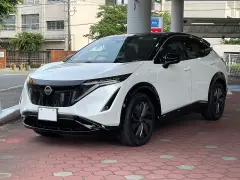
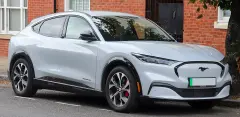
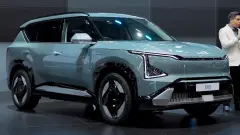
Official figures are measured on standard test procedures and differ between markets. Your consumption depends on how, where and in what conditions you drive.