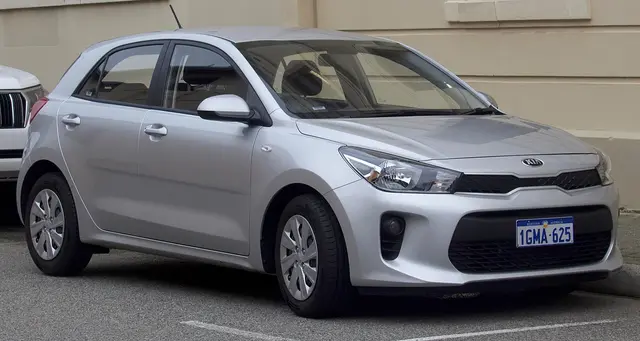
The official data lists 205 versions of the Hyundai i20 (2009 - 2026), in the European Union, the United Kingdom, and France. Each market publishes its own figures, measured on its own test procedure.
At a glance
Years in the data
2009 - 2026
Markets
European Union, United Kingdom, France
Engines
1.0 L to 1.6 L
Power
54 kW (73 PS) to 150 kW (204 PS)
Fuels
Diesel, Petrol, Hybrid, LPG
Lowest consumption (France)
3.2 L/100 km (NEDC)
Lowest consumption (United Kingdom)
3.2 L/100 km (NEDC)
Lowest consumption (European Union)
4.7 L/100 km (WLTP)
New registrations in the EU
2,101,624
What is the Hyundai i20?
The Hyundai i20 is a small hatchback in Europe’s B-segment, designed for everyday driving in town and beyond. It sits between the i10 and i30 in Hyundai’s range. Hyundai introduced the model for European buyers, with the first generation arriving in 2009.
Generations
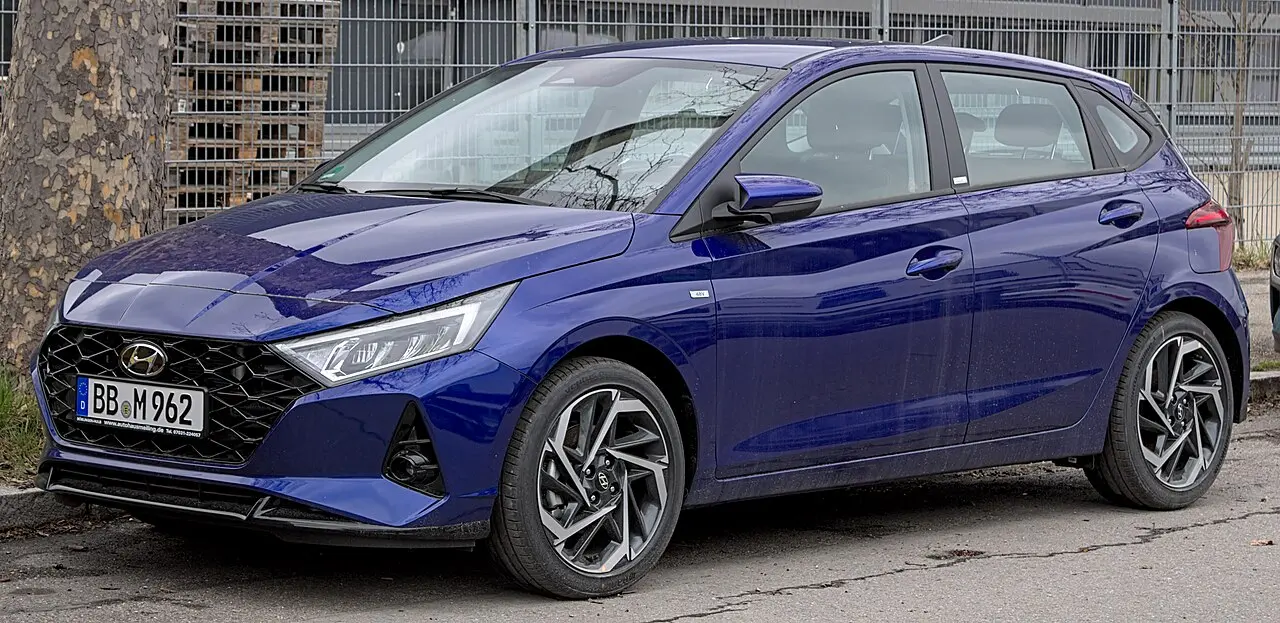
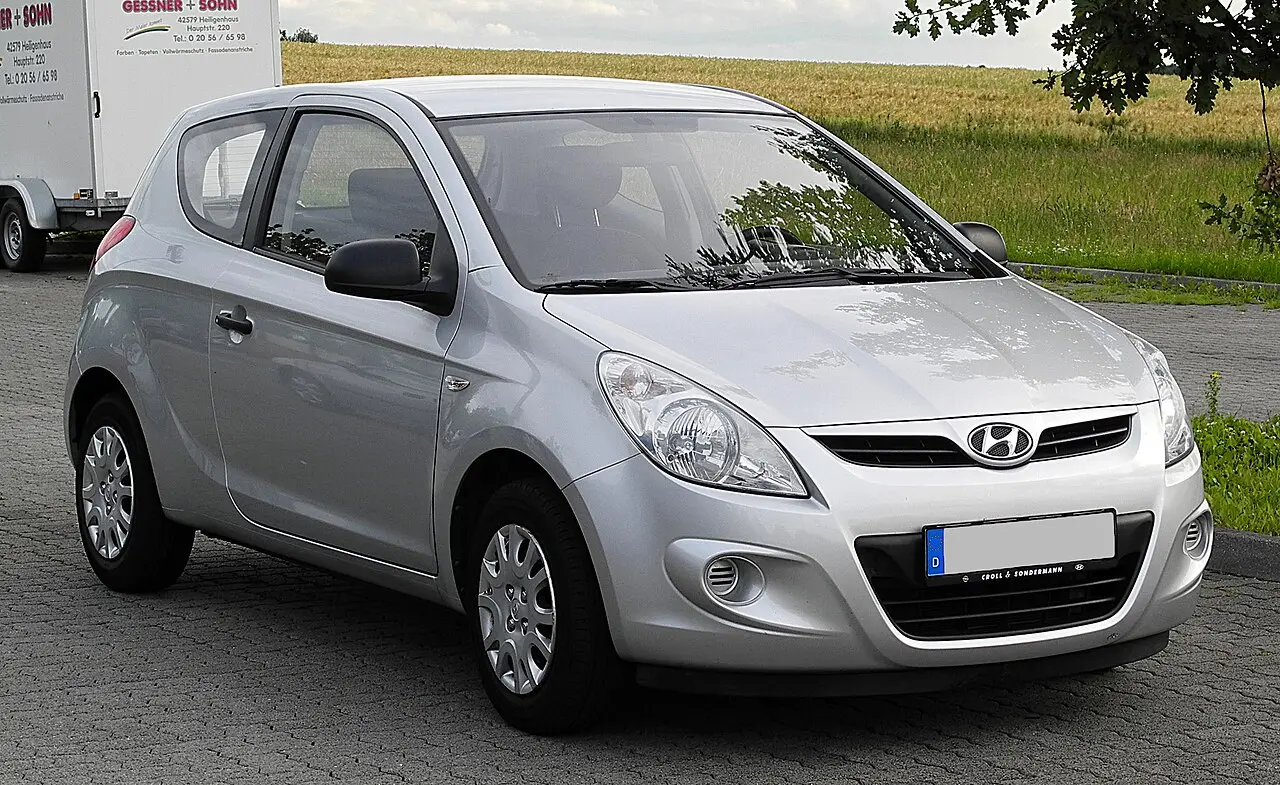
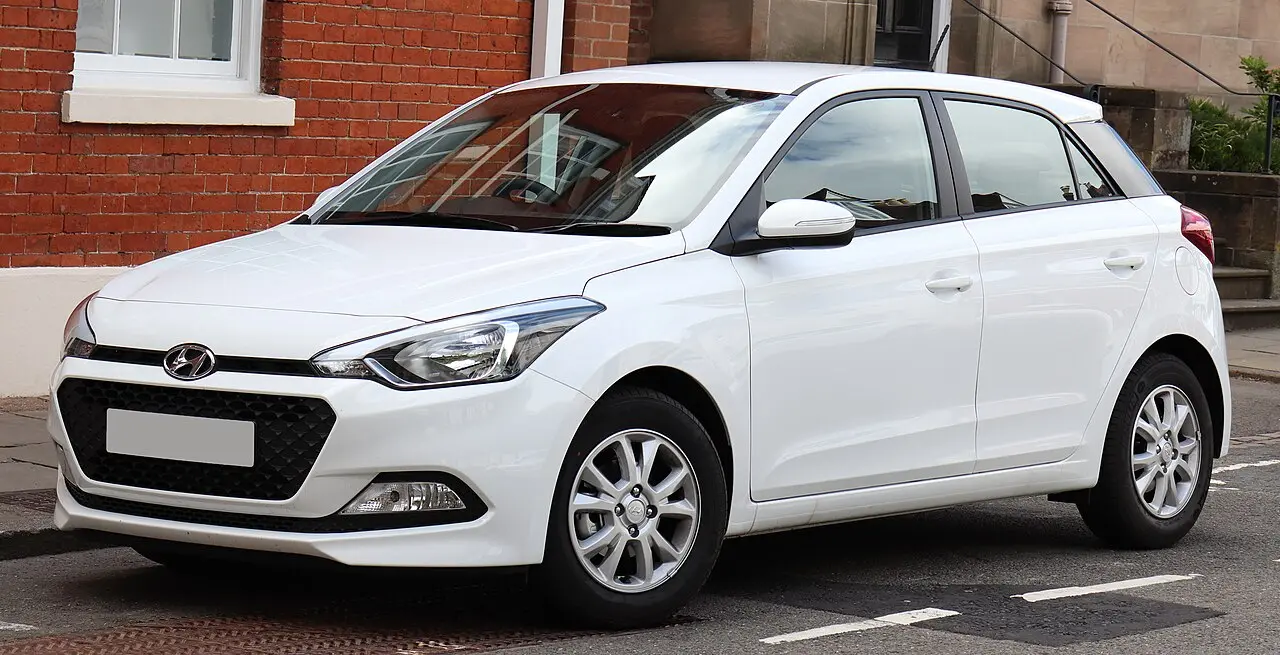
The first-generation i20 (PB) ran from 2009 to 2014, followed by the second generation (GB) from 2015 to 2020. The third generation (BC3) began in 2021 and brought a fresh design, including Hyundai’s “Sensuous Sportiness” style.
Engines and power
In EU figures, engine sizes range from 1.0 L to 1.6 L, and power from 54 kW (73 PS) to 150 kW (204 PS). UK figures extend the power range to 150 kW (204 PS). Petrol versions are joined by hybrid and diesel options in EU and UK figures; EU figures also include LPG and other fuel entries.
How economical is the Hyundai i20?
The lowest listed EU consumption is 4.7 L/100 km on WLTP for petrol, hybrid and LPG versions. UK and French figures list a low of 3.2 L/100 km on NEDC. WLTP and NEDC are different European test procedures, so the results are best read separately. Official EU registrations total 2,101,624 for 2010-2025. UK figures span 2009-2026, while French figures span 2012-2015.
Questions and answers
What kind of car is the Hyundai i20?
It is a small B-segment hatchback, positioned between Hyundai’s i10 and i30.
What are the i20 generations and their years?
The first generation (PB) ran from 2009-2014, the second (GB) from 2015-2020, and the third (BC3) from 2021 onward.
What is the lowest listed i20 fuel consumption?
EU figures give 4.7 L/100 km on WLTP; UK and French figures give 3.2 L/100 km on NEDC.
Where was the i20 sold?
Official figures are available for the European Union, the United Kingdom and France.
Model codes: PB · Sold in: European Union, United Kingdom, and France · References: en.wikipedia.org
At a glance: Length 3,940 mm · Kerb weight 935 - 1,038 kg · Top speed 165 - 180 km/h · MOT first-time pass at 9 - 12 years: 77.2% (UK average 77.9%) Specifications, reliability and all versions
Model codes: GB · Sold in: European Union, United Kingdom, and France · References: en.wikipedia.org, autowiki.fi
At a glance: Length 4,040 mm · Kerb weight 955 - 1,065 kg · Top speed 170 - 190 km/h · MOT first-time pass at 6 - 8 years: 90.6% (UK average 86.4%) Specifications, reliability and all versions
Model codes: BC3 · Sold in: European Union, United Kingdom, and France · References: en.wikipedia.org
At a glance: Length 4,040 - 4,080 mm · Kerb weight 988 - 1,090 kg · Top speed 179 - 230 km/h · MOT first-time pass at 3 years: 92.6% (UK average 92.2%) Specifications, reliability and all versions
Show all 63 versions
European Union 36 versions
New cars registered in the EU (plus Norway and Iceland), from the European Environment Agency. Figures on the NEDC procedure until 2020 and on WLTP from 2021; versions are grouped by engine and power, with their number of registrations.
Years and version
Engine
Power
Fuel
Consumption (combined)
CO₂
EU registrations
2021 - 2025
1.0 L
74 kW (101 PS)
Petrol
5.1 - 5.4 L/100 km WLTP
120 - 122 g/km
74,638
2021 - 2025
1.2 L
62 kW (84 PS)
Petrol
5.0 - 5.5 L/100 km WLTP
120 - 121 g/km
52,457
2021 - 2025
1.0 L
73 kW (99 PS)
Petrol
4.7 - 5.3 L/100 km WLTP
120 - 121 g/km
50,762
2021 - 2025
1.2 L
61 kW (83 PS)
Petrol
4.8 - 5.5 L/100 km WLTP
120 - 123 g/km
46,172
2021 - 2025
1.0 L
74 kW (101 PS)
Hybrid
4.9 - 5.2 L/100 km WLTP
117 g/km
32,219
2021 - 2025
1.0 L
73 kW (99 PS)
Hybrid
4.9 - 5.2 L/100 km WLTP
117 - 118 g/km
27,792
2024 - 2025
1.2 L
58 kW (79 PS)
Petrol
5.4 L/100 km WLTP
122 g/km
21,975
2021 - 2025
1.6 L
150 kW (204 PS)
Petrol
7.0 L/100 km WLTP
158 g/km
14,676
2024 - 2025
1.2 L
57 kW (77 PS)
Petrol
5.4 L/100 km WLTP
122 g/km
9,167
2021 - 2025
1.0 L
88 kW (120 PS)
Hybrid
5.1 - 5.3 L/100 km WLTP
119 - 120 g/km
7,048
2024 - 2025
1.2 L
58 kW (79 PS)
LPG
6.7 L/100 km WLTP
113 g/km
3,803
2025
1.0 L
66 kW (90 PS)
Petrol
5.7 L/100 km WLTP
129 g/km
232
2025
1.0 L
62 kW (84 PS)
Petrol
5.3 L/100 km WLTP
121 g/km
62
2021 - 2024
1.2 L
60 kW (82 PS)
LPG
6.4 - 6.9 L/100 km WLTP
112 - 116 g/km
1,507
2021 - 2024
1.6 L
-
Petrol
-
-
105
2023
1.2 L
Not listed
Petrol
5.2 L/100 km WLTP
119 g/km
129
2023
1.0 L
Not listed
Hybrid
5.2 L/100 km WLTP
117 g/km
55
2023
1.2 L
110 kW (150 PS)
Petrol
5.2 L/100 km WLTP
119 g/km
51
2023
1.2 L
81 kW (110 PS)
Petrol
5.2 L/100 km WLTP
119 g/km
36
2023
1.2 L
84 kW (114 PS)
Petrol
5.2 L/100 km WLTP
119 g/km
22
2023
1.2 L
95 kW (129 PS)
Petrol
5.2 L/100 km WLTP
119 g/km
20
2023
1.0 L
81 kW (110 PS)
Hybrid
5.2 L/100 km WLTP
117 g/km
17
2023
1.2 L
112 kW (152 PS)
Petrol
5.3 L/100 km WLTP
120 g/km
15
2023
1.2 L
72 kW (98 PS)
Petrol
5.2 L/100 km WLTP
119 g/km
14
2023
1.2 L
96 kW (131 PS)
Petrol
5.2 L/100 km WLTP
119 g/km
12
2023
1.0 L
95 kW (129 PS)
Hybrid
5.2 L/100 km WLTP
117 g/km
11
2023
1.2 L
70 kW (95 PS)
Petrol
5.2 L/100 km WLTP
119 g/km
10
2021 - 2022
1.2 L
62 kW (84 PS)
LPG
5.0 - 6.4 L/100 km WLTP
112 - 120 g/km
1,104
2021
1.0 L
88 kW (120 PS)
Petrol
5.1 L/100 km WLTP
119 g/km
1,281
2021
1.2 L
61 kW (83 PS)
Petrol
5.9 L/100 km WLTP
137 g/km
802
2021
1.2 L
62 kW (84 PS)
Petrol
6.0 L/100 km WLTP
137 g/km
446
2021
1.2 L
54 kW (73 PS)
LPG
7.1 L/100 km WLTP
129 g/km
292
2021
1.2 L
55 kW (75 PS)
Petrol
5.7 L/100 km WLTP
135 g/km
290
2021
1.0 L
74 kW (101 PS)
Hybrid
-
117 g/km
21
2021
1.0 L
74 kW (101 PS)
Petrol
-
117 g/km
21
2021
1.6 L
Not listed
Petrol
-
-
12
United Kingdom 27 versions
New cars on sale in the UK, from the Vehicle Certification Agency. NEDC figures until 2018 and WLTP figures after; years are the editions a version appeared in.
Years and version
Engine
Power
Fuel
Gearbox
Consumption (combined)
CO₂
2026i20 BLACK LINE 1.0T DCT MY26 · i20 ELEMENT 1.0T DCT MY26
1.0 L
66 kW (90 PS)
Petrol
Automatic
5.7 L/100 km WLTP
129 g/km
2026i20 BLACK LINE 1.0T MT MY26 · i20 ELEMENT 1.0T MT MY26
1.0 L
66 kW (90 PS)
Petrol
Manual
5.7 L/100 km WLTP
130 g/km
2026i20 TECH LINE 1.0T DCT MY26
1.0 L
66 kW (90 PS)
Petrol
Automatic
6.0 L/100 km WLTP
136 g/km
2026i20 TECH LINE 1.0T MT MY26
1.0 L
66 kW (90 PS)
Petrol
Manual
6.0 L/100 km WLTP
136 g/km
2025 - 2026I20 ADVANCE 1.0T DCT MY25 · I20 ADVANCE 1.0T DCT MY24 · i20 ADVANCE 1.0T DCT MY24 and 1 more trim
2025 - 2026I20 PREMIUM 1.0T MT MY24 · I20 PREMIUM 1.0T MT MY25 · i20 PREMIUM 1.0T MT MY24 and 1 more trim
1.0 L
74 kW (101 PS)
Petrol
Manual
5.5 L/100 km WLTP
124 g/km
2025 - 2026I20 ULTIMATE 1.0T DCT MY24 · I20 ULTIMATE 1.0T DCT MY25 · i20 ULTIMATE 1.0T DCT MY24 and 1 more trim
1.0 L
74 kW (101 PS)
Petrol
Automatic
5.6 L/100 km WLTP
127 g/km
2025 - 2026I20 ULTIMATE 1.0T MT MY24 · I20 ULTIMATE 1.0T MT MY25 · i20 ULTIMATE 1.0T MT MY24 and 1 more trim
1.0 L
74 kW (101 PS)
Petrol
Manual
5.5 L/100 km WLTP
125 g/km
2025 - 2026I20 N LINE S 1.0T MT MY25 · i20 N LINE S 1.0T MT MY25
1.0 L
74 kW (101 PS)
Petrol
Manual
5.4 L/100 km WLTP
123 g/km
2025 - 2026I20 PREMIUM 1.0T 48V DCT MY23 · I20 ULTIMATE 1.0T 48V DCT MY23 · i20 PREMIUM 1.0T 48V DCT MY23 and 1 more trim
1.0 L
74 kW (101 PS)
Hybrid
Automatic
5.4 L/100 km WLTP
122 g/km
2025 - 2026I20 PREMIUM 1.0T 48V MY23 · I20 ULTIMATE 1.0T 48V MY23 · i20 PREMIUM 1.0T 48V MY23 and 1 more trim
1.0 L
74 kW (101 PS)
Hybrid
Manual
5.2 L/100 km WLTP
119 g/km
2025 - 2026I20 SE CONNECT 1.0T 48V DCT MY23 · i20 SE CONNECT 1.0T 48V DCT MY23
1.0 L
74 kW (101 PS)
Hybrid
Automatic
5.2 L/100 km WLTP
117 g/km
2025 - 2026I20 N LINE 1.0T 48V DCT MY23 · i20 N LINE 1.0T 48V DCT MY23
1.0 L
88 kW (120 PS)
Hybrid
Automatic
5.3 L/100 km WLTP
120 g/km
2025 - 2026I20 N LINE 1.0T 48V MY23 · i20 N LINE 1.0T 48V MY23
1.0 L
88 kW (120 PS)
Hybrid
Manual
5.3 L/100 km WLTP
120 g/km
2025 - 2026I20 N 1.6 T-GDI 204PS MY23 · i20 N 1.6 T-GDI 204PS MY23
1.6 L
150 kW (204 PS)
Petrol
Manual
7.0 L/100 km WLTP
158 g/km
20241.0l T-GDi, N Line S
1.0 L
74 kW (101 PS)
Petrol
6-speed manual
5.4 L/100 km WLTP
123 g/km
20241.0l T-GDi, N Line S
1.0 L
74 kW (101 PS)
Petrol
7-speed automatic
5.4 L/100 km WLTP
123 g/km
2021 - 2024N Line
1.0 L
88 kW (120 PS)
Petrol
7-speed automatic
5.3 L/100 km WLTP
120 g/km
2021 - 2024N Line
1.0 L
88 kW (120 PS)
Petrol
6-speed manual
5.3 L/100 km WLTP
120 g/km
20231.0l T-GDi, Advance
1.0 L
74 kW (101 PS)
Petrol
6-speed manual
5.3 L/100 km WLTP
120 g/km
20231.0l T-GDi, Premium
1.0 L
74 kW (101 PS)
Petrol
6-speed manual
5.5 L/100 km WLTP
124 g/km
20231.0l T-GDi, Ultimate
1.0 L
74 kW (101 PS)
Petrol
6-speed manual
5.5 L/100 km WLTP
125 g/km
2021 - 2023N
1.6 L
150 kW (204 PS)
Petrol
6-speed manual
7.0 L/100 km WLTP
158 g/km
2021 - 2022Element
1.0 L
73 kW (99 PS)
Petrol
6-speed manual
5.3 L/100 km WLTP
120 g/km
Hyundai i20 recalls
4 official safety recalls for the Hyundai i20 from NHTSA (United States), DVSA (United Kingdom) and the EU Safety Gate, newest first. Recall repairs are normally free at the maker’s dealers.
Vacuum hose may crack and reduce braking2015 - 2020
Fuel pump may fail and cause loss of drive2021 - 2023
Transmission malfunction may cause loss of drive2023 - 2024
VIN information may not be sent during an eCall2020
Official figures are measured on standard test procedures and differ between markets. Your consumption depends on how, where and in what conditions you drive.