The official data lists 222 versions of the Hyundai i10 (2008–2026), in the European Union, the United Kingdom, and France. Each market publishes its own figures, measured on its own test procedure.
At a glance
Years in the data
2008–2026
Markets
European Union, United Kingdom, France
Engines
1.0 L to 1.2 L
Power
46 kW (63 PS) to 88 kW (120 PS)
Fuels
Petrol, LPG, Hybrid, Diesel
Lowest consumption (United Kingdom)
4.0 L/100 km (NEDC)
Lowest consumption (France)
4.6 L/100 km (NEDC)
Lowest consumption (European Union)
4.8 L/100 km (WLTP)
New registrations in the EU
1,957,411
What is the Hyundai i10?
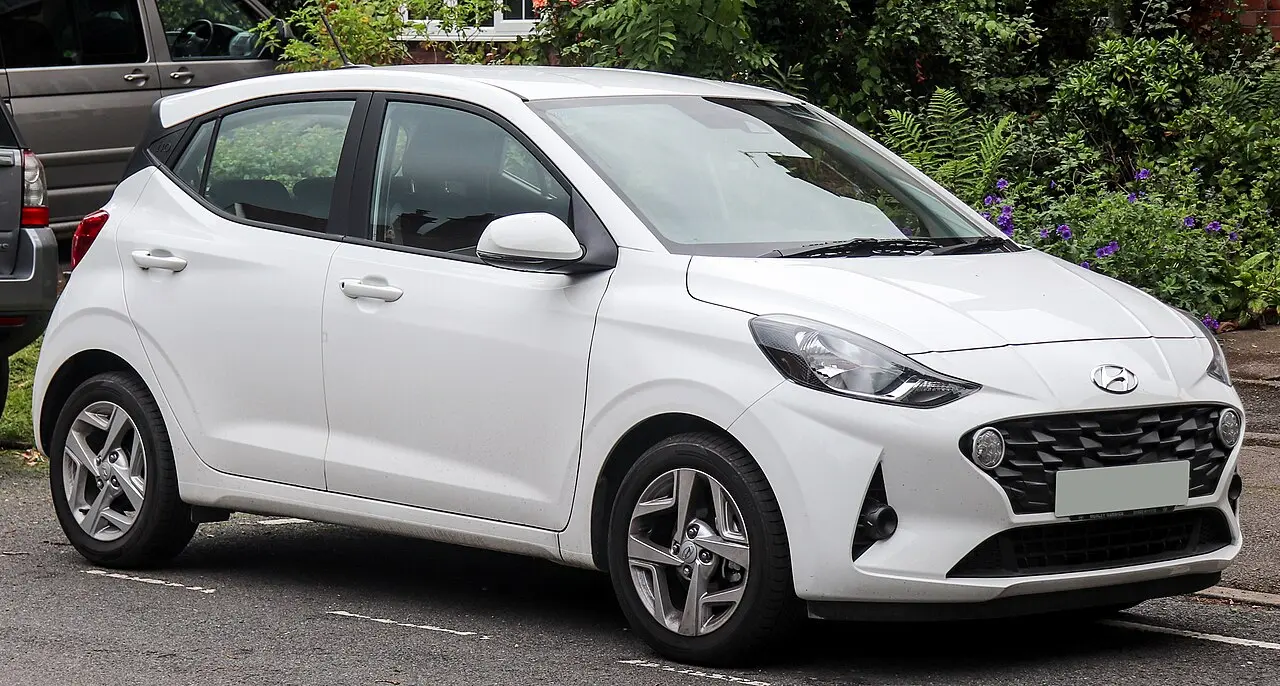
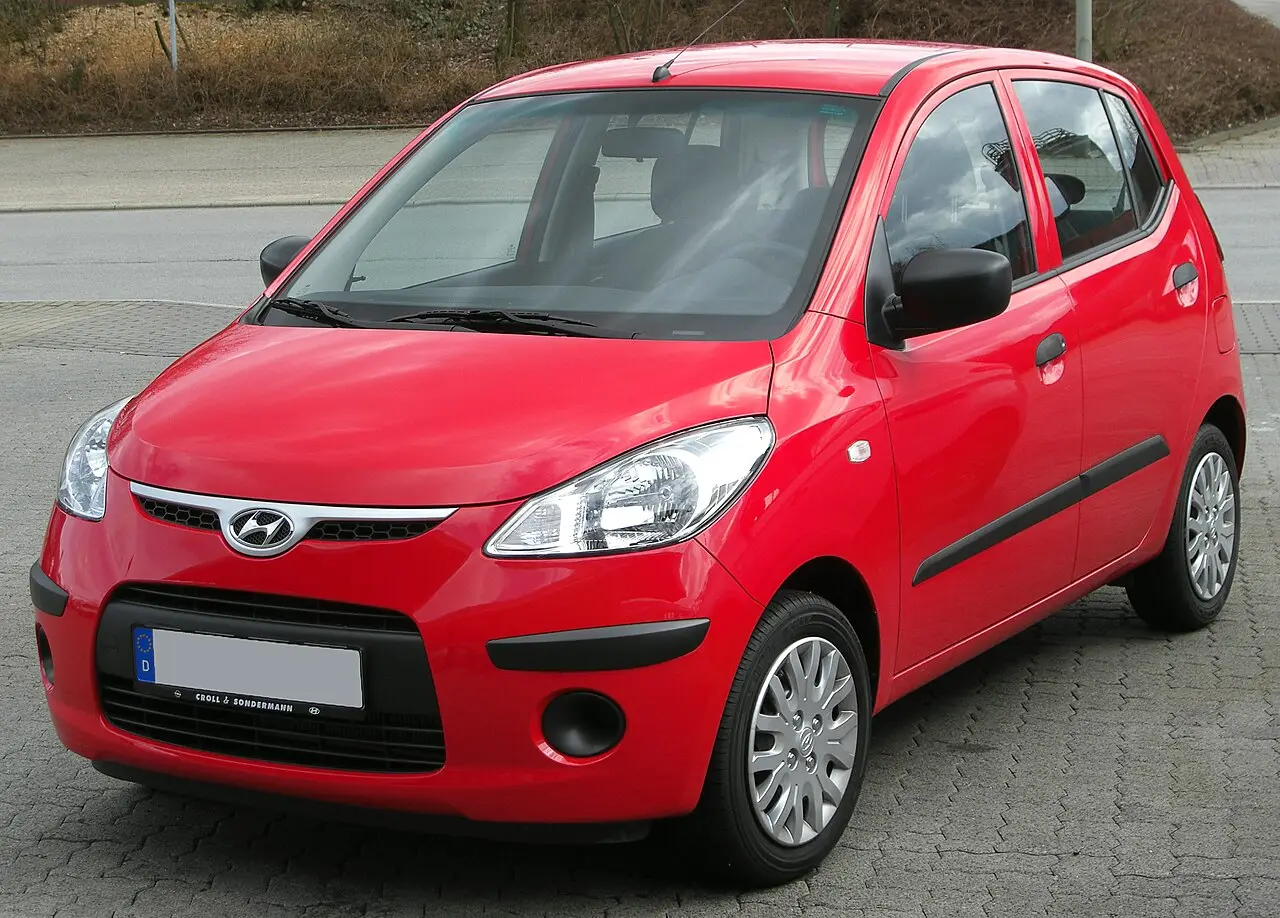
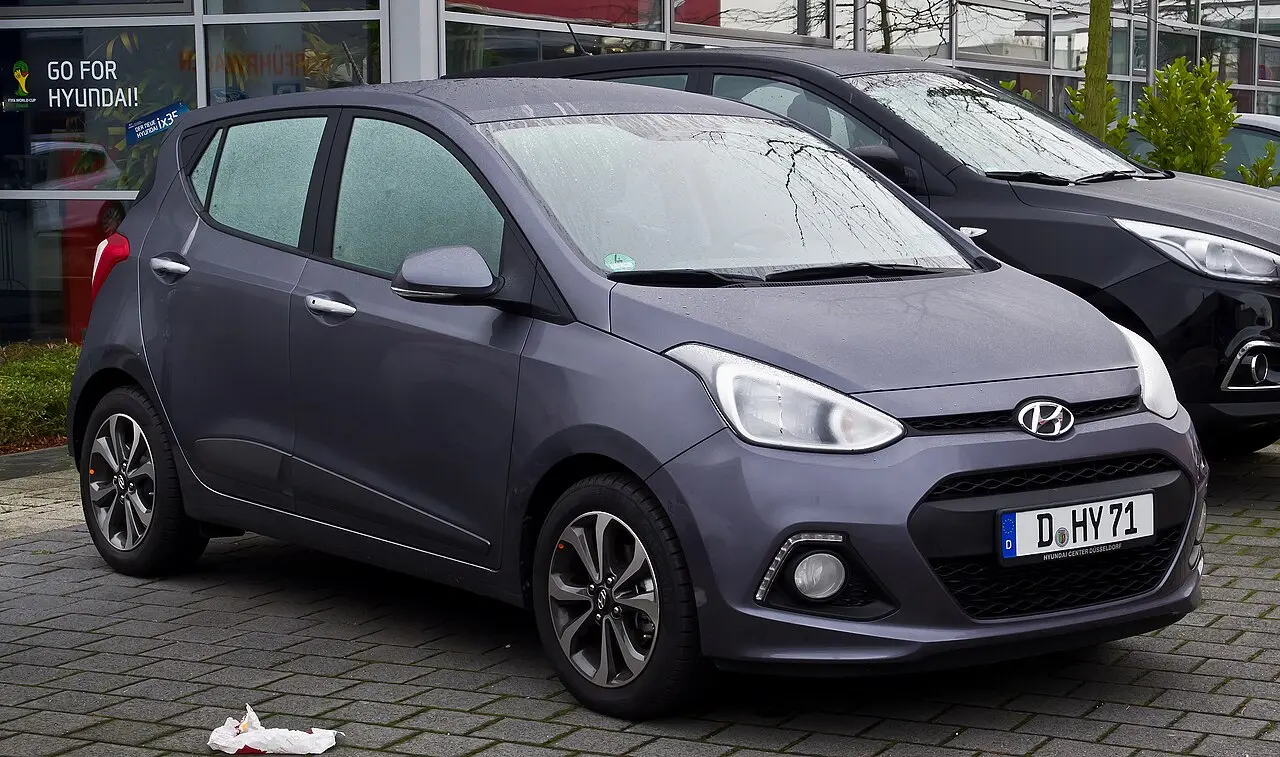
The Hyundai i10 is a small city car and the smallest model in Hyundai’s European passenger-car range, below the i20 and i30. Its compact hatchback body suits tight streets and local trips. Hyundai launched the i10 in Europe in 2008.
Generations
The first-generation i10 (PA) ran from 2008 to 2013. The second generation (IA) followed from 2014 to 2019, and the third generation (AC3) began in 2020. The model has retained its city-car role through each generation, with updated styling and equipment.
Engines and power
EU figures cover engines from 1.0 L to 1.2 L, with power from 47 kW (64 PS) to 88 kW (120 PS). UK figures begin at 46 kW (63 PS) and reach 100 kW (136 PS); French figures span 49 kW (66 PS) to 74 kW (100 PS). Petrol is the only fuel type listed in the UK and France. EU figures also include LPG, hybrid, diesel and other entries.
How economical is the Hyundai i10?
The lowest listed EU consumption is 4.8 L/100 km on WLTP for petrol, diesel and hybrid versions. UK figures list a low of 4 L/100 km on NEDC, while French figures list 4.6 L/100 km on NEDC. WLTP and NEDC are different European test procedures, so their results are best read separately. Official EU registrations total 1,957,411 for 2010–2025. UK figures span 2008–2026, and French figures span 2012–2026.
Questions and answers
What kind of car is the Hyundai i10?
It is Hyundai’s small city car, positioned below the i20 and i30.
What are the i10 generations?
The first generation (PA) ran from 2008–2013, the second (IA) from 2014–2019, and the third (AC3) from 2020 onward.
What is the lowest listed i10 consumption?
EU figures give 4.8 L/100 km on WLTP; UK figures give 4 L/100 km on NEDC, and French figures give 4.6 L/100 km on NEDC.
Where was the i10 sold?
Official figures are available for the European Union, the United Kingdom and France.
Model codes: AC3 · Sold in: European Union, United Kingdom, and France · References: en.wikipedia.org
European Union 50 versions
New cars registered in the EU (plus Norway and Iceland), from the European Environment Agency. Figures on the NEDC procedure until 2020 and on WLTP from 2021; versions are grouped by engine and power, with their number of registrations.
Years and version
Engine
Power
Fuel
Consumption (combined)
CO₂
EU registrations
2024–2025
1.0 L
46 kW (63 PS)
Petrol
5.1 L/100 km WLTP
116 g/km
55,318
2025
1.2 L
58 kW (79 PS)
Petrol
5.4 L/100 km WLTP
123 g/km
7,596
2024–2025
1.0 L
66 kW (90 PS)
Petrol
5.4 L/100 km WLTP
123 g/km
3,770
2025
1.2 L
57 kW (77 PS)
Petrol
5.3 L/100 km WLTP
121 g/km
3,010
2024–2025
1.0 L
46 kW (63 PS)
LPG
6.5 L/100 km WLTP
108 g/km
2,906
2025
1.0 L
49 kW (67 PS)
Petrol
5.0 L/100 km WLTP
113 g/km
135
2025
1.2 L
61 kW (83 PS)
Petrol
5.3 L/100 km WLTP
122 g/km
66
2025
1.2 L
62 kW (84 PS)
Petrol
5.4 L/100 km WLTP
122 g/km
51
2025
1.2 L
46 kW (63 PS)
Petrol
5.1 L/100 km WLTP
122 g/km
47
2024
1.0 L
49 kW (67 PS)
Petrol
5.1 L/100 km WLTP
115 g/km
22,045
2024
1.2 L
62 kW (84 PS)
Petrol
5.4 L/100 km WLTP
123 g/km
5,647
2023–2024
1.0 L
74 kW (101 PS)
Petrol
5.4 L/100 km WLTP
123 g/km
4,526
2024
1.2 L
58 kW (79 PS)
Petrol
5.4 L/100 km WLTP
122 g/km
3,682
2024
1.2 L
57 kW (77 PS)
Petrol
5.3 L/100 km WLTP
120 g/km
1,686
2024
1.0 L
47 kW (64 PS)
LPG
6.6 L/100 km WLTP
107 g/km
1,505
2024
1.2 L
61 kW (83 PS)
Petrol
5.4 L/100 km WLTP
123 g/km
1,113
2023–2024
1.0 L
73 kW (99 PS)
Petrol
5.4 L/100 km WLTP
123 g/km
849
2023
1.0 L
49 kW (67 PS)
Petrol
5.1 L/100 km WLTP
116 g/km
38,843
2023
1.2 L
62 kW (84 PS)
Petrol
5.5 L/100 km WLTP
124 g/km
6,271
2023
1.2 L
61 kW (83 PS)
Petrol
5.1 L/100 km WLTP
124 g/km
2,424
2023
1.0 L
49 kW (67 PS)
Petrol
6.0 L/100 km WLTP
119 g/km
1,521
2023
1.2 L
67 kW (91 PS)
Petrol
5.4 L/100 km WLTP
122 g/km
58
2023
1.0 L
67 kW (91 PS)
Petrol
5.1 L/100 km WLTP
116 g/km
37
2023
1.2 L
110 kW (150 PS)
Petrol
5.4 L/100 km WLTP
122 g/km
31
2023
1.2 L
81 kW (110 PS)
Petrol
5.4 L/100 km WLTP
123 g/km
21
2023
1.2 L
95 kW (129 PS)
Petrol
5.5 L/100 km WLTP
124 g/km
16
2023
1.0 L
110 kW (150 PS)
Petrol
5.1 L/100 km WLTP
116 g/km
15
2023
1.2 L
84 kW (114 PS)
Petrol
5.4 L/100 km WLTP
122 g/km
13
2023
1.2 L
96 kW (131 PS)
Petrol
5.4 L/100 km WLTP
123 g/km
11
2022
1.0 L
49 kW (67 PS)
Petrol
4.8 L/100 km WLTP
117 g/km
32,447
2022
1.2 L
62 kW (84 PS)
Petrol
5.5 L/100 km WLTP
125 g/km
6,054
2021–2022
1.0 L
74 kW (101 PS)
Petrol
5.3 L/100 km WLTP
123 g/km
4,267
2022
1.2 L
61 kW (83 PS)
Petrol
5.0 L/100 km WLTP
125 g/km
2,314
2022
1.0 L
49 kW (67 PS)
LPG
6.1 L/100 km WLTP
110 g/km
1,430
2022
1.0 L
73 kW (99 PS)
Petrol
5.3 L/100 km WLTP
123 g/km
320
2021
1.0 L
49 kW (67 PS)
Petrol
4.8 L/100 km WLTP
117 g/km
77,043
2021
1.2 L
61 kW (83 PS)
Petrol
5.4 L/100 km WLTP
124 g/km
6,332
2021
1.2 L
62 kW (84 PS)
Petrol
5.5 L/100 km WLTP
126 g/km
5,768
2021
1.0 L
48 kW (65 PS)
LPG
6.1 L/100 km WLTP
109 g/km
3,734
2021
1.0 L
73 kW (99 PS)
Petrol
5.4 L/100 km WLTP
123 g/km
1,312
2021
1.2 L
64 kW (87 PS)
Petrol
5.5 L/100 km WLTP
147 g/km
32
2021
1.2 L
62 kW (84 PS)
LPG
4.6 L/100 km WLTP
117 g/km
18
2020
1.0 L
49 kW (67 PS)
Petrol
–
104 g/km
69,910
2020
1.2 L
62 kW (84 PS)
Petrol
–
108 g/km
16,506
2020
1.2 L
64 kW (87 PS)
Petrol
–
130 g/km
3,715
2020
1.0 L
48 kW (65 PS)
LPG
–
109 g/km
3,422
2020
1.2 L
61 kW (83 PS)
Petrol
–
106 g/km
3,066
2020
1.0 L
74 kW (101 PS)
Petrol
–
105 g/km
1,498
2020
1.0 L
73 kW (99 PS)
Petrol
–
105 g/km
466
2020
1.2 L
49 kW (67 PS)
Petrol
–
104 g/km
24
United Kingdom 39 versions
New cars on sale in the UK, from the Vehicle Certification Agency. NEDC figures until 2018 and WLTP figures after; years are the editions a version appeared in.
2025–2026I10 PREMIUM 1.2 MPI 84PS AMT +NAV MY24 · i10 PREMIUM 1.2 MPI 84PS AMT +NAV MY24
1.2 L
62 kW (84 PS)
Petrol
Automated manual
5.7 L/100 km WLTP
129 g/km
20241.0l Premium
1.0 L
67 kW (91 PS)
Petrol
5-speed manual
5.3 L/100 km WLTP
120 g/km
20241.0l Advance
1.0 L
67 kW (91 PS)
Petrol
5-speed automated manual
5.4 L/100 km WLTP
122 g/km
20241.0l Premium
1.0 L
67 kW (91 PS)
Petrol
5-speed automated manual
5.6 L/100 km WLTP
126 g/km
2024N Line T-GDi
1.0 L
100 kW (136 PS)
Petrol
5-speed manual
5.4 L/100 km WLTP
123 g/km
20241.2l Advance
1.2 L
84 kW (114 PS)
Petrol
5-speed manual
5.3 L/100 km WLTP
120 g/km
20241.2l Premium
1.2 L
84 kW (114 PS)
Petrol
5-speed manual
5.5 L/100 km WLTP
124 g/km
20241.2l Advance
1.2 L
84 kW (114 PS)
Petrol
5-speed automated manual
5.5 L/100 km WLTP
125 g/km
20241.2l Premium
1.2 L
84 kW (114 PS)
Petrol
5-speed automated manual
5.7 L/100 km WLTP
130 g/km
2020–20231.0l Premium · 1.0l SE Connect
1.0 L
49 kW (67 PS)
Petrol
5-speed automatic
5.6 L/100 km WLTP
126 g/km
2020–20231.0l Premium
1.0 L
49 kW (67 PS)
Petrol
5-speed manual
5.3 L/100 km WLTP
120 g/km
2020–20231.0l SE Connect
1.0 L
49 kW (67 PS)
Petrol
5-speed manual
5.2 L/100 km WLTP
119 g/km
20231.0l Advance
1.0 L
49 kW (67 PS)
Petrol
5-speed manual
5.1 L/100 km WLTP
116 g/km
20231.0l Advance
1.0 L
49 kW (67 PS)
Petrol
5-speed automated manual
5.4 L/100 km WLTP
122 g/km
2020–2023N Line T-GDi
1.0 L
74 kW (101 PS)
Petrol
5-speed manual
5.4 L/100 km WLTP
123 g/km
2020–20231.2l Premium · 1.2l SE Connect
1.2 L
61 kW (83 PS)
Petrol
5-speed automatic
5.7 L/100 km WLTP
130 g/km
2020–20231.2l Premium
1.2 L
61 kW (83 PS)
Petrol
5-speed manual
5.5 L/100 km WLTP
124 g/km
2020–20231.2l SE Connect
1.2 L
61 kW (83 PS)
Petrol
5-speed manual
5.4 L/100 km WLTP
124 g/km
20231.2l Advance
1.2 L
62 kW (84 PS)
Petrol
5-speed manual
5.3 L/100 km WLTP
120 g/km
20231.2l Advance
1.2 L
62 kW (84 PS)
Petrol
5-speed automatic
5.5 L/100 km WLTP
125 g/km
2020–20221.0l SE
1.0 L
49 kW (67 PS)
Petrol
5-speed manual
5.0 L/100 km WLTP
114 g/km
France 4 versions
New cars on sale in France, from ADEME Car Labelling. NEDC figures until 2015, WLTP figures in the current catalogue.
Years and version
Engine
Power
Fuel
Gearbox
Consumption (combined)
CO₂
2026Nouvelle i10 1.0 ECO 4PL
1.0 L
49 kW (67 PS)
Petrol
5-speed manual
4.8 L/100 km WLTP
110 g/km
2026Nouvelle i10 1.0 BVR 4PL
1.0 L
49 kW (67 PS)
Petrol
5-speed automatic
5.2 L/100 km WLTP
119 g/km
2026Nouvelle i10 1.0 (100ch) N Line
1.0 L
74 kW (100 PS)
Petrol
5-speed manual
–
–
2026Nouvelle i10 1.2 (84ch) N Line
1.2 L
62 kW (84 PS)
Petrol
5-speed manual
5.1 L/100 km WLTP
117 g/km
Official figures are measured on standard test procedures and differ between markets. Your consumption depends on how, where and in what conditions you drive.