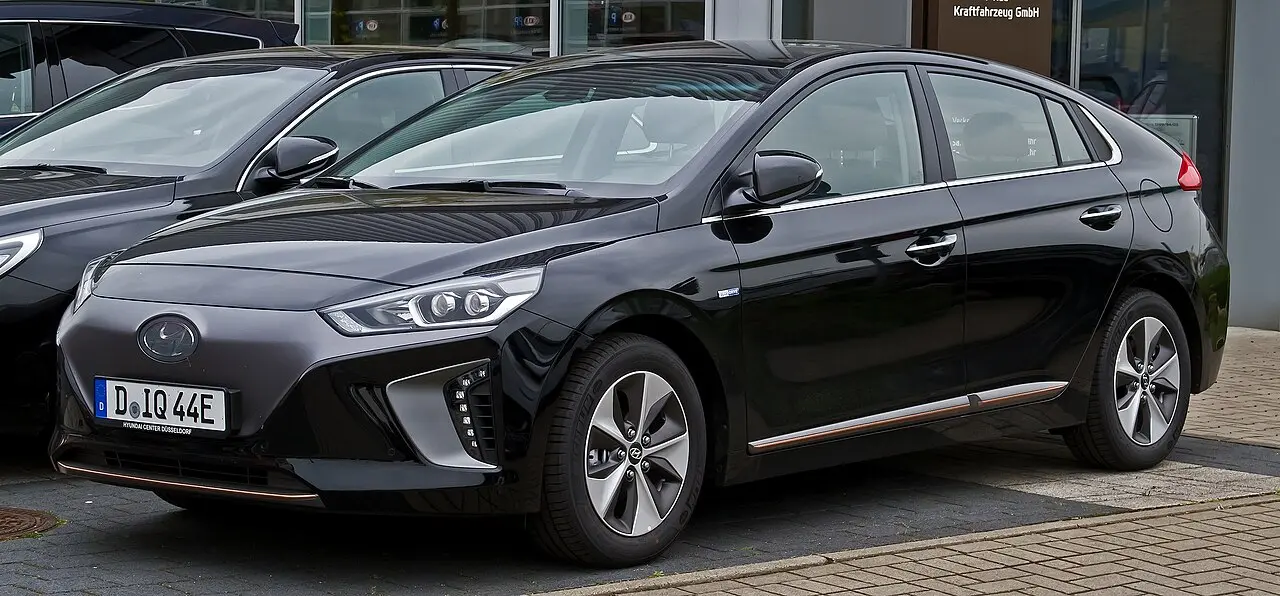
The official data lists 72 versions of the Hyundai IONIQ (2016–2023), in the European Union, the United Kingdom, the United States, and Canada. Each market publishes its own figures, measured on its own test procedure.
At a glance
Years in the data
2016–2023
Markets
European Union, United Kingdom, United States, Canada
Engines
1.6 L to 1.6 L
Power
25 kW (34 PS) to 116 kW (158 PS)
Fuels
Hybrid, Electric, Plug-in hybrid, Petrol, Diesel
Lowest consumption (United Kingdom)
3.4 L/100 km (NEDC)
Lowest consumption (United States)
4.0 L/100 km (EPA)
Lowest consumption (Canada)
4.0 L/100 km (5-cycle)
Plug-in hybrid, weighted (European Union)
1.1 L/100 km (WLTP)
Plug-in hybrid, weighted (United Kingdom)
1.1 L/100 km (NEDC)
New registrations in the EU
250,643
What is the Hyundai IONIQ?
The Hyundai IONIQ is a compact liftback that came with hybrid, plug-in hybrid or fully electric power. Introduced in 2016, it was Hyundai’s first dedicated electrified model. Its low, streamlined shape set it apart from the brand’s SUVs, while the choice of powertrains gave drivers different ways to use electric power.
The first generation ran from 2016 to 2022. Hyundai designed the IONIQ around electrified powertrains, offering hybrid, plug-in hybrid and electric versions in the same body. That combination became a defining part of the car’s identity.
Engines and power
The hybrid and plug-in hybrid combine a 1.6-litre petrol engine with electric drive. The plug-in hybrid can also be charged from an external power source; the electric version has no combustion engine. Across EU registrations, power ranges from 25 kW (34 PS) to 116 kW (158 PS). The 1.6-litre petrol versions rated at 77 kW (105 PS) were among the most registered EU choices.
How economical is the Hyundai IONIQ?
The lowest listed EU consumption is 4.2 L/100 km on the WLTP test for petrol, diesel or hybrid versions. For the plug-in hybrid, the lowest official weighted figure is 1.1 L/100 km WLTP. This figure assumes part of the driving is electric, so fuel use in practice depends on charging and journey length.
Test procedures differ between markets. The UK’s lowest listed figure is 3.4 L/100 km on NEDC; the US EPA figure is 4 L/100 km, with a best combined rating of 59 MPG. Canada’s lowest conventional figure is 4 L/100 km on the NRCan 5-cycle test. For the plug-in hybrid, the lowest listed weighted figures are 1.1 L/100 km on UK NEDC and 4.5 L/100 km under EPA and NRCan 5-cycle testing. WLTP, NEDC, EPA and Canada’s 5-cycle results are not directly interchangeable.
Where was the IONIQ sold?
EU registration figures cover 2016 to 2023, with 250,643 cars registered. The UK, US and Canadian listings cover 2017 to 2022. The available powertrains varied by market: EU listings include petrol, other fuel categories, hybrid, plug-in hybrid and electric, while UK listings include hybrid, plug-in hybrid and electric.
Questions and answers
When was the Hyundai IONIQ sold?
Its first generation ran from 2016 to 2022. EU registration figures cover 2016 to 2023; UK, US and Canadian listings cover 2017 to 2022.
Did the IONIQ come as a fully electric car?
Yes. The first-generation range included hybrid, plug-in hybrid and fully electric versions.
What is the IONIQ’s lowest official fuel-consumption figure?
The lowest listed figure is 1.1 L/100 km for the plug-in hybrid on the EU WLTP and UK NEDC tests. It is a weighted figure that assumes part of the driving is electric.
New cars registered in the EU (plus Norway and Iceland), from the European Environment Agency. Figures on the NEDC procedure until 2020 and on WLTP from 2021; versions are grouped by engine and power, with their number of registrations.
Years and version
Engine
Power
Fuel
Consumption (combined)
CO₂
Electric range
EU registrations
2021–2022
1.6 L
77 kW (105 PS)
Plug-in hybrid
1.1 L/100 km WLTP11.7 kWh/100 km WLTP
26 g/km
52 km
9,430
2022
1.6 L
77 kW (105 PS)
Hybrid
4.2 L/100 km WLTP
104 g/km
–
3,167
2022
Electric motor
100 kW (136 PS)
Electric
13.8 kWh/100 km WLTP
0 g/km
311 km
2,270
2022
Electric motor
25 kW (34 PS)
Electric
13.8 kWh/100 km WLTP
0 g/km
311 km
657
2022
1.6 L
77 kW (105 PS)
Petrol
4.0 L/100 km WLTP
103 g/km
–
23
2021
1.6 L
77 kW (105 PS)
Hybrid
4.5 L/100 km WLTP11.7 kWh/100 km WLTP
104 g/km
52 km
10,149
2021
Electric motor
100 kW (136 PS)
Electric
13.8 kWh/100 km WLTP
0 g/km
311 km
9,506
2021
Electric motor
25 kW (34 PS)
Electric
13.8 kWh/100 km WLTP
0 g/km
311 km
1,501
2021
1.6 L
77 kW (105 PS)
Petrol
4.5 L/100 km WLTP
104 g/km
–
82
2020
Electric motor
100 kW (136 PS)
Electric
13.8 kWh/100 km NEDC
0 g/km
311 km
16,565
2020
1.6 L
77 kW (105 PS)
Hybrid
–
85 g/km
–
14,672
2020
1.6 L
77 kW (105 PS)
Plug-in hybrid
11.7 kWh/100 km NEDC
26 g/km
52 km
10,929
2020
Electric motor
25 kW (34 PS)
Electric
13.8 kWh/100 km NEDC
0 g/km
311 km
3,806
2020
1.6 L
77 kW (105 PS)
Petrol
–
84 g/km
–
3,203
2020
Electric motor
88 kW (120 PS)
Electric
11.5 kWh/100 km NEDC
0 g/km
280 km
365
2020
1.6 L
10 kW (14 PS)
Plug-in hybrid
11.7 kWh/100 km NEDC
26 g/km
44 km
83
2019
1.6 L
77 kW (105 PS)
Hybrid
1.0 kWh/100 km NEDC
84 g/km
–
31,176
2018–2019
Electric motor
88 kW (120 PS)
Electric
11.5 kWh/100 km NEDC
0 g/km
–
14,776
2019
1.6 L
77 kW (105 PS)
Plug-in hybrid
10.7 kWh/100 km NEDC
27 g/km
–
9,962
2019
Electric motor
25 kW (34 PS)
Electric
11.8 kWh/100 km NEDC
0 g/km
–
4,892
2019
1.6 L
77 kW (105 PS)
Petrol
–
86 g/km
–
3,653
2019
Electric motor
100 kW (136 PS)
Electric
13.6 kWh/100 km NEDC
0 g/km
–
1,458
2019
1.6 L
10 kW (14 PS)
Plug-in hybrid
–
26 g/km
–
64
2018
1.6 L
77 kW (105 PS)
Petrol
9.4 kWh/100 km NEDC
85 g/km
–
33,330
2016–2018
Electric motor
25 kW (34 PS)
Electric
11.5 kWh/100 km NEDC
0 g/km
–
15,920
2018
1.6 L
77 kW (105 PS)
Hybrid
9.5 kWh/100 km NEDC
26 g/km
–
9,472
2018
1.6 L
77 kW (105 PS)
Other fuel
–
90 g/km
–
798
2018
1.6 L
10 kW (14 PS)
Hybrid
9.8 kWh/100 km NEDC
26 g/km
–
52
2017
1.6 L
77 kW (105 PS)
Petrol
–
85 g/km
–
25,584
2017
1.6 L
77 kW (105 PS)
Hybrid
9.4 kWh/100 km NEDC
28 g/km
–
4,572
2017
Electric motor
88 kW (120 PS)
Electric
11.5 kWh/100 km NEDC
0 g/km
–
2,334
2017
1.6 L
116 kW (158 PS)
Petrol
–
87 g/km
–
404
2016
1.6 L
77 kW (105 PS)
Petrol
–
86 g/km
–
4,976
2016
1.6 L
77 kW (105 PS)
Other fuel
–
89 g/km
–
528
2016
Electric motor
88 kW (120 PS)
Electric
11.5 kWh/100 km NEDC
0 g/km
–
136
2016
1.6 L
77 kW (105 PS)
Diesel
–
92 g/km
–
10
United Kingdom 13 versions
New cars on sale in the UK, from the Vehicle Certification Agency. NEDC figures until 2018 and WLTP figures after; years are the editions a version appeared in.
Years and version
Engine
Power
Fuel
Gearbox
Consumption (combined)
CO₂
Electric range
2020–2022Electric Premium & Premium SE - 20MY · Electric Premium & Premium SE
Electric motor
100 kW (136 PS)
Electric
–
13.8 kWh/100 km WLTP
0 g/km
311 km
2020–2022Hybrid Premium · Hybrid SE Connect 20MY · SE Connect & Premium
1.6 L
77 kW (105 PS)
Hybrid
6-speed automatic
4.5 L/100 km WLTP
102 g/km
–
2020–2022Hybrid Premium SE · Premium SE
1.6 L
77 kW (105 PS)
Hybrid
6-speed automatic
4.6 L/100 km WLTP
105 g/km
–
2020Plug-In hybrid, all trim levels - 20MY
1.6 L
77 kW (105 PS)
Plug-in hybrid
6-speed automatic
4.8 L/100 km WLTP11.7 kWh/100 km WLTP
26 g/km
52 km
2019Electric Premium & Premium SE - 19MY
Electric motor
88 kW (120 PS)
Electric
–
11.5 kWh/100 km NEDC
–
280 km
2019Hybrid, all trim levels, 20MY
1.6 L
77 kW (105 PS)
Hybrid
6-speed automatic
4.5 L/100 km WLTP
–
–
2019Plug-In hybrid, all trim levels - 20MY
1.6 L
77 kW (105 PS)
Plug-in hybrid
6-speed automatic
4.8 L/100 km WLTP8.3 kWh/100 km WLTP
–
41 km
2017–2018Electric
Electric motor
–
Electric
–
11.5 kWh/100 km NEDC
0 g/km
280 km
2018Hybrid
1.6 L
–
Hybrid
6-speed automatic
3.6 L/100 km NEDC
84 g/km
–
2018PHEV
1.6 L
–
Plug-in hybrid
6-speed automatic
1.1 L/100 km NEDC9.4 kWh/100 km NEDC
26 g/km
63 km
2017PHEV
1.6 L
–
Plug-in hybrid
6-speed automatic
1.1 L/100 km NEDC9.4 kWh/100 km NEDC
26 g/km
63 km
2017Hybrid 15" wheels
1.6 L
–
Hybrid
6-speed automatic
3.4 L/100 km NEDC
79 g/km
–
2017Hybrid 17" wheels
1.6 L
–
Hybrid
6-speed automatic
3.9 L/100 km NEDC
92 g/km
–
United States 10 versions
Model years sold in the USA, from the EPA and the Department of Energy (fueleconomy.gov). MPG on the EPA test; litres per 100 km = 235.215 ÷ MPG.
Years and version
Engine
Fuel
Gearbox
Drive
Consumption (combined)
CO₂
Electric range
2021–2022SIDI; Hybrid
1.6 L
Hybrid
6-speed automated manual
Front-wheel drive
59 MPG (4.0 L/100 km) EPA
94 g/km
–
2021–2022SIDI; PHEV
1.6 L
Plug-in hybrid
6-speed automated manual
Front-wheel drive
52 MPG (4.5 L/100 km) EPA
46 g/km
–
2022SIDI; Hybrid
1.6 L
Hybrid
6-speed automated manual
Front-wheel drive
55 MPG (4.3 L/100 km) EPA
101 g/km
–
2020–2021
Electric motor
Electric
Automatic
Front-wheel drive
133 MPGe EPA
0 g/km
274 km
2021SIDI; Hybrid
1.6 L
Hybrid
6-speed automated manual
Front-wheel drive
55 MPG (4.3 L/100 km) EPA
101 g/km
–
2017–2020SIDI · SIDI; Hybrid
1.6 L
Hybrid
6-speed automated manual
Front-wheel drive
55 MPG (4.3 L/100 km) EPA
101 g/km
–
2017–2020SIDI · SIDI; Hybrid
1.6 L
Hybrid
6-speed automated manual
Front-wheel drive
58 MPG (4.1 L/100 km) EPA
96 g/km
–
2019–2020SIDI; PHEV
1.6 L
Plug-in hybrid
6-speed automated manual
Front-wheel drive
52 MPG (4.5 L/100 km) EPA
46 g/km
–
2017–2019
Electric motor
Electric
Automatic
Front-wheel drive
136 MPGe EPA
0 g/km
200 km
2018SIDI; PHEV
1.6 L
Plug-in hybrid
6-speed automated manual
Front-wheel drive
52 MPG (4.5 L/100 km) EPA
47 g/km
–
Canada 11 versions
Model years sold in Canada, from Natural Resources Canada fuel consumption ratings (5-cycle test).
Years and version
Engine
Power
Fuel
Gearbox
Consumption (combined)
CO₂
Electric range
2021–2022Mid-size
1.6 L
–
Plug-in hybrid
6-speed automated manual
4.5 L/100 km 5-cycle
46 g/km
47 km
2021–2022Full-size
1.6 L
–
Petrol
6-speed automated manual
4.2 L/100 km 5-cycle
99 g/km
–
2021–2022Full-size
1.6 L
–
Petrol
6-speed automated manual
4.0 L/100 km 5-cycle
94 g/km
–
2020–2021Mid-size
Electric motor
100 kW (136 PS)
Electric
Automatic
15.8 kWh/100 km 5-cycle
0 g/km
274 km
2018–2020Mid-size
1.6 L
–
Plug-in hybrid
6-speed automated manual
4.5 L/100 km 5-cycle
46 g/km
47 km
2017–2020Full-size
1.6 L
–
Petrol
6-speed automated manual
4.1 L/100 km 5-cycle
96 g/km
–
2020Full-size
1.6 L
–
Petrol
6-speed automated manual
4.2 L/100 km 5-cycle
99 g/km
–
2017–2019Mid-size
Electric motor
88 kW (120 PS)
Electric
Automatic
15.5 kWh/100 km 5-cycle
0 g/km
200 km
2019Full-size
1.6 L
–
Petrol
6-speed automated manual
4.3 L/100 km 5-cycle
104 g/km
–
2018Full-size
1.6 L
–
Petrol
6-speed automated manual
4.3 L/100 km 5-cycle
102 g/km
–
2017Full-size
1.6 L
–
Petrol
6-speed automated manual
4.4 L/100 km 5-cycle
103 g/km
–
Versions outside these generations
European Union 2 versions
New cars registered in the EU (plus Norway and Iceland), from the European Environment Agency. Figures on the NEDC procedure until 2020 and on WLTP from 2021; versions are grouped by engine and power, with their number of registrations.
Official figures are measured on standard test procedures and differ between markets. Your consumption depends on how, where and in what conditions you drive.