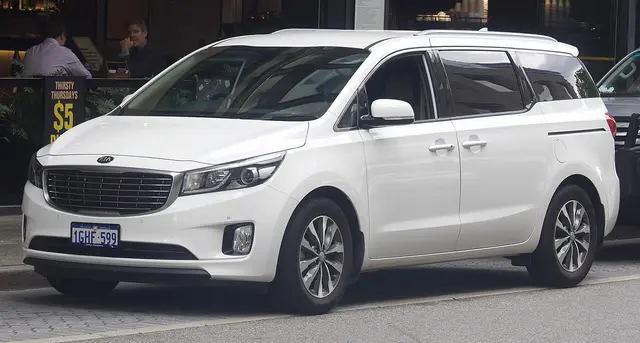
The official data lists 176 versions of the Ford Galaxy (2000 - 2026), in the European Union, the United Kingdom, and France. Each market publishes its own figures, measured on its own test procedure.
At a glance
Years in the data
2000 - 2026
Markets
European Union, United Kingdom, France
Engines
1.5 L to 2.8 L
Power
66 kW (90 PS) to 177 kW (241 PS)
Fuels
Hybrid, Diesel, Petrol, Flex fuel (E85)
Lowest consumption (United Kingdom)
5.0 L/100 km (NEDC)
Lowest consumption (France)
5.2 L/100 km (NEDC)
Lowest consumption (European Union)
6.0 L/100 km (WLTP)
New registrations in the EU
391,196
What is the Ford Galaxy?
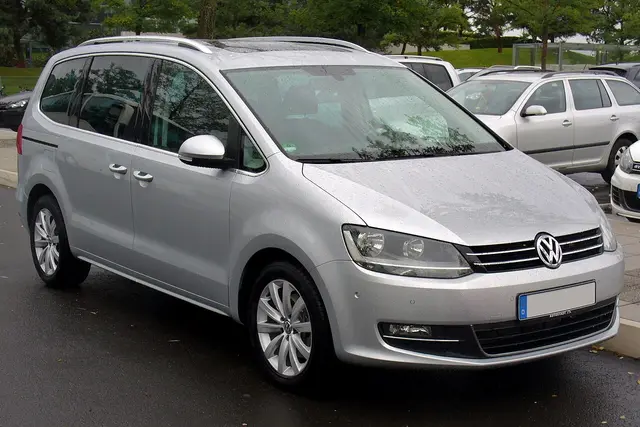
The Ford Galaxy is a large family MPV designed around passenger space and three rows of seating. It occupied the roomy end of Ford’s European car range, with a flexible cabin for people and luggage. Ford Motor Company was founded in 1903; the Galaxy brought the maker’s broad model range into the large people-carrier market.
The Galaxy name spans several generations. European Union registration years begin in 2010, while UK figures begin in 2000. The generations covered here are the second generation, II (2006-2015), and third generation, III (2015-2023). The third generation introduced a new model with the CD390 code, following the CD340-coded second generation.
Engines and power
In European Union registrations from 2010 to 2024, the Galaxy range covered engines from 1.5 L to 2.5 L and outputs from 85 kW (116 PS) to 177 kW (241 PS). It included hybrid, diesel, petrol, other and flex-fuel E85 versions. The 2.0 L diesel featured prominently in registration figures, with leading entries across different years and power ratings.
The UK range listed from 2000 to 2024 was broader in engine size and output: 1.5 L to 2.8 L and 66 kW (90 PS) to 177 kW (241 PS). France’s ADEME figures list 2.5 L engines and 85 kW (116 PS) to 149 kW (203 PS).
How economical is the Ford Galaxy?
The lowest listed European Union consumption was 6 L/100 km on the WLTP test. The UK’s lowest listed figure was 5 L/100 km on NEDC, and France’s was 5.2 L/100 km on NEDC. Test procedures differ: Europe has used NEDC and WLTP across different periods, while the USA uses EPA testing and Canada uses the 5-cycle test, so figures from different markets and cycles are not directly equivalent.
Official EU registration figures cover 59 versions from 2010 to 2024, with 391,196 registrations. The UK listing spans 129 versions from 2000 to 2024; France lists 13 versions for 2012-2026.
Where was the Ford Galaxy sold?
The Galaxy appears in European Union, UK and French market figures. It was a large passenger car in Ford’s European range, with a dedicated MPV body and space for a family and its luggage.
Questions and answers
Which Galaxy generations are listed?
The listed generations are Galaxy II (2006-2015) and Galaxy III (2015-2023).
What was the lowest listed Galaxy fuel consumption?
The European Union figure was 6 L/100 km on WLTP; the lowest UK and French figures were 5 and 5.2 L/100 km on NEDC, respectively.
Which engine type led Galaxy registrations in the EU?
The leading entries were 2.0 L diesels, including versions rated at 140 PS and 150 PS in different years.
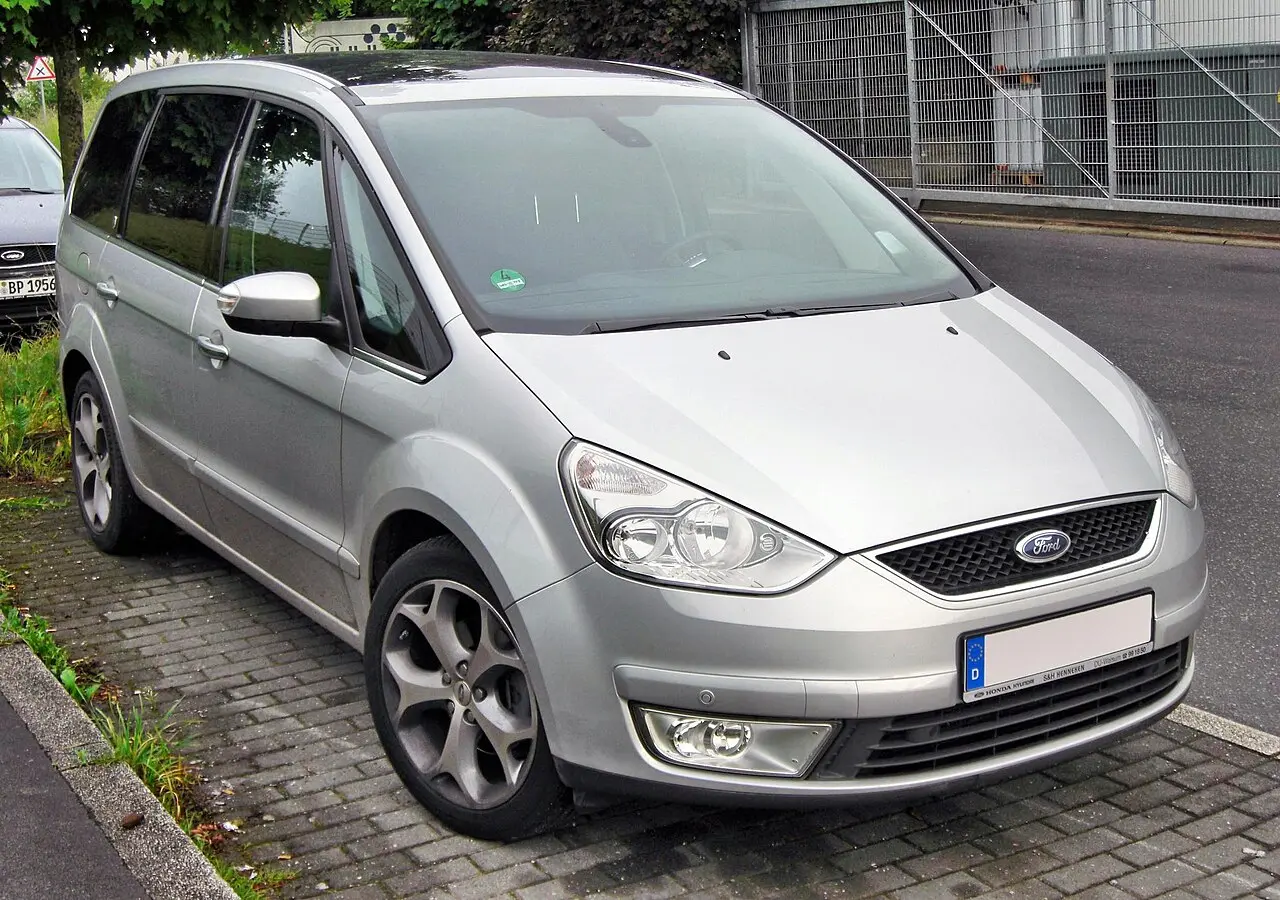
Model codes: CD340 · Sold in: European Union, United Kingdom, and France · References: adac.de, en.wikipedia.org
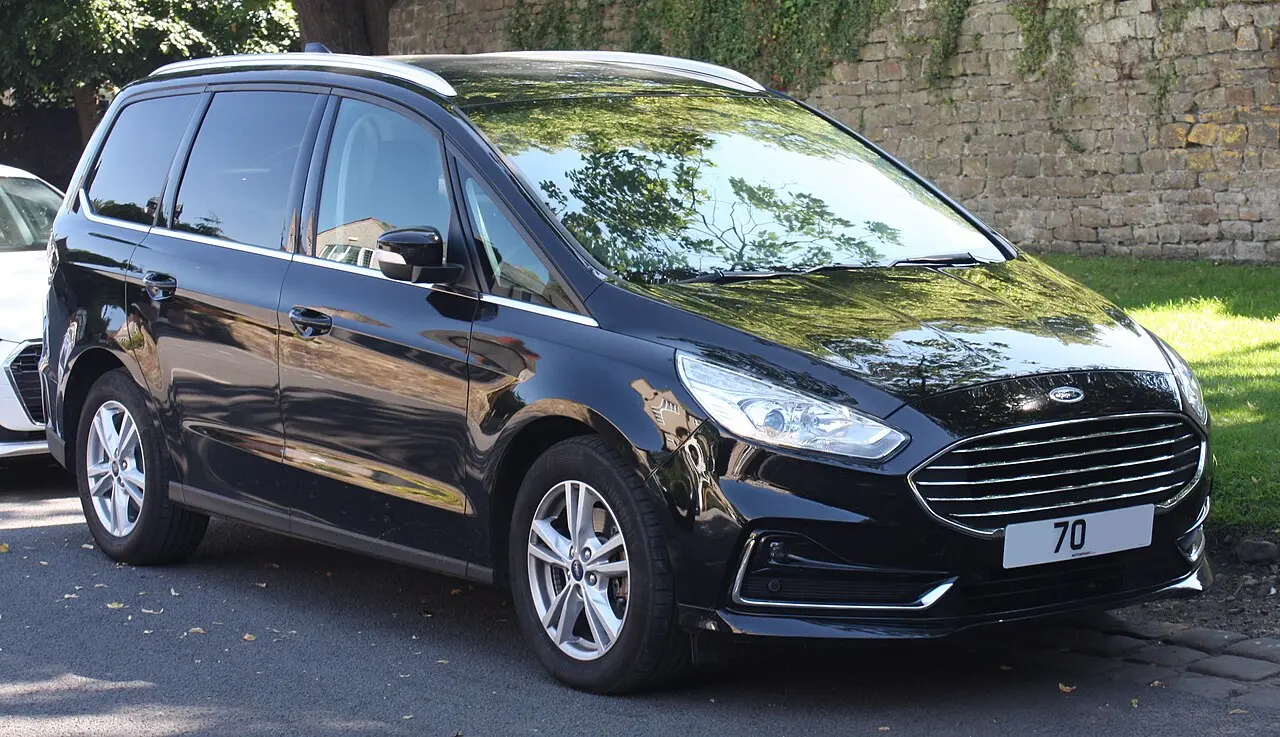
At a glance: Length 4,820 mm · Kerb weight 1,597 - 1,634 kg · Top speed 193 - 217 km/h · MOT first-time pass at 9 - 12 years: 70.8% (UK average 77.9%) Specifications, reliability and all versions
Model codes: CD390 · Sold in: European Union, United Kingdom, and France · References: adac.de
At a glance: Length 4,850 mm · Kerb weight 1,608 - 1,878 kg · Top speed 185 - 222 km/h · MOT first-time pass at 6 - 8 years: 87.7% (UK average 86.4%) Specifications, reliability and all versions
Show all 62 versions
European Union 19 versions
New cars registered in the EU (plus Norway and Iceland), from the European Environment Agency. Figures on the NEDC procedure until 2020 and on WLTP from 2021; versions are grouped by engine and power, with their number of registrations.
Years and version
Engine
Power
Fuel
Consumption (combined)
CO₂
EU registrations
2021 - 2023
2.0 L
110 kW (150 PS)
Diesel
6.1 - 6.3 L/100 km WLTP
165 - 168 g/km
4,907
2021 - 2023
2.5 L
110 kW (150 PS)
Hybrid
6.0 - 6.5 L/100 km WLTP
148 - 149 g/km
4,663
2021 - 2023
2.0 L
140 kW (190 PS)
Diesel
6.3 - 6.8 L/100 km WLTP
177 - 178 g/km
3,337
2021 - 2022
2.5 L
110 kW (150 PS)
Petrol
6.3 - 6.5 L/100 km WLTP
148 g/km
299
2022
2.0 L
110 kW (150 PS)
Hybrid
6.5 L/100 km WLTP
148 g/km
30
2018 - 2020
2.0 L
110 kW (150 PS)
Diesel
-
136 - 138 g/km
27,458
2018 - 2020
2.0 L
140 kW (190 PS)
Diesel
-
143 - 144 g/km
12,414
2018 - 2020
1.5 L
121 kW (165 PS)
Petrol
-
170 - 171 g/km
6,014
2018 - 2020
2.0 L
177 kW (241 PS)
Diesel
-
157 - 159 g/km
1,576
2018 - 2020
2.0 L
88 kW (120 PS)
Diesel
-
135 g/km
485
2019 - 2020
2.0 L
176 kW (239 PS)
Diesel
-
156 - 158 g/km
50
2016 - 2019
2.0 L
110 kW (150 PS)
Diesel
-
131 - 134 g/km
63,764
2016 - 2019
2.0 L
132 kW (179 PS)
Diesel
-
138 - 140 g/km
18,124
2016 - 2019
1.5 L
118 kW (160 PS)
Petrol
-
149 - 150 g/km
6,206
2017 - 2019
2.0 L
88 kW (120 PS)
Diesel
-
128 - 129 g/km
1,842
2016 - 2018
2.0 L
177 kW (241 PS)
Petrol
-
182 g/km
3,006
2016 - 2018
2.0 L
155 kW (211 PS)
Diesel
-
145 - 146 g/km
2,664
2016 - 2018
2.0 L
154 kW (209 PS)
Diesel
-
145 - 146 g/km
126
2016
2.0 L
103 kW (140 PS)
Diesel
-
146 g/km
36
United Kingdom 43 versions
New cars on sale in the UK, from the Vehicle Certification Agency. NEDC figures until 2018 and WLTP figures after; years are the editions a version appeared in.
Years and version
Engine
Power
Fuel
Gearbox
Consumption (combined)
CO₂
2020 - 20242.0 EcoBlue
2.0 L
110 kW (150 PS)
Diesel
6-speed manual
6.0 - 6.9 L/100 km WLTP
157 - 181 g/km
2020 - 20242.0 EcoBlue
2.0 L
110 kW (150 PS)
Diesel
8-speed automatic
6.4 - 7.2 L/100 km WLTP
168 - 187 g/km
2020 - 20242.0 EcoBlue
2.0 L
140 kW (190 PS)
Diesel
8-speed automatic
6.4 - 7.5 L/100 km WLTP
167 - 196 g/km
2021 - 20242.5 Duratec (FHEV)
2.5 L
140 kW (190 PS)
Hybrid
Continuously variable (CVT)
6.4 - 6.7 L/100 km WLTP
153 - 307 g/km
20201.5 EcoBoost
1.5 L
121 kW (165 PS)
Petrol
6-speed manual
8.3 - 9.0 L/100 km WLTP
188 - 206 g/km
20202.0 EcoBlue
2.0 L
88 kW (120 PS)
Diesel
6-speed manual
6.0 - 6.8 L/100 km WLTP
157 - 178 g/km
20202.0 EcoBlue
2.0 L
140 kW (190 PS)
Diesel
6-speed manual
6.0 - 6.8 L/100 km WLTP
157 - 178 g/km
20202.0 EcoBlue
2.0 L
177 kW (241 PS)
Diesel
8-speed automatic
6.5 - 7.0 L/100 km WLTP
170 - 184 g/km
20191.5 EcoBoost
1.5 L
121 kW (165 PS)
Petrol
6-speed manual
8.3 - 9.0 L/100 km WLTP
-
20192.0 EcoBlue
2.0 L
88 kW (120 PS)
Diesel
6-speed manual
6.0 - 6.8 L/100 km WLTP
-
20192.0 EcoBlue
2.0 L
110 kW (150 PS)
Diesel
8-speed automatic
6.4 - 7.0 L/100 km WLTP
-
20192.0 EcoBlue
2.0 L
110 kW (150 PS)
Diesel
6-speed manual
6.0 - 6.9 L/100 km WLTP
-
20192.0 EcoBlue
2.0 L
140 kW (190 PS)
Diesel
8-speed automatic
6.4 - 7.4 L/100 km WLTP
-
20192.0 EcoBlue
2.0 L
140 kW (190 PS)
Diesel
6-speed manual
6.0 - 6.8 L/100 km WLTP
-
20192.0 EcoBlue
2.0 L
177 kW (241 PS)
Diesel
8-speed automatic
6.5 - 7.0 L/100 km WLTP
-
2017 - 20181.5 EcoBoost SCTi (160PS) With Optional 18'' and 19'' Alloy Wheels
1.5 L
118 kW (160 PS)
Petrol
6-speed manual
6.7 L/100 km NEDC
154 g/km
20182.0 EcoBlue with 17" Tyres (120PS)
2.0 L
88 kW (120 PS)
Diesel
6-speed manual
5.1 L/100 km NEDC
135 g/km
20182.0 EcoBlue with 18" Tyres (120PS)
2.0 L
88 kW (120 PS)
Diesel
6-speed manual
5.2 L/100 km NEDC
138 g/km
20182.0 EcoBlue with 17" Tyres (150PS)
2.0 L
110 kW (150 PS)
Diesel
6-speed manual
5.1 L/100 km NEDC
133 g/km
20182.0 EcoBlue with 18" Tyres (150PS)
2.0 L
110 kW (150 PS)
Diesel
6-speed manual
5.3 - 5.9 L/100 km NEDC
139 - 159 g/km
20182.0 EcoBlue with 19" Tyres (150PS)
2.0 L
110 kW (150 PS)
Diesel
6-speed manual
5.1 L/100 km NEDC
135 g/km
20182.0 EcoBlue with 17" Tyres (150PS) · 2.0 EcoBlue with 19" Tyres (150PS)
2.0 L
110 kW (150 PS)
Diesel
6-speed manual
5.8 L/100 km NEDC
155 g/km
20182.0 EcoBlue with 17" Tyres (150PS)
2.0 L
110 kW (150 PS)
Diesel
8-speed automatic
5.3 L/100 km NEDC
140 g/km
20182.0 EcoBlue with 18" Tyres (150PS)
2.0 L
110 kW (150 PS)
Diesel
8-speed automatic
5.5 L/100 km NEDC
142 g/km
20182.0 EcoBlue with 19" Tyres (150PS)
2.0 L
110 kW (150 PS)
Diesel
8-speed automatic
5.4 L/100 km NEDC
140 g/km
20182.0 EcoBlue with 17" Tyres (190PS)
2.0 L
140 kW (190 PS)
Diesel
6-speed manual
5.1 L/100 km NEDC
133 g/km
20182.0 EcoBlue with 18" Tyres (190PS)
2.0 L
140 kW (190 PS)
Diesel
6-speed manual
5.3 L/100 km NEDC
139 g/km
20182.0 EcoBlue with 19" Tyres (190PS)
2.0 L
140 kW (190 PS)
Diesel
6-speed manual
5.1 L/100 km NEDC
135 g/km
20182.0 EcoBlue with 17" Tyres (190PS)
2.0 L
140 kW (190 PS)
Diesel
8-speed automatic
5.2 L/100 km NEDC
136 g/km
20182.0 EcoBlue with 18" Tyres (190PS)
2.0 L
140 kW (190 PS)
Diesel
8-speed automatic
5.5 - 6.2 L/100 km NEDC
143 - 162 g/km
20182.0 EcoBlue with 19" Tyres (190PS)
2.0 L
140 kW (190 PS)
Diesel
8-speed automatic
5.3 L/100 km NEDC
138 g/km
20182.0 EcoBlue with 17" Tyres (190PS) · 2.0 EcoBlue with 19" Tyres (190PS)
2.0 L
140 kW (190 PS)
Diesel
8-speed automatic
6.1 L/100 km NEDC
159 g/km
20182.0 EcoBlue with 17" Tyres (240PS) · 2.0 EcoBlue with 19" Tyres (240PS)
2.0 L
177 kW (241 PS)
Diesel
8-speed automatic
6.1 L/100 km NEDC
158 g/km
20182.0 EcoBlue with 18" Tyres (240PS)
2.0 L
177 kW (241 PS)
Diesel
8-speed automatic
6.1 L/100 km NEDC
160 g/km
2017 - 20182.0 Duratorq TDCi (120PS) With Optional 18'' and 19'' Alloy Wheels
2.0 L
88 kW (120 PS)
Diesel
6-speed manual
5.1 L/100 km NEDC
132 g/km
2016 - 20182.0 Duratorq TDCi (150PS)
2.0 L
110 kW (150 PS)
Diesel
-
5.2 L/100 km NEDC
134 g/km
2017 - 20182.0 Duratorq TDCi (150PS) With Opitional 18'' and 19'' Alloy Wheels
2.0 L
110 kW (150 PS)
Diesel
-
5.3 L/100 km NEDC
137 g/km
2017 - 20182.0 Duratorq TDCi (150PS) With Optional 18'' and 19'' Alloy Wheels
2.0 L
110 kW (150 PS)
Diesel
6-speed manual
5.1 - 5.5 L/100 km NEDC
132 - 143 g/km
2016 - 20182.0 Duratorq TDCi (180PS)
2.0 L
132 kW (179 PS)
Diesel
-
5.2 - 5.8 L/100 km NEDC
134 - 149 g/km
2017 - 20182.0 Duratorq TDCi (180PS) With Optional 18'' and 19'' Alloy Wheels
2.0 L
132 kW (179 PS)
Diesel
6-speed manual
5.1 L/100 km NEDC
132 g/km
2017 - 20182.0 Duratorq TDCi (180PS) With Optional 18'' and 19'' Alloy Wheels
2.0 L
132 kW (179 PS)
Diesel
-
5.3 - 5.9 L/100 km NEDC
137 - 152 g/km
2017 - 20182.0 Duratorq (210PS) Bi-Turbo With Optional 18'' and 19'' Alloy Wheels
2.0 L
155 kW (211 PS)
Diesel
-
5.6 L/100 km NEDC
147 g/km
2017 - 20182.0 EcoBoost SCTi (240PS) With Optional 18'' and 19'' Alloy Wheels
2.0 L
177 kW (241 PS)
Petrol
6-speed automatic
8.0 L/100 km NEDC
184 g/km
Versions outside these generations
Show all 46 versions
European Union 14 versions
New cars registered in the EU (plus Norway and Iceland), from the European Environment Agency. Figures on the NEDC procedure until 2020 and on WLTP from 2021; versions are grouped by engine and power, with their number of registrations.
Years and version
Engine
Power
Fuel
Consumption (combined)
CO₂
EU registrations
2024
2.5 L
110 kW (150 PS)
Hybrid
6.5 L/100 km WLTP
148 g/km
23
2015 - 2016
2.0 L
88 kW (120 PS)
Diesel
-
129 g/km
1,610
2015
2.0 L
103 kW (140 PS)
Diesel
-
145 g/km
10,764
2015
2.0 L
110 kW (150 PS)
Diesel
-
135 g/km
3,942
2015
2.0 L
132 kW (179 PS)
Diesel
-
141 g/km
2,300
2015
2.0 L
120 kW (163 PS)
Diesel
-
145 g/km
764
2015
1.6 L
85 kW (116 PS)
Diesel
-
139 g/km
758
2015
2.0 L
155 kW (211 PS)
Diesel
-
146 g/km
446
2015
2.0 L
100 kW (136 PS)
Diesel
-
141 g/km
318
2015
1.5 L
118 kW (160 PS)
Petrol
-
150 g/km
302
2015
1.6 L
118 kW (160 PS)
Petrol
-
167 g/km
298
2015
2.0 L
177 kW (241 PS)
Petrol
-
182 g/km
182
2015
2.2 L
147 kW (200 PS)
Diesel
-
187 g/km
96
2015
2.0 L
149 kW (203 PS)
Petrol
-
189 g/km
18
United Kingdom 31 versions
New cars on sale in the UK, from the Vehicle Certification Agency. NEDC figures until 2018 and WLTP figures after; years are the editions a version appeared in.
New cars on sale in France, from ADEME Car Labelling. NEDC figures until 2015, WLTP figures in the current catalogue.
Years and version
Engine
Fuel
Gearbox
Consumption (combined)
CO₂
2026GALAXY 2.5 Duratec (190ch) Hybrid eCVT
2.5 L
Hybrid
Continuously variable (CVT)
6.4 L/100 km WLTP
146 g/km
Ford Galaxy recalls
27 official safety recalls for the Ford Galaxy from NHTSA (United States), DVSA (United Kingdom) and the EU Safety Gate, newest first. Recall repairs are normally free at the maker’s dealers.
Emergency call system may lose functionality2021 - 2023
Rear-view camera may show a reduced view or stay on2019
Powertrain software update may not have installed correctly2021 - 2022
Official figures are measured on standard test procedures and differ between markets. Your consumption depends on how, where and in what conditions you drive.