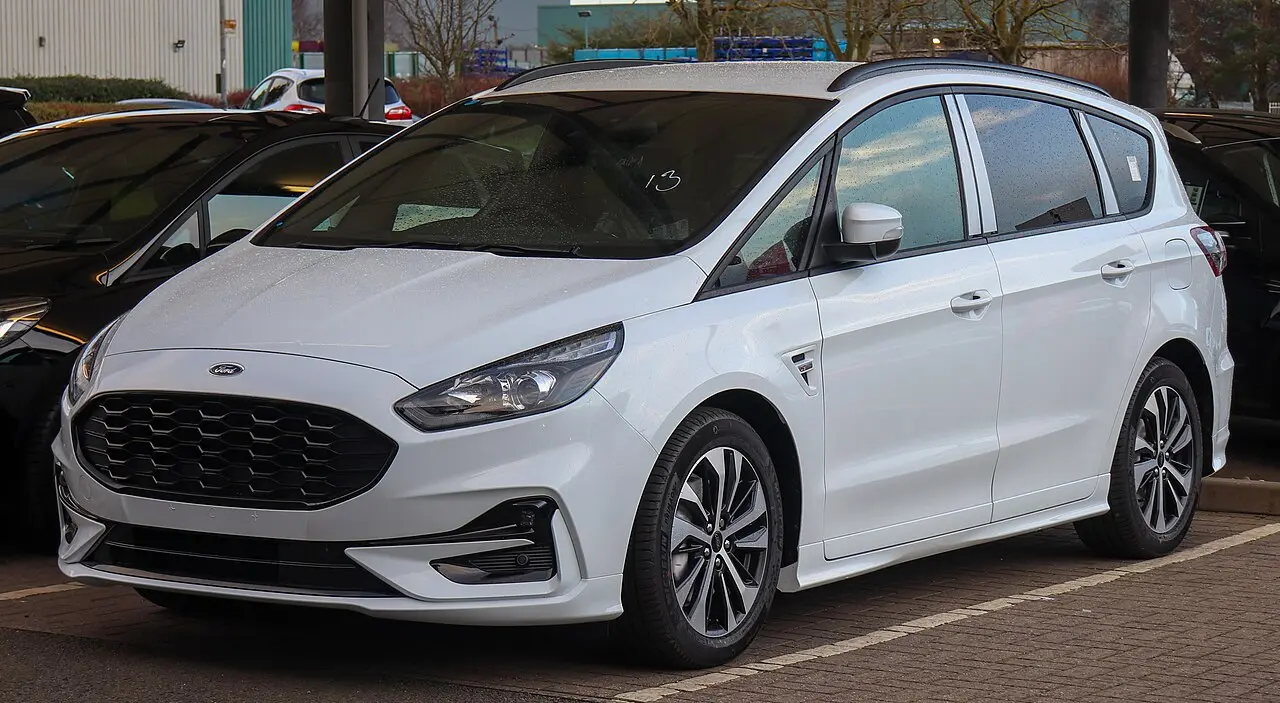
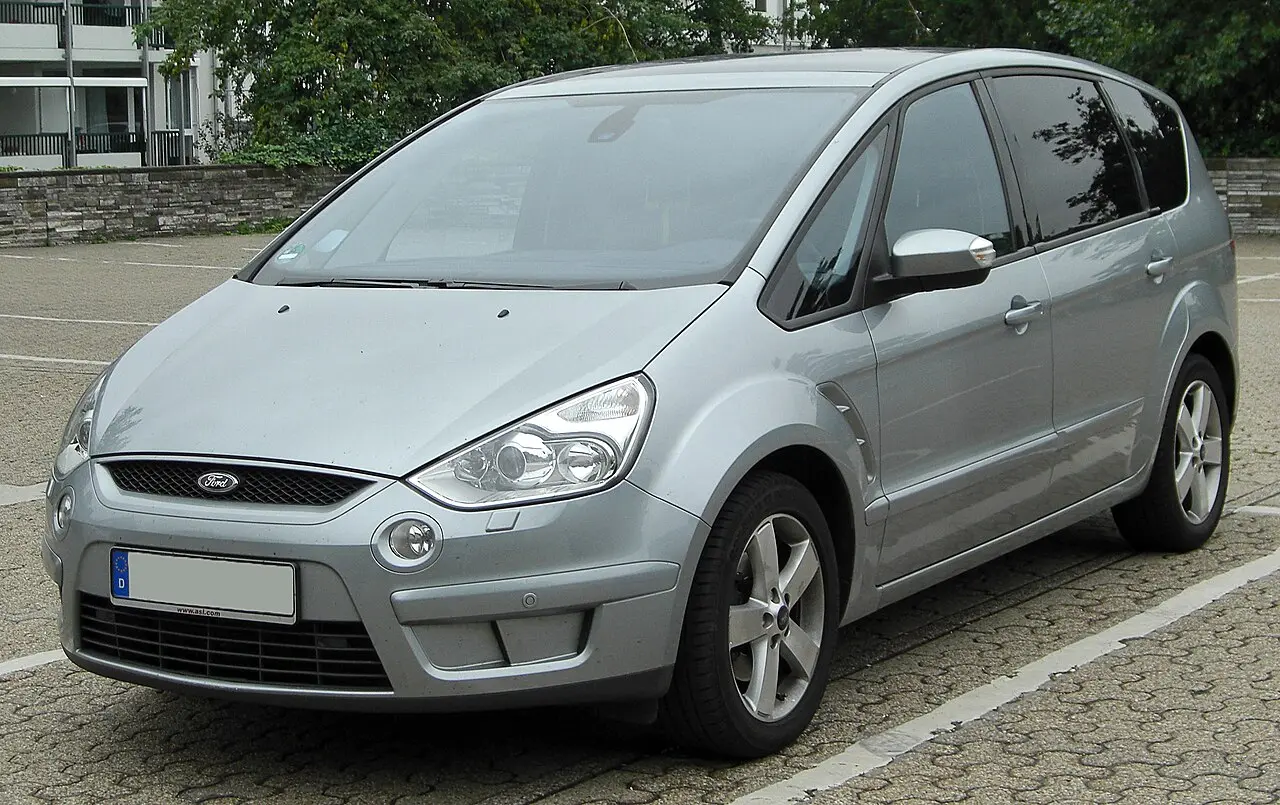
The official data lists 320 versions of the Ford S-Max (2006–2026), in the European Union, the United Kingdom, and France. Each market publishes its own figures, measured on its own test procedure.
At a glance
Years in the data
2006–2026
Markets
European Union, United Kingdom, France
Engines
1.5 L to 2.5 L
Power
85 kW (115 PS) to 190 kW (258 PS)
Fuels
Hybrid, Diesel, Petrol, Flex fuel (E85)
Lowest consumption (United Kingdom)
5.0 L/100 km (NEDC)
Lowest consumption (France)
5.2 L/100 km (NEDC)
Lowest consumption (European Union)
5.9 L/100 km (WLTP)
New registrations in the EU
663,238
What is the Ford S-MAX?
The S-MAX is a large family people carrier with a lower, sportier shape than a traditional MPV. Ford called it a Sports Activity Vehicle, reflecting its mix of passenger space and a more car-like design. It was created for families who need room for passengers and luggage while preferring a sleeker profile.
The original S-MAX established this approach. The second generation carried it forward with updated styling, technology and a flexible cabin, including folding second- and third-row seats.
Generations and engines
The first generation, code CD340, ran from 2006 to 2015. The second generation, code CD390, followed from 2015 to 2023. Both generations were sold in Europe, the UK and France.
EU figures cover engines from 1.5 to 2.5 litres, with power from 85 kW (116 PS) to 198 kW (269 PS). The UK range covers the same engine-size span and power from 85 kW (115 PS) to 190 kW (258 PS). Diesel featured prominently in EU registrations, while petrol and hybrid options also appear across the markets.
How economical is the Ford S-MAX?
The lowest listed EU figure is 5.9 L/100 km on WLTP. The UK minimum is 5 L/100 km on NEDC, and France’s is 5.2 L/100 km on NEDC. WLTP and NEDC are different European test procedures, so those figures are best considered within their own market.
A full hybrid joined the European S-MAX range, pairing a petrol engine with an electric motor. It can drive on electric power without needing to be plugged in, while retaining the model’s flexible family cabin.
Where was the S-MAX sold?
EU registration figures cover the S-MAX from 2010 to 2024, UK figures from 2006 to 2024, and French figures from 2012 to 2026. Ford developed the S-MAX as a European family vehicle, and both generations were offered across these markets.
Questions and answers
When did the S-MAX generations run?
The first generation ran from 2006 to 2015; the second ran from 2015 to 2023.
What is the S-MAX body style?
It is a large family people carrier that Ford described as a Sports Activity Vehicle.
What is the lowest listed EU fuel-consumption figure?
It is 5.9 L/100 km on the WLTP test.
Did the S-MAX have a hybrid version?
Yes. A petrol-electric full hybrid joined the European range.
Model codes: CD390 · Sold in: European Union, United Kingdom, and France · References: autocentrum.pl, media.ford.com
European Union 77 versions
New cars registered in the EU (plus Norway and Iceland), from the European Environment Agency. Figures on the NEDC procedure until 2020 and on WLTP from 2021; versions are grouped by engine and power, with their number of registrations.
Years and version
Engine
Power
Fuel
Consumption (combined)
CO₂
EU registrations
2023
2.5 L
110 kW (150 PS)
Hybrid
6.4 L/100 km WLTP
147 g/km
3,567
2023
2.0 L
140 kW (190 PS)
Diesel
6.4 L/100 km WLTP
169 g/km
136
2023
2.0 L
110 kW (150 PS)
Diesel
6.3 L/100 km WLTP
164 g/km
112
2023
2.5 L
150 kW (204 PS)
Hybrid
6.4 L/100 km WLTP
147 g/km
50
2022
2.5 L
110 kW (150 PS)
Hybrid
6.4 L/100 km WLTP
147 g/km
2,234
2022
2.0 L
140 kW (190 PS)
Diesel
6.4 L/100 km WLTP
170 g/km
1,943
2022
2.0 L
110 kW (150 PS)
Diesel
6.2 L/100 km WLTP
165 g/km
1,491
2022
2.5 L
110 kW (150 PS)
Petrol
6.0 L/100 km WLTP
147 g/km
650
2022
2.0 L
110 kW (150 PS)
Hybrid
6.4 L/100 km WLTP
147 g/km
121
2021
2.0 L
140 kW (190 PS)
Diesel
6.3 L/100 km WLTP
171 g/km
5,462
2021
2.0 L
110 kW (150 PS)
Diesel
6.0 L/100 km WLTP
164 g/km
4,880
2021
2.5 L
110 kW (150 PS)
Hybrid
5.9 L/100 km WLTP
148 g/km
2,167
2021
2.5 L
110 kW (150 PS)
Petrol
6.4 L/100 km WLTP
148 g/km
89
2021
2.0 L
177 kW (241 PS)
Diesel
6.4 L/100 km WLTP
172 g/km
14
2020
2.0 L
140 kW (190 PS)
Diesel
–
139 g/km
14,392
2020
2.0 L
110 kW (150 PS)
Diesel
–
136 g/km
8,758
2020
1.5 L
121 kW (165 PS)
Petrol
–
169 g/km
1,728
2020
2.0 L
177 kW (241 PS)
Diesel
–
153 g/km
1,174
2020
2.0 L
176 kW (239 PS)
Diesel
–
152 g/km
56
2020
2.0 L
88 kW (120 PS)
Diesel
–
134 g/km
16
2019
2.0 L
140 kW (190 PS)
Diesel
–
140 g/km
19,168
2019
2.0 L
110 kW (150 PS)
Diesel
–
137 g/km
13,408
2019
1.5 L
121 kW (165 PS)
Petrol
–
170 g/km
10,102
2017–2019
2.0 L
155 kW (211 PS)
Diesel
–
144 g/km
3,730
2019
2.0 L
177 kW (241 PS)
Diesel
–
155 g/km
2,408
2019
2.0 L
110 kW (150 PS)
Diesel
–
130 g/km
402
2019
2.0 L
88 kW (120 PS)
Diesel
–
134 g/km
386
2019
2.0 L
132 kW (179 PS)
Diesel
–
139 g/km
220
2019
2.0 L
176 kW (239 PS)
Diesel
–
154 g/km
128
2019
1.5 L
118 kW (160 PS)
Petrol
–
149 g/km
40
2018
2.0 L
110 kW (150 PS)
Diesel
–
130 g/km
13,458
2018
2.0 L
140 kW (190 PS)
Diesel
–
142 g/km
7,052
2018
2.0 L
132 kW (179 PS)
Diesel
–
135 g/km
5,946
2018
2.0 L
110 kW (150 PS)
Diesel
–
138 g/km
5,368
2018
1.5 L
118 kW (160 PS)
Petrol
–
149 g/km
5,006
2018
2.0 L
177 kW (241 PS)
Petrol
–
180 g/km
2,930
2018
2.0 L
177 kW (241 PS)
Diesel
–
155 g/km
664
2018
2.0 L
88 kW (120 PS)
Diesel
–
129 g/km
312
2018
2.0 L
88 kW (120 PS)
Diesel
–
134 g/km
156
2018
2.0 L
154 kW (209 PS)
Diesel
–
144 g/km
148
2018
1.5 L
121 kW (165 PS)
Petrol
–
170 g/km
122
2018
2.0 L
176 kW (239 PS)
Diesel
–
154 g/km
26
2018
1.5 L
124 kW (169 PS)
Petrol
–
172 g/km
22
2017
2.0 L
110 kW (150 PS)
Diesel
–
130 g/km
29,442
2017
2.0 L
132 kW (179 PS)
Diesel
–
134 g/km
14,696
2017
1.5 L
118 kW (160 PS)
Petrol
–
149 g/km
5,530
2017
2.0 L
177 kW (241 PS)
Petrol
–
180 g/km
3,486
2015–2017
2.0 L
88 kW (120 PS)
Diesel
–
129 g/km
2,662
2017
2.0 L
110 kW (150 PS)
Other fuel
–
133 g/km
1,498
2015–2017
2.0 L
154 kW (209 PS)
Diesel
–
144 g/km
598
2017
2.0 L
198 kW (269 PS)
Diesel
–
139 g/km
538
2017
2.0 L
165 kW (224 PS)
Diesel
–
130 g/km
334
2017
1.5 L
177 kW (241 PS)
Petrol
–
149 g/km
122
2017
1.5 L
177 kW (241 PS)
Diesel
–
149 g/km
106
2017
2.0 L
266 kW (362 PS)
Petrol
–
180 g/km
96
2017
2.0 L
232 kW (315 PS)
Diesel
–
144 g/km
76
2016
2.0 L
110 kW (150 PS)
Diesel
–
133 g/km
43,774
2016
2.0 L
132 kW (179 PS)
Diesel
–
138 g/km
19,302
2016
1.5 L
118 kW (160 PS)
Petrol
–
149 g/km
5,304
2016
2.0 L
155 kW (211 PS)
Diesel
–
144 g/km
3,268
2016
2.0 L
177 kW (241 PS)
Petrol
–
181 g/km
2,866
2015–2016
1.6 L
85 kW (116 PS)
Diesel
–
139 g/km
1,144
2016
2.0 L
120 kW (163 PS)
Diesel
–
139 g/km
28
2016
2.0 L
103 kW (140 PS)
Diesel
–
147 g/km
20
2016
2.0 L
110 kW (150 PS)
Petrol
–
129 g/km
10
2015
2.0 L
110 kW (150 PS)
Diesel
–
135 g/km
16,674
2015
2.0 L
132 kW (179 PS)
Diesel
–
140 g/km
4,710
2015
2.0 L
103 kW (140 PS)
Diesel
–
145 g/km
3,548
2015
2.0 L
120 kW (163 PS)
Diesel
–
145 g/km
2,602
2015
2.0 L
155 kW (211 PS)
Diesel
–
144 g/km
1,030
2015
1.5 L
118 kW (160 PS)
Petrol
–
149 g/km
1,024
2015
2.0 L
177 kW (241 PS)
Petrol
–
180 g/km
864
2015
1.6 L
118 kW (160 PS)
Petrol
–
160 g/km
642
2015
2.0 L
100 kW (136 PS)
Diesel
–
142 g/km
468
2015
2.2 L
147 kW (200 PS)
Diesel
–
180 g/km
366
2015
2.0 L
149 kW (203 PS)
Petrol
–
189 g/km
42
2015
2.0 L
176 kW (239 PS)
Petrol
–
192 g/km
18
United Kingdom 78 versions
New cars on sale in the UK, from the Vehicle Certification Agency. NEDC figures until 2018 and WLTP figures after; years are the editions a version appeared in.
Years and version
Engine
Power
Fuel
Gearbox
Consumption (combined)
CO₂
2020–20232.0 EcoBlue
2.0 L
110 kW (150 PS)
Diesel
8-speed automatic
6.4 L/100 km WLTP
168 g/km
2020–20232.0 EcoBlue
2.0 L
110 kW (150 PS)
Diesel
8-speed automatic
7.2 L/100 km WLTP
187 g/km
2020–20232.0 EcoBlue
2.0 L
110 kW (150 PS)
Diesel
6-speed manual
6.0 L/100 km WLTP
157 g/km
2020–20232.0 EcoBlue
2.0 L
110 kW (150 PS)
Diesel
6-speed manual
6.7 L/100 km WLTP
177 g/km
2020–20232.0 EcoBlue
2.0 L
140 kW (190 PS)
Diesel
8-speed automatic
6.4 L/100 km WLTP
167 g/km
2020–20232.0 EcoBlue
2.0 L
140 kW (190 PS)
Diesel
8-speed automatic
7.2 L/100 km WLTP
188 g/km
2020–20232.0 EcoBlue
2.0 L
140 kW (190 PS)
Diesel
8-speed automatic
6.5 L/100 km WLTP
171 g/km
2020–20232.0 EcoBlue
2.0 L
140 kW (190 PS)
Diesel
8-speed automatic
7.5 L/100 km WLTP
196 g/km
2021–20232.5 Duratec (FHEV)
2.5 L
140 kW (190 PS)
Hybrid
Continuously variable (CVT)
6.4 L/100 km WLTP
146 g/km
2021–20232.5 Duratec (FHEV)
2.5 L
140 kW (190 PS)
Hybrid
Continuously variable (CVT)
6.7 L/100 km WLTP
153 g/km
2020–20212.0 EcoBlue
2.0 L
110 kW (150 PS)
Diesel
8-speed automatic
6.4 L/100 km WLTP
169 g/km
2020–20212.0 EcoBlue
2.0 L
110 kW (150 PS)
Diesel
6-speed manual
6.8 L/100 km WLTP
178 g/km
20212.0 EcoBlue
2.0 L
110 kW (150 PS)
Diesel
8-speed automatic
7.0 L/100 km WLTP
184 g/km
2020–20212.0 EcoBlue
2.0 L
140 kW (190 PS)
Diesel
8-speed automatic
6.4 L/100 km WLTP
169 g/km
2020–20212.0 EcoBlue
2.0 L
140 kW (190 PS)
Diesel
8-speed automatic
7.0 L/100 km WLTP
184 g/km
2020–20212.0 EcoBlue
2.0 L
140 kW (190 PS)
Diesel
8-speed automatic
6.8 L/100 km WLTP
178 g/km
2020–20212.0 EcoBlue
2.0 L
140 kW (190 PS)
Diesel
8-speed automatic
7.4 L/100 km WLTP
195 g/km
20191.5 EcoBoost
1.5 L
121 kW (165 PS)
Petrol
6-speed manual
8.3 L/100 km WLTP
–
20191.5 EcoBoost
1.5 L
121 kW (165 PS)
Petrol
6-speed manual
9.0 L/100 km WLTP
–
20192.0 EcoBlue
2.0 L
88 kW (120 PS)
Diesel
6-speed manual
6.0 L/100 km WLTP
–
20192.0 EcoBlue
2.0 L
88 kW (120 PS)
Diesel
6-speed manual
6.8 L/100 km WLTP
–
20192.0 EcoBlue
2.0 L
110 kW (150 PS)
Diesel
8-speed automatic
6.4 L/100 km WLTP
–
20192.0 EcoBlue
2.0 L
110 kW (150 PS)
Diesel
8-speed automatic
7.0 L/100 km WLTP
–
20192.0 EcoBlue
2.0 L
110 kW (150 PS)
Diesel
6-speed manual
6.8 L/100 km WLTP
–
20192.0 EcoBlue
2.0 L
110 kW (150 PS)
Diesel
6-speed manual
6.0 L/100 km WLTP
–
20192.0 EcoBlue
2.0 L
110 kW (150 PS)
Diesel
6-speed manual
6.3 L/100 km WLTP
–
20192.0 EcoBlue
2.0 L
110 kW (150 PS)
Diesel
6-speed manual
6.9 L/100 km WLTP
–
20192.0 EcoBlue
2.0 L
140 kW (190 PS)
Diesel
8-speed automatic
6.4 L/100 km WLTP
–
20192.0 EcoBlue
2.0 L
140 kW (190 PS)
Diesel
8-speed automatic
7.0 L/100 km WLTP
–
20192.0 EcoBlue
2.0 L
140 kW (190 PS)
Diesel
8-speed automatic
7.4 L/100 km WLTP
–
20192.0 EcoBlue
2.0 L
140 kW (190 PS)
Diesel
8-speed automatic
6.8 L/100 km WLTP
–
20192.0 EcoBlue
2.0 L
140 kW (190 PS)
Diesel
6-speed manual
6.8 L/100 km WLTP
–
20192.0 EcoBlue
2.0 L
140 kW (190 PS)
Diesel
6-speed manual
6.0 L/100 km WLTP
–
20192.0 EcoBlue
2.0 L
177 kW (241 PS)
Diesel
8-speed automatic
6.5 L/100 km WLTP
–
20192.0 EcoBlue
2.0 L
177 kW (241 PS)
Diesel
8-speed automatic
7.0 L/100 km WLTP
–
2015–20181.5 EcoBoost SCTi (160PS)
1.5 L
118 kW (160 PS)
Petrol
6-speed manual
6.5 L/100 km NEDC
149 g/km
20182.0 EcoBlue with 17" Tyres (120PS)
2.0 L
88 kW (120 PS)
Diesel
6-speed manual
5.1 L/100 km NEDC
134 g/km
20182.0 EcoBlue with 17" Tyres (150PS)
2.0 L
110 kW (150 PS)
Diesel
6-speed manual
5.0 L/100 km NEDC
132 g/km
20182.0 EcoBlue with 17" Tyres (150PS) · 2.0 EcoBlue with 19" Tyres (150PS)
New cars on sale in France, from ADEME Car Labelling. NEDC figures until 2015, WLTP figures in the current catalogue.
Years and version
Engine
Power
Fuel
Gearbox
Consumption (combined)
CO₂
2015S-MAX 1600 TDCi S&S (115ch) FAP
–
85 kW (116 PS)
Diesel
6-speed manual
5.2 L/100 km NEDC
139 g/km
2015S-MAX 2000 TDCi (140ch) FAP
–
103 kW (140 PS)
Diesel
6-speed manual
5.3 L/100 km NEDC
139 g/km
2015S-MAX 2000 TDCi (140ch) FAP PowerShift
–
103 kW (140 PS)
Diesel
6-speed automatic
5.7 L/100 km NEDC
149 g/km
2015S-MAX 1600 EcoBoost S&S (160ch)
–
118 kW (160 PS)
Petrol
6-speed manual
6.8 L/100 km NEDC
159 g/km
2015S-MAX 2000 TDCi (163ch) FAP
–
120 kW (163 PS)
Diesel
6-speed manual
5.3 L/100 km NEDC
139 g/km
2015S-MAX 2000 TDCi (163ch) FAP PowerShift
–
120 kW (163 PS)
Diesel
6-speed automatic
5.7 L/100 km NEDC
149 g/km
Versions outside these generations
European Union 2 versions
New cars registered in the EU (plus Norway and Iceland), from the European Environment Agency. Figures on the NEDC procedure until 2020 and on WLTP from 2021; versions are grouped by engine and power, with their number of registrations.
Years and version
Engine
Power
Fuel
Consumption (combined)
CO₂
EU registrations
2024
2.5 L
110 kW (150 PS)
Hybrid
6.4 L/100 km WLTP
147 g/km
88
2024
2.5 L
168 kW (228 PS)
Hybrid
6.4 L/100 km WLTP
148 g/km
10
United Kingdom 10 versions
New cars on sale in the UK, from the Vehicle Certification Agency. NEDC figures until 2018 and WLTP figures after; years are the editions a version appeared in.
Years and version
Engine
Power
Fuel
Gearbox
Consumption (combined)
CO₂
20242.0 EcoBlue
2.0 L
150 kW (204 PS)
Diesel
6-speed manual
6.0 L/100 km WLTP
157 g/km
20242.0 EcoBlue
2.0 L
150 kW (204 PS)
Diesel
8-speed automatic
6.4 L/100 km WLTP
168 g/km
20242.0 EcoBlue
2.0 L
150 kW (204 PS)
Diesel
6-speed manual
6.7 L/100 km WLTP
177 g/km
20242.0 EcoBlue
2.0 L
150 kW (204 PS)
Diesel
8-speed automatic
7.2 L/100 km WLTP
187 g/km
20242.0 EcoBlue
2.0 L
190 kW (258 PS)
Diesel
8-speed automatic
6.4 L/100 km WLTP
167 g/km
20242.0 EcoBlue
2.0 L
190 kW (258 PS)
Diesel
8-speed automatic
6.5 L/100 km WLTP
171 g/km
20242.0 EcoBlue
2.0 L
190 kW (258 PS)
Diesel
8-speed automatic
7.2 L/100 km WLTP
188 g/km
20242.0 EcoBlue
2.0 L
190 kW (258 PS)
Diesel
8-speed automatic
7.5 L/100 km WLTP
196 g/km
20242.5 Duratec (FHEV)
2.5 L
190 kW (258 PS)
Hybrid
Continuously variable (CVT)
6.4 L/100 km WLTP
146 g/km
20242.5 Duratec (FHEV)
2.5 L
190 kW (258 PS)
Hybrid
Continuously variable (CVT)
6.7 L/100 km WLTP
153 g/km
France 1 version
New cars on sale in France, from ADEME Car Labelling. NEDC figures until 2015, WLTP figures in the current catalogue.
Years and version
Engine
Power
Fuel
Gearbox
Consumption (combined)
CO₂
2026S-MAX 2.5 Duratec (190ch) Hybrid eCVT
2.5 L
110 kW (150 PS)
Hybrid
Continuously variable (CVT)
6.4 L/100 km WLTP
146 g/km
Official figures are measured on standard test procedures and differ between markets. Your consumption depends on how, where and in what conditions you drive.