
Kia

Kia Sedona

Kia Sedona
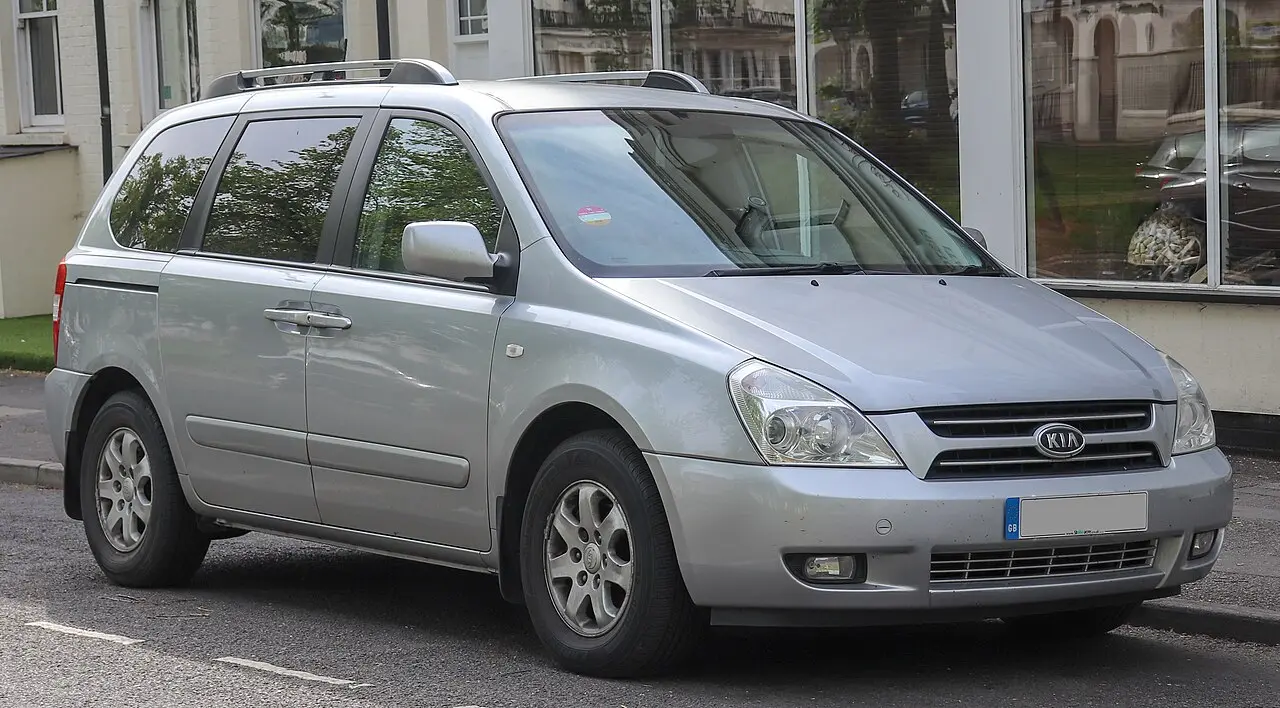
Photo: EurovisionNim / Wikimedia Commons · CC BY-SA 4.0

The official data lists 59 versions of the Kia Sedona (2000–2021), in the European Union, the United Kingdom, the United States, and Canada. Each market publishes its own figures, measured on its own test procedure.

At a glance

Years in the data
2000–2021
Markets
European Union, United Kingdom, United States, Canada
Engines
2.2 L to 3.8 L
Power
143 kW (194 PS)
Fuels
Diesel, Petrol
Lowest consumption (United Kingdom)
6.7 L/100 km (NEDC)
Lowest consumption (United States)
11.2 L/100 km (EPA)
Lowest consumption (Canada)
11.4 L/100 km (5-cycle)
New registrations in the EU
4,835

What is the Kia Sedona?

The Kia Sedona is a minivan, also known as a people carrier, built around passenger space. Kia used the Sedona name in North America; the same model is known as the Carnival in many other markets.

The name spans different market timelines. UK figures cover 2000–2012, EU registrations cover 2010–2012, and US and Canadian figures run from 2002 to 2021.

Generations and engines

The second-generation Sedona, code VQ, ran from 2006 to 2014. In the United States and Canada, the third generation, code YP, followed from 2015 to 2021.

Engine choices varied by market. UK and EU versions used diesel or petrol engines from 2.2 L to 2.9 L; EU power reached 143 kW (194 PS). In the US and Canada, the listed versions were petrol powered, with engines from 3.3 L to 3.8 L.

Fuel consumption and where it was sold

The lowest listed UK consumption is 6.7 L/100 km on the NEDC test. In the United States, the EPA figure is 11.2 L/100 km, or 21 MPG combined. Canada’s lowest listed figure is 11.4 L/100 km under the NRCan 5-cycle test. WLTP and NEDC procedures in Europe, EPA testing in the US, and Canada’s 5-cycle procedure differ, so these results are best considered within their own markets. EU registration figures record 4,835 Sedonas in 2010–2012. The leading listed version was the 2.2 L diesel with 143 kW (194 PS), which had 2,349 registrations in 2011–2012.

The Sedona appeared in UK, EU, US and Canadian figures. Its name and engine choices varied by region, while its role remained that of a large passenger-carrying Kia.

Questions and answers

What type of car is the Kia Sedona?

It is a minivan, also known as a people carrier, designed around passenger space.

What generations of Sedona are listed?

The second generation (VQ) ran from 2006 to 2014, followed by the third generation (YP) in the United States and Canada from 2015 to 2021.

What is the Sedona’s lowest listed fuel consumption?

The lowest listed figure is 6.7 L/100 km on the UK NEDC test. US EPA and Canadian 5-cycle figures use different procedures.

Was the Sedona sold with diesel engines?

Yes. UK and EU versions included diesel and petrol engines; the listed US and Canadian versions were petrol powered.
Sedona second generation (2006–2014)

Kia Sedona second generation
Photo: Vauxford / Wikimedia Commons · CC BY-SA 4.0

Model codes: VQ · References: en.wikipedia.org, cars.com

Show all 26 versions

Sedona third generation (2015–2021)

Kia Sedona third generation
Photo: EurovisionNim / Wikimedia Commons · CC BY-SA 4.0

Model codes: YP · Sold in: United States and Canada · References: en.wikipedia.org, cars.com

United States 5 versions

Model years sold in the USA, from the EPA and the Department of Energy (fueleconomy.gov). MPG on the EPA test; litres per 100 km = 235.215 ÷ MPG.

Years and versionEngineFuelGearboxDriveConsumption (combined)CO₂
2020–2021SIDI3.3 LPetrol8-speed automaticFront-wheel drive21 MPG (11.2 L/100 km) EPA271 g/km
2019SIDI3.3 LPetrol8-speed automaticFront-wheel drive21 MPG (11.2 L/100 km) EPA272 g/km
2015–2018SIDI3.3 LPetrol6-speed automaticFront-wheel drive20 MPG (11.8 L/100 km) EPA275 g/km
2015–2018SIDI3.3 LPetrol6-speed automaticFront-wheel drive21 MPG (11.2 L/100 km) EPA269 g/km
2015–2018SIDI3.3 LPetrol6-speed automaticFront-wheel drive19 MPG (12.4 L/100 km) EPA296 g/km

Canada 10 versions

Model years sold in Canada, from Natural Resources Canada fuel consumption ratings (5-cycle test).

Years and versionEngineFuelGearboxConsumption (combined)CO₂
2021Minivan3.3 LPetrol8-speed automatic11.5 L/100 km 5-cycle272 g/km
2020Minivan3.3 LPetrol8-speed automatic11.5 L/100 km 5-cycle271 g/km
2019Minivan3.3 LPetrol8-speed automatic11.5 L/100 km 5-cycle272 g/km
2016–2018Minivan3.3 LPetrol6-speed automatic11.6 L/100 km 5-cycle275 g/km
2016–2018Minivan3.3 LPetrol6-speed automatic11.4 L/100 km 5-cycle269 g/km
2017–2018Minivan3.3 LPetrol6-speed automatic12.5 L/100 km 5-cycle296 g/km
2016Minivan3.3 LPetrol6-speed automatic12.5 L/100 km 5-cycle296 g/km
2015Minivan3.3 LPetrol6-speed automatic11.6 L/100 km 5-cycle267 g/km
2015Minivan3.3 LPetrol6-speed automatic11.4 L/100 km 5-cycle262 g/km
2015Minivan3.3 LPetrol6-speed automatic12.5 L/100 km 5-cycle288 g/km

Versions outside these generations

United Kingdom 11 versions

New cars on sale in the UK, from the Vehicle Certification Agency. NEDC figures until 2018 and WLTP figures after; years are the editions a version appeared in.

Years and versionEngineFuelGearboxConsumption (combined)CO₂
2002–20042.5 V6 · 2.52.5 LPetrol5-speed manual11.0 L/100 km NEDC261 g/km
2002–20042.5 V6 · 2.52.5 LPetrol4-speed automatic12.4 L/100 km NEDC293 g/km
20042.92.9 LDiesel5-speed manual7.8 L/100 km NEDC208 g/km
20042.92.9 LDiesel4-speed automatic8.5 L/100 km NEDC226 g/km
2002–20032.9 CRDi · 2.92.9 LDiesel5-speed manual8.2 L/100 km NEDC217 g/km
20032.92.9 LDiesel4-speed automatic8.8 L/100 km NEDC235 g/km
20022.9 CRDi2.9 LDiesel4-speed automatic8.8 L/100 km NEDC235 g/km
2000–20012.5 V6 S/SX/GSX/Executive · 2.5 V62.5 LPetrol5-speed manual11.3 L/100 km NEDC265 g/km
2000–20012.5 V6 S/SX/GSX/Executive · 2.5 V62.5 LPetrol4-speed automatic11.5 L/100 km NEDC269 g/km
2000–20012.9 TDI S/SX/GSX/Executive · 2.9 TDI2.9 LDiesel5-speed manual8.3 L/100 km NEDC222 g/km
2000–20012.9 TDI S/SX/GSX/Executive · 2.9 TDI2.9 LDiesel4-speed automatic9.1 L/100 km NEDC240 g/km

United States 3 versions

Model years sold in the USA, from the EPA and the Department of Energy (fueleconomy.gov). MPG on the EPA test; litres per 100 km = 235.215 ÷ MPG.

Years and versionEngineFuelGearboxDriveConsumption (combined)CO₂
2005CLKUP3.5 LPetrol5-speed automaticFront-wheel drive17 MPG (13.8 L/100 km) EPA325 g/km
2004CLKUP3.5 LPetrol5-speed automaticFront-wheel drive16 MPG (14.7 L/100 km) EPA345 g/km
2002–20032MODE CLKUP3.5 LPetrol5-speed automaticFront-wheel drive16 MPG (14.7 L/100 km) EPA345 g/km

Canada 4 versions

Model years sold in Canada, from Natural Resources Canada fuel consumption ratings (5-cycle test).

Years and versionEngineFuelGearboxConsumption (combined)CO₂
2005Minivan3.5 LPetrol5-speed automatic14.2 L/100 km 5-cycle327 g/km
2004Minivan3.5 LPetrol5-speed automatic14.3 L/100 km 5-cycle329 g/km
2003Minivan3.5 LPetrol5-speed automatic15.2 L/100 km 5-cycle350 g/km
2002Minivan3.5 LPetrol5-speed automatic15.3 L/100 km 5-cycle352 g/km

Official figures are measured on standard test procedures and differ between markets. Your consumption depends on how, where and in what conditions you drive.