

Fisker Karma first generation
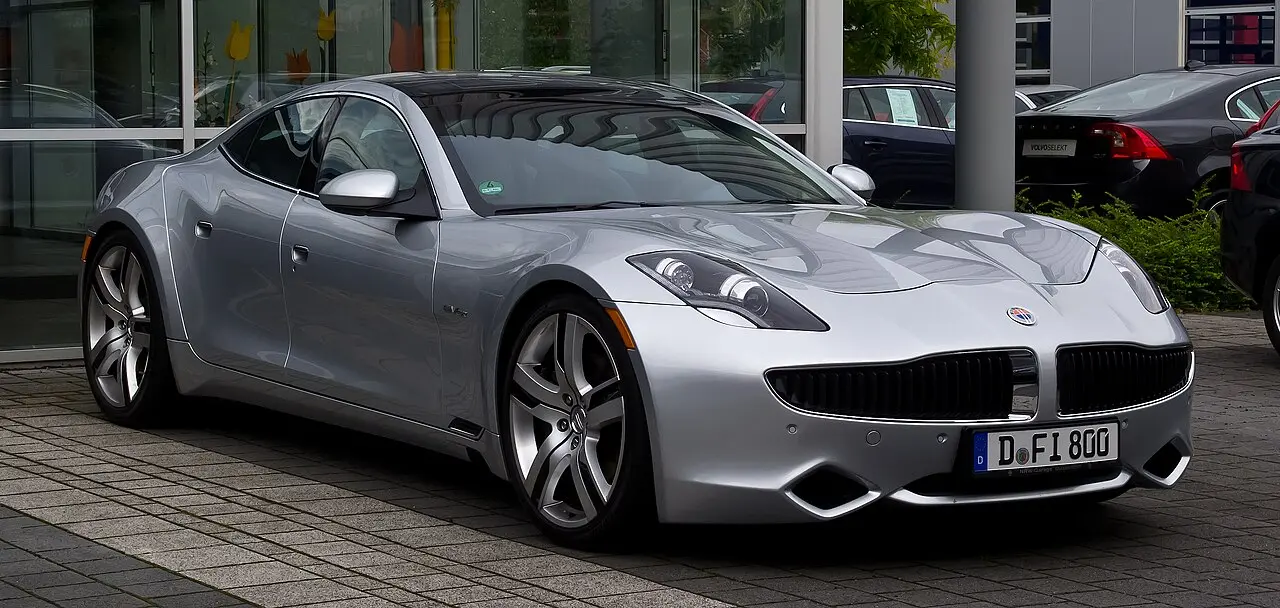
The Fisker Karma first generation (2012–2013): dimensions, weights, reliability and the official figures of its 6 versions in the European Union and the United States.
Dimensions, weights and capacity
| Specification | Europe | North America | Wikipedia |
|---|---|---|---|
| Dimensions | |||
| Length | 5,000 mm RDW | 5,000 mm TC | 4,970 mm |
| Width | 1,990 mm RDW | 1,980 mm TC | 1,984 mm |
| Height | 1,330 mm RDW | 1,330 mm TC | 1,310 mm |
| Wheelbase | 3,160 mm RDW | 3,160 mm TC | 3,160 mm |
| Front track | – | 1,690 mm TC | – |
| Rear track | – | 1,700 mm TC | – |
| Weights and towing | |||
| Kerb weight | 2,405 kg RDW | 2,404 kg TC | 2,011–2,495 kg |
| Mass in running order | 2,505 kg RDW | – | – |
| Gross vehicle weight | 2,767 kg RDW | – | – |
| Seats and space | |||
| Seats | 4 RDW | – | – |
| Doors | 4 RDW | – | – |
| Boot space | – | – | 195 L |
| Luggage space (EPA) | – | 198 L EPA | – |
| Passenger space (EPA) | – | 2,520 L EPA | – |
| Fuel tank | – | – | 40 L |
| Performance | |||
| Top speed | 200 km/h RDW | – | – |
| Torque | – | – | 1,300 Nm |
| Electric | |||
| Battery capacity (usable) | – | – | 20.1 kWh |
| Charging time at 240 V | – | 6.0 h EPA | – |
Tyre sizes (most common first): 245/40R21, 255/35R22, 265/40R21, 285/35R22
Ranges cover the generation’s versions and body styles; European and North American versions can differ. Sources: RDW type approvals (Netherlands), Transport Canada vehicle specifications, Wikipedia (en, fr, ja, es, pl), US EPA fuel economy data, ASTRA type approvals (Switzerland). Wikipedia figures are used under CC BY-SA 4.0.
Reliability and owner reports
Owner complaints to NHTSA (US)
6 complaints for model years 2012–2012.
Complaints are reported by owners and not checked by NHTSA; they are not adjusted for how many cars were sold, so popular models have more. NHTSA owner complaints
All 6 versions of the Fisker Karma first generation
European Union 5 versions
New cars registered in the EU (plus Norway and Iceland), from the European Environment Agency. Figures on the NEDC procedure until 2020 and on WLTP from 2021; versions are grouped by engine and power, with their number of registrations.
| Years and version | Engine | Power | Fuel | Consumption (combined) | CO₂ | EU registrations |
|---|---|---|---|---|---|---|
| 2012–2013 | 2.0 L | 300 kW (408 PS) | Hybrid | – | 53 g/km | 304 |
| 2013 | 2.0 L | 150 kW (204 PS) | Hybrid | 20.1 kWh/100 km NEDC | 51 g/km | 118 |
| 2012–2013 | 2.0 L | 156 kW (212 PS) | Hybrid | 20.6 kWh/100 km NEDC | 53 g/km | 100 |
| 2012 | 2.0 L | 150 kW (204 PS) | Electric | – | 53 g/km | 52 |
| 2012 | 2.0 L | 156 kW (212 PS) | Petrol | – | 53 g/km | 50 |
United States 1 version
Model years sold in the USA, from the EPA and the Department of Energy (fueleconomy.gov). MPG on the EPA test; litres per 100 km = 235.215 ÷ MPG.
| Years and version | Engine | Fuel | Gearbox | Drive | Consumption (combined) | CO₂ |
|---|---|---|---|---|---|---|
| 2012PHEV | 2.0 L | Plug-in hybrid | Automatic | Rear-wheel drive | 20 MPG (11.8 L/100 km) EPA | 105 g/km |
Similar models from other brands






Official figures are measured on standard test procedures and differ between markets. Your consumption depends on how, where and in what conditions you drive.