Fisker

Fisker Karma

Fisker Karma
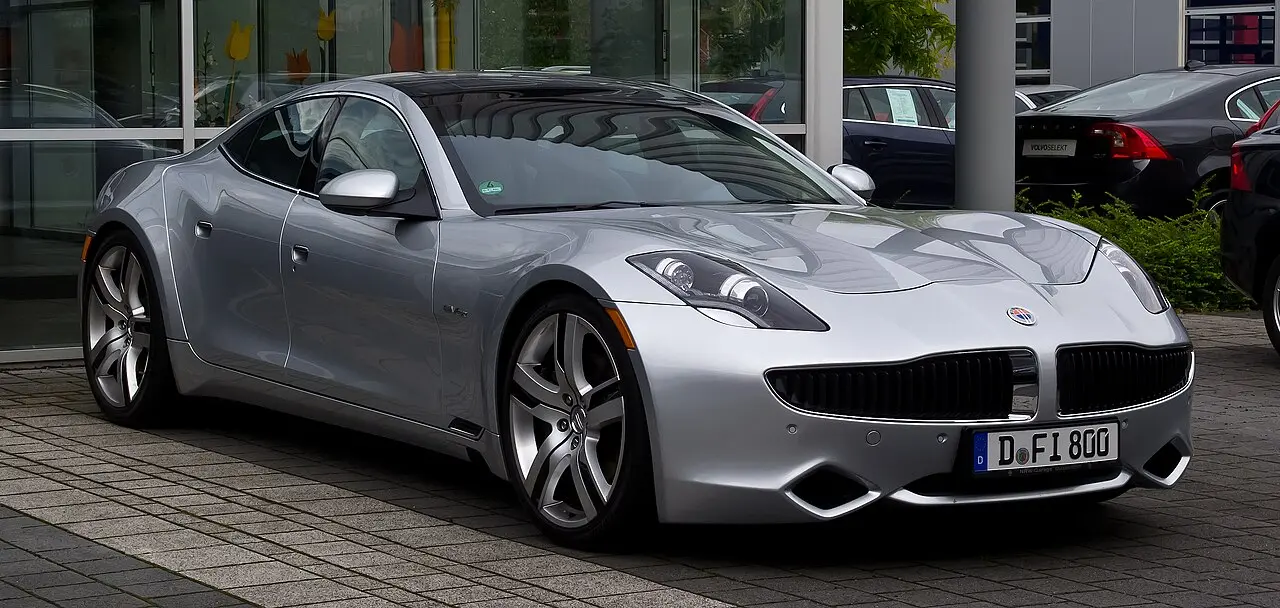
Photo: M 93 / Wikimedia Commons · CC BY-SA 3.0 de

The official data lists 7 versions of the Fisker Karma (2012–2014), in the European Union and the United States. Each market publishes its own figures, measured on its own test procedure.

At a glance

Years in the data
2012–2014
Markets
European Union, United States
Engines
2.0 L to 2.0 L
Power
150 kW (204 PS) to 300 kW (408 PS)
Fuels
Hybrid, Electric, Petrol, Plug-in hybrid
Plug-in hybrid, weighted (United States)
11.8 L/100 km (EPA)
New registrations in the EU
668

What is the Fisker Karma?

The Karma was a low, four-door luxury sedan and Fisker’s first production car. Its first generation is listed for 2012, with EU registration figures continuing through 2014. Its long, sculpted shape reflected the work of Henrik Fisker, the designer who founded the company. The plug-in hybrid paired electric drive with a petrol engine that powered a generator.

The Karma could be charged from an external power source, and its electric motors drove the car. The petrol engine generated electricity, giving the sedan an extended-range electric layout.

Generation, engine and power

The Karma has one generation, listed for 2012. EU listings cover six versions from 2012 to 2014, with hybrid, electric and petrol fuel labels and a 2.0-litre engine. Power ranges from 150 kW (204 PS) to 300 kW (408 PS). The most registered listed version was the 2.0-litre hybrid rated at 300 kW (408 PS), with 304 registrations across 2012–2013.

US EPA listings cover one 2012 plug-in hybrid version with a 2.0-litre engine. The Karma’s plug-in layout combines electric drive with a petrol-powered generator.

Fuel consumption, CO₂ and where it was sold

The US EPA’s official weighted fuel-consumption figure is 11.8 L/100 km. For a plug-in hybrid, the weighted figure assumes that some driving is electric, so it is not a petrol-only consumption result. European test procedures include WLTP and NEDC, while the US uses EPA testing and Canada uses the 5-cycle procedure; results from different methods are not directly comparable.

In official EU registration figures, the Karma recorded 668 registrations from 2012 to 2014. It also appears in US EPA listings for 2012.

Questions and answers

Was the Fisker Karma fully electric?

It was a plug-in hybrid: electric motors drove it, and a 2.0-litre petrol engine powered a generator.

How much power did the Karma produce?

EU-listed versions range from 150 kW (204 PS) to 300 kW (408 PS).

What is the Karma’s EPA fuel-consumption figure?

The official weighted figure is 11.8 L/100 km, assuming some driving is electric.

When and where was the Karma listed?

It appears in EU registration figures from 2012 to 2014 and in US EPA listings for 2012.

Karma first generation (2012)

Fisker Karma first generation
Photo: M 93 / Wikimedia Commons · CC BY-SA 3.0 de

References: consumerreports.org, en.wikipedia.org

European Union 4 versions

New cars registered in the EU (plus Norway and Iceland), from the European Environment Agency. Figures on the NEDC procedure until 2020 and on WLTP from 2021; versions are grouped by engine and power, with their number of registrations.

Years and versionEnginePowerFuelConsumption (combined)CO₂EU registrations
2012–20132.0 L300 kW (408 PS)Hybrid–53 g/km304
2012–20132.0 L156 kW (212 PS)Hybrid20.6 kWh/100 km NEDC53 g/km100
20122.0 L150 kW (204 PS)Electric–53 g/km52
20122.0 L156 kW (212 PS)Petrol–53 g/km50

United States 1 version

Model years sold in the USA, from the EPA and the Department of Energy (fueleconomy.gov). MPG on the EPA test; litres per 100 km = 235.215 ÷ MPG.

Years and versionEngineFuelGearboxDriveConsumption (combined)CO₂
2012PHEV2.0 LPlug-in hybridAutomaticRear-wheel drive20 MPG (11.8 L/100 km) EPA105 g/km

Versions outside these generations

European Union 2 versions

New cars registered in the EU (plus Norway and Iceland), from the European Environment Agency. Figures on the NEDC procedure until 2020 and on WLTP from 2021; versions are grouped by engine and power, with their number of registrations.

Years and versionEnginePowerFuelConsumption (combined)CO₂EU registrations
20142.0 L150 kW (204 PS)Hybrid20.6 kWh/100 km NEDC53 g/km44
20132.0 L150 kW (204 PS)Hybrid20.1 kWh/100 km NEDC51 g/km118

Official figures are measured on standard test procedures and differ between markets. Your consumption depends on how, where and in what conditions you drive.