Lincoln

Lincoln MKZ

Lincoln MKZ
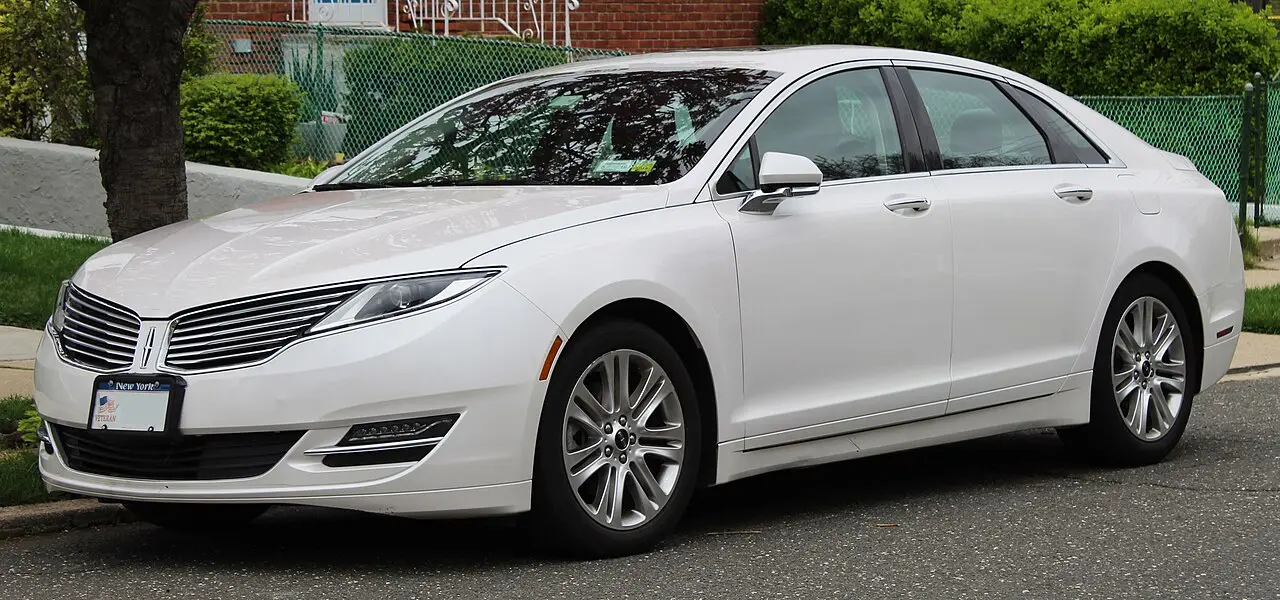
Photo: Kevauto / Wikimedia Commons · CC BY-SA 4.0

The official data lists 62 versions of the Lincoln MKZ (2007–2021), in the European Union, the United States, and Canada. Each market publishes its own figures, measured on its own test procedure.

At a glance

Years in the data
2007–2021
Markets
European Union, United States, Canada
Engines
2.0 L to 3.7 L
Fuels
Petrol, Hybrid
Lowest consumption (Canada)
5.6 L/100 km (5-cycle)
Lowest consumption (United States)
5.7 L/100 km (EPA)
New registrations in the EU
10

What is the Lincoln MKZ?

The MKZ is a four-door luxury sedan that gave Lincoln drivers a car-focused option in a range increasingly associated with SUVs. Its comfortable, everyday character suited drivers looking for a midsize saloon. The model was sold in North America and also appears in European Union registration figures.

The MKZ name spans two generations: the first ran from 2006 to 2012, and the second from 2013 to 2020. The car was introduced as the Zephyr before adopting the MKZ name. The 2013 redesign brought a more distinctive exterior, and US versions included a hybrid alongside petrol models.

Engines and power

US and Canadian listings span engine sizes from 2.0 L to 3.7 L. US versions include petrol and hybrid models, while the listed Canadian versions use petrol. Engine and drivetrain specifications varied by model year and version.

The MKZ appears in European Union registration figures for 2021, with 10 registrations. The listed version is a 2.0 L petrol rated at 149 kW, or 203 PS.

How economical is the Lincoln MKZ?

The best combined US EPA rating is 41 MPG, and the lowest listed US consumption is 5.7 L/100 km under EPA testing. Canada’s lowest listed figure is 5.6 L/100 km under NRCan’s 5-cycle procedure. The EPA and Canadian procedures differ, so the results are not directly comparable.

US listings cover 2007–2020 and include 31 versions; Canadian listings cover the same years and include 30. European Union registration figures include the 2021 entry. European official consumption testing uses WLTP or the earlier NEDC procedure, while the US uses EPA testing and Canada uses the 5-cycle method.

Questions and answers

How many generations of MKZ were there?

Two: the first ran from 2006 to 2012, and the second from 2013 to 2020.

Was the Lincoln MKZ available as a hybrid?

Yes. Hybrid versions are listed in the United States.

What power is listed for the EU-registered MKZ?

The 2021 EU entry is a 2.0 L petrol version rated at 149 kW, or 203 PS.

What is the best combined EPA rating listed for the MKZ?

41 MPG.
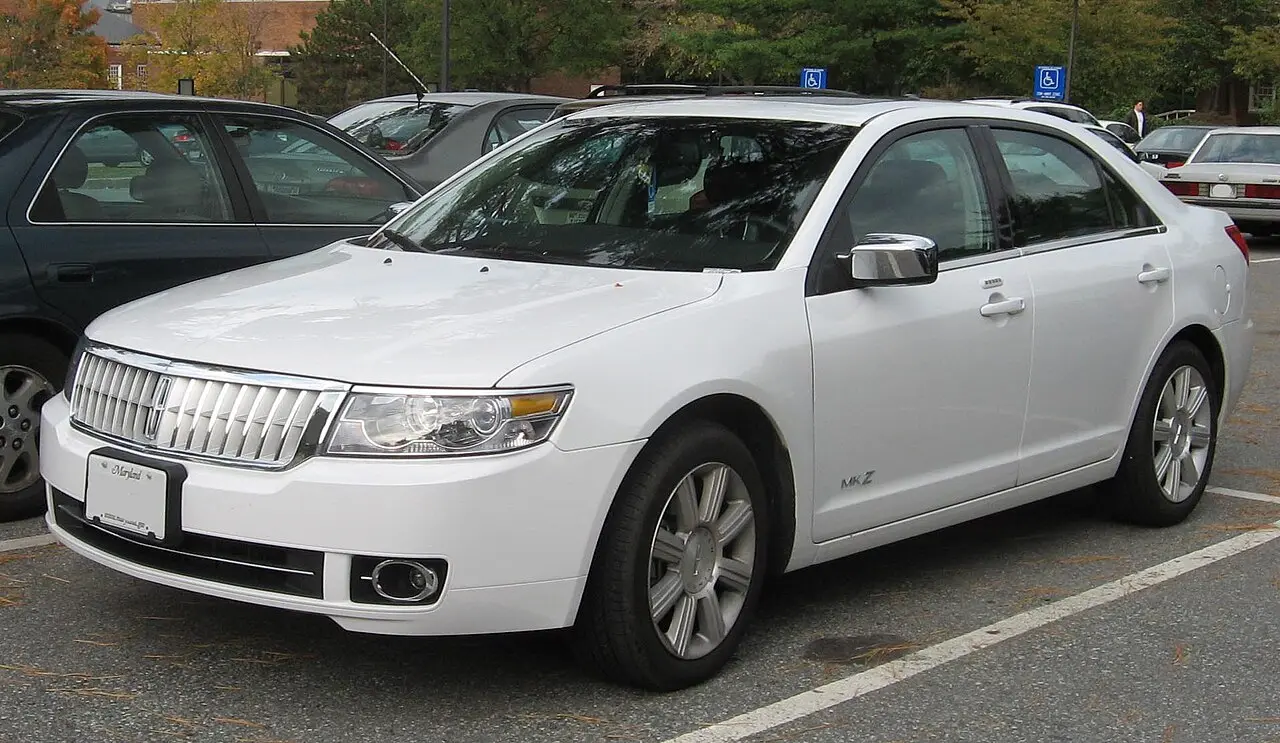
MKZ first generation (2006–2012)

Lincoln MKZ first generation
Photo: IFCAR / Wikimedia Commons · Public domain

Model codes: CD378, CD3 · References: en.wikipedia.org, texa.it

Show all 22 versions

MKZ second generation (2013–2020)

Lincoln MKZ second generation
Photo: Kevauto / Wikimedia Commons · CC BY-SA 4.0

Model codes: CD533, CD4 · References: en.wikipedia.org, texa.it

United States 19 versions

Model years sold in the USA, from the EPA and the Department of Energy (fueleconomy.gov). MPG on the EPA test; litres per 100 km = 235.215 ÷ MPG.

Years and versionEngineFuelGearboxDriveConsumption (combined)CO₂
2019–2020SIDI2.0 LPetrol6-speed automaticFront-wheel drive24 MPG (9.8 L/100 km) EPA232 g/km
2019–2020Hybrid2.0 LHybridContinuously variable (CVT)Front-wheel drive41 MPG (5.7 L/100 km) EPA135 g/km
2020SIDI2.0 LPetrol6-speed automaticAll-wheel drive23 MPG (10.2 L/100 km) EPA239 g/km
2017–2020SIDI3.0 LPetrol6-speed automaticAll-wheel drive20 MPG (11.8 L/100 km) EPA278 g/km
2017–2020SIDI3.0 LPetrol6-speed automaticFront-wheel drive21 MPG (11.2 L/100 km) EPA264 g/km
2019SIDI2.0 LPetrol6-speed automaticAll-wheel drive23 MPG (10.2 L/100 km) EPA240 g/km
2017–20182.0 LHybridContinuously variable (CVT)Front-wheel drive40 MPG (5.9 L/100 km) EPA138 g/km
2017–2018SIDI2.0 LPetrol6-speed automaticAll-wheel drive23 MPG (10.2 L/100 km) EPA240 g/km
2017–2018SIDI2.0 LPetrol6-speed automaticFront-wheel drive24 MPG (9.8 L/100 km) EPA230 g/km
2013–2016SIDI2.0 LPetrol6-speed automaticAll-wheel drive25 MPG (9.4 L/100 km) EPA222 g/km
2015–2016SIDI2.0 LPetrol6-speed automaticFront-wheel drive26 MPG (9.0 L/100 km) EPA212 g/km
2015–20162.0 LHybridContinuously variable (CVT)Front-wheel drive40 MPG (5.9 L/100 km) EPA141 g/km
2015–20163.7 LPetrol6-speed automaticFront-wheel drive21 MPG (11.2 L/100 km) EPA258 g/km
20163.7 LPetrol6-speed automaticAll-wheel drive20 MPG (11.8 L/100 km) EPA280 g/km
2014–20153.7 LPetrol6-speed automaticAll-wheel drive21 MPG (11.2 L/100 km) EPA267 g/km
2013–2014SIDI2.0 LPetrol6-speed automaticFront-wheel drive26 MPG (9.0 L/100 km) EPA213 g/km
2013–20142.0 LHybridContinuously variable (CVT)Front-wheel drive38 MPG (6.2 L/100 km) EPA150 g/km
2013–20143.7 LPetrol6-speed automaticFront-wheel drive22 MPG (10.7 L/100 km) EPA255 g/km
20133.7 LPetrol6-speed automaticAll-wheel drive21 MPG (11.2 L/100 km) EPA265 g/km

Canada 20 versions

Model years sold in Canada, from Natural Resources Canada fuel consumption ratings (5-cycle test).

Years and versionEngineFuelGearboxConsumption (combined)CO₂
2019–2020Mid-size2.0 LPetrol6-speed automatic10.4 L/100 km 5-cycle245 g/km
2020Mid-size2.0 LPetrolContinuously variable (CVT)5.6 L/100 km 5-cycle131 g/km
2017–2019Mid-size2.0 LPetrolContinuously variable (CVT)5.9 L/100 km 5-cycle139 g/km
2017–2019Mid-size3.0 LPetrol6-speed automatic11.8 L/100 km 5-cycle278 g/km
2018Mid-size2.0 LPetrol6-speed automatic10.3 L/100 km 5-cycle242 g/km
2017Mid-size2.0 LPetrol6-speed automatic9.8 L/100 km 5-cycle230 g/km
2017Mid-size2.0 LPetrol6-speed automatic10.2 L/100 km 5-cycle239 g/km
2017Mid-size3.0 LPetrol6-speed automatic11.2 L/100 km 5-cycle264 g/km
2016Mid-size2.0 LPetrol6-speed automatic8.9 L/100 km 5-cycle210 g/km
2016Mid-size2.0 LPetrol6-speed automatic9.3 L/100 km 5-cycle220 g/km
2016Mid-size2.0 LPetrolContinuously variable (CVT)5.8 L/100 km 5-cycle136 g/km
2016Mid-size3.7 LPetrol6-speed automatic10.9 L/100 km 5-cycle257 g/km
2016Mid-size3.7 LPetrol6-speed automatic11.9 L/100 km 5-cycle279 g/km
2015Mid-size2.0 LPetrol6-speed automatic8.9 L/100 km 5-cycle205 g/km
2015Mid-size2.0 LPetrolContinuously variable (CVT)5.8 L/100 km 5-cycle133 g/km
2015Mid-size3.7 LPetrol6-speed automatic11.3 L/100 km 5-cycle260 g/km
2013–2014Mid-size2.0 LPetrol6-speed automatic9.0 L/100 km 5-cycle207 g/km
2013–2014Mid-size2.0 LPetrolContinuously variable (CVT)6.3 L/100 km 5-cycle145 g/km
2014Mid-size3.7 LPetrol6-speed automatic11.4 L/100 km 5-cycle262 g/km
2013Mid-size3.7 LPetrol6-speed automatic11.2 L/100 km 5-cycle258 g/km

Versions outside these generations

European Union 1 version

New cars registered in the EU (plus Norway and Iceland), from the European Environment Agency. Figures on the NEDC procedure until 2020 and on WLTP from 2021; versions are grouped by engine and power, with their number of registrations.

Years and versionEnginePowerFuelEU registrations
20212.0 L149 kW (203 PS)Petrol10

Official figures are measured on standard test procedures and differ between markets. Your consumption depends on how, where and in what conditions you drive.