

BMW 6 Series fourth generation
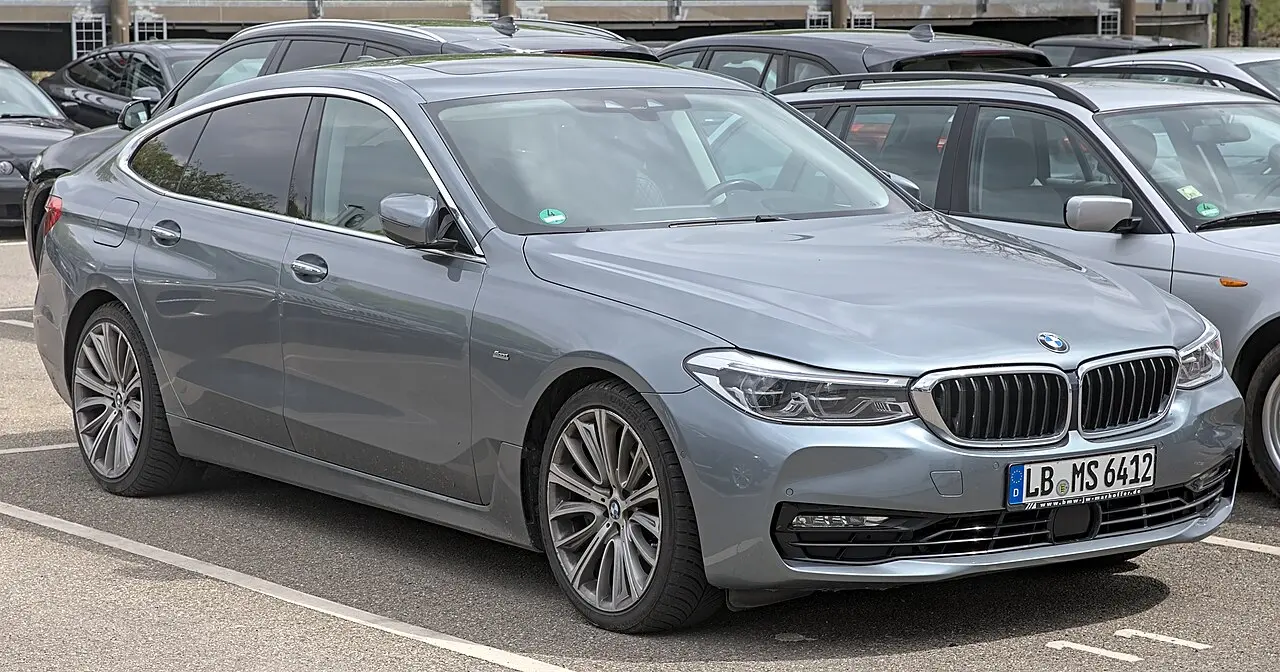
The BMW 6 Series fourth generation (2017–2023): dimensions, weights, reliability and the official figures of its 50 versions in the European Union and the United Kingdom.
Model codes: G32 · Sold in: European Union, France, and United Kingdom
Dimensions, weights and capacity
| Specification | Europe |
|---|---|
| Dimensions | |
| Length | 5,090 mm RDW |
| Width | 1,900 mm RDW |
| Height | 1,540 mm RDW |
| Wheelbase | 3,070 mm RDW |
| Front track | 1,609–1,619 mm ASTRA |
| Rear track | 1,619–1,653 mm ASTRA |
| Weights and towing | |
| Kerb weight | 1,695–1,885 kg RDW |
| Mass in running order | 1,795–1,985 kg RDW |
| Gross vehicle weight | 2,380–2,580 kg RDW |
| Towing, braked trailer | 2,100 kg RDW |
| Towing, unbraked trailer | 750 kg RDW |
| Seats and space | |
| Seats | 5 RDW |
| Doors | 4 RDW |
| Performance | |
| Top speed | 250 km/h RDW |
| Torque | 450–700 Nm ASTRA |
Tyre sizes (most common first): 245/45R19, 245/40R20, 245/50R18, 275/35R20, 225/60R17, 275/40R19, 245/35R21, 275/30R21
Ranges cover the generation’s versions and body styles; European and North American versions can differ. Sources: RDW type approvals (Netherlands), ASTRA type approvals (Switzerland), Traficom type approvals (Finland).
All 50 versions of the BMW 6 Series fourth generation
Show all 50 versions
European Union 42 versions
New cars registered in the EU (plus Norway and Iceland), from the European Environment Agency. Figures on the NEDC procedure until 2020 and on WLTP from 2021; versions are grouped by engine and power, with their number of registrations.
| Years and version | Engine | Power | Fuel | Consumption (combined) | CO₂ | EU registrations |
|---|---|---|---|---|---|---|
| 2021–2023 | 3.0 L | 210 kW (286 PS) | Hybrid | 6.4–6.5 L/100 km WLTP | 169–171 g/km | 1,275 |
| 2021–2023 | 3.0 L | 250 kW (340 PS) | Hybrid | 6.4–6.6 L/100 km WLTP | 172–174 g/km | 817 |
| 2021–2023 | 3.0 L | 245 kW (333 PS) | Hybrid | 8.3–8.4 L/100 km WLTP | 192–194 g/km | 670 |
| 2021–2023 | 2.0 L | 140 kW (190 PS) | Hybrid | 5.5–5.7 L/100 km WLTP | 151–155 g/km | 563 |
| 2022–2023 | 2.0 L | 180 kW (245 PS) | Hybrid | 7.5 L/100 km WLTP | 171–174 g/km | 63 |
| 2021–2023 | 2.0 L | 140 kW (190 PS) | Diesel | 4.6–5.2 L/100 km WLTP | 153–164 g/km | 111 |
| 2021–2023 | 3.0 L | 250 kW (340 PS) | Diesel | 5.3–5.9 L/100 km WLTP | 169–181 g/km | 68 |
| 2021–2023 | 2.0 L | 120 kW (163 PS) | Hybrid | 5.0–5.7 L/100 km WLTP | 146–149 g/km | 158 |
| 2021–2023 | 3.0 L | 245 kW (333 PS) | Petrol | 7.2–8.3 L/100 km WLTP | 194–204 g/km | 45 |
| 2021–2022 | 2.0 L | 190 kW (258 PS) | Hybrid | 7.1–7.3 L/100 km WLTP | 167 g/km | 185 |
| 2021 | 3.0 L | 210 kW (286 PS) | Diesel | 5.9 L/100 km WLTP | 168 g/km | 102 |
| 2021 | 2.0 L | 190 kW (258 PS) | Petrol | 7.4 L/100 km WLTP | 183 g/km | 40 |
| 2021 | 3.0 L | 235 kW (320 PS) | Diesel | 7.3 L/100 km WLTP | 197 g/km | 20 |
| 2021 | 2.0 L | 120 kW (163 PS) | Diesel | 5.7 L/100 km WLTP | 169 g/km | 10 |
| 2017–2020 | 3.0 L | 195 kW (265 PS) | Diesel | – | 145–153 g/km | 14,929 |
| 2018–2020 | 2.0 L | 140 kW (190 PS) | Diesel | – | 130–131 g/km | 1,615 |
| 2017–2020 | 3.0 L | 250 kW (340 PS) | Petrol | – | 172–181 g/km | 5,701 |
| 2020 | 3.0 L | 210 kW (286 PS) | Hybrid | – | 138 g/km | 356 |
| 2017–2020 | 3.0 L | 235 kW (320 PS) | Diesel | – | 152–163 g/km | 3,252 |
| 2017–2020 | 2.0 L | 190 kW (258 PS) | Petrol | – | 147–152 g/km | 3,225 |
| 2020 | 3.0 L | 250 kW (340 PS) | Hybrid | – | 145 g/km | 232 |
| 2020 | 3.0 L | 245 kW (333 PS) | Hybrid | – | 167 g/km | 194 |
| 2020 | 2.0 L | 140 kW (190 PS) | Hybrid | – | 122 g/km | 139 |
| 2018–2020 | 2.0 L | 120 kW (163 PS) | Diesel | – | 128–129 g/km | 578 |
| 2020 | 2.0 L | 190 kW (258 PS) | Hybrid | – | 138 g/km | 91 |
| 2020 | 3.0 L | 210 kW (286 PS) | Diesel | – | 140 g/km | 28 |
| 2020 | 2.0 L | 120 kW (163 PS) | Hybrid | – | 118 g/km | 26 |
| 2020 | 3.0 L | 245 kW (333 PS) | Petrol | – | 170 g/km | 26 |
| 2020 | 3.0 L | 250 kW (340 PS) | Diesel | – | 143 g/km | 18 |
| 2018–2020 | 3.0 L | 183 kW (249 PS) | Diesel | – | 152–154 g/km | 666 |
| 2019 | 2.0 L | 140 kW (190 PS) | Diesel | 14.8 kWh/100 km NEDC | 131 g/km | 2,298 |
| 2017–2019 | 3.0 L | 230 kW (313 PS) | Diesel | – | 152–156 g/km | 5,293 |
| 2017–2019 | 3.0 L | 155 kW (211 PS) | Diesel | – | 139–145 g/km | 252 |
| 2017–2019 | 3.0 L | 235 kW (320 PS) | Petrol | – | 183–186 g/km | 1,152 |
| 2017–2018 | 4.4 L | 330 kW (449 PS) | Petrol | – | 216 g/km | 810 |
| 2018 | 3.0 L | 265 kW (360 PS) | Petrol | – | 185 g/km | 10 |
| 2017 | 3.0 L | 195 kW (265 PS) | Other fuel | – | 139 g/km | 254 |
| 2017 | 3.0 L | 293 kW (398 PS) | Diesel | – | 154 g/km | 64 |
| 2017 | 3.0 L | 235 kW (320 PS) | Other fuel | – | 162 g/km | 56 |
| 2017 | 3.0 L | 345 kW (469 PS) | Diesel | – | 158 g/km | 48 |
| 2017 | 3.0 L | 183 kW (249 PS) | Other fuel | – | 152 g/km | 20 |
| 2017 | 3.0 L | 375 kW (510 PS) | Petrol | – | 187 g/km | 18 |
United Kingdom 8 versions
New cars on sale in the UK, from the Vehicle Certification Agency. NEDC figures until 2018 and WLTP figures after; years are the editions a version appeared in.
| Years and version | Engine | Fuel | Gearbox | Consumption (combined) | CO₂ |
|---|---|---|---|---|---|
| 2018630i 18'' standard tyres | 2.0 L | Petrol | 8-speed automatic | 6.5 L/100 km NEDC | 148 g/km |
| 2018630i 18'', 19'', 20'' run flat tyres | 2.0 L | Petrol | 8-speed automatic | 6.6 L/100 km NEDC | 152 g/km |
| 2018630d 18'' standard tyres | 3.0 L | Diesel | 8-speed automatic | 4.9 L/100 km NEDC | 129 g/km |
| 2018630d xDrive 18'' standard tyres | 3.0 L | Diesel | 8-speed automatic | 5.7 L/100 km NEDC | 150 g/km |
| 2018630d 18'', 19'', 20'' run flat tyres | 3.0 L | Diesel | 8-speed automatic | 5.1 L/100 km NEDC | 135 g/km |
| 2018630d xDrive 18'', 19'', 20'' run flat tyres | 3.0 L | Diesel | 8-speed automatic | 5.9 L/100 km NEDC | 154 g/km |
| 2018640i xDrive 18'' standard tyres | 3.0 L | Petrol | 8-speed automatic | 8.0 L/100 km NEDC | 183 g/km |
| 2018640i xDrive 18'', 19'', 20'' tyres | 3.0 L | Petrol | 8-speed automatic | 8.2 L/100 km NEDC | 187 g/km |
Similar models from other brands

Official figures are measured on standard test procedures and differ between markets. Your consumption depends on how, where and in what conditions you drive.