The official data lists 106 versions of the Infiniti G (1991–2014), in the European Union, the United Kingdom, France, the United States, and Canada. Each market publishes its own figures, measured on its own test procedure.
At a glance
Years in the data
1991–2014
Markets
European Union, United Kingdom, France, United States, Canada
Engines
2.0 L to 3.7 L
Power
235 kW (320 PS)
Fuels
Petrol
Lowest consumption (United States)
9.8 L/100 km (EPA)
Lowest consumption (Canada)
9.9 L/100 km (5-cycle)
Lowest consumption (France)
10.5 L/100 km (NEDC)
New registrations in the EU
1,706
What is the Infiniti G?
The Infiniti G was a range of premium passenger cars offered as a sedan and coupe, with a convertible in the G37 line. It brought together everyday comfort and a sportier character in a compact package. Infiniti launched in 1989 as Nissan’s luxury brand; the G35 helped build the marque’s reputation for distinctive styling and performance-minded cars.
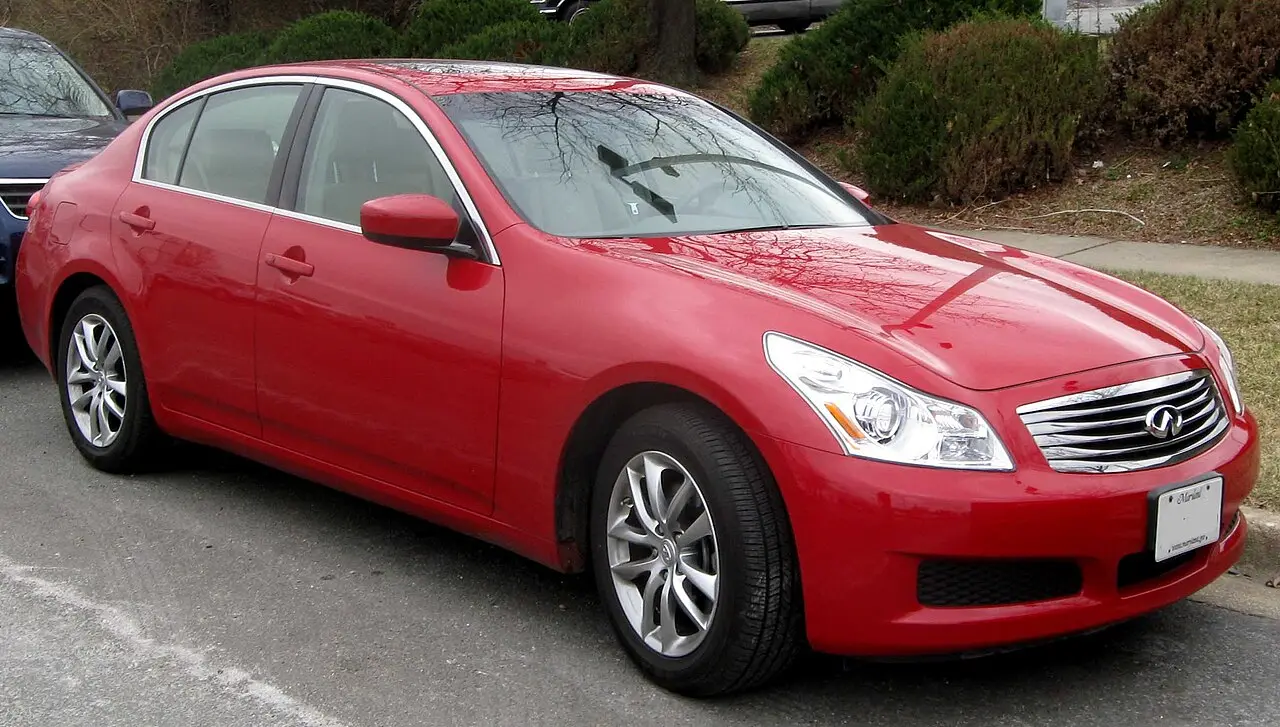
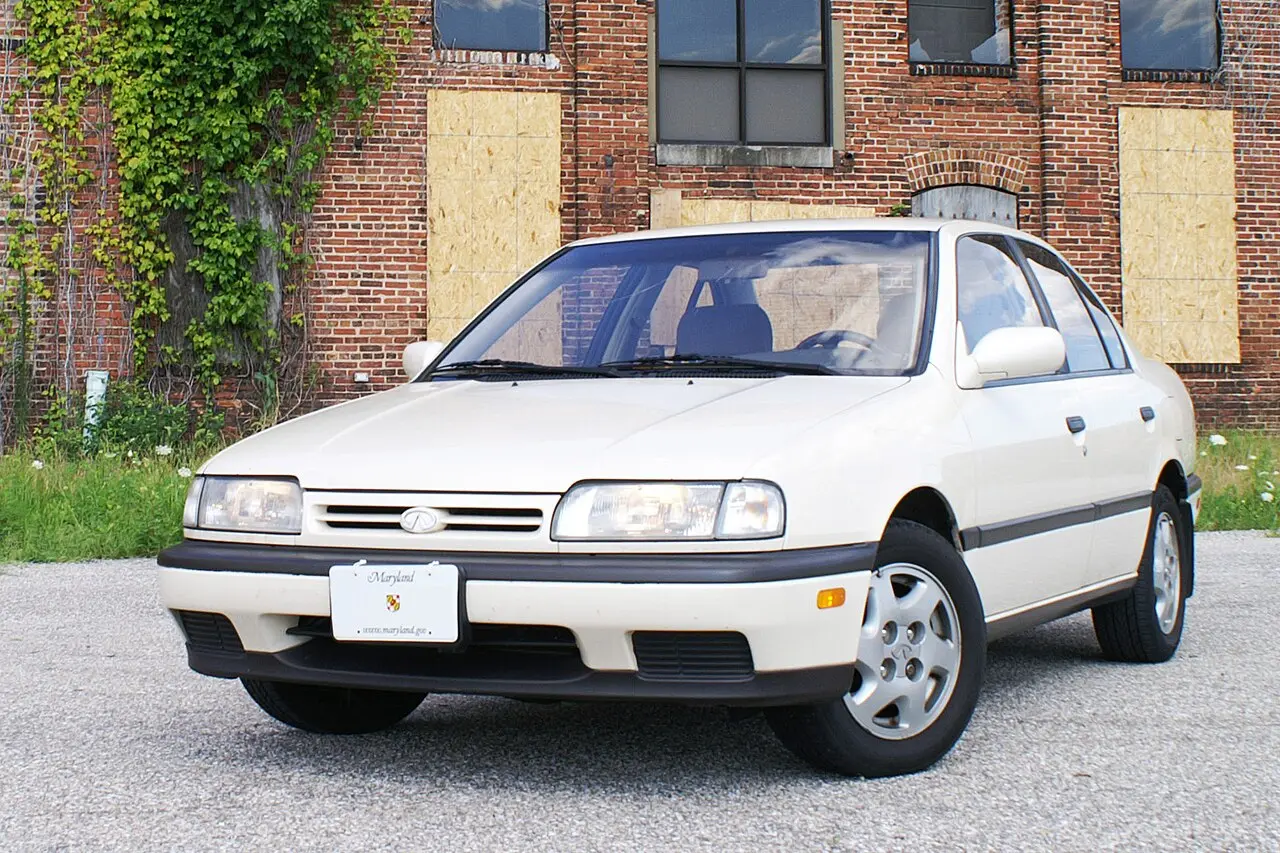
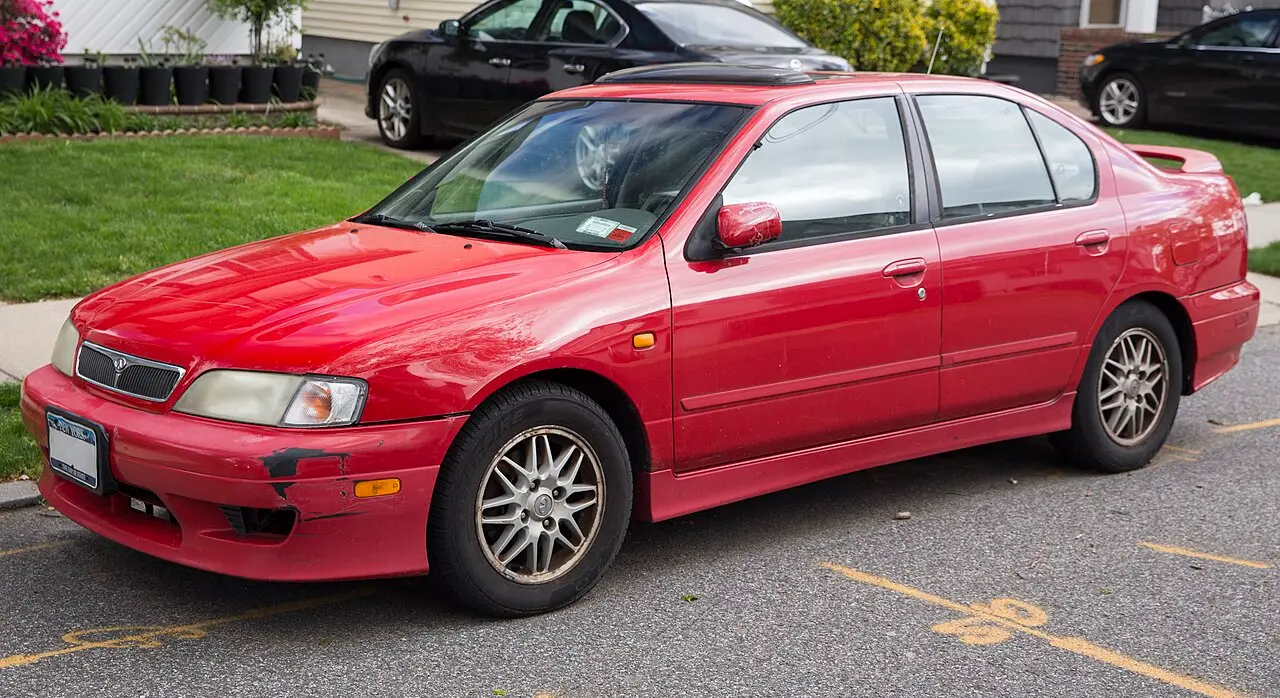
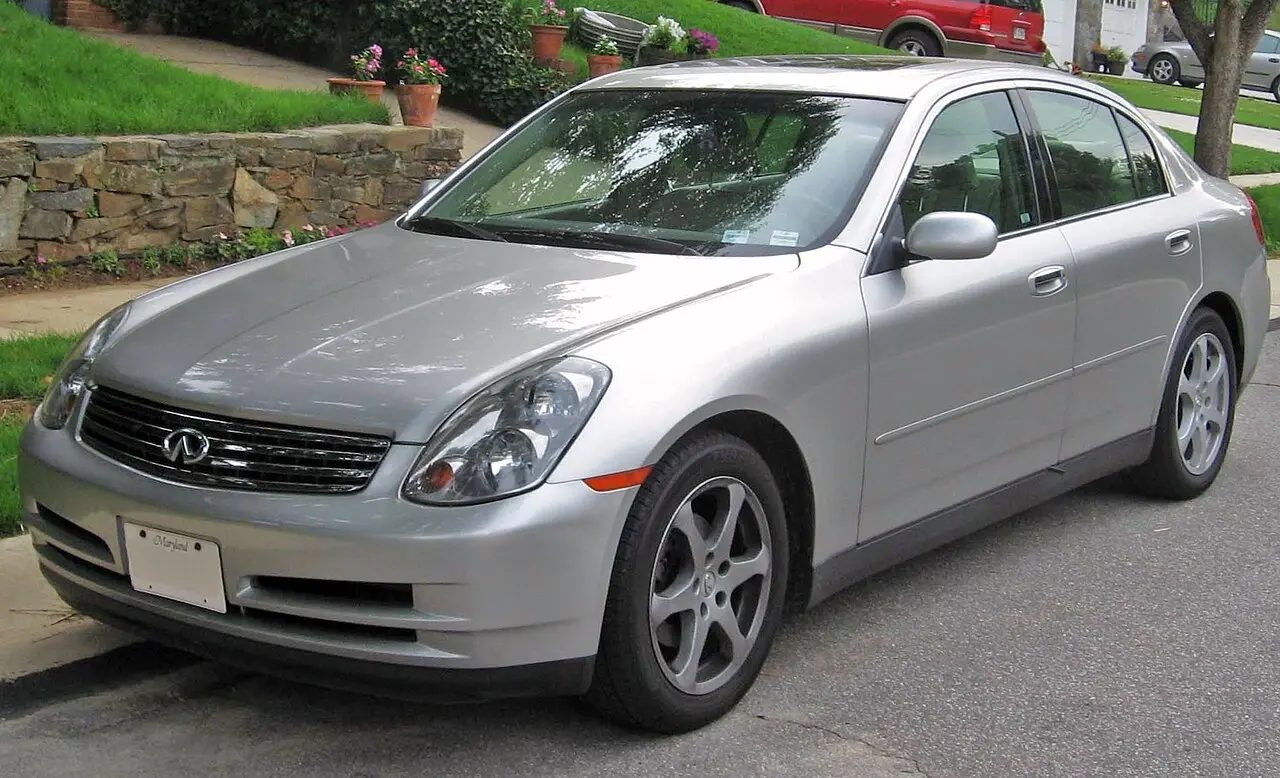
The G name spans several generations and body styles. The first (P10, 1991–1996) and second (P11, 1999–2002) generations were sold in the United States and Canada. The third (V35, 2003–2007) introduced the G35 sedan and coupe in those markets. The fourth (V36/CV36, 2007–2013) also reached Europe. Over time, the G35 name gave way to G37.
Engines and power
Engines varied by generation and market. US and Canadian versions span 2.0 to 3.7 litres; European, UK and French versions centre on a 3.7-litre petrol engine. EU registration figures list that engine at 235 kW (320 PS). In the UK, France, the US and Canada, the listed fuel type is petrol.
How economical is the Infiniti G?
The lowest listed consumption is 10.5 L/100 km in UK and French NEDC figures. The US EPA rates its most economical version at 9.8 L/100 km, with a best combined result of 24 MPG. Canada’s lowest figure is 9.9 L/100 km on the 5-cycle test. These results use different procedures, so they are best considered within their own markets.
The G recorded 1,706 EU registrations from 2010 to 2014. US figures span 1991–2013, and Canadian figures span 1995–2013, reflecting the model’s longer history in North America.
Questions and answers
Was the Infiniti G a sedan or a coupe?
It was offered as both. The G37 line also included a convertible.
What engine is listed for European G versions?
European figures centre on a 3.7-litre petrol engine rated at 235 kW (320 PS).
What is the lowest listed Infiniti G fuel consumption?
The lowest listed figure is 9.8 L/100 km in US EPA results. UK and French NEDC figures show 10.5 L/100 km, while Canada’s 5-cycle figure is 9.9 L/100 km.
When was the G sold in Europe?
EU registration figures cover 2010–2014. The fourth generation, V36/CV36, was also sold in the UK and France.
Model codes: V36, CV36 · Sold in: United States, Canada, European Union, United Kingdom, and France · References: en.wikipedia.org, en.wikipedia.org
European Union 6 versions
New cars registered in the EU (plus Norway and Iceland), from the European Environment Agency. Figures on the NEDC procedure until 2020 and on WLTP from 2021; versions are grouped by engine and power, with their number of registrations.
Years and version
Engine
Power
Fuel
CO₂
EU registrations
2013
3.7 L
235 kW (320 PS)
Petrol
255 g/km
162
2013
3.7 L
–
Other fuel
258 g/km
40
2012
3.7 L
235 kW (320 PS)
Petrol
251 g/km
268
2011
3.7 L
235 kW (320 PS)
Petrol
257 g/km
522
2010
3.7 L
–
Petrol
255 g/km
652
2010
–
–
Other fuel
259 g/km
12
United Kingdom 12 versions
New cars on sale in the UK, from the Vehicle Certification Agency. NEDC figures until 2018 and WLTP figures after; years are the editions a version appeared in.
Years and version
Engine
Fuel
Gearbox
Consumption (combined)
CO₂
2013–2014G37 Cabrio
3.7 L
Petrol
Automatic
11.4 L/100 km NEDC
264 g/km
2013–2014G37 Coupe · G37 Sedan · G37 Coupé
3.7 L
Petrol
Automatic
10.5 L/100 km NEDC
246 g/km
2012G37 Convertible
3.7 L
Petrol
7-speed automatic
11.4 L/100 km NEDC
264 g/km
2012G37 Convertible
3.7 L
Petrol
6-speed manual
11.9 L/100 km NEDC
275 g/km
2012G37 Coupé · G37 Saloon 2WD
3.7 L
Petrol
7-speed automatic
10.5 L/100 km NEDC
246 g/km
2012G37 Coupé · G37 Saloon 2WD
3.7 L
Petrol
6-speed manual
10.6 L/100 km NEDC
248 g/km
2012G37 Saloon 4WD
3.7 L
Petrol
7-speed automatic
11.0 L/100 km NEDC
255 g/km
2010G37 Convertible
3.7 L
Petrol
7-speed automatic
11.4 L/100 km NEDC
264 g/km
2010G37 Convertible
3.7 L
Petrol
6-speed manual
11.9 L/100 km NEDC
275 g/km
2010G37 Saloon 2WD · G37 Coupé
3.7 L
Petrol
7-speed automatic
10.5 L/100 km NEDC
246 g/km
2010G37 Saloon 2WD · G37 Coupé
3.7 L
Petrol
6-speed manual
10.6 L/100 km NEDC
248 g/km
2010G37 Saloon 4WD
3.7 L
Petrol
7-speed automatic
11.0 L/100 km NEDC
255 g/km
France 13 versions
New cars on sale in France, from ADEME Car Labelling. NEDC figures until 2015, WLTP figures in the current catalogue.
Years and version
Engine
Power
Fuel
Gearbox
Consumption (combined)
CO₂
2012–2013G37
–
235 kW (320 PS)
Petrol
6-speed manual
10.6 L/100 km NEDC
248 g/km
2012–2013G37 4WAS
–
235 kW (320 PS)
Petrol
6-speed manual
10.6 L/100 km NEDC
248 g/km
2012–2013G37 COUPE
–
235 kW (320 PS)
Petrol
6-speed manual
10.6 L/100 km NEDC
248 g/km
2012–2013G37 COUPE 4WAS
–
235 kW (320 PS)
Petrol
6-speed manual
10.6 L/100 km NEDC
248 g/km
2012–2013G37 CABRIO
–
235 kW (320 PS)
Petrol
6-speed manual
11.9 L/100 km NEDC
275 g/km
2012–2013G37
–
235 kW (320 PS)
Petrol
7-speed automatic
10.5 L/100 km NEDC
246 g/km
2012–2013G37 4WAS · G37
–
235 kW (320 PS)
Petrol
7-speed automatic
10.5 L/100 km NEDC
246 g/km
2012–2013G37 COUPE · G37
–
235 kW (320 PS)
Petrol
7-speed automatic
10.5 L/100 km NEDC
246 g/km
2012–2013G37 COUPE 4WAS · G37
–
235 kW (320 PS)
Petrol
7-speed automatic
10.5 L/100 km NEDC
246 g/km
2013G37
–
235 kW (320 PS)
Petrol
7-speed automatic
11.0 L/100 km NEDC
255 g/km
2013G37
–
235 kW (320 PS)
Petrol
7-speed automatic
11.4 L/100 km NEDC
264 g/km
2012G37 4WD
–
235 kW (320 PS)
Petrol
7-speed automatic
11.0 L/100 km NEDC
255 g/km
2012G37 CABRIO
–
235 kW (320 PS)
Petrol
7-speed automatic
11.4 L/100 km NEDC
264 g/km
United States 24 versions
Model years sold in the USA, from the EPA and the Department of Energy (fueleconomy.gov). MPG on the EPA test; litres per 100 km = 235.215 ÷ MPG.
Years and version
Engine
Fuel
Gearbox
Drive
Consumption (combined)
CO₂
2013
3.7 L
Petrol
7-speed automatic
Rear-wheel drive
20 MPG (11.8 L/100 km) EPA
274 g/km
2013
3.7 L
Petrol
6-speed manual
Rear-wheel drive
19 MPG (12.4 L/100 km) EPA
295 g/km
2013
3.7 L
Petrol
6-speed manual
Rear-wheel drive
20 MPG (11.8 L/100 km) EPA
282 g/km
2013
3.7 L
Petrol
7-speed automatic
Rear-wheel drive
22 MPG (10.7 L/100 km) EPA
255 g/km
2013
3.7 L
Petrol
7-speed automatic
All-wheel drive
20 MPG (11.8 L/100 km) EPA
270 g/km
2011–2012
2.5 L
Petrol
7-speed automatic
Rear-wheel drive
23 MPG (10.2 L/100 km) EPA
240 g/km
2011–2012
2.5 L
Petrol
7-speed automatic
All-wheel drive
22 MPG (10.7 L/100 km) EPA
251 g/km
2009–2012
3.7 L
Petrol
6-speed manual
Rear-wheel drive
19 MPG (12.4 L/100 km) EPA
291 g/km
2009–2012
3.7 L
Petrol
7-speed automatic
Rear-wheel drive
20 MPG (11.8 L/100 km) EPA
276 g/km
2011–2012
3.7 L
Petrol
6-speed manual
Rear-wheel drive
19 MPG (12.4 L/100 km) EPA
291 g/km
2011–2012
3.7 L
Petrol
7-speed automatic
Rear-wheel drive
22 MPG (10.7 L/100 km) EPA
251 g/km
2011–2012
3.7 L
Petrol
7-speed automatic
All-wheel drive
20 MPG (11.8 L/100 km) EPA
276 g/km
2009–2010
3.7 L
Petrol
6-speed manual
Rear-wheel drive
20 MPG (11.8 L/100 km) EPA
276 g/km
2010
3.7 L
Petrol
7-speed automatic
Rear-wheel drive
22 MPG (10.7 L/100 km) EPA
251 g/km
2010
3.7 L
Petrol
7-speed automatic
Four-wheel drive
20 MPG (11.8 L/100 km) EPA
276 g/km
2009CLKUP
3.7 L
Petrol
7-speed automatic
Rear-wheel drive
21 MPG (11.2 L/100 km) EPA
263 g/km
2009CLKUP
3.7 L
Petrol
7-speed automatic
Four- or all-wheel drive
20 MPG (11.8 L/100 km) EPA
276 g/km
2007–2008
3.5 L
Petrol
6-speed manual
Rear-wheel drive
20 MPG (11.8 L/100 km) EPA
276 g/km
2007–2008CLKUP
3.5 L
Petrol
5-speed automatic
Rear-wheel drive
20 MPG (11.8 L/100 km) EPA
276 g/km
2007–2008CLKUP
3.5 L
Petrol
5-speed automatic
Four- or all-wheel drive
19 MPG (12.4 L/100 km) EPA
291 g/km
2008
3.7 L
Petrol
6-speed manual
Rear-wheel drive
20 MPG (11.8 L/100 km) EPA
276 g/km
2008CLKUP
3.7 L
Petrol
5-speed automatic
Rear-wheel drive
20 MPG (11.8 L/100 km) EPA
276 g/km
2007CLKUP
3.5 L
Petrol
5-speed automatic
Rear-wheel drive
19 MPG (12.4 L/100 km) EPA
291 g/km
2007
3.5 L
Petrol
6-speed manual
Rear-wheel drive
20 MPG (11.8 L/100 km) EPA
276 g/km
Canada 25 versions
Model years sold in Canada, from Natural Resources Canada fuel consumption ratings (5-cycle test).
Years and version
Engine
Fuel
Gearbox
Consumption (combined)
CO₂
2010–2013Subcompact
3.7 L
Petrol
6-speed manual
12.4 L/100 km 5-cycle
285 g/km
2011–2013Mid-size · Subcompact
3.7 L
Petrol
6-speed manual
11.8 L/100 km 5-cycle
271 g/km
2011–2013Subcompact
3.7 L
Petrol
7-speed automatic
10.8 L/100 km 5-cycle
248 g/km
2013Mid-size
3.7 L
Petrol
7-speed automatic
10.8 L/100 km 5-cycle
248 g/km
2013Subcompact
3.7 L
Petrol
7-speed automatic
11.5 L/100 km 5-cycle
264 g/km
2013Mid-size · Subcompact
3.7 L
Petrol
7-speed automatic
11.5 L/100 km 5-cycle
264 g/km
2011–2012Mid-size
2.5 L
Petrol
7-speed automatic
10.1 L/100 km 5-cycle
232 g/km
2011–2012Mid-size
2.5 L
Petrol
7-speed automatic
10.5 L/100 km 5-cycle
242 g/km
2010–2012Subcompact
3.7 L
Petrol
7-speed automatic
11.5 L/100 km 5-cycle
265 g/km
2010–2012Mid-size · Subcompact
3.7 L
Petrol
7-speed automatic
11.4 L/100 km 5-cycle
262 g/km
2010Mid-size · Subcompact
3.7 L
Petrol
7-speed automatic
11.0 L/100 km 5-cycle
253 g/km
2010Mid-size · Subcompact
3.7 L
Petrol
6-speed manual
11.9 L/100 km 5-cycle
274 g/km
2009Mid-size · Subcompact
3.7 L
Petrol
7-speed automatic
11.3 L/100 km 5-cycle
260 g/km
2009Mid-size · Subcompact
3.7 L
Petrol
6-speed manual
11.7 L/100 km 5-cycle
269 g/km
2009Mid-size · Subcompact
3.7 L
Petrol
7-speed automatic
11.5 L/100 km 5-cycle
265 g/km
2008Mid-size
3.5 L
Petrol
5-speed automatic
11.9 L/100 km 5-cycle
274 g/km
2008Mid-size
3.5 L
Petrol
6-speed manual
11.8 L/100 km 5-cycle
271 g/km
2008Mid-size
3.5 L
Petrol
5-speed automatic
12.4 L/100 km 5-cycle
285 g/km
2008Subcompact
3.7 L
Petrol
5-speed automatic
11.7 L/100 km 5-cycle
269 g/km
2008Subcompact
3.7 L
Petrol
6-speed manual
11.6 L/100 km 5-cycle
267 g/km
2007Mid-size
3.5 L
Petrol
5-speed automatic
12.0 L/100 km 5-cycle
276 g/km
2007Mid-size
3.5 L
Petrol
6-speed manual
11.8 L/100 km 5-cycle
271 g/km
2007Subcompact
3.5 L
Petrol
5-speed automatic
12.6 L/100 km 5-cycle
290 g/km
2007Subcompact
3.5 L
Petrol
6-speed manual
12.0 L/100 km 5-cycle
276 g/km
2007Mid-size
3.5 L
Petrol
5-speed automatic
12.4 L/100 km 5-cycle
285 g/km
Versions outside these generations
European Union 1 version
New cars registered in the EU (plus Norway and Iceland), from the European Environment Agency. Figures on the NEDC procedure until 2020 and on WLTP from 2021; versions are grouped by engine and power, with their number of registrations.
Years and version
Engine
Power
Fuel
CO₂
EU registrations
2014
3.7 L
235 kW (320 PS)
Petrol
253 g/km
50
Official figures are measured on standard test procedures and differ between markets. Your consumption depends on how, where and in what conditions you drive.