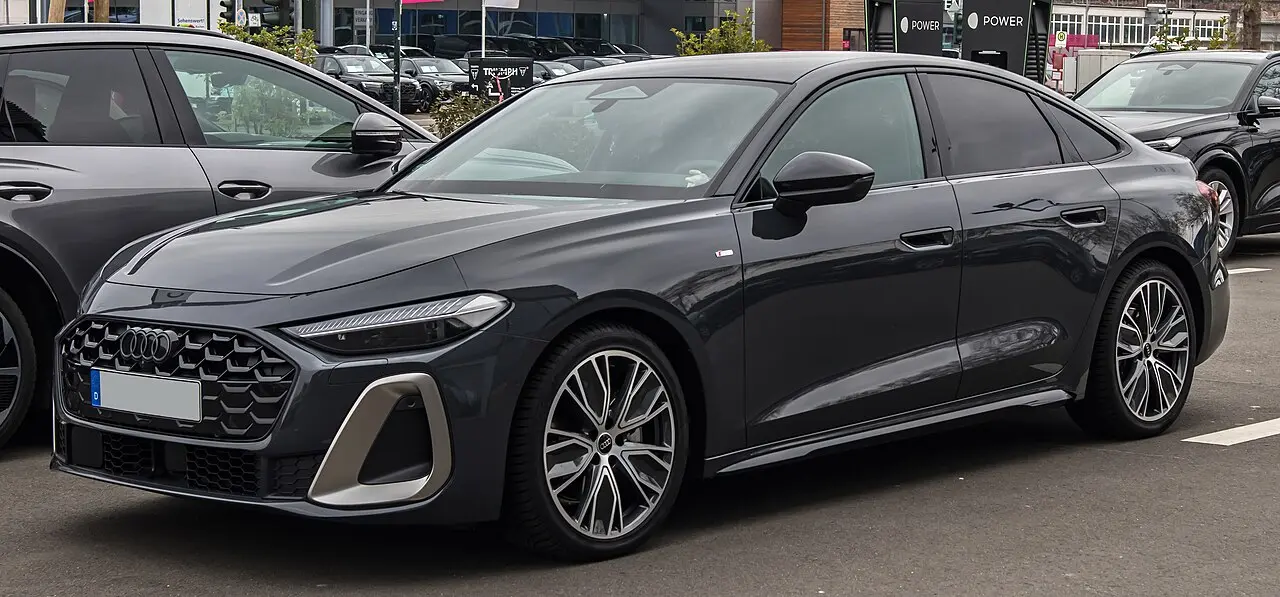
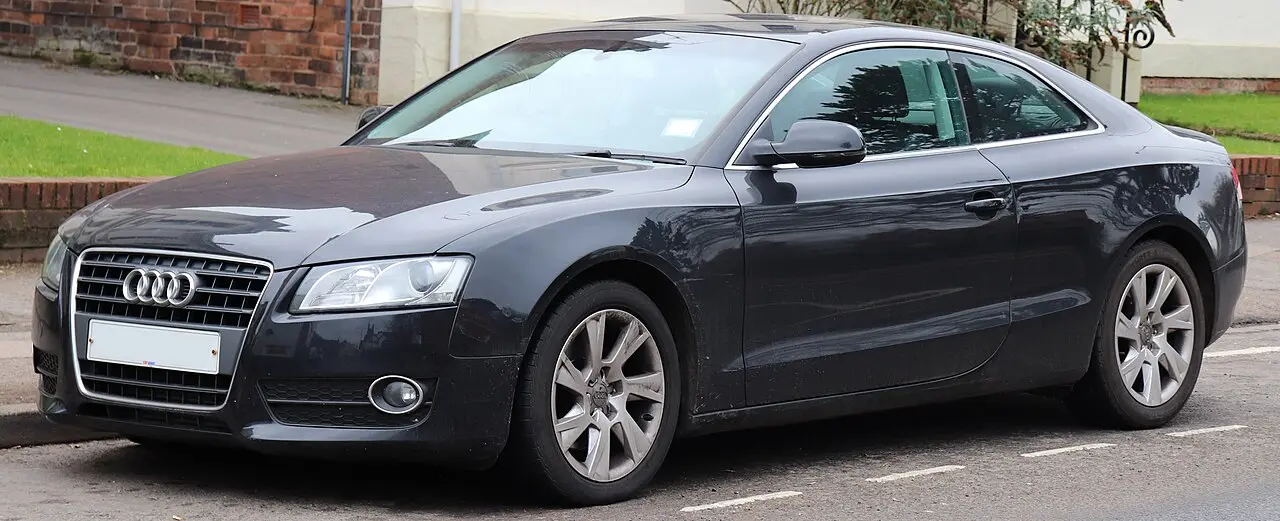
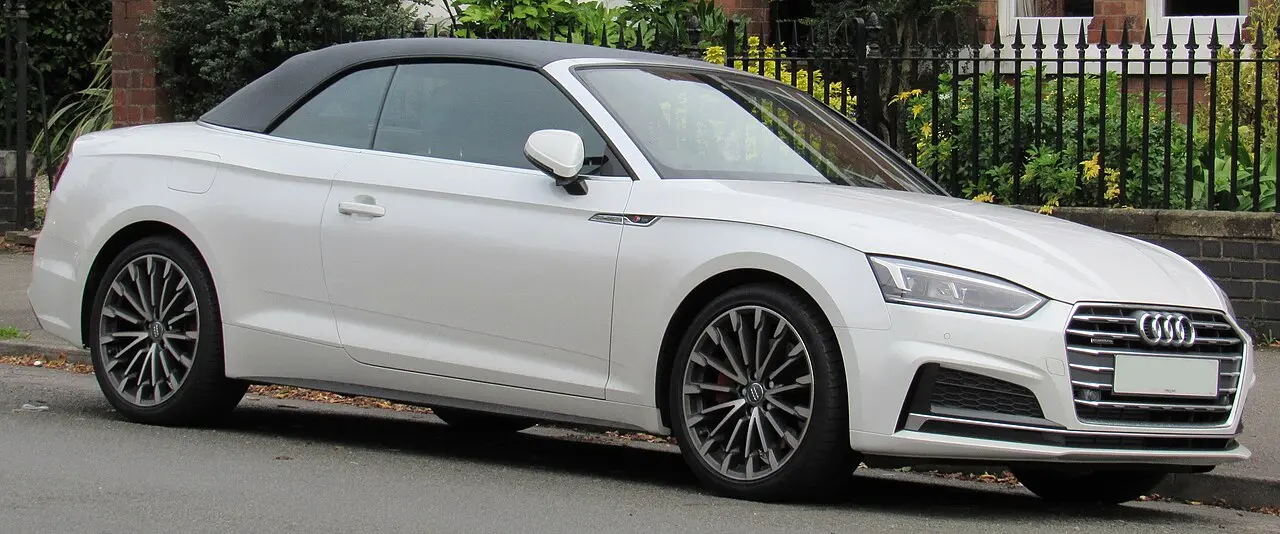
The official data lists 1023 versions of the Audi A5 (2008–2027), in the European Union, the United Kingdom, France, the United States, and Canada. Each market publishes its own figures, measured on its own test procedure.
At a glance
Years in the data
2008–2027
Markets
European Union, United Kingdom, France, United States, Canada
The Audi A5 is a premium mid-size car that has come as a coupé, cabriolet and Sportback, a five-door hatchback with a sloping roof. It sits in Audi’s range between its smaller and larger passenger cars, pairing a more distinctive shape with a choice of everyday engines.
Audi introduced the A5 in 2007. The first generation, known as 8T, ran from 2008 to 2016. The F5 generation followed from 2017 to 2024, and the B10 has been built since 2025. The model’s body styles and design evolved across those generations, with newer technology arriving along the way.
Engines and power
In the European Union, the A5 range spans 1.8-litre to 4.2-litre engines and 100 kW (136 PS) to 331 kW (450 PS). In the UK, it covers 1.8-litre to 3.2-litre engines and 105 kW (143 PS) to 270 kW (367 PS). Petrol and diesel versions feature in both markets, alongside hybrid and plug-in hybrid models. EU figures also include natural gas and other fuel categories.
In the United States, engines range from 2.0-litre to 4.2-litre, while Canada’s range covers 2.0-litre to 4.2-litre. Petrol versions appear in both markets; US figures also include hybrid and E85 flex-fuel models.
How economical is the Audi A5?
The lowest EU figure for petrol, diesel and hybrid versions is 4.1 L/100 km on the WLTP test. For plug-in hybrids, the lowest official weighted figure is 2.5 L/100 km WLTP; it assumes some driving is electric. In the UK, the lowest figure for petrol, diesel and hybrid versions is 4 L/100 km on NEDC, while the plug-in hybrid figure is 6.9 L/100 km WLTP.
In the United States, the EPA rates the A5 at as little as 7.8 L/100 km, or 30 MPG combined. Canada’s lowest figure is 8.6 L/100 km on the NRCan 5-cycle test. These results use different procedures: Europe uses WLTP or NEDC, the US uses EPA testing and Canada uses the 5-cycle test.
Where was the Audi A5 sold?
Official figures cover the European Union, the UK, France, the United States and Canada. EU registration figures span 2010–2025, with 1,236,242 registrations. The French figures cover 2012–2015; UK figures span 2008 onward.
Questions and answers
What body styles has the Audi A5 had?
The A5 has been offered as a coupé, cabriolet and Sportback.
What is the lowest EU fuel-consumption figure?
It is 4.1 L/100 km WLTP for petrol, diesel and hybrid versions. The lowest plug-in hybrid weighted figure is 2.5 L/100 km WLTP.
How many Audi A5 generations are there?
Three: 8T (2008–2016), F5 (2017–2024) and B10 (since 2025).
Where was the Audi A5 sold?
Official figures cover the EU, UK, France, the United States and Canada.
Model codes: B10 · Sold in: European Union, United Kingdom, United States, Canada, and France · References: autowoop.com, autocentrum.pl
European Union 21 versions
New cars registered in the EU (plus Norway and Iceland), from the European Environment Agency. Figures on the NEDC procedure until 2020 and on WLTP from 2021; versions are grouped by engine and power, with their number of registrations.
Years and version
Engine
Power
Fuel
Consumption (combined)
CO₂
Electric range
EU registrations
2025
2.0 L
150 kW (204 PS)
Hybrid
5.2 L/100 km WLTP
135 g/km
–
21,715
2025
2.0 L
150 kW (204 PS)
Petrol
7.1 L/100 km WLTP
162 g/km
–
12,174
2025
2.0 L
185 kW (252 PS)
Plug-in hybrid
2.5 L/100 km WLTP15.5 kWh/100 km WLTP
56 g/km
101 km
10,226
2025
2.0 L
110 kW (150 PS)
Petrol
6.9 L/100 km WLTP
157 g/km
–
5,549
2025
3.0 L
270 kW (367 PS)
Hybrid
7.8 L/100 km WLTP
178 g/km
–
3,411
2025
2.0 L
150 kW (204 PS)
Diesel
5.0 L/100 km WLTP
134 g/km
–
1,467
2025
2.0 L
150 kW (204 PS)
Hybrid
6.9 L/100 km WLTP
158 g/km
–
550
2025
2.0 L
110 kW (150 PS)
Hybrid
7.0 L/100 km WLTP
161 g/km
–
191
2025
3.0 L
260 kW (354 PS)
Petrol
9.1 L/100 km WLTP
207 g/km
–
145
2025
2.0 L
195 kW (265 PS)
Hybrid
7.6 L/100 km WLTP
174 g/km
–
116
2025
2.0 L
120 kW (163 PS)
Hybrid
5.2 L/100 km WLTP
136 g/km
–
76
2025
2.0 L
150 kW (204 PS)
Plug-in hybrid
5.1 L/100 km WLTP
135 g/km
–
71
2025
2.9 L
331 kW (450 PS)
Petrol
9.8 L/100 km WLTP
221 g/km
–
59
2025
2.9 L
346 kW (470 PS)
Petrol
9.8 L/100 km WLTP
222 g/km
–
56
2025
3.0 L
251 kW (341 PS)
Hybrid
7.3 L/100 km WLTP
192 g/km
–
55
2025
3.0 L
270 kW (367 PS)
Petrol
7.8 L/100 km WLTP
179 g/km
–
48
2025
2.9 L
375 kW (510 PS)
Plug-in hybrid
–
221 g/km
–
25
2025
2.0 L
200 kW (272 PS)
Petrol
–
290 g/km
–
23
2025
3.0 L
270 kW (367 PS)
Plug-in hybrid
7.7 L/100 km WLTP
177 g/km
–
14
2025
2.9 L
360 kW (489 PS)
Plug-in hybrid
–
224 g/km
–
12
2025
2.0 L
200 kW (272 PS)
Petrol
–
265 g/km
–
10
United Kingdom 33 versions
New cars on sale in the UK, from the Vehicle Certification Agency. NEDC figures until 2018 and WLTP figures after; years are the editions a version appeared in.
Years and version
Engine
Power
Fuel
Gearbox
Consumption (combined)
CO₂
Electric range
2025–2026TDI 163PS
2.0 L
125 kW (170 PS)
Diesel
7-speed automatic
5.4 L/100 km WLTP
134 g/km
–
2025–2026TDI 204 PS S tronic
2.0 L
150 kW (204 PS)
Hybrid
7-speed automatic
5.0 L/100 km WLTP
130 g/km
–
2025–2026TDI 204 PS S tronic
2.0 L
150 kW (204 PS)
Hybrid
7-speed automatic
5.4 L/100 km WLTP
141 g/km
–
2025–2026TDI quattro 204 PS S tronic
2.0 L
150 kW (204 PS)
Hybrid
7-speed automatic
5.2 L/100 km WLTP
136 g/km
–
2025–2026TDI quattro 204 PS S tronic
2.0 L
150 kW (204 PS)
Hybrid
7-speed automatic
5.4 L/100 km WLTP
144 g/km
–
2025–2026TDI 204 PS S tronic
2.0 L
150 kW (204 PS)
Diesel
7-speed automatic
4.9 L/100 km WLTP
128 g/km
–
2025–2026TDI 204 PS S tronic
2.0 L
150 kW (204 PS)
Diesel
7-speed automatic
5.2 L/100 km WLTP
137 g/km
–
2025–2026TDI 204 PS quattro S tronic
2.0 L
150 kW (204 PS)
Diesel
7-speed automatic
5.1 L/100 km WLTP
135 g/km
–
2025–2026TDI 204 PS quattro S tronic
2.0 L
150 kW (204 PS)
Diesel
7-speed automatic
5.3 L/100 km WLTP
142 g/km
–
2025–2026TDI 163PS
2.0 L
120 kW (163 PS)
Diesel
7-speed automatic
5.1 L/100 km WLTP
141 g/km
–
2025–2026TFSI 150 PS
2.0 L
110 kW (150 PS)
Petrol
7-speed automatic
6.8 L/100 km WLTP
155 g/km
–
2025–2026TFSI 150 PS
2.0 L
110 kW (150 PS)
Petrol
7-speed automatic
7.3 L/100 km WLTP
167 g/km
–
2025–2026TFSI 150 PS
2.0 L
110 kW (150 PS)
Petrol
7-speed automatic
6.8 L/100 km WLTP
154 g/km
–
2025–2026TFSI 150 PS
2.0 L
110 kW (150 PS)
Petrol
7-speed automatic
7.2 L/100 km WLTP
164 g/km
–
2025–2026TFSI 204 PS
2.0 L
150 kW (204 PS)
Petrol
7-speed automatic
6.9 L/100 km WLTP
157 g/km
–
2025–2026TFSI 204 PS
2.0 L
150 kW (204 PS)
Petrol
7-speed automatic
7.4 L/100 km WLTP
168 g/km
–
2025–2026TFSI 204 PS
2.0 L
150 kW (204 PS)
Petrol
7-speed automatic
6.8 L/100 km WLTP
155 g/km
–
2025–2026TFSI 204 PS
2.0 L
150 kW (204 PS)
Petrol
7-speed automatic
7.2 L/100 km WLTP
164 g/km
–
2025–202645 TFSI quattro 265PS
2.0 L
195 kW (265 PS)
Hybrid
7-speed automatic
7.3 L/100 km WLTP
166 g/km
–
2025–202645 TFSI quattro 265PS
2.0 L
195 kW (265 PS)
Hybrid
7-speed automatic
7.5 L/100 km WLTP
169 g/km
–
2025–202645 TFSI quattro 265PS
2.0 L
195 kW (265 PS)
Petrol
7-speed automatic
7.3 L/100 km WLTP
166 g/km
–
2025–202645 TFSI quattro 265PS
2.0 L
195 kW (265 PS)
Petrol
7-speed automatic
7.5 L/100 km WLTP
169 g/km
–
2025–2026e-hybrid quattro 299PS
2.0 L
220 kW (299 PS)
Plug-in hybrid
7-speed automatic
15.2 kWh/100 km WLTP
–
106 km
2025–2026e-hybrid quattro 299PS
2.0 L
220 kW (299 PS)
Plug-in hybrid
7-speed automatic
15.8 kWh/100 km WLTP
–
94 km
2025–2026e-hybrid quattro 299PS
2.0 L
220 kW (299 PS)
Plug-in hybrid
7-speed automatic
15.0 kWh/100 km WLTP
–
108 km
2025–2026e-hybrid quattro 299PS
2.0 L
220 kW (299 PS)
Plug-in hybrid
7-speed automatic
6.9 L/100 km WLTP15.5 kWh/100 km WLTP
–
99 km
2025–2026TFSI 450 PS
2.9 L
331 kW (450 PS)
Petrol
8-speed automatic
9.6 L/100 km WLTP
218 g/km
–
2025–2026TFSI 450 PS
2.9 L
331 kW (450 PS)
Petrol
8-speed automatic
9.9 L/100 km WLTP
224 g/km
–
2025–2026TFSI 470 PS
2.9 L
346 kW (470 PS)
Petrol
8-speed automatic
9.7 L/100 km WLTP
221 g/km
–
2025–2026TFSI quattro 367 PS
3.0 L
270 kW (367 PS)
Hybrid
7-speed automatic
7.9 L/100 km WLTP
179 g/km
–
2025–2026TFSI quattro 367 PS
3.0 L
270 kW (367 PS)
Hybrid
7-speed automatic
8.0 L/100 km WLTP
181 g/km
–
2025–2026TFSI quattro 367 PS
3.0 L
270 kW (367 PS)
Hybrid
7-speed automatic
7.9 L/100 km WLTP
176 g/km
–
2025–2026TFSI quattro 367 PS
3.0 L
270 kW (367 PS)
Hybrid
7-speed automatic
7.8 L/100 km WLTP
177 g/km
–
United States 7 versions
Model years sold in the USA, from the EPA and the Department of Energy (fueleconomy.gov). MPG on the EPA test; litres per 100 km = 235.215 ÷ MPG.
Years and version
Engine
Fuel
Gearbox
Drive
Consumption (combined)
CO₂
2026–2027SIDI
2.0 L
Petrol
7-speed automated manual
All-wheel drive
26 MPG (9.0 L/100 km) EPA
214 g/km
2027SIDI
3.0 L
Petrol
7-speed automated manual
All-wheel drive
23 MPG (10.2 L/100 km) EPA
237 g/km
2026SIDI
3.0 L
Petrol
7-speed automated manual
All-wheel drive
23 MPG (10.2 L/100 km) EPA
240 g/km
2025SIDI; Mild Hybrid
2.0 L
Hybrid
7-speed automated manual
All-wheel drive
26 MPG (9.0 L/100 km) EPA
211 g/km
2025SIDI; Mild Hybrid
2.0 L
Hybrid
7-speed automated manual
All-wheel drive
29 MPG (8.1 L/100 km) EPA
187 g/km
2025SIDI
2.0 L
Petrol
7-speed automated manual
All-wheel drive
26 MPG (9.0 L/100 km) EPA
217 g/km
2025SIDI
3.0 L
Petrol
7-speed automated manual
All-wheel drive
22 MPG (10.7 L/100 km) EPA
247 g/km
Canada 6 versions
Model years sold in Canada, from Natural Resources Canada fuel consumption ratings (5-cycle test).
Years and version
Engine
Fuel
Gearbox
Consumption (combined)
CO₂
2026Mid-size
2.0 L
Petrol
7-speed automated manual
9.1 L/100 km 5-cycle
214 g/km
2026Mid-size
3.0 L
Petrol
7-speed automated manual
10.2 L/100 km 5-cycle
240 g/km
2025Subcompact · Mid-size
2.0 L
Petrol
7-speed automated manual
8.8 L/100 km 5-cycle
207 g/km
2025Mid-size
2.0 L
Petrol
7-speed automated manual
9.2 L/100 km 5-cycle
217 g/km
2025Subcompact
3.0 L
Petrol
8-speed automatic
9.7 L/100 km 5-cycle
228 g/km
2025Mid-size
3.0 L
Petrol
7-speed automated manual
10.5 L/100 km 5-cycle
247 g/km
Official figures are measured on standard test procedures and differ between markets. Your consumption depends on how, where and in what conditions you drive.