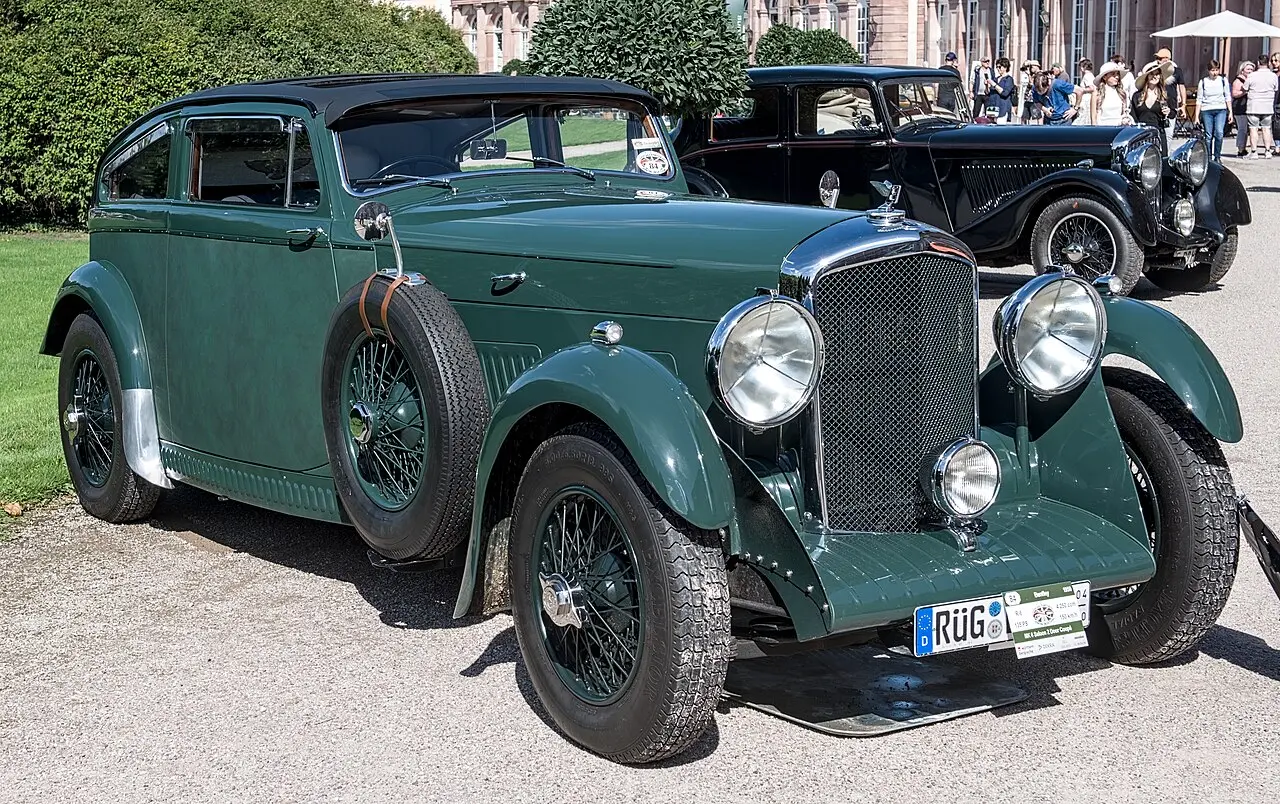
What is the Bentley Mark VI?
The Mark VI is a post-war Bentley saloon, designed for comfortable travel in a formal four-door body. It was the first new car to emerge from Bentley’s Crewe works after the war. For the first time, buyers could order a complete Bentley with a factory-fitted steel body, or choose a bare chassis for an independent coachbuilder to finish.
Design and place in Bentley’s range
The Mark VI brought a factory-bodied saloon into Bentley’s range while keeping the option of bespoke coachwork. Its upright, restrained shape carried the familiar Bentley character into the post-war years. The R-Type followed it, retaining much of the Mark VI’s design while giving the rear a longer boot.
Engines and power
The Mark VI was powered by a straight-six petrol engine.
How economical is the Bentley Mark VI?
The Mark VI predates modern official fuel-consumption and CO₂ tests, so there are no comparable results to quote for this car. European WLTP and NEDC tests, the US EPA procedure and Canada’s 5-cycle test use different methods.
Questions and answers
What kind of car is the Bentley Mark VI?
It is a four-door luxury saloon from Bentley’s post-war range.
Was the Mark VI only available with a standard steel body?
No. Buyers could choose a complete car with a factory-fitted steel body or a chassis for an independent coachbuilder.
What engine does the Mark VI use?
It has a straight-six petrol engine.
Are official fuel-consumption and CO₂ figures available?
The Mark VI predates modern official fuel-consumption and CO₂ tests.